

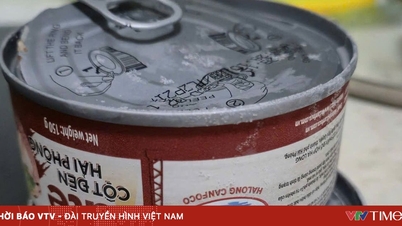
DNVN - The European Union (EU) and Thailand's move towards signing a Free Trade Agreement (ETFTA) could increase competitive pressure on Vietnamese tuna products in the EU market.
Following the entry into force of the EU-Vietnam Free Trade Agreement (EVFTA), Vietnam's tuna exports to the EU have grown continuously. Export turnover increased from US$136 million in 2020 to US$176 million in 2023, a 30% increase.
Entering 2024, exports to this market bloc continued to show positive growth. By the end of April 2024, tuna exports to the EU reached nearly $67 million, an increase of 38% compared to the same period in 2023.
According to Ms. Nguyen Ha, a tuna market expert at the Vietnam Association of Seafood Processing and Export (VASEP), Vietnam is currently the 7th largest supplier of tuna to the EU market after Ecuador, Seychelles, Papua New Guinea, Mauritius, the Philippines, and China. Thailand ranks 17th. Compared to Thailand, Vietnam's production capacity is significantly lower.
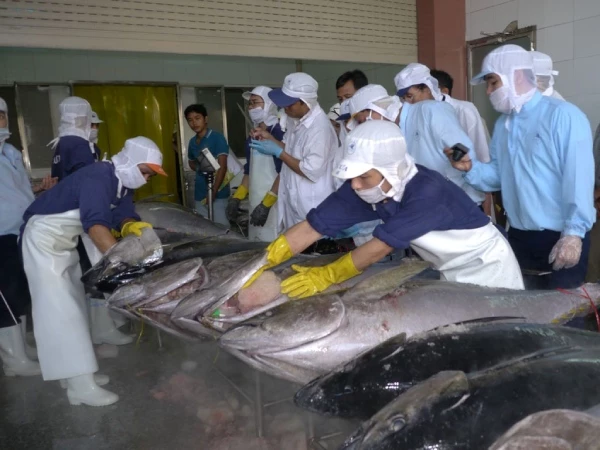
The entry into force of the ETFTA will increase competitive pressure on Vietnamese tuna in the EU market.
After no longer benefiting from the Generalized System of Preferences (GSP) in 2025, Thailand's tuna exports to the EU have been steadily declining. The value of Thai tuna exports to the EU fell from $155 million in 2015 to $41 million in 2023, a decrease of 74%.
According to expert Nguyen Ha, if the FTA between the EU and Thailand is signed, the EU will likely have access to the Thai seafood market with a 0% tariff, including tuna. Currently, Thai tuna exported to the EU is subject to a 24% tariff – the highest in the world – following Thailand's loss of tariff benefits from the EU's Generalized System of Preferences (GSP) in 2015. Thailand currently exports only a small amount of yellowfin tuna to the EU for processing.
Thailand has the capacity to supply 600,000 tons of canned tuna annually, higher than Vietnam. However, unlike Vietnam, Thailand does not have its own fishing fleet. Therefore, the country relies primarily on imported raw materials rather than from its own fishing.
According to Ms. Ha, if we compare the raw materials with purely domestic sources (tuna caught by the national fishing fleet), Vietnam has an advantage. However, due to the small size of the fishing fleet, Vietnam's domestic supply of raw materials is insufficient to meet the needs of export production.
Furthermore, while Thailand has had its yellow card lifted, Vietnam has not yet achieved this. Therefore, if the ETFTA comes into effect, although the terms of the agreement are not yet clear, it will certainly facilitate Thai tuna exports to the EU. This will increase the competitive pressure on Vietnamese tuna in this market.
Thu An
Source: https://doanhnghiepvn.vn/kinh-te/thach-thuc-nao-cho-ca-ngu-viet-neu-eu-va-thai-lan-ky-etfta/20240530051902882



















































































Comment (0)