

A mother's confession
In a social media post, a woman named Aila candidly shared that after a year of enduring workplace bullying, she began to find herself easily angered and frequently hitting her 8-year-old son.
Realizing she was having psychological and behavioral problems, the mother shared her story on social media, hoping to receive support and advice.
"I've been enduring workplace bullying for the past year. The unhealthy competition at work is so intense that it leads to negative feelings. Even when I achieve good results, I can't feel happy. Colleagues' gossip, jealousy, and underhanded tactics have severely impacted my mental health."
"Faced with negative issues at work, I find myself becoming easily irritable and often scolding my young son. Looking back, I realize I was unreasonable and even somewhat cruel to him. I fear that the negativity at work has caused me to lose my composure...", the mother confided.
The woman said she valued her job and didn't want to quit easily. She had raised the issue with her superiors, but the situation hadn't improved.
Aila said that although she recognizes her own shortcomings in how she treats her child, and sometimes even feels regret, she still can't control herself whenever anger arises.
Aila's story is sparking debate on Malaysian social media, opening up deeper discussions about workplace bullying and the mental health of parents.
"Often, parents' anger isn't due to what the children have done. The real reason behind the anger is dissatisfaction with married life, work pressure, financial difficulties... Parents easily vent their psychological frustrations on their children," one netizen commented.
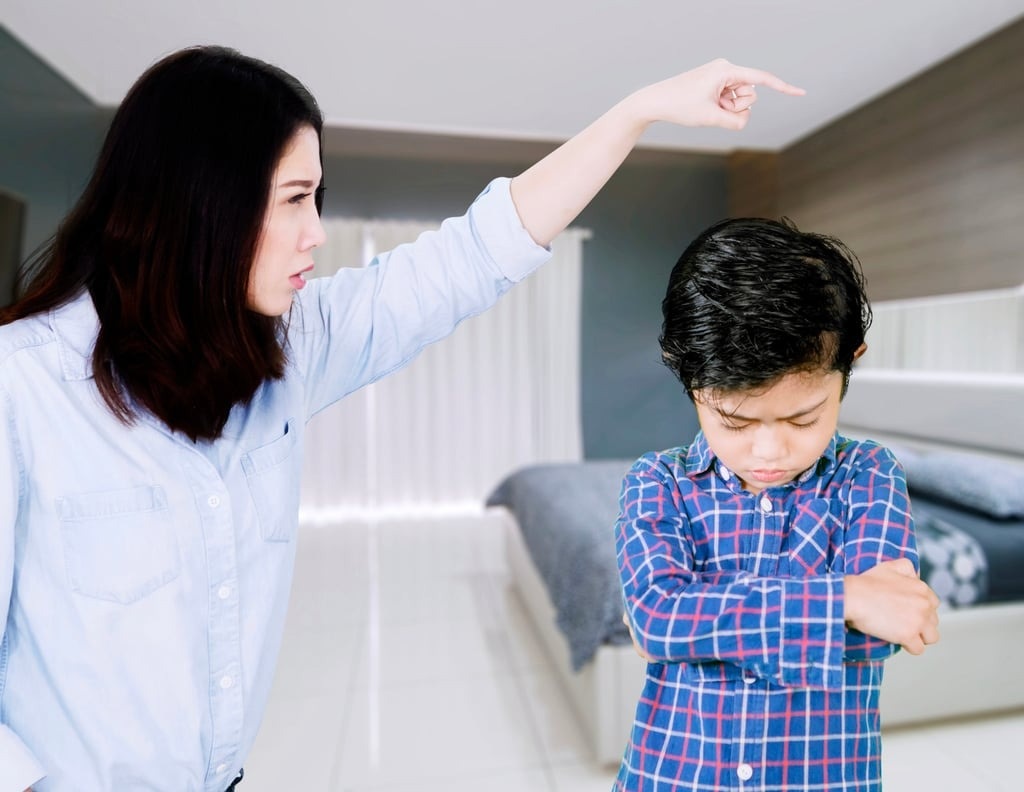
Parents should only discipline their children when they are calm (Illustrative image: SCMP).
How can parents manage their child's anger?
Life pressures are a common reason why parents lose control over their young children. However, once we calm down, we all realize that things would be much better if we could remain composed.
However, when anger flares up, parents' ability to control themselves decreases significantly. This is also normal from a psychological perspective. Nevertheless, parenting requires parents to know how to control themselves, especially their anger, because uncontrolled anger is very harmful to raising children.
The most important thing parents need to remember about anger is not to act while angry. At that moment, parents tend to want to act immediately, to discipline their child right away, but that need is a result of anger "speaking up".
Parents should only discipline their children when they are calm. At that time, the advice will be more educational , and children will absorb it more easily.
Don't scold, lecture, or punish your child when you're angry. Angry parents will cause their children to imitate them. Meanwhile, controlling your own emotions and behavior is a crucial skill.
Young children observe their parents' anger. Parents who know how to handle their anger will teach their children self-control skills, even in their own anger. To manage anger, parents should keep a few things in mind.
Set limits on your anger.
Parents should set limits on their own anger when dealing with their children, for example, by not spanking, yelling, lecturing, or punishing them while they are angry.
In addition, parents also need to learn how to communicate with their children when they themselves are not in a good mood. Gently explain to your child: "Right now, Mom and Dad are tired, so please be quiet, do your work, and don't misbehave at this time." Such simple, gentle instructions can have surprisingly positive effects.

Life pressures are a common reason why parents lose control over their young children (Illustrative image: iStock).
Stay calm before acting.
When you find yourself getting angry, tell yourself: stop, take a deep breath. Remember that there's no urgency, and you don't need to act immediately.
Find a reason to laugh, even if it's forced; you're sending a positive signal to your nervous system, helping to calm your emotions and making you feel more peaceful.
If you frequently get angry, take 20 minutes each day to sit in silence. Each time you manage your anger, you increase your self-control.
In reality, behind anger always lie fear, sadness, disappointment... you yourself must understand your deepest emotions to address the root of the problem.
"Withdrew"
When you're angry, allow yourself to temporarily retreat and only return when you've calmed down. When faced with your children and you find yourself angry, parents should temporarily return to their own room or corner.
If your child is old enough to sit alone, calmly say to them, "We're too angry to talk to you right now. We'll talk about this when we're calmer."
Pausing the conversation doesn't mean you're spoiling your child or feeling helpless. In fact, parents pausing the conversation helps children better understand the seriousness of the situation. Additionally, children see how their parents control themselves when angry.
If your child is young and you don't want to leave them alone, you can sit a little distance away from them and take deep breaths to calm yourself down.
Listen to your anger
The best way to deal with anger is to make an effort to regain composure, clearly identify the problem, and determine what needs to change to improve the situation. In parenting, the issue often lies with the parents themselves. Perhaps parents need to provide better guidance and establish clearer rules for their children to follow.
The more you vent your anger, the angrier you become.
We think we need to vent our anger to calm down, but in reality, letting anger erupt only makes us lose control, and the anger can escalate far beyond what we anticipated. When we calm down, we may feel regret for hurting our children in a moment of excessive anger. The answer to all anger is to stay calm first.
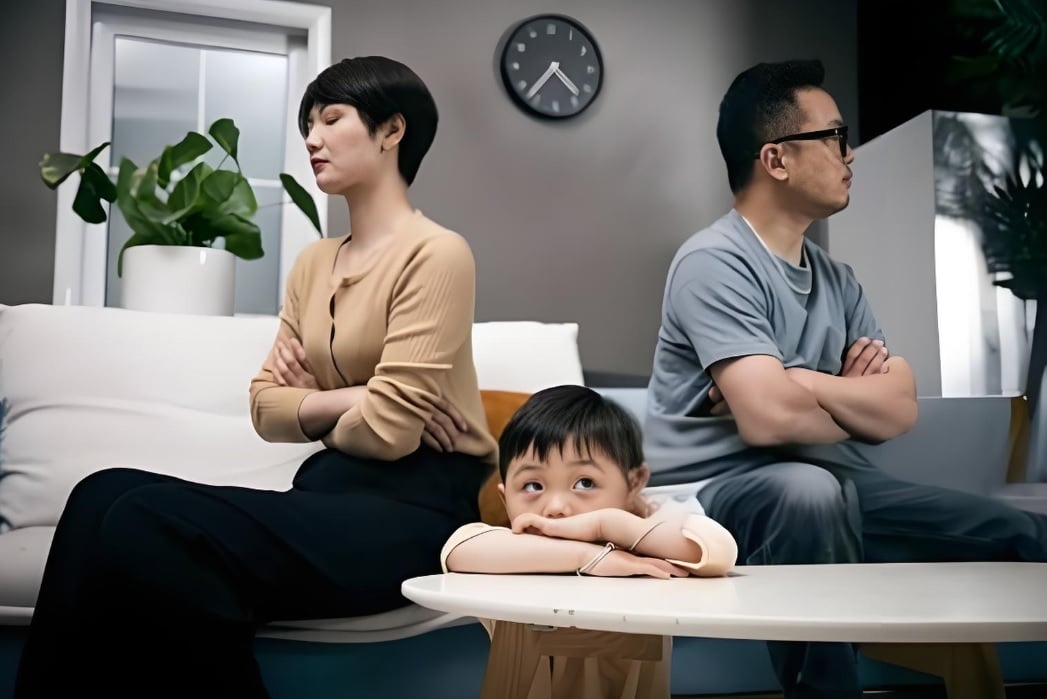
Parents who are frequently angry create a negative atmosphere in the family (Illustrative image: Getty Image).
Don't punish your child too quickly.
Develop the habit of not acting when you're angry. Postpone dialogue and punishment until you've calmed down. During that time, parents and children should continue with their normal work and studies.
When sitting down to talk, you need to listen to your child, respond appropriately and respectfully. The most important thing in every conversation about a child's mistakes is for parents to help their children establish boundaries. This will help children learn self-control and reduce actions that anger or upset their parents.
Do not spank your child.
Education experts never endorse corporal punishment of young children, as this practice negatively impacts their development and can leave long-lasting psychological effects.
Parents should always maintain self-control in front of their children. When they realize they are too angry and might lose control, they should leave the room. If parents have already acted out of control towards their child and feel remorse, they should sincerely apologize.
Don't threaten
While corporal punishment is not advisable, parents should also avoid threatening their children verbally, as this instills unhealthy fear. Furthermore, threats are often exaggerated; when children realize the truth, their parents' words lose their authority, and the children become even more stubborn and disobedient.
Control your voice and language.
The more you try to keep your voice calm, the faster you'll regain your composure. This also helps calm your child. Parents raising their voices and using angry words only causes both parents and children to lose control.
Don't harbor anger indefinitely.
Parents who are easily angered create a negative atmosphere in the family, so don't get angry easily. You need to know what is important in raising your children.
Your child's small actions, for example, leaving things messy, might annoy you, but don't get easily angered by trivial matters. Remember, the more cheerful, gentle, and close you are to your child, the more they will listen to you.
According to SCMP/Psychology Today
Source: https://dantri.com.vn/giao-duc/tam-su-chua-chat-cua-nguoi-me-hanh-ha-con-trai-vi-bi-bat-nat-noi-cong-so-20240913183327250.htm
![[Photo] Two flights successfully landed and took off at Long Thanh Airport.](/_next/image?url=https%3A%2F%2Fvphoto.vietnam.vn%2Fthumb%2F1200x675%2Fvietnam%2Fresource%2FIMAGE%2F2025%2F12%2F15%2F1765808718882_ndo_br_img-8897-resize-5807-jpg.webp&w=3840&q=75)



































































































Comment (0)