

On February 28th, The Outbox Company, a leading market research and data analytics firm focusing on the tourism and hospitality sector in Asia, officially released its quick report, "Vietnam's Destination Brand Strength from the Perspective of Asian Source Markets."
This report analyzes Vietnam's tourism brands as a destination in 2024, assessed across Asian markets using data from Destination Navigate, conducted by The Outbox Company. The measured indicators include Destination Brand Strength (DBS), NPS (Net Promoter Score), awareness, attractiveness, and likelihood of visiting Vietnam within the next 12 months for tourists from eight major Asian source markets (excluding China).
The report also assesses the effectiveness of Vietnam's tourism promotion and compares Vietnam's competitiveness with other destinations in Southeast Asia; at the same time, it provides data to support destination managers and businesses in the industry in better understanding Vietnam's position, thereby helping to optimize strategies for attracting international tourists.
An Asian traveler's perspective on the strength of Vietnam's destination brand.
The Destination Brand Strengths (DBS) index reflects the level of recognition and image of Vietnam in key source markets in the region. The index is designed to measure both the desire to visit (Propensity to Visit) and the ability to recommend a destination (Net Promoter Score). A strong brand score indicates that tourists are not only interested in visiting but also tend to recommend the destination to others, demonstrating a solid overall brand position.
Data shows that Thailand, Indonesia, and India are the three markets with the highest ratings for Vietnam's tourism brand, with scores of 142.8, 138.8, and 138.2 respectively. This indicates that Vietnam has a positive brand image and high recognition in these markets. Conversely, Japan and Taiwan (China) have the lowest scores, at 106.9 and 103.4 respectively, reflecting limited desire and interest from tourists.
Vietnam's average score across the Asian market is 127.5, indicating that the Vietnamese tourism brand has a certain competitive position but still has areas for improvement. To capitalize on its current advantages, Vietnam needs to strengthen its destination brand marketing campaign and expand the introduction of new tourism products in markets with high brand recognition. Simultaneously, promoting destination marketing strategies to markets with limited brand effectiveness, such as Japan and Taiwan (China), is necessary to enhance brand awareness and attract interest from tourists in these markets.
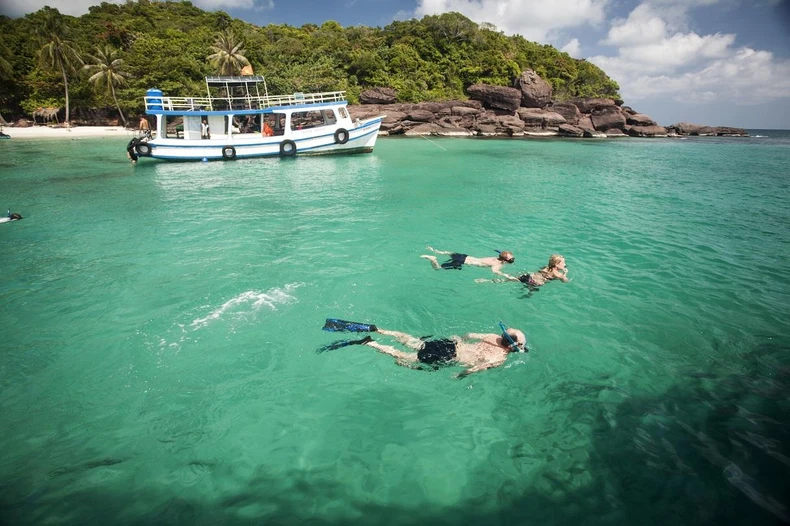 |
| Tourists enjoy their holiday on Phu Quoc Island. (Photo: ShutterStock) |
Indonesian, Thai, and Indian tourists are ready to recommend Vietnam as a destination.
The Net Promoter Score (NPS) measures the likelihood that travelers will recommend a destination to others. According to data from the report, Indonesia, Thailand, and India have the highest NPS scores for Vietnam, at 51.0, 49.3, and 39.0 respectively, indicating that travelers from these markets are not only satisfied with their experience in Vietnam but also tend to recommend it positively to friends and family.
Conversely, Japan and Taiwan (China) continue to be the markets with the lowest recommendation readiness index in the region, at -3.4 and -12.8 points respectively. Negative scores indicate very low satisfaction levels among tourists from these two markets, leading to a low likelihood of them recommending Vietnam as an ideal destination. With negative NPS scores, tourists not only discourage others from visiting Vietnam but may also share negative experiences, significantly impacting the destination's image. This raises the challenge of improving the quality of the actual tourist experience and adjusting marketing strategies to better suit the characteristics and needs of Japanese and Taiwanese (China) tourists.
Vietnam's average NPS score in the Asian market is 26.0, reflecting a positive image of Vietnamese tourism but highlighting the need to improve the overall experience to increase satisfaction and encourage tourists to recommend the destination. For markets with high NPS scores, leveraging word-of-mouth marketing, creating incentive programs for repeat visitors, and promoting content based on tourist experiences are crucial.
Vietnam's Destination Brand Health Index
The report also analyzes the health of Vietnam's destination brand in each specific market by measuring four key indicators: Destination Knowledge Score, Destination Familiarity Score, Destination Appeal Score, and Propensity to Visit for tourists over the next 12 months.
Accordingly, Vietnam's brand as a destination generally maintains a relatively high level of attractiveness for repeat visits across all markets in the Asian region. The image of Vietnam as a destination is also well-represented to tourists in most markets; except for some markets such as Japan, Taiwan (China), and Malaysia, which still have limited understanding of Vietnam as a destination.
The Vietnam destination awareness index across all surveyed markets was at a low average level, indicating that the rate of repeat visits to Vietnam among tourists from these Asian markets remains relatively limited. South Korea had the highest percentage of tourists with a good understanding of Vietnam, at 27.3 percentage points.
The likelihood of tourists visiting Vietnam in the next 12 months also varies greatly. India and Thailand have the highest consideration rates for Vietnam as a destination for their upcoming trip, with scores of 37.3 and 36.3 respectively. Meanwhile, Japan and Taiwan (China) have the lowest consideration rates, at 17.3 and 19.7 respectively.
The effectiveness of Vietnam's tourism communication campaign.
In addition, the report also provides data and information measuring the effectiveness of marketing campaigns and communication activities for Vietnam's tourism destinations in Asian markets.
Data from Outbox's survey shows that the level of access to Vietnam's tourism marketing information, both directly and indirectly, among Asian tourists is currently only at an average level.
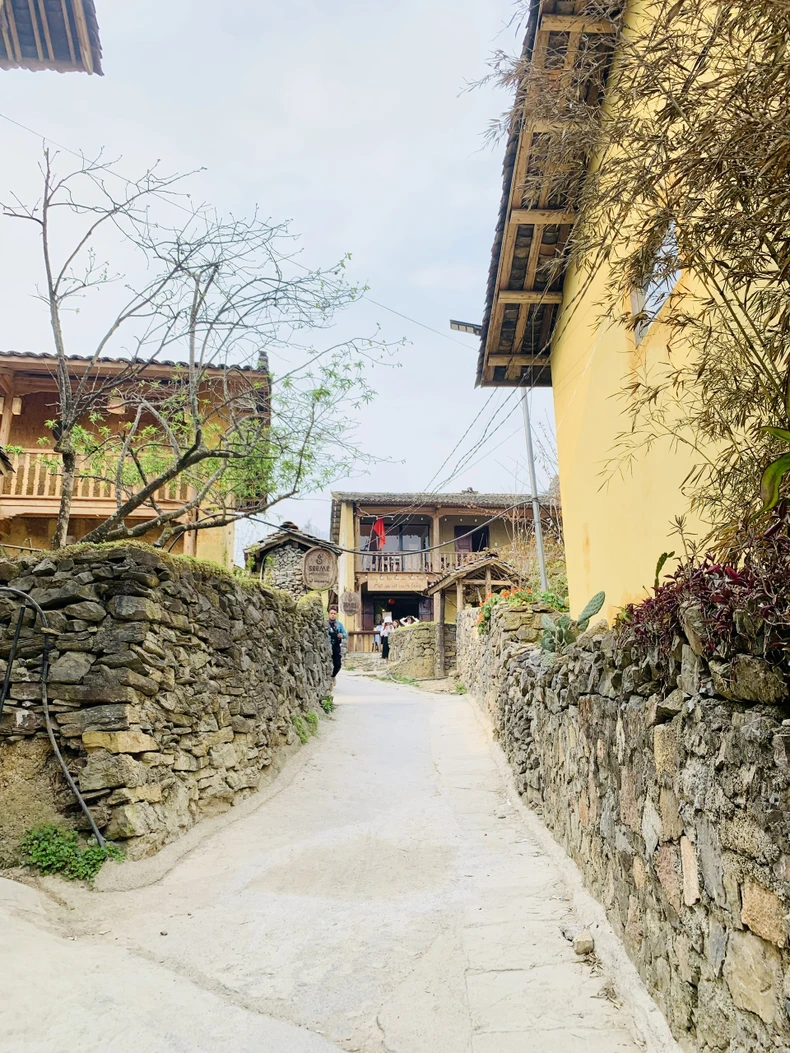 |
A peaceful corner in Lo Lo Chai village, Ha Giang . (Photo: NGOC BICH) |
Thailand and Taiwan (China) are the two markets with the highest percentage of tourists reporting seeing Vietnamese tourism promotions, at 67% and 61% respectively. South Korea and Japan also have relatively high awareness levels, at 60.4% and 57.7% respectively. These are all traditional and key markets for Vietnamese tourism in recent years. The positive results of communication activities partly reflect the diversity of marketing channels for Vietnamese tourism in these markets, including both direct campaigns by Vietnamese tourism agencies and indirect campaigns through tourism businesses.
Conversely, Singapore has the lowest level of awareness of Vietnamese tourism marketing information, at only 38.9%. Malaysia and India have as many as 51.7% of tourists who do not remember or have never seen Vietnamese tourism advertisements, indicating the need for a stronger communication strategy to improve brand awareness in these two markets.
There is a need to improve brand marketing and positioning of Vietnam as a tourist destination.
Although Vietnam's tourism brand received relatively positive DBS scores in most of the surveyed Asian markets, a comparison with top destinations in Southeast Asia (including Thailand, Singapore, Malaysia, and Indonesia) reveals significant limitations in terms of competitiveness.
Vietnam's tourism brand does not lead in brand strength index in all markets, even in the South Korean market, which has consistently ranked first in terms of visitor numbers over the years. In this market, Vietnam's DBS index ranks only second in the region, behind Singapore.
Within the Southeast Asian regional markets, Thailand is the market where Vietnam recorded the most positive DBS (Distribution Base) index, ranking second after Singapore. For most other Southeast Asian markets, Vietnam's tourism brand remains very limited compared to its competitors. This partly reflects the fact that the level of attention and investment in promoting Vietnamese tourism is still not commensurate with its potential.
In other key markets such as Taiwan (China), Japan, or high-growth potential markets like India, Vietnam's tourism brand also appears relatively modest compared to neighboring countries, ranking at the bottom or near the bottom in most markets.
Annual visitor growth reflects the development potential of tourism at each destination, but indicators measuring brand strength and destination health provide regulators with a more comprehensive view of the sustainable development capacity of that destination in target markets. Indicators measuring Vietnam's tourism brand in 2024 from the report show that although still witnessing positive growth in visitor numbers across markets, Vietnam's tourism sector still faces many limitations in brand marketing and destination positioning.
This has the potential to threaten the stable development and competitiveness of Vietnam's tourism destination in the future; requiring a new approach in thinking and action to improve the effectiveness of marketing the Vietnamese tourism brand.
Source: https://nhandan.vn/suc-manh-thuong-hieu-diem-den-viet-nam-qua-goc-nhin-cua-cac-thi-truong-nguon-chau-a-post862434.html






















































































Comment (0)