(NLĐO) - Zircon crystals remaining from the Holocene epoch have revealed the timing of an event crucial for the beginning of life on Earth.
In a study recently published in the journal PNAS , scientists examined nearly 1,000 zircon specimens collected from the Jack Hills region of Australia, which holds crucial geological evidence of Earth's early stages.
The results showed that over 35% of these zircons belonged to the S type, a crystal group representative of plate tectonics.
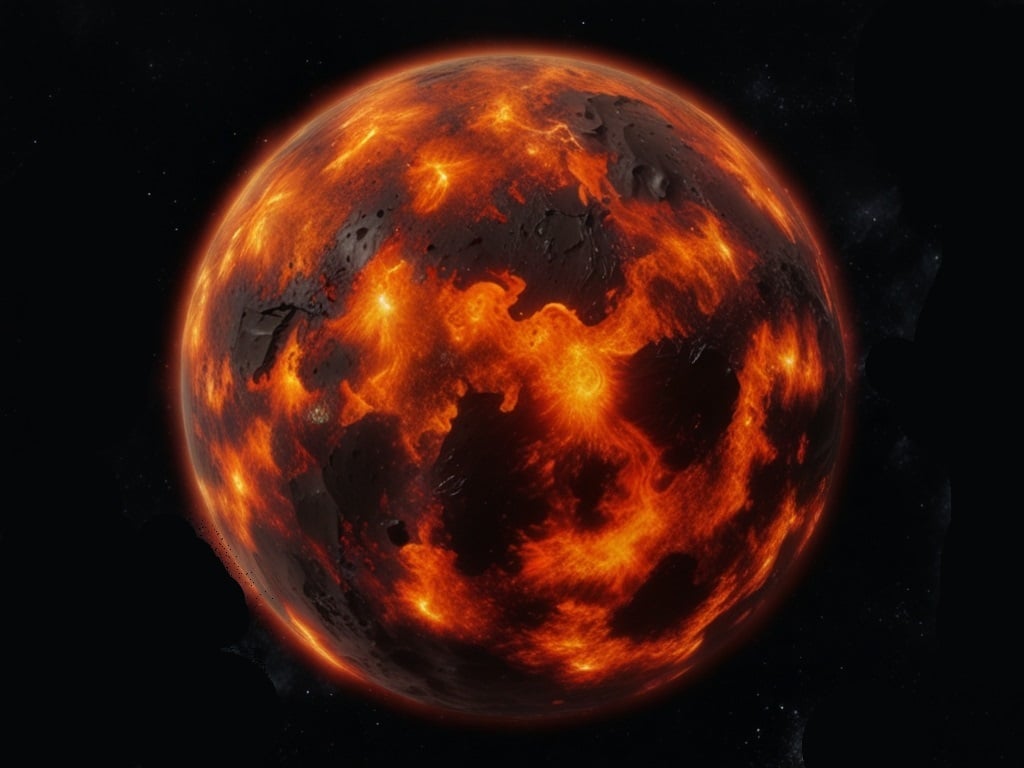
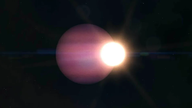
Earth is "scorching hot" during the Fire Age - Image AI: Anh Thu
Plate tectonics is the process by which tectonic plates—which can be simply understood as pieces of the Earth's crust—move, slide over each other, rise from the mantle, or sink.
![[GALLERY] Google's free AI feature is causing a sensation, Vietnamese people are using it a lot.](https://vphoto.vietnam.vn/thumb/192x108/vietnam/resource/IMAGE/2026/06/24/1782277759727_ni-1-png.webp)


Although it causes catastrophic events—from the merging and splitting of continents to earthquakes and volcanic eruptions—plate tectonics also plays a crucial role in stabilizing the climate and atmosphere, maintaining the planet's chemical balance.
Therefore, plate tectonics is one of the necessary conditions for Earth to give birth to and sustain life.
Previously, it was thought that this process only began after or at the end of the Fiery Eon, the Earth's "fireball" phase, which lasted from the Earth's conception until 3.8 billion years ago.
However, among the S-type zircon recently identified in Australia, some date back as far as 4.2 billion years.
This is evidence of the beginning of tectonic activity.
During the Volcanic Era, the Earth possessed an atmosphere saturated with ammonia and methane, which eventually condensed into an ocean that covered the entire planet. It was also during this period that the Earth gradually cooled, forming its solid outer crust.

These 4.2-billion-year-old zircon "treasures" reveal that at that time, the outer crust had not only formed but had also broken down into tectonic plates, beginning a crucial transition for the planet's evolution.
This suggests that our planet experienced a much more turbulent and rapidly developing early period than previously thought.
The work was led by a team of authors from the Institute of Geology and Geophysics and the University of Earth and Planetary Sciences, both under the Chinese Academy of Sciences.
Source: https://nld.com.vn/su-that-tu-bau-vat-42-ti-nam-196240717114006392.htm
![[Image] Paris's oldest bridge goes viral after transforming into a giant cave.](https://vphoto.vietnam.vn/thumb/1200x675/vietnam/resource/IMAGE/2026/06/24/1782283441197_ndo_br_dsc05314-jpg.webp)

![[Photo] Opening Ceremony of the 13th National Congress of the Ho Chi Minh Communist Youth Union](https://vphoto.vietnam.vn/thumb/1200x675/vietnam/resource/IMAGE/2026/06/24/1782286753905_ndo_br_1-8510-jpg.webp)

![[Photo] Overview of the renovation and upgrading of the Ho Chi Minh Museum - Ho Chi Minh City Branch](https://vphoto.vietnam.vn/thumb/1200x675/vietnam/resource/IMAGE/2026/06/24/1782287051250_ndo_br_01-jpg.webp)







![[GALLERY] Google's free AI feature is causing a sensation, Vietnamese people are using it a lot.](https://vphoto.vietnam.vn/thumb/402x226/vietnam/resource/IMAGE/2026/06/24/1782277759727_ni-1-png.webp)