

The transportation infrastructure of Thu Duc City (Ho Chi Minh City) will open up many new possibilities, such as the development of 9 urban railway lines; connecting Thu Duc City with Ho Chi Minh City and Long Thanh International Airport, meeting 50-60% of future travel needs.
On February 6th, Thu Duc City (Ho Chi Minh City) held a conference to announce the general planning project for Thu Duc City until 2040 and to promote investment attraction.
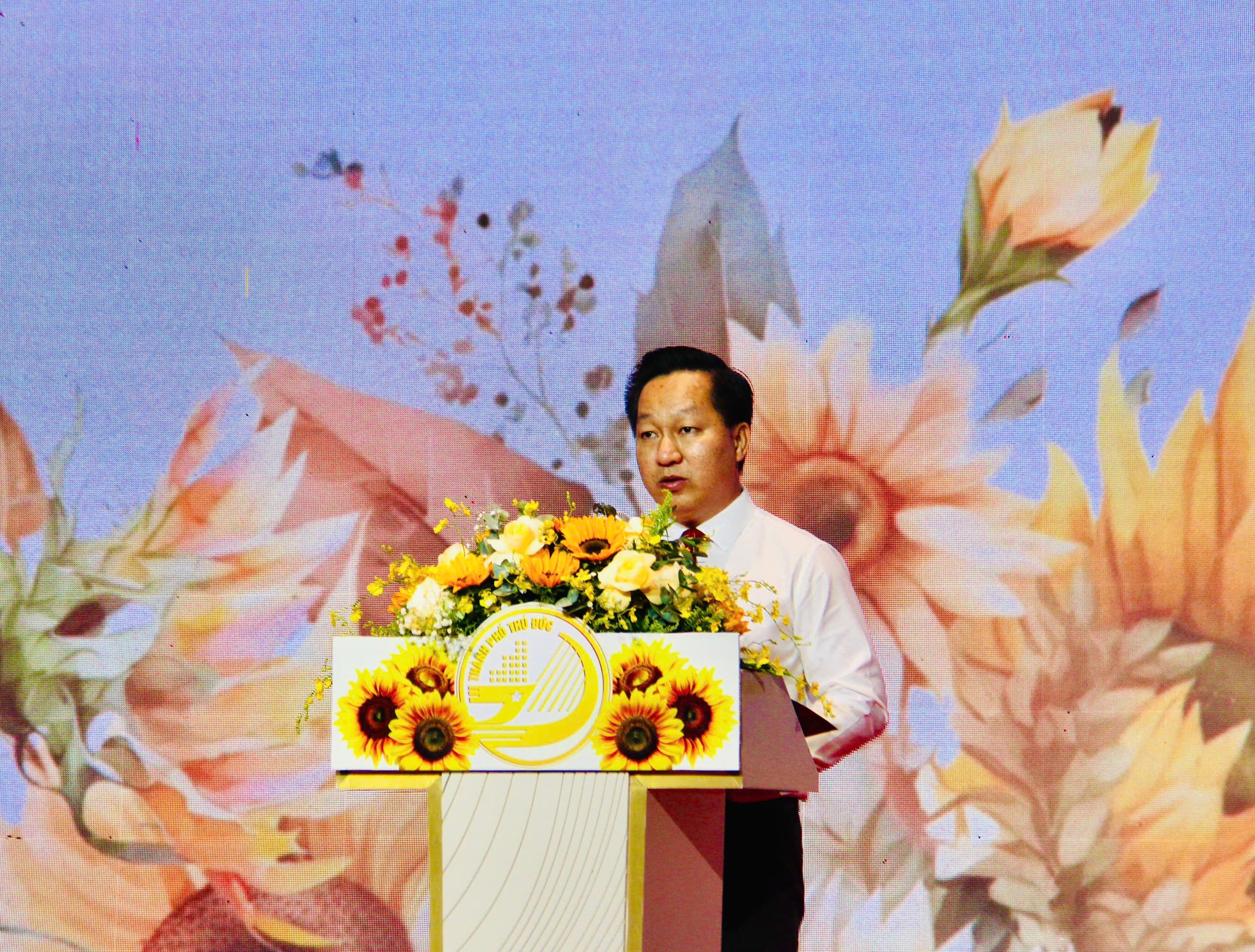
Mr. Hoang Tung, Chairman of the People's Committee of Thu Duc City, at the conference announcing the general planning project of Thu Duc City until 2040 and promoting investment attraction.
Ho Chi Minh City's economic leadership area
Speaking at the conference, Mr. Hoang Tung, Chairman of the People's Committee of Thu Duc City, shared that on January 21, the Prime Minister approved the general planning project for Thu Duc City, part of Ho Chi Minh City, until 2040.
The approved master plan for Thu Duc City until 2040 plays a particularly important role and has significant meaning for the city's development. It serves as a crucial legal basis for guiding spatial development, organizing economic and social infrastructure, and planning land use… in order to maximize the potential and strengths to realize the goal of transforming Thu Duc City into a highly interactive and innovative urban area by 2040; a leading economic hub of Ho Chi Minh City and the Ho Chi Minh City metropolitan area through knowledge-based economic activities; and initially becoming a national financial center, aiming towards the international region.
According to the master plan, Thu Duc City is a type 1 urban area under Ho Chi Minh City; it is a transportation hub of the Southeast region for road, rail, maritime and inland waterway transport, and is the eastern center for economy, science and technology, culture, education and training...
Thu Duc City is projected to have a population of approximately 1.8 million by 2030, around 2.6 million by 2040, and approximately 3 million after 2040.
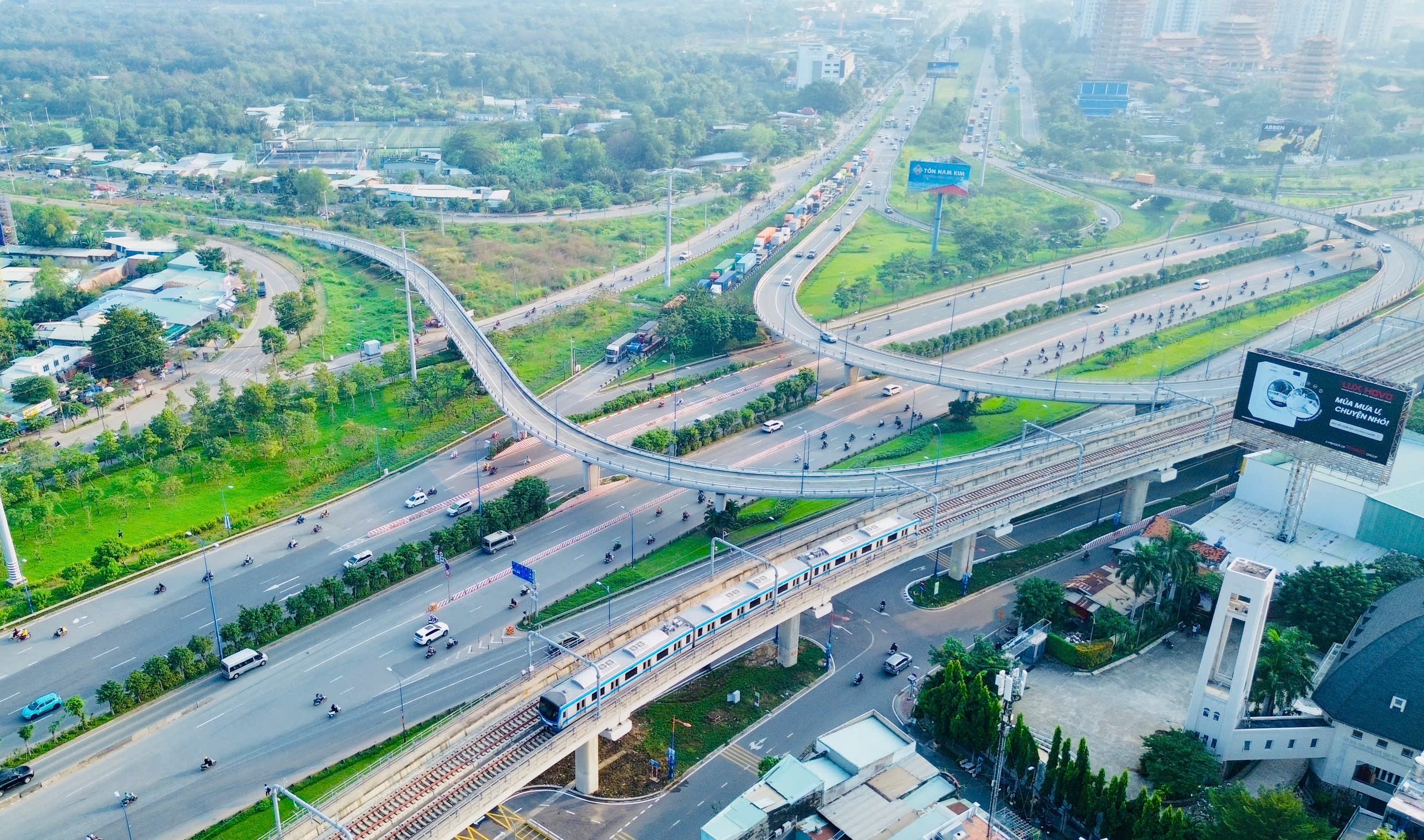
Thu Duc City will develop 9 urban railway lines in the future.
In terms of spatial planning, Thu Duc City is divided into 9 zones corresponding to 11 key development areas, each linked to its own cultural, historical, and potential advantages. These zones have been studied and critically analyzed with utmost scientific rigor, intelligence, and responsibility to maximize the value of each zone, driving economic development, attracting investment, creating job opportunities, and providing high-quality social amenities for residents. Among these key development areas are also centers of innovation and creativity, fostering a knowledge-based economy and developing in line with smart city trends.
Mr. Tung assessed that the master plan will have a profound and positive impact on many aspects of Thu Duc City, from the management and operation of the government to the activities of citizens and businesses, opening up many new development directions thanks to the connectivity and synchronization through 9 sub-area planning projects. This will, in turn, resolve many difficulties in construction permitting and other legitimate needs of citizens and businesses.
Nine metro lines will connect Ho Chi Minh City and Long Thanh Airport.
Regarding transportation infrastructure, Thu Duc City will open up many new opportunities, such as developing 9 urban and inter-regional railway lines, connecting Thu Duc City with the rest of Ho Chi Minh City and Long Thanh International Airport, meeting 50% - 60% of travel demand. Simultaneously, urban development will follow a transport-oriented development (TOD) approach; developing many new roads with inter-regional connectivity, such as the road connecting Cat Lai - Phu Huu Port - Ring Road 3 interchange - Ho Chi Minh City - Long Thanh - Dau Giay Expressway, and the road connecting Ring Road 2 to the Ho Chi Minh City - Chon Thanh Expressway.
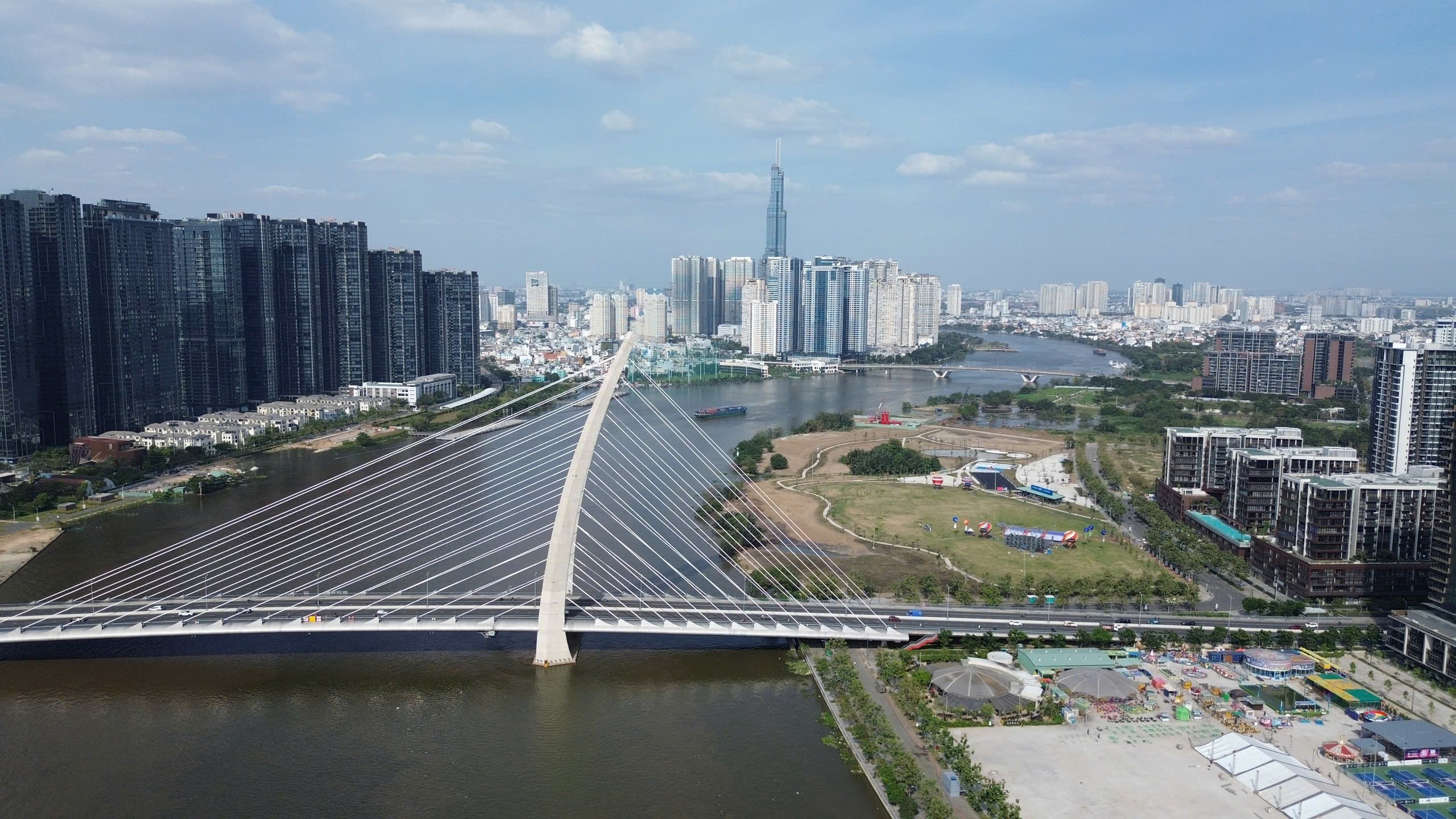
Thu Duc City is being developed into a creative urban area, a leading economic hub of Ho Chi Minh City.
Urban spaces are planned with green spaces and water bodies as the central focus, organizing a system of rivers, canals, and streams (Saigon River, Dong Nai River, Tac River, Chiec Stream, Trau Trau Stream, Go Cong Stream, Ong Nhieu Stream, etc.) connected with a system of public parks and green spaces, forming a distinctive spatial structure while also serving as drainage and water storage corridors.
Thu Duc City will increase the land area for urban-level educational facilities by nearly five times, the land area for urban-level medical facilities by more than ten times, and the land area for urban-level cultural and sports facilities by approximately three times, including the National Sports Complex in the Rach Chiec area, as well as the area of parks and green spaces, which will reach 1,800 hectares.
Speaking at the conference, Chairman of the Ho Chi Minh City People's Committee Phan Van Mai stated that the Thu Duc City master plan, with its 9 zones, 11 key areas, and main development orientations for each zone, serves as a basis for Thu Duc City to attract domestic and international investors to invest in key sectors within each zone.
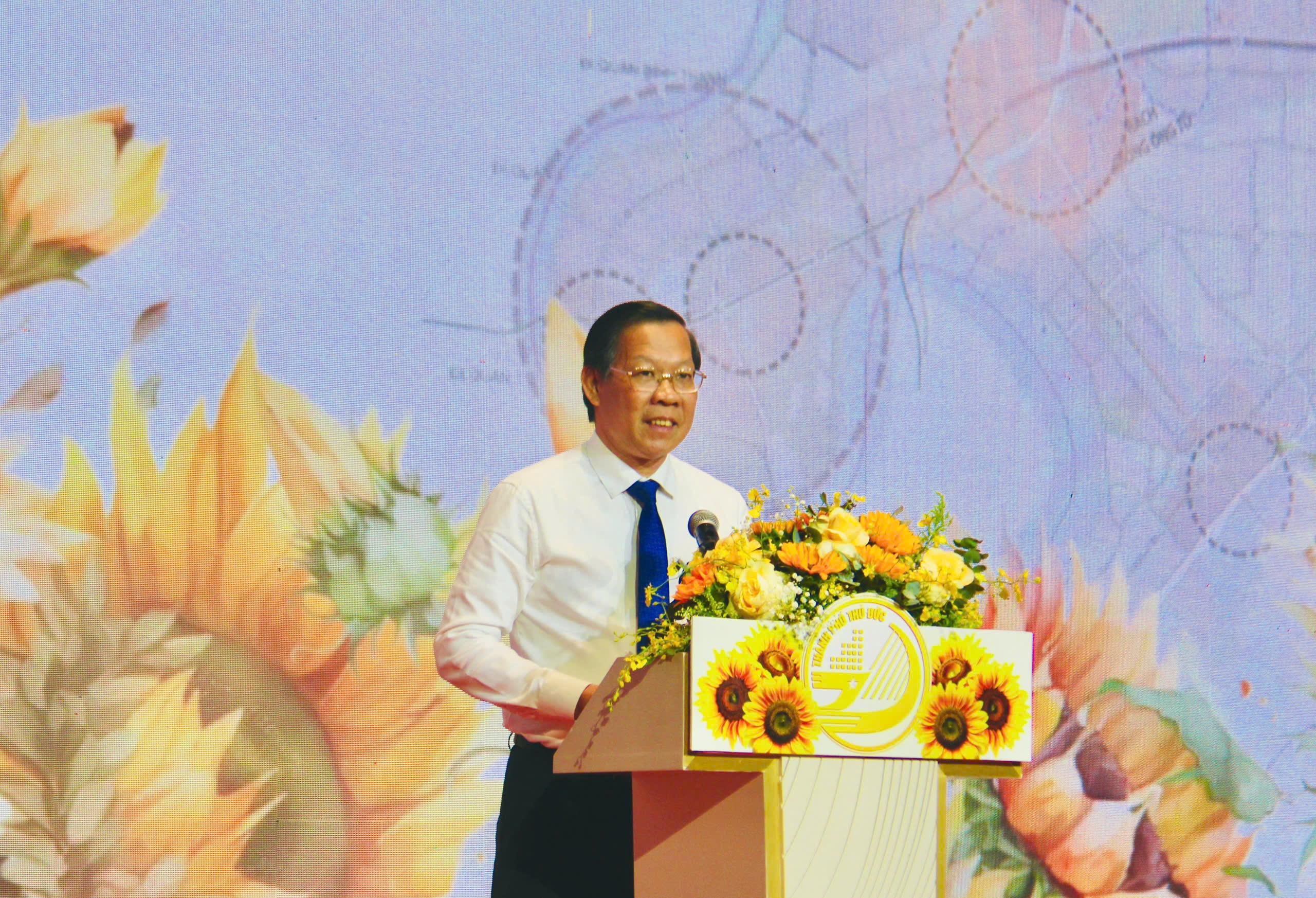
Mr. Phan Van Mai, Chairman of the People's Committee of Ho Chi Minh City.
To ensure the effective implementation of the Thu Duc City planning, Mr. Mai suggested that the Thu Duc City People's Committee widely publicize the planning project to each ward, neighborhood, household, and business... so that people and businesses understand the plan; creating high consensus among the people, contributing to the effective implementation of the plan and projects in the area.
At the same time, Thu Duc City needs to coordinate with relevant departments and agencies to develop detailed plans and projects, including organizing the planning of the actual situation in 9 development zones, to be implemented in stages; urgently complete the zoning plans no later than September 2025.
Thu Duc City also needs to focus resources on attracting investment to complete the Thu Thiem area in conjunction with the construction of an international financial center. Regarding the Truong Tho area, Thu Duc City should coordinate with the Vietnam National University Ho Chi Minh City to complete the investment in the National University Technology Park; and urgently implement the expansion of the high-tech zone before 2030.
Mr. Mai also suggested that Thu Duc City strengthen development cooperation with neighboring areas, not only with districts of Ho Chi Minh City but also with areas closely related to Ho Chi Minh City such as Binh Duong, Dong Nai, and Ba Ria - Vung Tau, leveraging the strengths and advantages of each locality in overall development; invest in the development of high-quality human resources, focusing on effectively utilizing the intellectual resources of education and training to serve the overall development goals of Thu Duc City and Ho Chi Minh City; and strongly and effectively reform administrative operations to serve the people.
On this occasion, Chairman of the Ho Chi Minh City People's Committee Phan Van Mai called on domestic and foreign investors to boldly invest in Thu Duc City, Ho Chi Minh City, with a commitment to support investors; and to listen to the contributions of experts and investors in implementing the Thu Duc City planning as well as Ho Chi Minh City planning to achieve the best results.
Source: https://www.baogiaothong.vn/thanh-pho-thu-duc-cong-bo-do-an-quy-hoach-se-co-9-tuyen-duong-sat-do-thi-192250206094050232.htm

![[Photo] General Secretary To Lam attends the inauguration ceremony of Si Pa Phin multi-level boarding school.](/_next/image?url=https%3A%2F%2Fvphoto.vietnam.vn%2Fthumb%2F1200x675%2Fvietnam%2Fresource%2FIMAGE%2F2026%2F01%2F31%2F1769840655651_ndo_br_z7486540481209-f37c7e00a962aec2a061c64b7db569ef-jpg.webp&w=3840&q=75)


![OCOP during Tet season: [Part 3] Ultra-thin rice paper takes off.](/_next/image?url=https%3A%2F%2Fvphoto.vietnam.vn%2Fthumb%2F402x226%2Fvietnam%2Fresource%2FIMAGE%2F2026%2F01%2F28%2F1769562783429_004-194121_651-081010.jpeg&w=3840&q=75)


![OCOP during Tet season: [Part 2] Hoa Thanh incense village glows red.](/_next/image?url=https%3A%2F%2Fvphoto.vietnam.vn%2Fthumb%2F402x226%2Fvietnam%2Fresource%2FIMAGE%2F2026%2F01%2F27%2F1769480573807_505139049_683408031333867_2820052735775418136_n-180643_808-092229.jpeg&w=3840&q=75)



Comment (0)