

Spain's bilingual education policy, which aims to teach students in both Spanish and English, has attracted attention and achieved considerable success in recent years.
In 2023, Spain ranked 35th in the world for English proficiency and was assessed as "intermediate," according to the English Proficiency Index (EPI) ranking by the Swiss international education group EF Education First.
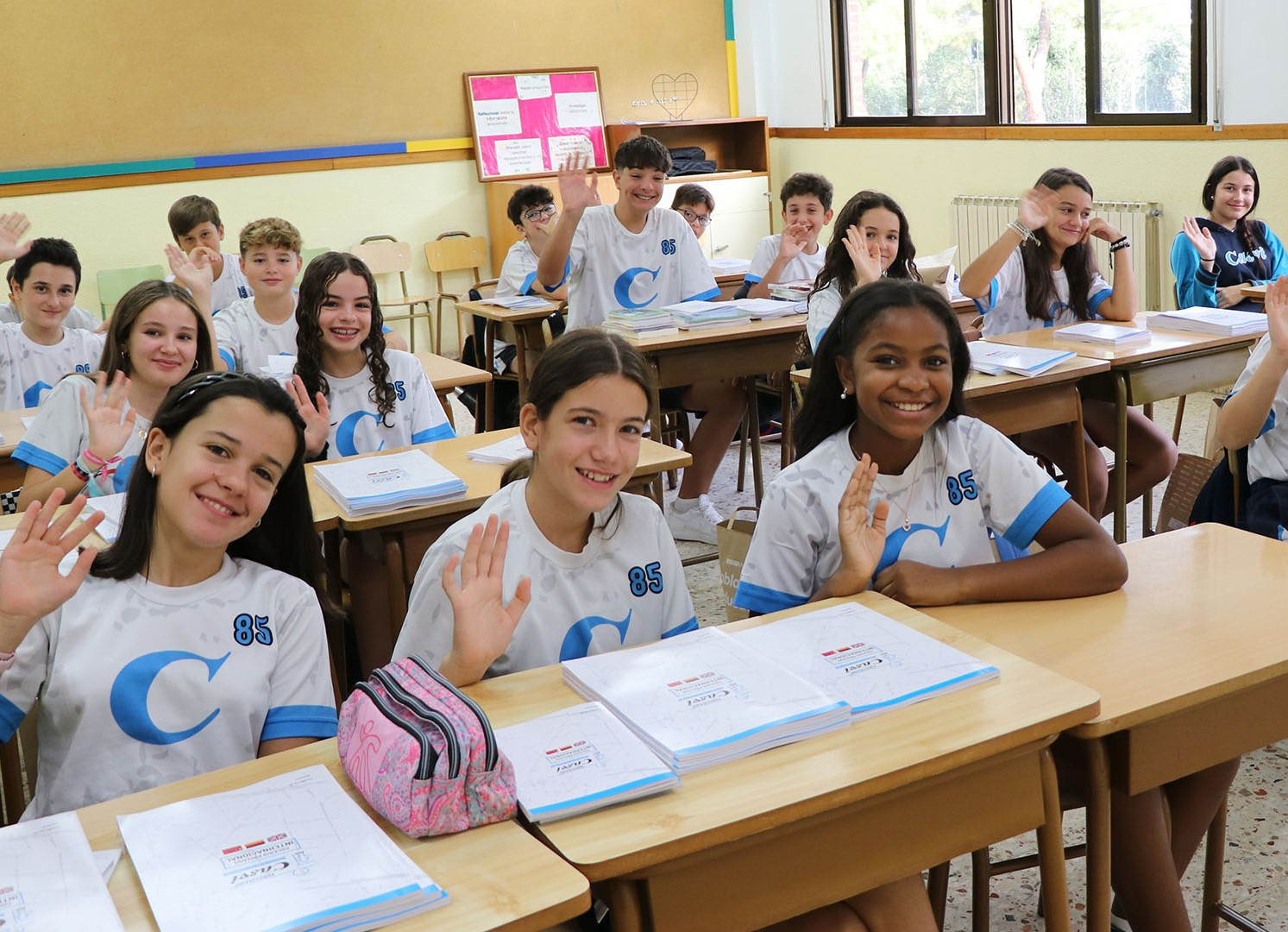
The bilingual policy was first introduced in 1996, through a collaboration between the Spanish Ministry of Education and the British Council, aiming to improve students' English proficiency, thereby enhancing their career opportunities and global competitiveness. The program is implemented in Spanish public schools.
By 2000, the regional governments of Spain began implementing their own bilingual programs, and since then the number of participating schools has exploded. To date, the program has reached 40,000 students in 90 preschools and primary schools and 58 secondary schools across 10 regions, according to the British Council Spain .
Expectations and reality
One of the biggest problems with bilingual education policies in Spain is the disparity between expectations and actual results.
Although the program has expanded rapidly, increasing by nearly 500% in a decade, it has also faced criticism for failing to meet the high expectations of parents and educators. The discussion about how to improve this bilingual model remains a hot topic in Spanish education.
Parents in Spain view bilingual education as a key to their children's future success, expecting that by enrolling them in bilingual schools, their children will become proficient in both Spanish and English. However, this is neither the goal of the policy nor reflects reality, according to the newspaper Ediciones El País .
"Parents need to understand that we are not aiming to create native-like speaking abilities. Our goal is practical fluency, helping students use English in real-life situations," said Professor María Luisa Pérez, an English language professor at the University of Jaén (Spain).
This perspective aligns with the English as a Linguistics (ELF) approach to learning English as an international language, emphasizing communicative ability over perfect pronunciation or grammar. According to ELF researchers, the most important thing is for students to be able to use English as an interactive tool, rather than speaking with the perfect native-level fluency of a native speaker.
“No student can speak their second language as well as their first. The focus should be on communicative ability, not perfection,” said Dr. David Marsh, an educational innovation who helped develop the Content-Language Integration (CLIL) methodology, in a recent interview.
He and his colleagues discovered that many European students, even after eight years of studying English, still struggled to speak fluently.
Challenges and highlights in implementation
While the goals of bilingual education policy are commendable, its implementation is uneven across Spain. One of the key issues is the varying demands placed on teachers in different regions.
Some regions only require teachers to have a B2 level in English, indicating fluency but not proficiency, while other regions require a C1 level, equivalent to a higher level of proficiency. This disparity has led to concerns that many teachers lack the necessary skills to teach subjects in English.

Furthermore, the lack of language advisors in bilingual public schools has exacerbated this problem. The original plan by the Spanish Ministry of Education and the British Council was to have advisors with experience in the British education system to assist in curriculum development.
However, in practice, these advisors have been replaced by school coordinators, often teachers with the best English skills but lacking experience in educational leadership or bilingual teaching. “We’re basically on our own, with no clear guidance or support,” shared Laura, a bilingual program coordinator in Madrid.
Despite the challenges, Spain's bilingual education policy has yielded some positive results. Studies, such as the Mon-CLIL report by the universities of Jaén and Córdoba, show that students in bilingual programs generally achieve better English proficiency than their monolingual peers.
According to the report, primary school students in bilingual programs scored an average of 1.23 points higher in English than their non-bilingual peers, while secondary school students scored 2.4 points higher.
Notably, the study indicated that bilingual students performed better than their peers in Spanish, scoring 0.46 points higher in primary school and 1 point higher in secondary school.
In other subjects such as geography, history, and science , bilingual students also performed slightly better, although the difference wasn't as dramatic. "Bilingual students have an advantage not only in English but also in other subjects, even Spanish," shared Ignacio, one of the report's lead researchers.
Lessons learned
Countries wishing to make English a second language can learn many lessons from Spain's bilingual education policy. First, realistic expectations are necessary. Instead of promising native-level English proficiency, the focus should be on equipping students with practical communication skills to effectively participate in a globalized world.
Starting language instruction early is also crucial. Countries should introduce English from primary school and provide ongoing support throughout students' learning. This approach ensures students build a solid foundation that can be further strengthened as they progress further in their education.
Another important lesson is prioritizing teacher training. Teachers need to be proficient in English and master effective teaching methods. This ensures that they not only convey subject matter in English but also help students better understand the language through the learning of other subjects.
Countries also need to ensure adequate resources are provided, including equal access to teaching materials and infrastructure. Without these resources, disparities in educational outcomes can emerge, as seen in some regions of Spain.
A key element in improving bilingual education is regular monitoring and adjustment of the curriculum. Continuous assessment helps identify areas for improvement in student learning outcomes and teacher effectiveness, allowing the education system to be more flexible and responsive.
Source: https://vietnamnet.vn/sai-lam-khi-nghi-giao-duc-song-ngu-giup-hoc-sinh-noi-tieng-anh-nhu-tieng-me-de-2325236.html



























































![[Photo] General Secretary To Lam meets with voters in Hanoi.](https://vphoto.vietnam.vn/thumb/402x226/vietnam/resource/IMAGE/2025/12/15/1765783098527_image.jpeg)


























Comment (0)