


Besides choosing high-quality vegetables, the process of preparing and washing them is also very important - Illustration photo
Washing vegetables isn't simply a matter of rinsing them with water; it requires specific methods to achieve the best cleaning results.
Why is it necessary to wash vegetables?
According to the Food Safety Department ( Ministry of Health ), washing vegetables thoroughly before use or processing is an important step in ensuring the safety and health of the food.
Food, especially fruits and vegetables, is often exposed to many external factors such as dirt, bacteria from the soil, or preservatives and pesticides during cultivation and transportation.
These factors not only affect the appearance of vegetables but also pose a significant health risk if they are not thoroughly washed before eating or preparing them.
Washing vegetables thoroughly effectively removes these contaminants, minimizing the risk of bacterial infection and foodborne illnesses.
In addition, this process also helps protect and maintain the nutritional content of fruits and vegetables, from vitamins and minerals such as vitamin C and beta-carotene to essential minerals for the body such as potassium and magnesium...
Before washing vegetables, choose fresh ones that are not bruised, rotten, or damaged. Remove wilted leaves, dirty roots, or inedible parts. Wash your hands thoroughly before preparing and washing vegetables. Use clean water to wash, avoiding pond or lake water which is easily contaminated with bacteria. The correct steps for washing vegetables include:
Step 1: Rinse the vegetables briefly with clean water to remove any soil, sand, or dirt.
Step 2: Soak the vegetables in clean water or diluted salt water (0.9%) for 5-10 minutes to help remove bacteria and chemicals. Salt water can be replaced with rice water or a safe vegetable washing solution.
Step 3: Rinse thoroughly under running water to completely remove dirt, bacteria, and pesticide residue. For leafy vegetables, wash each leaf individually for effective cleaning.
Step 4: Remove the vegetables from the water and let them drain, or use a vegetable spinner to dry them before cooking.
Note that you shouldn't soak vegetables for too long as this can cause nutrient loss. Do not use potassium permanganate or chemicals of unknown origin to wash vegetables. For vegetables that will be eaten raw, wash them more thoroughly and consider soaking them in ozone-treated water if possible. Use vegetables immediately after washing to avoid re-contamination.
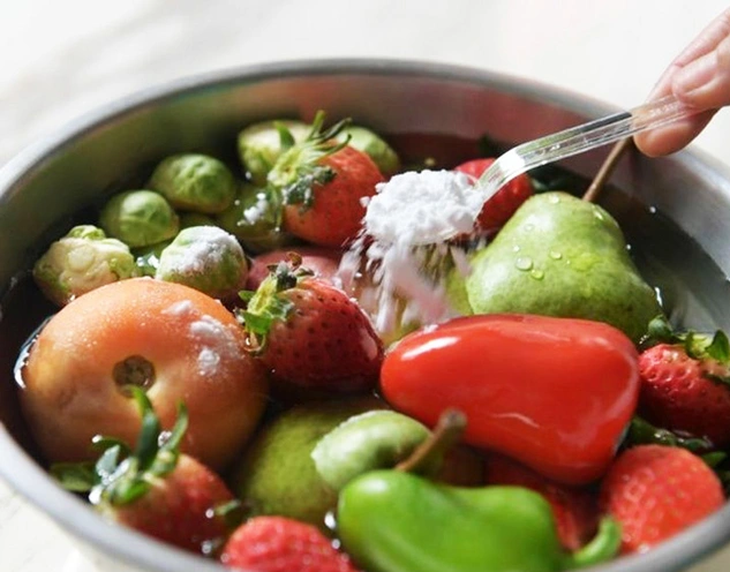
Depending on whether you're washing leafy vegetables, root vegetables, fruits, or flowers, you should use a different washing method - Illustration.
Instructions on how to wash each type of vegetable effectively and thoroughly.
Leafy vegetables and herbs (greens, raw vegetables, cabbage, onions, cilantro, etc.): Clean and remove any wilted leaves, then soak in cold water for about 10 minutes. Afterwards, rinse the leaves thoroughly under running water. Soak the vegetables in diluted salt water for about 5 minutes, then rinse them again before use.
Fruiting vegetables (tomatoes, cucumbers, etc.): Wash the vegetables thoroughly, then let them dry and store them in the refrigerator for about 2-3 days before use. Note: Do not soak them in salt water before storage to avoid the vegetables spoiling easily due to dampness.
If you need to use them immediately, you can soak the vegetables in diluted salt water for about 5 minutes, then rinse them thoroughly under running water.
Root vegetables (sweet potatoes, carrots, etc.) are usually grown underground, so they are very safe. They should be washed thoroughly under running water to remove dirt. Peel and wash them again before cooking.
Flowering vegetables (broccoli, cauliflower): Soak in diluted salt water for about 5 minutes, then rinse with clean water.
Common mistakes when washing vegetables
Soaking vegetables for a long time to clean them more thoroughly : Many people have a habit of soaking vegetables in water for a long time to ensure all dirt and pesticides are removed. However, soaking for too long can cause vegetables to lose nutrients and absorb water, making them lose their original crispness and freshness.
Using bleach : Many people think that using bleach is an effective way to clean vegetables. However, bleach can increase the risk of poisoning because the chemicals can seep into the vegetables and fruits.
Washing in too many steps : Washing vegetables in too many steps with various substances such as baking soda, salt water, rice oil, etc., can reduce their nutritional value without increasing the cleaning effectiveness.
No need to wash organic vegetables : Even without chemical pesticides, organic vegetables can still contain bacteria and dirt and should be washed before eating.
Washing with hot water : This not only removes nutrients but can also reduce the nutritional value of fruits and vegetables.
Washing only the surface : Many people focus only on washing the outer surface of fruits and vegetables, forgetting that bacteria and chemicals can penetrate inside through cracks.
Not washing the root area thoroughly : When washing vegetables and fruits, many people only focus on the stems and leaves, forgetting that the root area also needs to be washed to remove dirt and pathogens.
Source: https://tuoitre.vn/rua-rau-sao-cho-sach-tuong-don-gian-nhung-khong-phai-ai-cung-biet-20250324172541301.htm












![[Photo] Prime Minister Pham Minh Chinh holds a phone call with the CEO of Russia's Rosatom Corporation.](/_next/image?url=https%3A%2F%2Fvphoto.vietnam.vn%2Fthumb%2F1200x675%2Fvietnam%2Fresource%2FIMAGE%2F2025%2F12%2F11%2F1765464552365_dsc-5295-jpg.webp&w=3840&q=75)














































Comment (0)