

Vietnam has many opportunities and is ready to open its doors to welcome investment from the United States.
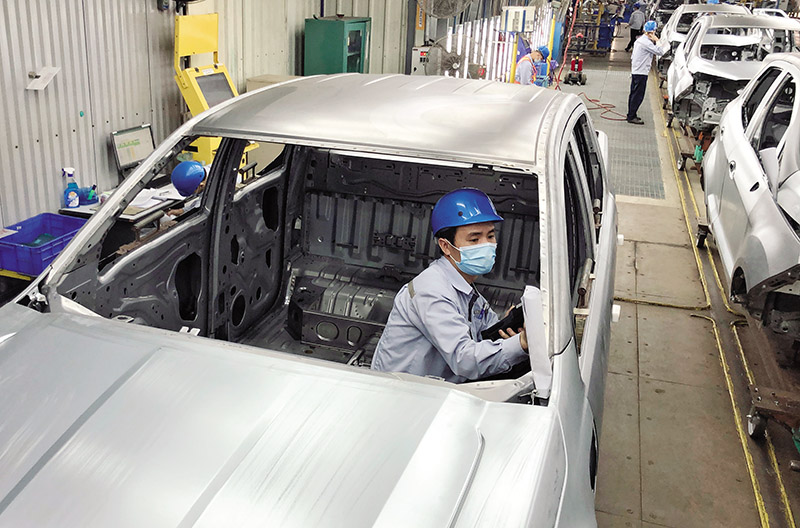 |
| Ford's factory in Hai Duong . |
Open doors to capital investment.
Suntory PepsiCo Vietnam Beverage Company Limited has just commenced construction of its sixth factory in Vietnam. Located in Huu Thanh Industrial Park (Long An province), with an investment of up to 300 million USD, this will be Suntory PepsiCo's largest and most modern factory in the Asia- Pacific region.
The plant is expected to operate on renewable energy, significantly reducing greenhouse gas emissions throughout its production process. It will also be the production site for products with packaging made from 100% recycled plastic. “The plant will help raise standards of productivity and sustainability, paving the way for the company’s long-term growth,” said Jahanzeb Khan, CEO of Suntory PepsiCo Vietnam.
This is the project that PepsiCo's leaders (USA) mentioned to Prime Minister Pham Minh Chinh, as well as leaders of various ministries and agencies, when they accompanied the US-ASEAN Business Council (USABC) delegation to explore investment opportunities in Vietnam. Along with this project, there is another $90 million project that will soon be built in Ha Nam province.
PepsiCo is one of the US corporations that invested in Vietnam very early on, starting in 1994, and this year marks its 30th anniversary. The Suntory PepsiCo brand only appeared in April 2013, after Suntory, Japan's largest beverage company, acquired 51% of PepsiCo Vietnam's beverage business; the remaining 49% is still held by PepsiCo.
“We believe in the potential and development of Vietnam’s economy. This sixth factory will contribute to strengthening Suntory PepsiCo Vietnam’s leading position,” said Takayuki Sanno, CEO of Suntory Food & Beverage Group Asia Pacific, adding that Vietnam is one of Suntory’s key markets.
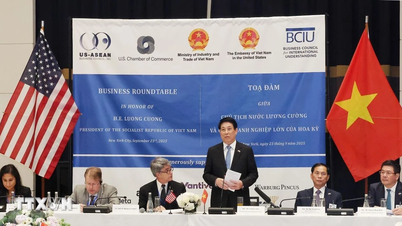
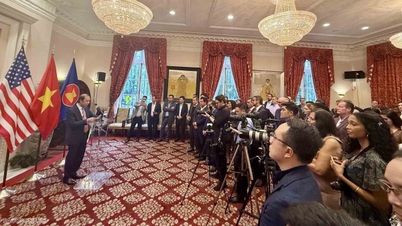
In fact, not only Suntory or PepsiCo, but many foreign investors, including US investors, have recently affirmed their confidence in the potential of the Vietnamese market. The recent visit of the USABC business delegation to Vietnam, which, according to Ted Osius, President and CEO of USABC, was "the largest ever," is one example of this.
During a meeting with the Minister of Planning and Investment, Nguyen Chi Dung, many US investors expressed their desire to invest and expand their investments in Vietnam. For example, Energy Capital is looking to invest in the Long Son Port Project (Ba Ria - Vung Tau) and is also in the process of applying for permission to invest in an LNG project at Ke Ga Cape (Binh Thuan). Meanwhile, AES is working with partners to prepare for investment in the Son My gas-electricity chain project.
Ford, Boeing, Viatris, and others have all expressed their commitment to continued investment in Vietnam. “We have invested over $1 billion in Vietnam through large corporations such as Vingroup and Masan… We will continue to seek opportunities to increase our investment in Vietnam,” said a leader of the KKR investment fund.
Recently, during Deputy Prime Minister Le Minh Khai's visit to the United States, the leaders of Rosen Partner Group also shared that the Group wishes to expand its investment in Vietnam in the real estate and tourism sectors, including world-class entertainment complexes.
And of course, there are also investments in high-tech, semiconductor, and AI sectors in Vietnam. In last year's investment opportunity surveys, leaders of many US corporations stated that they would invest billions of dollars in Vietnam in this Industry 4.0 field.
Remove barriers and attract more investment from the United States.
Despite strong interest from US investors in the Vietnamese market, US investment in Vietnam remains relatively modest. According to data from the Ministry of Planning and Investment, in the first quarter of 2024, US investors registered only $17.26 million in Vietnam, ranking 19th. Cumulatively, the figure is $11.8 billion, ranking 11th among countries and territories with significant investment in Vietnam.
"This ranking is modest and doesn't reflect the full potential. The potential of US investors is enormous, and the relationship between the two sides is also very good," Minister Nguyen Chi Dung said.
 We hope that US businesses will trust and expand their investments in Vietnam. Those businesses that haven't invested yet should do so quickly; together we will overcome difficulties and obstacles to promote investment.
- Minister of Planning and Investment Nguyen Chi Dung
Emphasizing that last year Vietnam and the United States upgraded their relationship to a Comprehensive Strategic Partnership and reached agreements to promote cooperation in technology and innovation, including the semiconductor industry, Minister Nguyen Chi Dung stated that there are "no barriers" to investment flows from the United States into Vietnam, or from Vietnam to the United States, as well as investment through third countries.
In fact, the fact that US businesses have invested modestly in Vietnam is frequently discussed. The enforcement of intellectual property rights, transparency and consistency of policies, and the quality of human resources are consistently cited as some of the biggest obstacles to increased US investment in Vietnam.
At the recent Vietnam Business Forum (VBF), Mr. Joseph Uddo, Chairman of AmCham Hanoi, mentioned the phrase "better, faster, easier" to describe the areas Vietnam needs to continue reforming to attract foreign capital in general, and investment from the United States in particular. "The most important factor in creating a favorable investment environment is a fair, transparent, predictable, and streamlined legal environment that values innovation, not only to attract new investments but also to maintain and develop existing investment projects," said Mr. Joseph Uddo.
He also emphasized the need for Vietnam to continue reforming administrative procedures, as several new laws and regulations are still being introduced, delaying approval processes and increasing the administrative burden on businesses.
In addition, AmCham expressed concerns about energy supply for investment, production, and business activities. This is not just a concern for US investors. Japanese and Korean investors are also particularly interested in this issue, especially those with projects in high-tech, electronics, and semiconductor sectors. Power shortages and unstable power supply are major worries.
“Data centers, semiconductor factories, and electronics plants require a stable energy supply. To develop the digital economy, cloud computing, AI, etc., we cannot ignore the issue of energy, especially clean energy,” said Mr. Vu Tu Thanh, Deputy Executive Director of USABC.
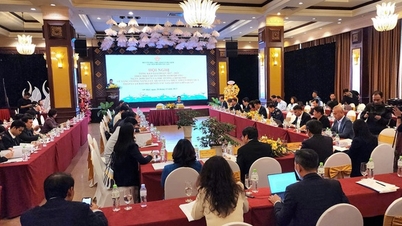
Speaking at a recent seminar on promoting investment from the United States, Mr. Vu Tu Thanh also suggested that Vietnam needs to pay attention to its ties with ASEAN countries, because US businesses investing in the region will not view any single country as a standalone market. “They see ASEAN as one large market. Therefore, if Vietnam wants to attract investment from the United States, it must cooperate with ASEAN countries,” Mr. Vu Tu Thanh said.
This is clearly something worth considering and could also be a way for Vietnam to attract even more investment from the United States.
Source
![[Photo] Prime Minister Pham Minh Chinh presides over a meeting on private sector economic development.](/_next/image?url=https%3A%2F%2Fvphoto.vietnam.vn%2Fthumb%2F1200x675%2Fvietnam%2Fresource%2FIMAGE%2F2025%2F12%2F20%2F1766237501876_thiet-ke-chua-co-ten-40-png.webp&w=3840&q=75)





























































Comment (0)