

These days, the Cham people of Bau Truc village are joyfully celebrating the 2024 Katê Festival in a warm and cheerful atmosphere. After offering prayers to the deities at the temples and towers, the villagers return to the village to hold a ceremony commemorating the founders of the pottery craft, remembering the contributions of their ancestors who painstakingly created and passed down their knowledge to their descendants. The atmosphere of the Cham pottery ancestor commemoration in Bau Truc is vibrant from the residential areas to the Po Klong Can temple.
Arriving at Bau Truc pottery village in Phuoc Dan town, Ninh Phuoc district, Ninh Thuan province, we met Mr. Nguy Ngoc Do, Head of the Customs Committee, who was urgently calling the villagers to ensure they arrived on time for the procession of the ceremonial attire, an important ritual of the Cham pottery ancestral commemoration. The attire, which he kept at the village hall in the middle of the residential area, was being transported to the Po Klong Can temple, located about two kilometers northwest of the residential area.
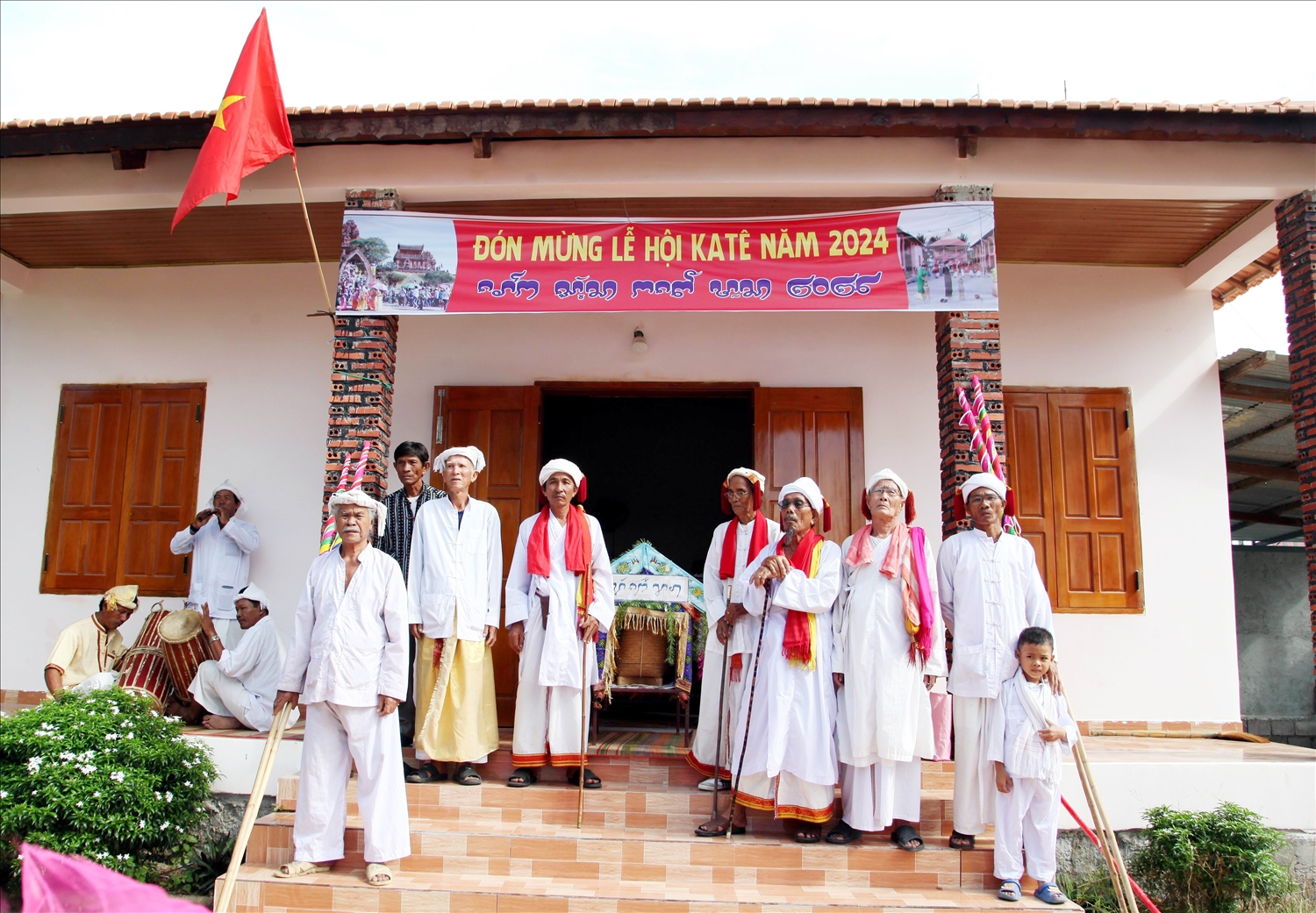
The Cham people celebrate the Katê Festival 2024 and the anniversary of the founding of Bau Truc pottery at the Bau Truc Village House.
We met with the elders, members of the Cham Brahman Council, who were there to witness the ancestral commemoration ceremony for Cham pottery in Bau Truc village. Deputy Chief Monk Han Van Ham said that the State has invested in building traditional craft villages of the Cham people in Ninh Phuoc district, making them increasingly modern and well-equipped. In particular, the system of asphalt roads, lighting, pottery exhibition halls, schools, and houses for the people have been built to a large and beautiful standard, contributing to the modern development of Bau Truc pottery village.
In conversations with the elders of Bau Truc village, we learned that pottery making is called "Danak ngap gok glah urang Cam" in the Cham language. According to local tradition, Mr. Po Klong Can and his wife, Mrs. Nai Lank Muh, taught women how to make pottery. The raw material is clay taken from the Hamu Tanu Halan field (a mound of clay fields), located more than three kilometers west of the village. The clay is transported to the small dam, dug into pits, and left overnight with just the right amount of water. Then, the clay is stomped until smooth and impurities are removed before being mixed with sand from the Quau River in the appropriate ratio. Cham women mold the pottery entirely by hand, without using a potter's wheel like in other places. They walk around the pottery base, crafting the terracotta products to create unique, vibrant colors. On November 29, 2022, the Cham art of pottery making was inscribed by UNESCO on the List of Intangible Cultural Heritage in Need of Urgent Safeguarding.
Villagers, dressed in their finest attire, eagerly bring offerings of cakes, fruits, betel nuts, tea, and water to the Po Klong Can temple to perform the ritual commemorating the founder of Cham pottery. The custom of worshipping the founder of pottery is performed by the Ka Thanh, the spirit medium, and the temple caretaker, in the presence of Brahman dignitaries. The spirit medium and the temple caretaker are responsible for bathing and dressing the statue. The Ka Thanh plays the Kanhi instrument and sings praises of the founder of pottery and prays for peace, good fortune, and prosperity for the village. The villagers offer their offerings, praying for the sustainable development of the pottery craft and family happiness.
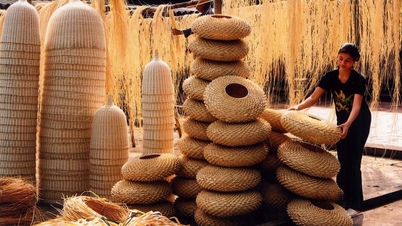
Currently, artisans in Bau Truc pottery village can produce hundreds of types of pottery products to meet market demand, from artistic pottery such as Apsara goddess statues, Cham towers, interior decorative reliefs, and feng shui water vases to essential pottery items for daily life in Southern Vietnam such as earthenware teapots, molds for making banh can and banh xeo (Vietnamese savory pancakes), water jars, clay pots, and charcoal stoves. Bau Truc pottery village attracts a large number of domestic and international tourists who come to visit and shop for souvenirs.
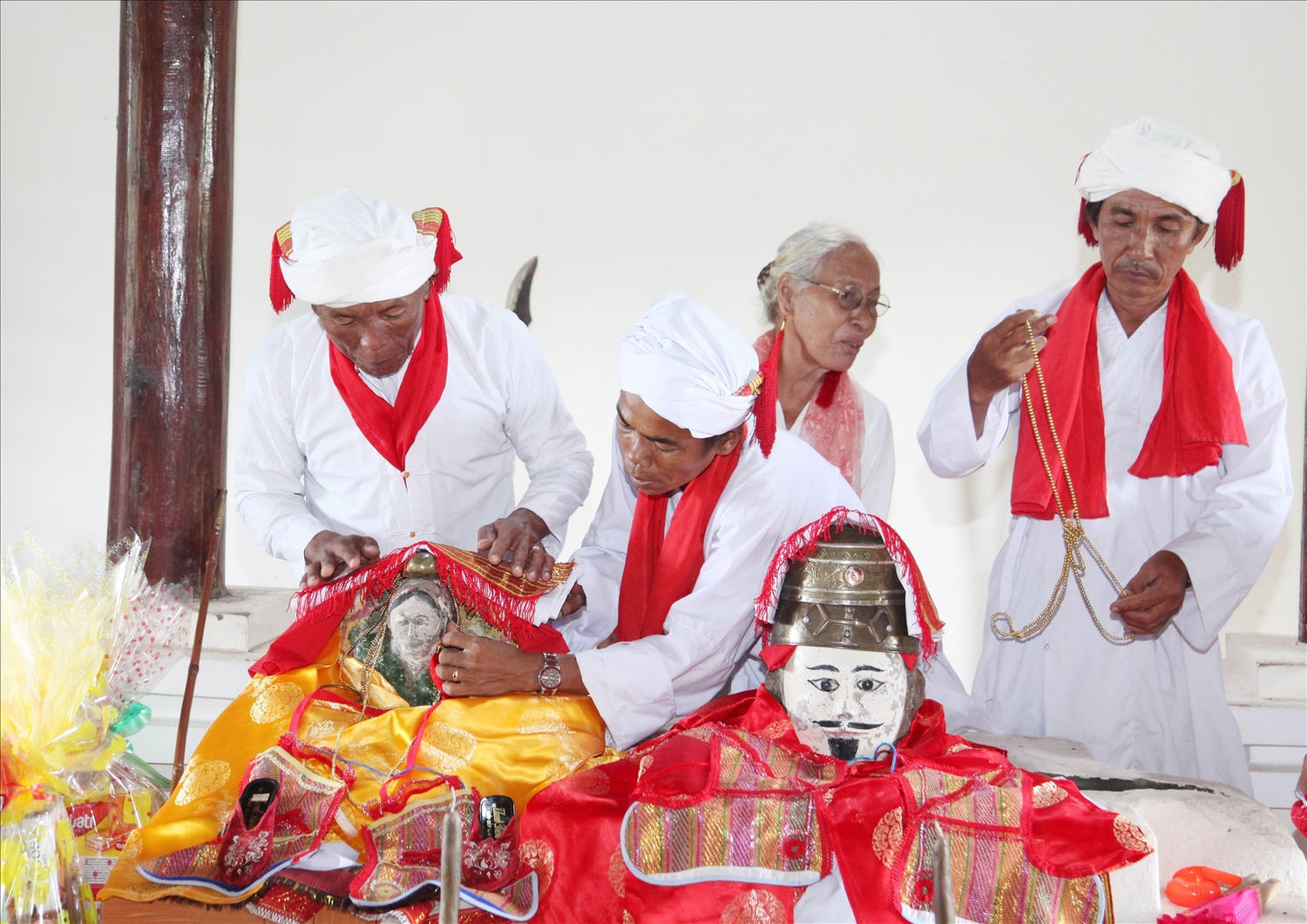
The dignitaries perform the ritual of bathing the statues and dressing the couple who are the founders of the pottery craft, Po Klong Can and his wife.
Mr. Phu Huu Minh Thuan, Director of the Bau Truc Cham Pottery Cooperative, happily shared: "Since the Cham pottery art was inscribed by UNESCO on the list of 'Intangible Cultural Heritage in Need of Urgent Safeguard,' the craft village has attracted a large number of tourists to visit and shop for products. Especially during holidays and Tet (Lunar New Year), the cooperative welcomes over 3,000 visitors daily; revenue has doubled compared to before. As a result, the income of member households has increased, ensuring a better life for their families."
“This year, the villagers organized a warm and joyful commemoration of the founding of the pottery craft, remembering the great contributions of our ancestors who taught the villagers how to make pottery. Bau Truc pottery village is increasingly attracting tourists to visit and shop. The Customs Committee encourages the villagers to unite and compete to create many beautiful, durable, and high-quality products to meet market demands. The precious cultural heritage of our ancestors is passed down to our descendants today, preserving it and contributing to its prosperous development, actively helping to build a rich and beautiful homeland,” said Mr. Nguy Ngoc Do, Head of the Customs Committee of Bau Truc village, with enthusiasm.
The Cham pottery ancestral commemoration ceremony is one of the cultural activities organized by the Cham people in accordance with the spirit of Project 6 on Preserving the fine cultural values of ethnic minorities associated with tourism development under the National Target Program for socio -economic development of ethnic minority and mountainous areas giai đoạn 2021-2030.
Thai Son Ngoc (Ethnic Groups and Development Newspaper)
Source: https://baophutho.vn/ron-rang-gio-to-gom-cham-224473.htm

![[Photo] Prime Minister Pham Minh Chinh presides over the conference announcing the establishment of the International Finance Centre in Vietnam.](/_next/image?url=https%3A%2F%2Fvphoto.vietnam.vn%2Fthumb%2F1200x675%2Fvietnam%2Fresource%2FIMAGE%2F2025%2F12%2F21%2F1766309817714_ndo_br_dsc-3400-jpg.webp&w=3840&q=75)


![[Photo] Prime Minister Pham Minh Chinh presides over a meeting on private sector economic development.](/_next/image?url=https%3A%2F%2Fvphoto.vietnam.vn%2Fthumb%2F1200x675%2Fvietnam%2Fresource%2FIMAGE%2F2025%2F12%2F20%2F1766237501876_thiet-ke-chua-co-ten-40-png.webp&w=3840&q=75)


















































Comment (0)