

INCREASE THE DEPOSIT VALUE BY 20-30%
According to Article 23 of the draft Law on Real Estate Business (amended), currently being considered by the National Assembly , the drafting agency has proposed two options regarding the principles of trading in housing and construction projects under construction. Option 1: Real estate project developers are only allowed to collect deposits from customers when the housing or construction project has met all the conditions for being put into business and the transaction has been conducted in accordance with the provisions of this law. Option 2: Real estate project developers are only allowed to collect deposits as agreed with customers when the project's basic design has been appraised by a state agency and the developer possesses one of the documents proving land use rights. The maximum deposit amount shall not exceed 10% of the selling or lease-purchase price.

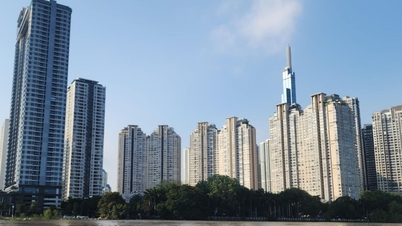
Regulations regarding deposits are needed to protect people when buying real estate.
Lawyer Nguyen Dang Tu, from Trilaw Law Firm, analyzed Option 1, stating that the nature of a deposit under the Civil Code is to secure the fulfillment of civil obligations. Accordingly, one party (the depositor) gives the other party (the recipient of the deposit) a sum of money or property within a certain period to confirm the agreement between the parties and to ensure the conclusion or performance of a civil contract. For real estate transactions, the deposit is intended to secure the signing of the real estate purchase and sale contract. If the regulations are as stated in Option 1, it becomes unnecessary, because once a project is ready for business, the parties can sign the real estate purchase and sale contract without needing a deposit. Therefore, Option 1 aims to limit risks for customers, enhance investor responsibility, and filter out financially incompetent investors, but its application to deposits is unnecessary. The conditions for a project to be eligible for business operations should only apply to the signing of sales contracts.
Option 2 is somewhat more "open" for developers to conduct deposit transactions. However, to protect customer rights, the draft should add a provision limiting the deposit to a suitable level (around 20-30%). Currently, the Civil Code does not stipulate a minimum or maximum deposit amount for real estate transactions. This has led to a chaotic situation regarding real estate deposits in the market recently. Some developers have required customers to deposit up to 95% of the property value to raise capital under the guise of a deposit system. However, when disputes arise, the developers are unable to compensate customers for the deposit and delay refunding the money. Many customers have suffered greatly trying to recover their principal, let alone demand compensation from the developer. For example, in many cases, developers mobilize funds for the sale of land plots, accepting deposits up to 95% of the value even before the legal procedures are completed. However, they fail to sign contracts on time and are unable to return the money, leading to complaints from residents, prosecution of the developers, and loss of funds for the buyers. There are also many cases where developers accept a 10% deposit, but when land and house prices rise, many developers are willing to forfeit the deposit without continuing with the purchase agreement. There are also cases where low deposits are accepted, and when the real estate market freezes and prices fall, customers are willing to abandon their deposits. "The draft should include a provision requiring developers to provide a bank guarantee letter committing to return the deposit to customers if the developer violates the agreement. This proposal would make it easier for developers to raise capital and also protect the rights of customers when developers violate their commitments," lawyer Tư suggested.
Deposits will only be accepted when the project meets the business eligibility requirements.
According to Mr. Le Hoang Chau, Chairman of the Ho Chi Minh City Real Estate Association, under Option 1, the purpose of the deposit is to guarantee the performance of the contract. In reality, after the contract has been concluded, cases of the depositor being defrauded by the recipient rarely occur. The reason is that the conclusion of the contract is usually carefully checked by both parties and carried out in accordance with the law. When the contract is executed, the deposit is usually deducted from the first payment of the transaction. Option 2 aims to secure the conclusion of the contract. In reality, it is before the contract is concluded that the depositor is most often defrauded by the recipient and the contract is not fulfilled, causing losses to the depositor. Currently, both options 1 and 2 are correct, so it is necessary to integrate both options into a single regulation on deposits to secure contract conclusion or deposits to secure contract performance, in order to protect the legitimate rights and interests of customers buying or leasing real estate, housing, whether existing or under construction.
Accordingly, Mr. Chau proposed combining the two options into one as follows: "The project investor may collect a deposit from customers when the housing or construction project meets the conditions for business operation and the transaction has been carried out in accordance with regulations, for the purpose of ensuring contract performance; or the real estate project investor may only collect a deposit to secure the conclusion of a contract as agreed with the customer when the project has a basic design approved by a state agency and the investor has one of the land use right documents specified in Clause 2, Article 24 of this law. The deposit agreement must clearly state the selling price or lease-purchase price of the housing or construction project. The maximum deposit amount is as stipulated by the Government but shall not exceed 10% of the real estate value."
"The 2006 and 2014 Real Estate Business Laws do not stipulate that deposits must be made before a real estate project meets the conditions for concluding a contract or raising capital through the sale of future housing, especially land plots. Therefore, unscrupulous land speculators, brokers, and businesses have taken advantage of Clause 1, Article 328 of the 2015 Civil Code, which does not specify the value or percentage of the deposit, to accept large deposits from customers, in some cases up to 90-95% of the transaction value. Furthermore, these unscrupulous land speculators, brokers, and businesses have even created 'ghost' projects without legal basis for the purpose of fraud, causing significant losses to customers and disrupting social order, a prime example being the fraud case at Alibaba Company," said Mr. Le Hoang Chau.
Dr. Nguyen Van Dinh, Vice President of the Vietnam Real Estate Association, believes that the draft revised Law on Real Estate Business needs clearer regulations on deposits, especially the timing of deposits, to prevent developers from exploiting loopholes to illegally raise funds. "We have studied deposit practices in the real estate market in many countries around the world , and all countries allow deposits. However, the deposit money is transferred to a common account managed and supervised by a third party, such as a bank. If the developer fails to fulfill their commitments, such as not constructing the project or being unable to sign a contract as required by law, then the customer is entitled to get their money back," Mr. Dinh said.
Customers can earn interest on their deposit while it's in the bank, so they don't have to worry about losing their money. The deposit amount cannot exceed 20% of the contract value. This limits the situation where developers raise large sums of money from customers without any prior work, essentially "making a fortune."
Dr. Nguyen Van Dinh, Vice President of the Vietnam Real Estate Association
Source link































































































Comment (0)