

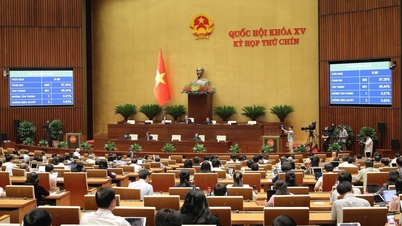
On February 14th, the National Assembly held a plenary session to discuss the draft Law on the Organization of the Government (amended).
Representative Pham Van Hoa ( Dong Thap Delegation) argued that, in principle, regarding the current division of authority, the Government and the Prime Minister are responsible for submitting to the National Assembly and the Standing Committee of the National Assembly for decision the contents as stipulated in the Constitution and the fundamental and important issues within the authority of the National Assembly and the Standing Committee of the National Assembly as stipulated in the Law on Government Organization.
Mr. Hoa stated that the Prime Minister , as the head of the Government, leads the Government's work and is accountable to the National Assembly and the Standing Committee of the National Assembly for the Government's responsibilities and assigned tasks. He emphasized the principle that when the Prime Minister delegates authority to localities, ministers, or heads of departments, he should not interfere in the internal affairs of ministries, departments, or people's committees.
Mr. Hoa suggested that in the decentralization and delegation of power, there must be specific mechanisms; if not included in the law, then at least in regulations, so that those to whom power is delegated, authorized, and given authority dare to act and dare to take responsibility.
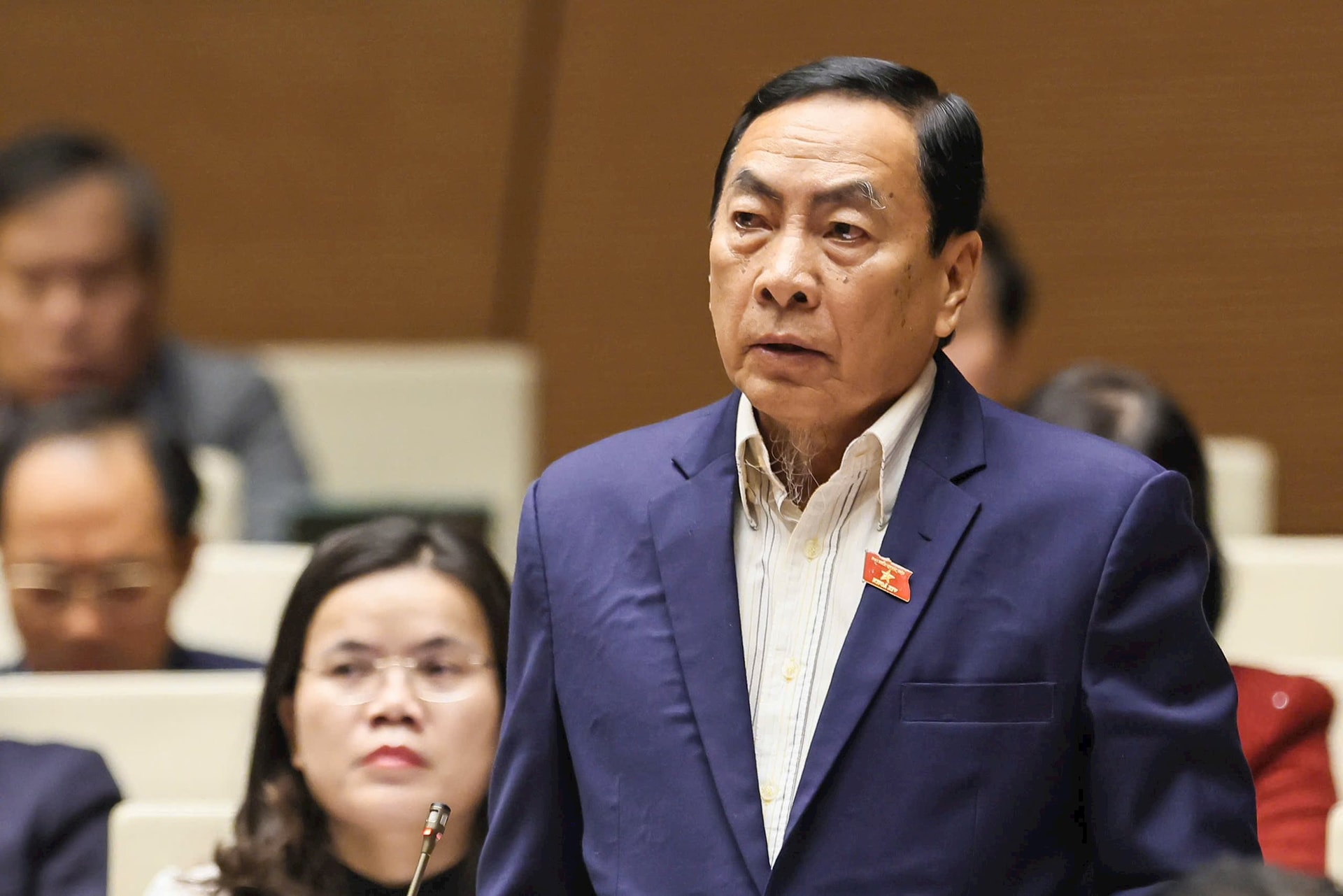
Mr. Hoa suggested that the person delegating authority should be responsible for checking, supervising, and inspecting the person to whom authority is delegated. If the person to whom authority is delegated acts improperly, the person delegating authority should also bear joint responsibility.
According to National Assembly Deputy Tran Van Khai (Ha Nam delegation), unclear decentralization of power can lead to overlapping responsibilities between the central and local governments. Some key tasks (planning, public investment, land management, environment) may fall under both the responsibility of the government and the authority of local governments, easily leading to disputes in policy implementation. If the central government retains the power to make decisions but delegates implementation to local governments without clear responsibilities, it can lead to a lack of coordination and stagnation in implementation.
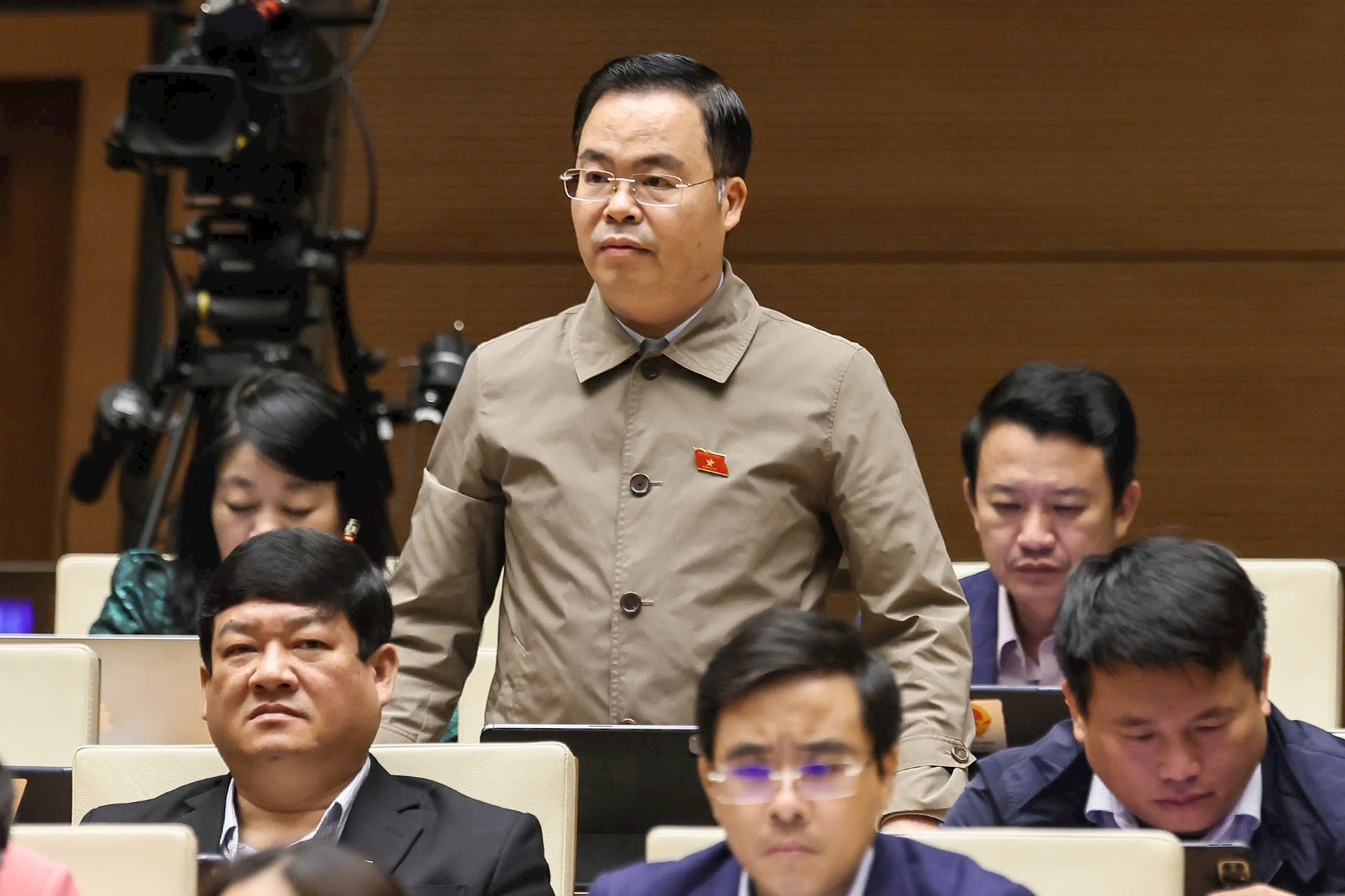
Furthermore, according to Mr. Khai, decentralization could lead some localities to make decisions based on local interests, inconsistent with general policies. Some provinces and cities rich in resources or with strong economies could leverage their decentralized power to establish their own preferential policies, creating inequality with other localities. Conversely, weaker localities might lack the capacity to implement policies, causing stagnation or even abusing power for personal gain.
Mr. Khai proposed amending Article 7 on decentralization, adding the principle of "conditional decentralization," meaning decentralization should only be granted when localities have sufficient financial, human, and administrative capacity. In addition, an index for evaluating the administrative capacity of each locality should be developed before decentralization takes place.
Regarding the issue of decentralization, Mr. Khai argued that lax supervision could lead to abuse of power in decentralization, with many tasks potentially being managed by both ministries and localities. The lack of a mechanism to evaluate the effectiveness of decentralization could lead to the delegation of authority without adequate conditions for implementation, causing waste and stagnation.
Mr. Khai proposed amending Article 8 on decentralization. Accordingly, he suggested adding a mechanism for "assessing the effectiveness of decentralization," clearly defining which tasks require annual evaluation reports. Decentralization decisions should be subject to periodic oversight by the National Assembly. At the same time, he proposed applying the principle of "flexible decentralization," requiring control mechanisms instead of granting full authority to localities lacking sufficient capacity.
Regarding the issue of delegation, Mr. Khai noted that uncontrolled delegation can lead to the shifting of responsibility between different levels of government. When a task is delegated without a mechanism for accountability, it can lead to subordinates failing to perform or performing ineffectively. For some important tasks, delegation without control can lead to corruption and malpractice.
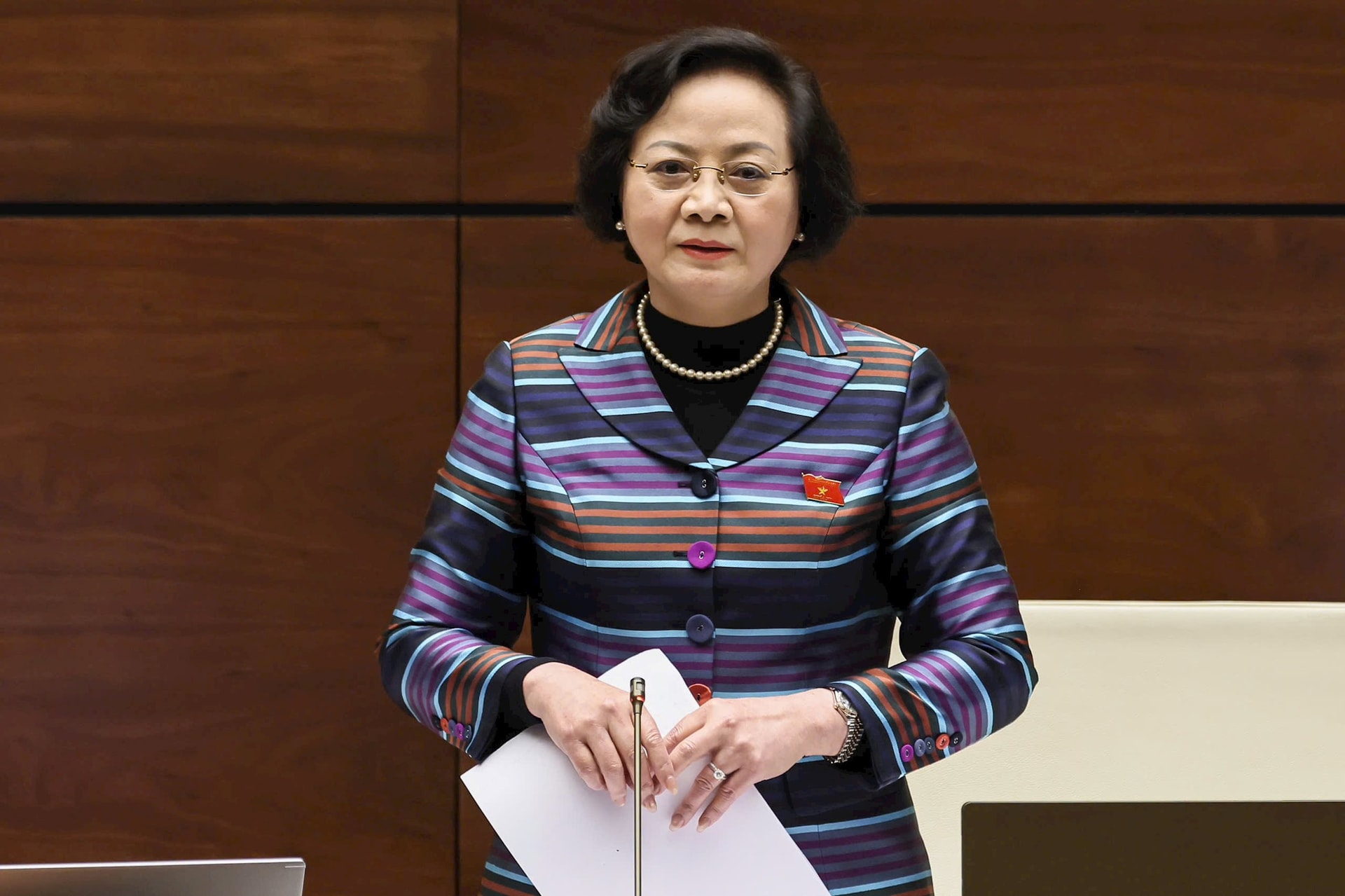
In her explanation, Minister of Home Affairs Pham Thi Thanh Tra stated that the Ministry would fully consider and address the opinions of the delegates.
Ms. Tra emphasized that the Law on Government Organization is the fundamental law of Vietnam's state administration, and the amendment of this law is being carried out at a historical moment. Therefore, the amended law has political, social, legal, and historical significance as we are implementing a revolution in streamlining the organizational structure of the political system, linked to efficiency, effectiveness, and effectiveness.
Minister Pham Thi Thanh Tra stated that the revised Law on Government Organization was developed with a completely new mindset regarding the construction of Vietnam's legal system, in accordance with the directives of the Politburo, the General Secretary, and the Chairman of the National Assembly, to ensure the law's long-term viability, fulfilling both the goals of state management and the goals of creation and development.
Source: https://daidoanket.vn/quoc-hoi-thao-luan-chuyen-phan-quyen-uy-quyen-10299906.html




























































































Comment (0)