


 |
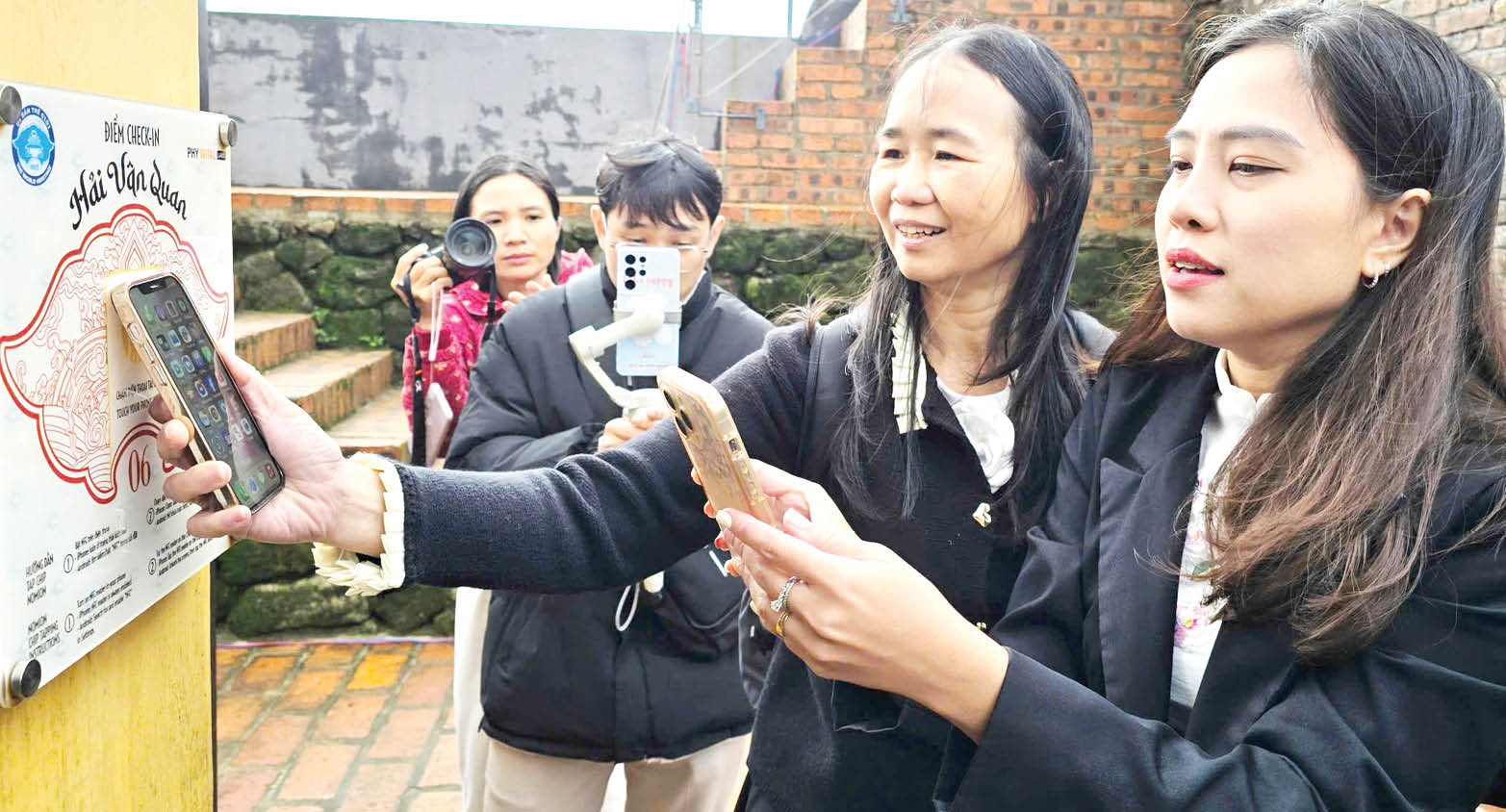
| By simply touching their smartphone to the NFC chip, visitors can explore information and images about the historical site. |
Bringing the government closer to the people.
Hue City is gradually transforming into a smart city, not through high-rise buildings or flashy architectural overhauls, but by choosing a more sustainable path: applying digital technology to rebuild the mindset of urban management and administration from the ground up. This is not just a superficial "digitization," but an effort to change how the city is run, using data as a foundation, technology as a tool, and citizens at the center of all decision-making.
When mentioning Hue , people immediately think of a distinctive heritage city. So, how does Hue manage its heritage effectively while simultaneously promoting its sustainable value in contemporary life? The clear answer is the application of digital technology.
In recent years, the city has implemented numerous technological solutions such as digitizing artifacts, applying 3D technology in monument restoration, bringing images of the Imperial Citadel to virtual reality platforms, implementing electronic tickets, and a QR code scanning system for automatic guidance for tourists. It can be said that technology is ushering in a "soft revolution" in conservation, from document archiving and artifact inventory to publicity and promotion.
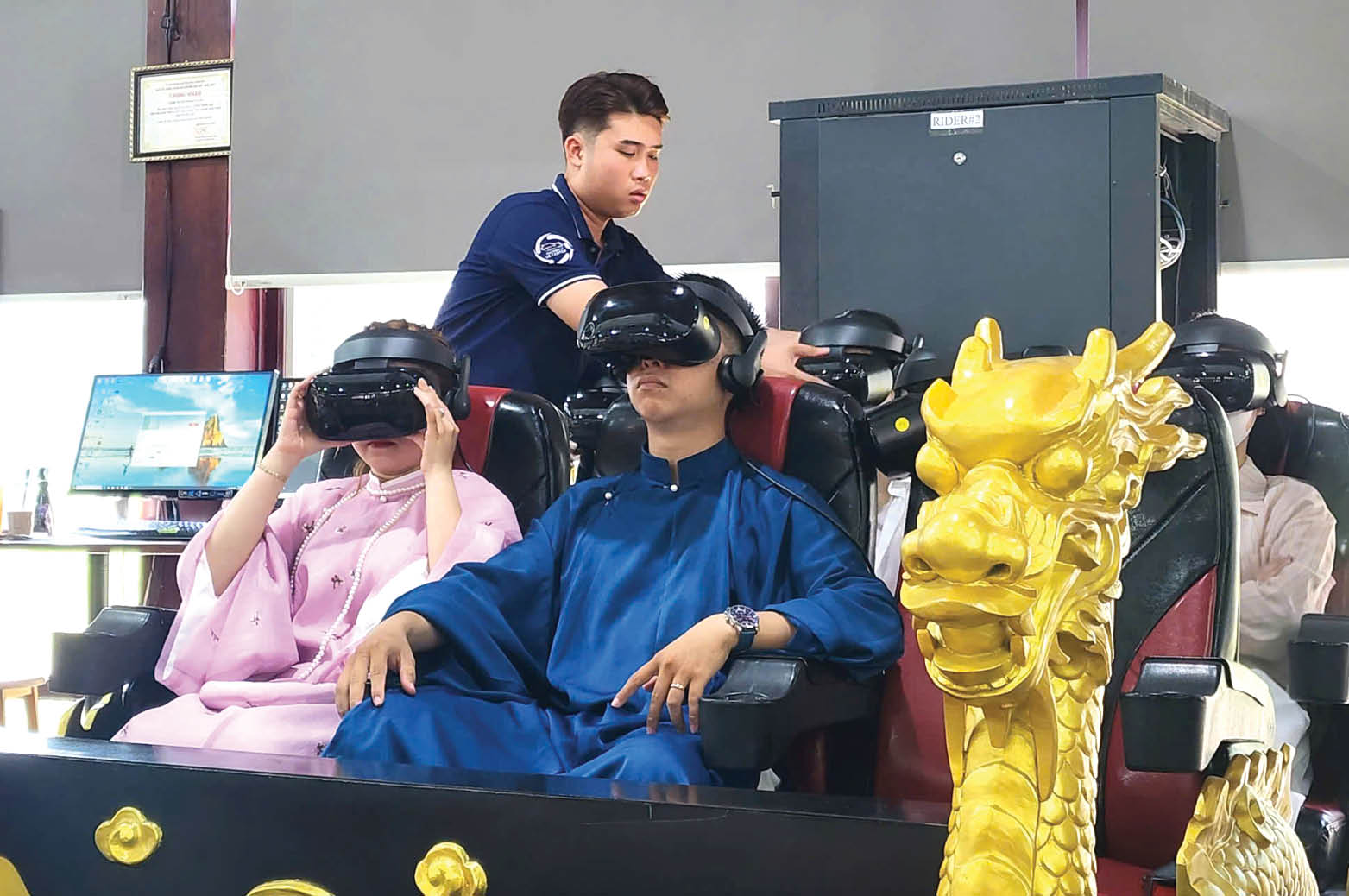 |
| Tourists experience virtual reality "Searching for the Lost Royal Palace" at the Hue Imperial Citadel. |
It is noteworthy that technology not only supports efficient management but also brings heritage closer to the public, especially the younger generation. With a single touch, viewers can "stroll" through the Imperial Citadel, admire the Ngo Mon Gate and the Thai Hoa Palace, or listen to excerpts of Hue Royal Court Music through digital space. Heritage is no longer "stagnant" in museums but has become more vibrant and accessible.
Stepping outside the "vegetarian" shell, in its role of managing urban infrastructure and transportation, the Intelligent Operations Center (IOC) cannot be overlooked. This center has helped the city government effectively monitor and manage urban activities, from traffic and the environment to security and order.
When the IOC (Integrated Operations Center) was put into operation, many Hue residents initially thought it was just "software for reporting incidents." However, over time, it has become clear that its deeper goal is to establish an interactive, transparent, and responsive urban management mechanism. From waste management to security camera surveillance, traffic monitoring, and public administration, everything is gradually being integrated into a digital management ecosystem. As a result, the government can grasp the situation in real time, citizens have tools to monitor the government, and the city operates more orderly, flexible, and efficiently than before.
Furthermore, the development of GIS maps for planning purposes, the application of environmental monitoring sensors, and the integration of public administrative services into online portals are examples showing that Hue City is gradually developing a smart urban governance system.
Complete the shared data infrastructure.
Digital transformation in urban management is not simply a matter of technology. It is a process of changing mindsets, from the leadership level down to each ward and commune, and from every official to every citizen.
Despite its remarkable achievements, it is undeniable that Hue still faces many obstacles, including a lack of data synchronization across sectors, which creates a bottleneck in information sharing and processing. Some units have implemented technology but lack standardized procedures for interconnection. Meanwhile, many grassroots officials are still hesitant to adopt new technologies. Conversely, a segment of the population, especially in suburban and disadvantaged areas, still faces difficulties and limitations in using technology.
Technology is a tool, but managing urban areas using technology requires synchronized data, competent officials capable of adopting it, and citizens confident in using it. This means that without investment in human resources, data infrastructure, and management institutions, all software, apps, or monitoring systems are merely "modern formalities." In meetings with large corporations and businesses regarding digital transformation, city leaders have acknowledged this and proposed fundamental solutions.
To address these challenges, the city has outlined a roadmap and solutions to quickly complete the shared data infrastructure, ensuring seamless connectivity between sectors and levels. When data becomes a "living resource," sharing, updating, and processing information will be a measure of governance capacity.
Over the past period, the city has actively promoted cooperation with technology corporations and businesses to build a green and sustainable development model. Among these, green transportation is a particularly prioritized issue for the city.
“Hue City is known for pursuing sustainable development, based on environmental protection and green development. Therefore, when technology corporations approach Hue, they all aim to partner with the city in line with its development orientation. In social management, traffic management, and urban management, Hue must apply advanced methods that are close to the requirements of sustainable and environmentally friendly development. Only then can we build Hue into a heritage city, a green city, and a sustainably developed city,” said Nguyen Thanh Binh, Standing Committee Member of the City Party Committee and Permanent Vice Chairman of the Hue City People's Committee.
Source: https://huengaynay.vn/kinh-te/quan-ly-van-hanh-do-thi-bang-cong-nghe-152841.html






















































































Comment (0)