

The family of Mr. Tran Van Huy, in Duc Manh commune, Dak Mil district ( Dak Nong province), has over 300 durian trees that are currently producing fruit. To ensure a reliable water supply for irrigation, Mr. Huy hired workers to drill a well to provide water for his durian trees. He also invested in installing a sprinkler irrigation system across his entire durian plantation to save water during the dry season.
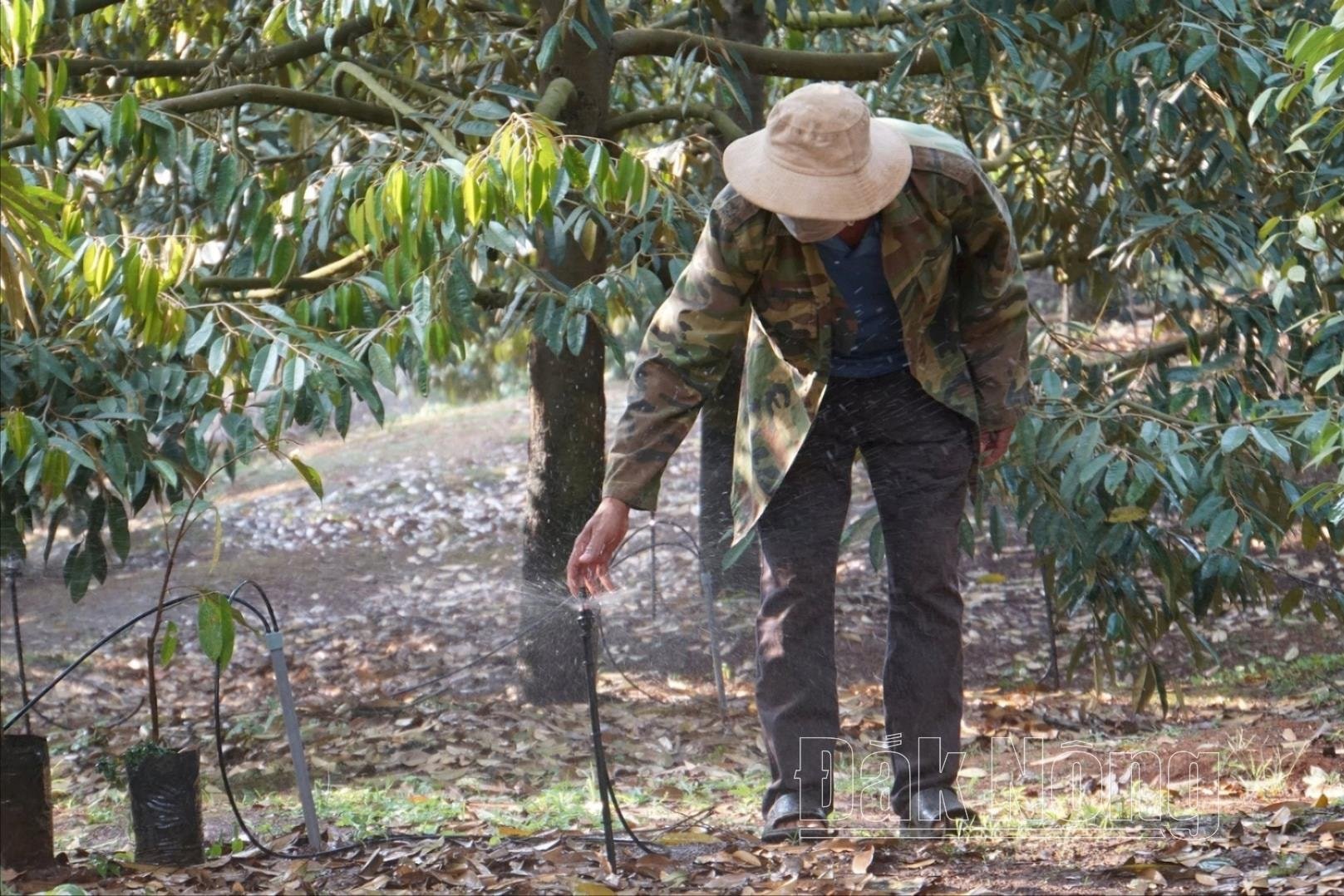
Mr. Tran Van Huy, from Duc Manh commune, Dak Mil district (Dak Nong province), proactively manages the water supply for his durian orchard.
According to Mr. Huy, durian trees require consistent moisture levels. Therefore, water is almost indispensable for durian cultivation. The dry season is also the season when durian trees flower and bear fruit, so irrigation water will determine the production efficiency.
Similarly, the family of Mr. Cao Van Diep, in Tan Dinh village, Dak Gan commune, Dak Mil district, has 900 mango trees. To ensure a reliable water supply for irrigation during the dry season, Mr. Diep invested in digging three reservoirs covering approximately 1,500 square meters.
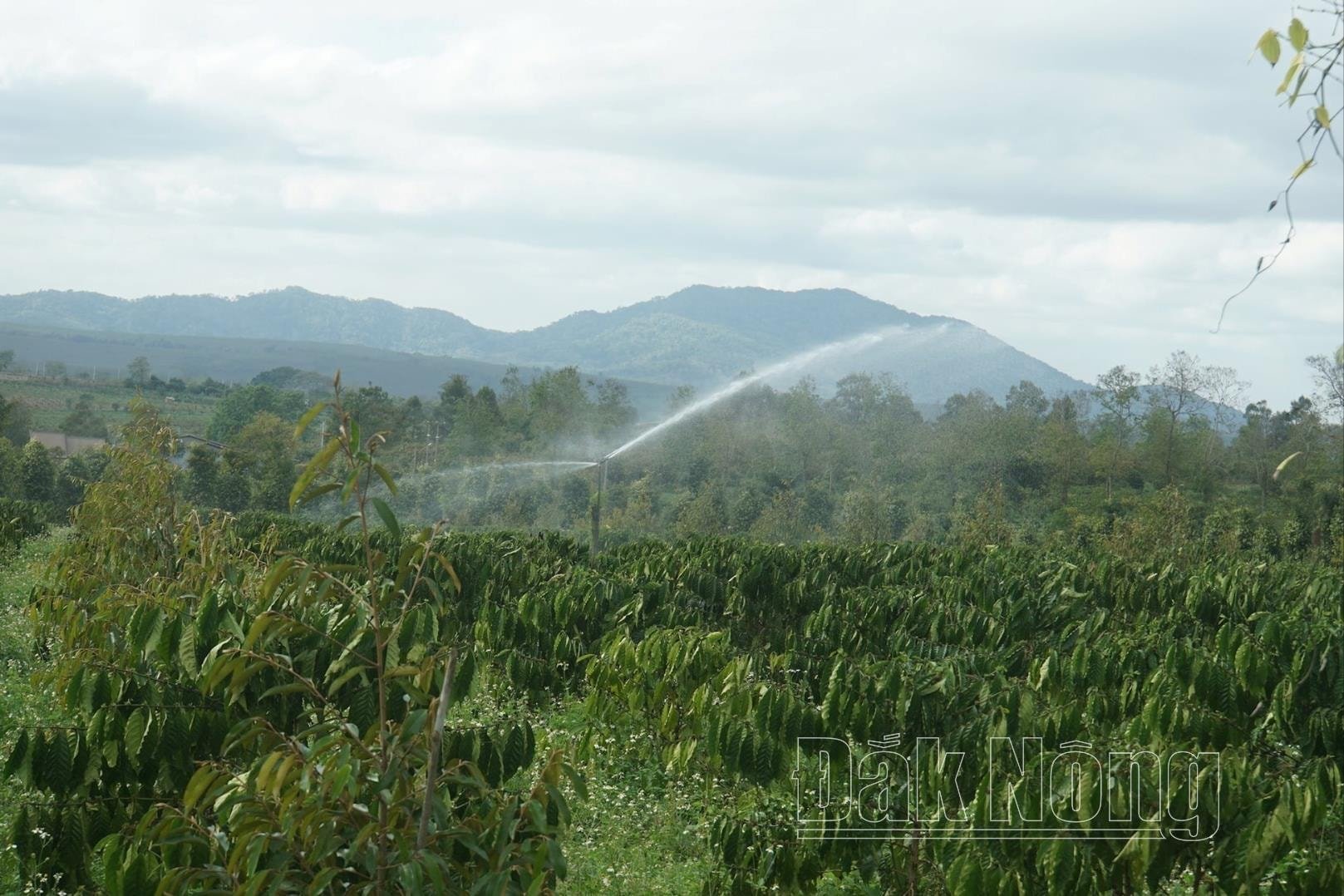
During the dry season, many farmers in Dak Nong proactively allow natural grass to grow in their gardens to retain soil moisture and reduce water evaporation.
Mr. Diep said that, in response to climate change, he has proactively dug more ponds to store water for irrigating his crops during the dry season.
"If there is a water shortage during the dry season, the economic damage to families is enormous; crops die, and years of hard work are wasted. Therefore, proactively securing water resources is a sustainable development solution for agricultural production," Mr. Diep said.
"
Dak Nong province has 307 irrigation works. These include 255 reservoirs, 32 diversion dams, 8 drainage canal systems, 10 pumping station systems, and 2 other irrigation projects. The total surface area of reservoirs in the province is approximately 3,700 hectares.
Dak Nong Department of Agriculture and Rural Development
According to the head of the Department of Agriculture and Rural Development, in addition to the reservoirs of irrigation projects, people in the province have created thousands of ponds, lakes, and boreholes to proactively secure water sources for irrigating crops, contributing to effective drought prevention.
Drawing on their experience in production, people always make calculations to adapt to unfavorable weather conditions. Among these, investing in digging ponds and lakes, and drilling wells to ensure a reliable water source for irrigating crops is a solution widely adopted.
In areas where people have control over their water sources, the damage is usually less than in other areas. Farmers' production efficiency is maintained because the impact of weather and climate is minimized.
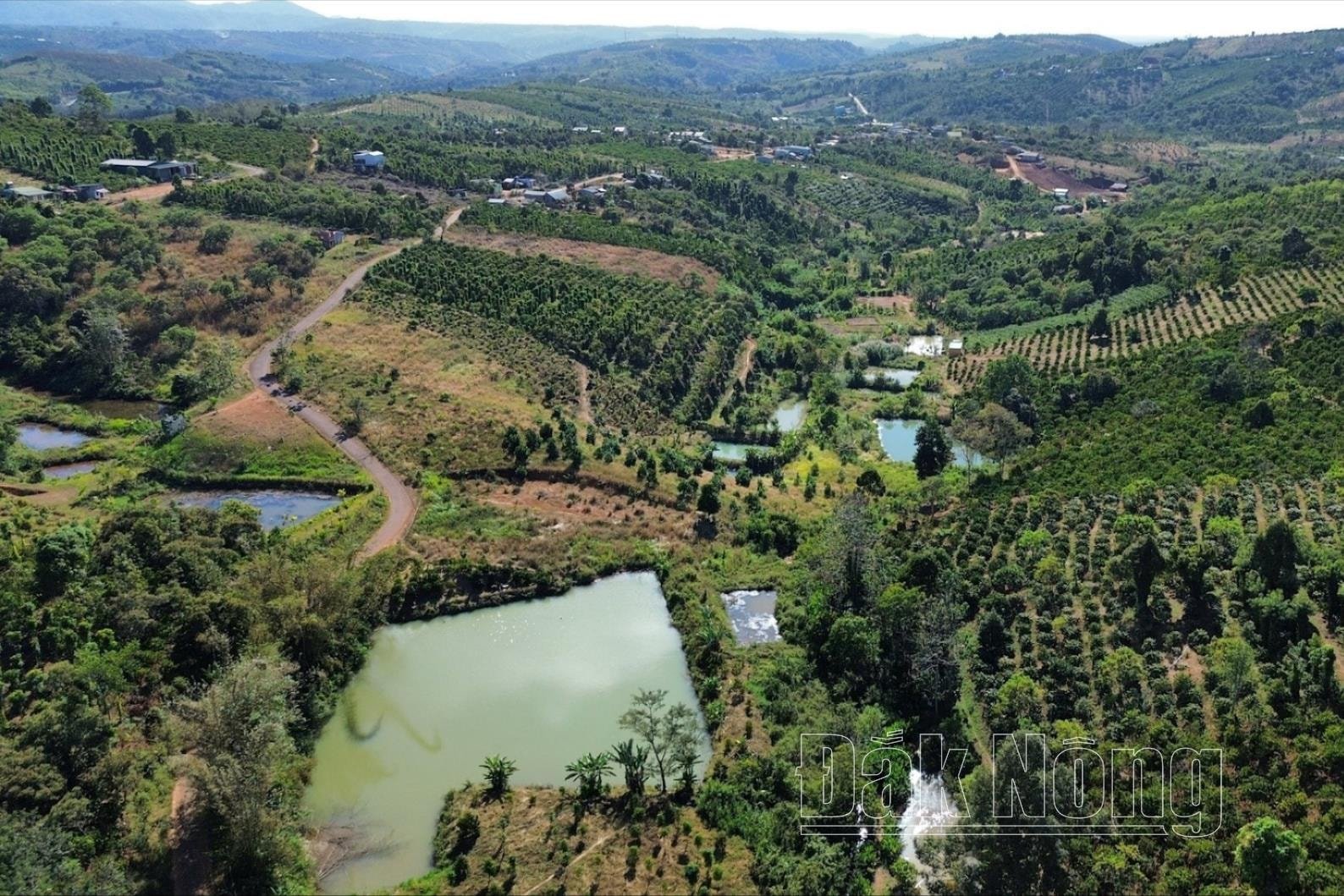
Small ponds and lakes are a proactive solution for irrigation water supply for people in Dak Nong.
According to the Department of Agriculture and Rural Development, in light of the increasingly serious impacts of climate change, the province of Dak Nong has incorporated environmental protection goals and tasks into its annual and phased socio-economic development programs and resolutions.
Provincial authorities have focused on disseminating information and providing guidance on basic steps for preparing for, responding to, and recovering from common types of natural disasters in Dak Nong province, especially droughts and floods.
The Dak Nong Provincial People's Committee has been decisively directing disaster response efforts. This includes focusing on proactive, flexible, and urgent solutions based on the "4 on-the-spot" and "3 ready" principles.
Dak Nong province has issued plans to implement measures to prevent and mitigate natural disasters, droughts, and water shortages, serving agricultural production and people's lives. Provincial authorities regularly organize awareness campaigns and training on disaster prevention and control for local areas.
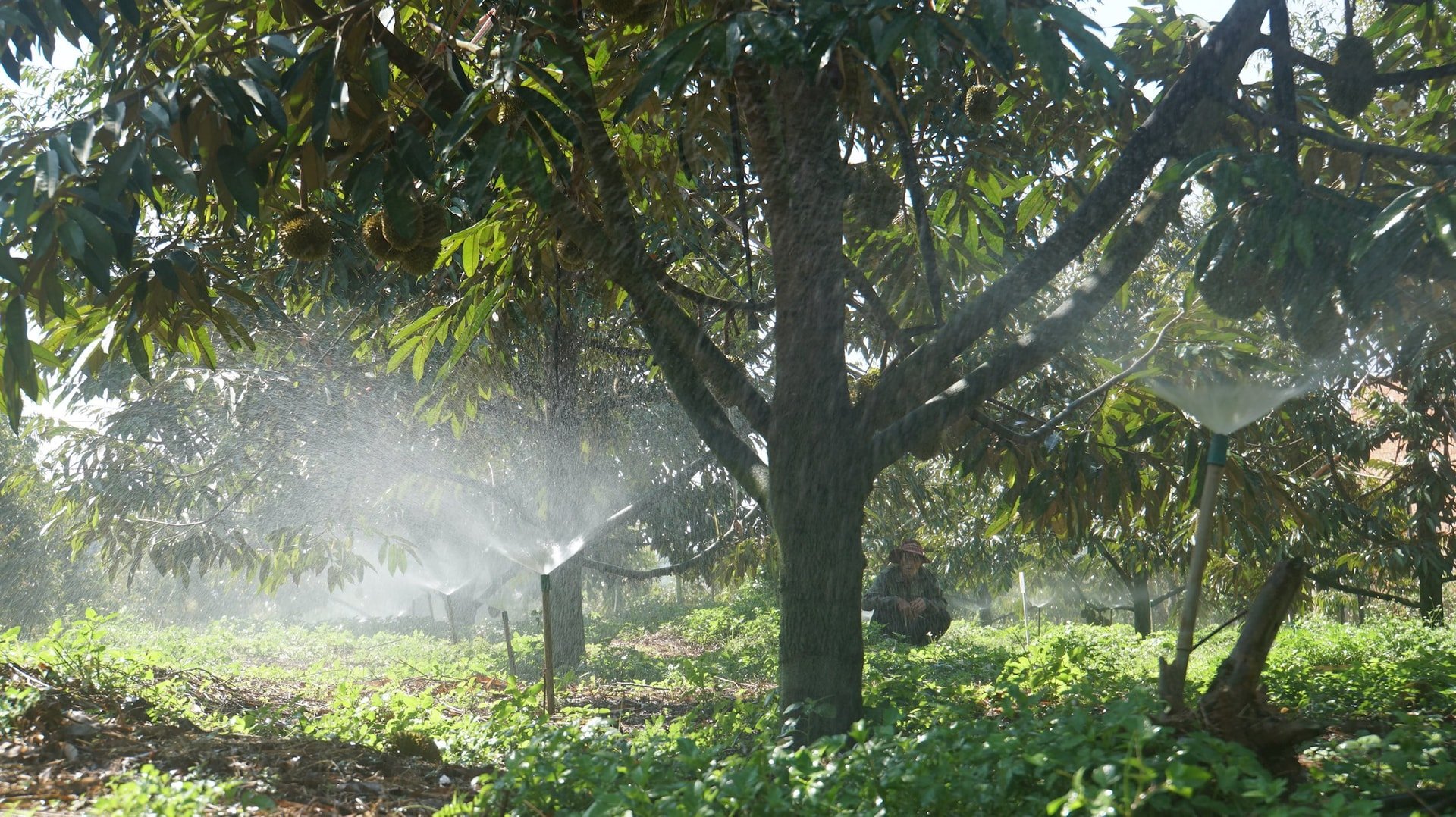
People in Dak Mil district are investing in and applying modern technology to irrigate their durian orchards.
However, the most effective way to prevent and mitigate natural disasters and protect production and crops remains the proactive, flexible, and prepared approach of the people. For example, during this year's drought, families who proactively secured irrigation water and adapted their production methods were able to minimize losses.
At the provincial People's Committee meeting on flood and storm prevention in August 2023, the Chairman of the Dak Nong Provincial People's Committee, Ho Van Muoi, assessed: "The proactive approach of the people and communities, right from the villages and hamlets, in preventing and combating natural disasters is the best way to minimize the impacts and damage to life and production."
Source: https://baodaknong.vn/phong-han-tu-som-do-lo-thiet-hai-250418.html
![[Photo] Commemorating the unwavering friendship between Vietnam and Laos](/_next/image?url=https%3A%2F%2Fvphoto.vietnam.vn%2Fthumb%2F1200x675%2Fvietnam%2Fresource%2FIMAGE%2F2026%2F01%2F27%2F1769518372051_ndo_br_1-jpg.webp&w=3840&q=75)


![[Photo] Announcement Ceremony of the Art Program “Light Concert – Welcoming the New Year 2026”](/_next/image?url=https%3A%2F%2Fvphoto.vietnam.vn%2Fthumb%2F1200x675%2Fvietnam%2Fresource%2FIMAGE%2F2026%2F01%2F27%2F1769514762857_le-cong-bo-ct-hoa-nhac-anh-sang-1772-9042-jpg.webp&w=3840&q=75)


![[Hightling] Conference on the Implementation of Tasks for 2026](/_next/image?url=https%3A%2F%2Fvphoto.vietnam.vn%2Fthumb%2F402x226%2Fvietnam%2Fresource%2FIMAGE%2F2026%2F01%2F27%2F1769477856197_dsc01637.jpeg&w=3840&q=75)


![OCOP during Tet season: [Part 2] Hoa Thanh incense village glows red.](/_next/image?url=https%3A%2F%2Fvphoto.vietnam.vn%2Fthumb%2F402x226%2Fvietnam%2Fresource%2FIMAGE%2F2026%2F01%2F27%2F1769480573807_505139049_683408031333867_2820052735775418136_n-180643_808-092229.jpeg&w=3840&q=75)
![OCOP during Tet season: [Part 1] Ba Den custard apples in their 'golden season'](/_next/image?url=https%3A%2F%2Fvphoto.vietnam.vn%2Fthumb%2F402x226%2Fvietnam%2Fresource%2FIMAGE%2F2026%2F01%2F26%2F1769417540049_03-174213_554-154843.jpeg&w=3840&q=75)





Comment (0)