

Smart tourism is an inevitable trend in the digital age. The development of information technology has completely changed the way tourists access and share information, requiring the tourism industry to make rapid and appropriate changes.
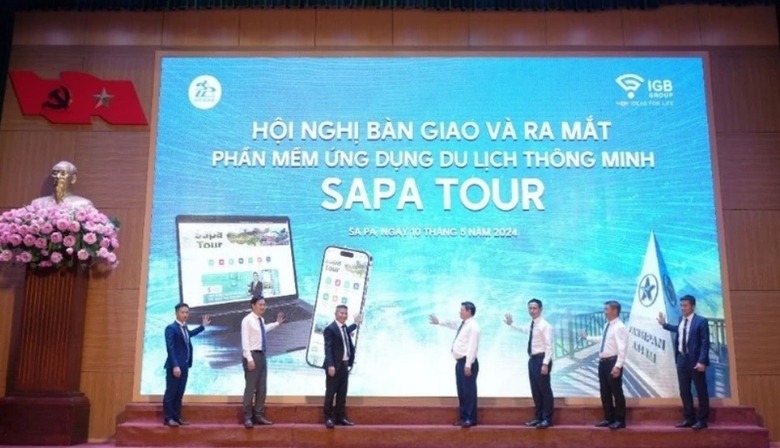
The proactive participation in digital transformation to attract tourists is demonstrated through a series of tourism activities and products in many localities across the country.
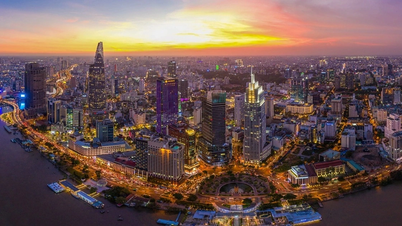
In Hanoi , sites such as the Thang Long Heritage Conservation Center, the Vietnam Fine Arts Museum, the National History Museum, and the Hoa Lo Prison historical site have organized numerous online exhibitions and offered electronic ticket sales, facilitating access for tourists. Meanwhile, in Ho Chi Minh City, the application of 3D technology in providing information and promoting tourism has been intensified, with the most notable product being an interactive smart tourist map featuring a virtual tour guide at various destinations, which has been highly praised by visitors.
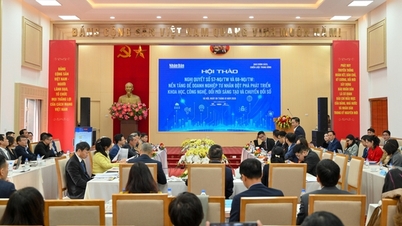
Many other localities such as Quang Ninh, Da Nang, Ninh Binh... are also promoting the use of artificial intelligence (AI), 360-degree virtual reality (VR 360) technology, QR code payment methods... contributing to the promotion of tourism development. In addition, in recent times, many large-scale workshops and seminars on smart tourism have been organized to enhance the awareness of relevant agencies and departments about smart tourism, thereby developing effective implementation methods.
Despite positive developments, experts believe that the development of smart tourism in Vietnam still faces many challenges. Currently, most Vietnamese tourism businesses are small and medium-sized enterprises, operating on a small scale and with limited capital, resulting in fragmented and inconsistent investment in technology applications.
It's easy to see that in today's online travel market, international travel companies are dominating the market share. Currently, only about 10 Vietnamese businesses operate in the online travel sector. Besides competition, domestic travel businesses also face many difficulties such as: Information technology infrastructure (including telecommunications networks, modern equipment, etc.) in many localities is still fragmented, underinvested, and lacks uniformity. We also lack experience in international competition in the online travel sector, as tourism still relies heavily on traditional methods; and the workforce serving smart tourism is both insufficient and weak, failing to meet the increasingly high demands of tourists.
Fundamental solutions need to be implemented quickly to remove bottlenecks and truly make tourism smart. Adequate funding should be allocated to investing in machinery and technological infrastructure, creating a foundation for the sustainable and synchronized development of smart tourism. To operate modern technological systems, training human resources to serve the smart tourism ecosystem is also crucial, as high-quality human resources will be more capable of operating, using, and creatively deploying new technological applications and adapting to new trends more quickly.
The Ministry of Culture, Sports and Tourism stated that these difficulties will be addressed in the next phase of the project "Applying Industry 4.0 technologies to develop smart tourism and promote tourism as a key economic sector"; completing the smart tourism ecosystem to meet the increasingly high demands of the market will create momentum for Vietnam's tourism to accelerate, soon becoming one of the key economic sectors, contributing positively to the industrialization and modernization of the country in the new era.
Source




















































































Comment (0)