

A research team at Stanford University has invented a multi-layered, self-healing synthetic electronic skin that can recognize and rearrange itself when injured, allowing the skin to continue functioning while the healing process takes place, New Atlas reported on June 4. The new skin mimics real skin, enabling the robot to feel like a human.
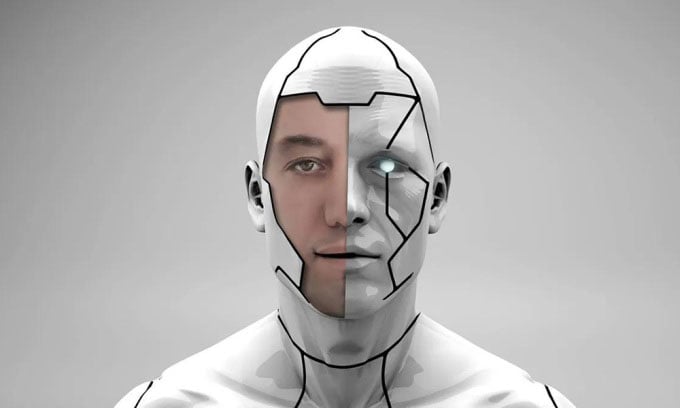 |
| Illustration of robot skin. (Image: Devrimb/iStock). |
"We believe we have for the first time demonstrated how multilayered thin-film sensors can automatically rearrange themselves during healing. This is a crucial step toward mimicking human skin, which is composed of multiple layers and will precisely reassemble itself as a wound heals," said Christopher B. Cooper, a graduate student at Stanford University and co-author of the study.
The new material can sense changes in temperature, mechanics, or electricity in its surroundings, and even detect pressure. "The electronic skin is soft and flexible. But if you puncture, cut, or slit it, each layer will selectively heal itself to restore overall function. This is just like real skin," said Sam Root, co-author of the study.
The electronic skin can self-heal in just 24 hours when warmed to 70 degrees Celsius or in about a week at room temperature. "Combined with magnetic navigation and an induction heating system, we can create soft robots that can change shape and sense deformation as needed," said Renee Zhao, co-author of the study.
The research team plans to layer multiple thin layers of skin with different capabilities; for example, one layer could sense temperature changes and another could sense pressure. This would help the electronic skin become increasingly closer to real, multidimensional skin.
According to khoahoc.tv
Source link































































































Comment (0)