

Kinhtedothi - On the morning of February 5th, at its 42nd session, the Standing Committee of the National Assembly gave its opinion on the draft Law on Government Organization (amended).
In her summary presentation of the draft Law on Government Organization (amended), Minister of Home Affairs Pham Thi Thanh Tra stated that the objective of the draft Law is to amend, supplement, and perfect the regulations on the principles of organization and operation of the Government; the tasks and powers of the Government, the Prime Minister, and the members of the Government, creating a legal basis for the reform and restructuring of the state administrative apparatus to be more effective and efficient. It aims to promote decentralization and delegation of power, fostering a development-oriented government, and meeting the requirements of building and perfecting the socialist rule of law in Vietnam.
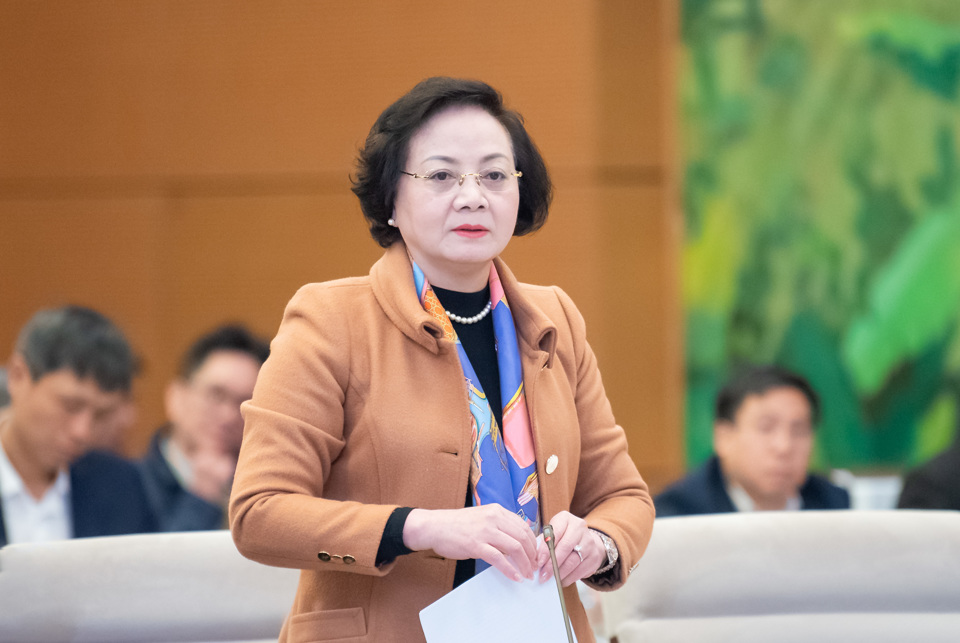
Accordingly, the draft law is expected to consist of 5 parts. The draft law comprises 35 chapters and 35 articles, a reduction of 2 chapters and 15 articles compared to the current law. The basic content of the draft law includes: perfecting regulations on the tasks and powers of the Government in relation to central state agencies; perfecting regulations on the tasks and powers of the Government, the Prime Minister , Ministers, heads of ministerial-level agencies, and the relationship between government agencies; and perfecting regulations on the tasks and powers of the Government, the Prime Minister, Ministers, and heads of ministerial-level agencies in relation to local governments.
In his remarks during the review, the Chairman of the Legal Committee, Hoang Thanh Tung, stated that the Standing Committee of the Legal Committee agrees with the comprehensive amendment of the Law on Government Organization. The Standing Committee also agrees with the decentralization provisions in the draft law, aiming to institutionalize the conclusions of the Politburo and create an important legal basis for "strengthening the autonomy, initiative, creativity, and accountability of agencies, units, and localities, while enhancing the accountability of leaders and tightly controlling power."
The reviewing agency also requested the drafting agency to continue researching and refining the content of the decentralization principle, clarifying the entities to which decentralization is granted, and the mechanism for accountability of the decentralized agencies to ensure consistency and uniformity with the provisions of the draft Law on Organization of Local Government (amended).
"We propose adding a principle of decentralization in the direction that: when implementing decentralization, it must ensure synchronization between the decentralization of tasks and powers and the decentralization of administrative procedures, creating favorable conditions for the decentralized agencies to proactively handle work, promoting administrative procedure reform associated with strengthening the responsibility of agencies and improving the quality and efficiency of services for citizens and businesses," Chairman Hoang Thanh Tung stated.
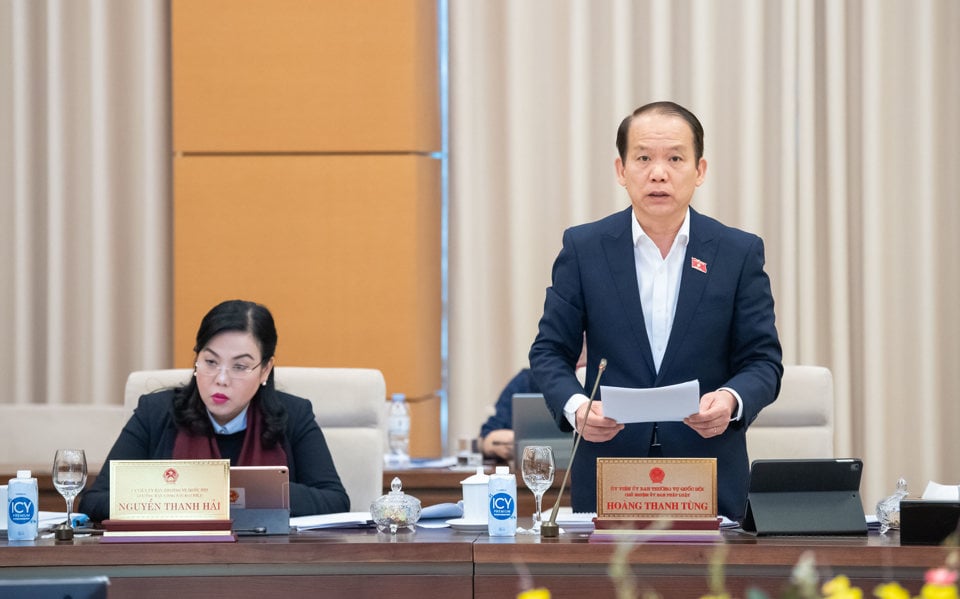
Furthermore, since the Law on Government Organization is being amended simultaneously with many related laws such as the Law on National Assembly Organization, the Law on Local Government Organization, the Law on Promulgation of Legal Normative Documents, the Law on Supervisory Activities of the National Assembly and People's Councils, etc., the drafting agency is requested to continue reviewing and comparing them to ensure policy consistency and the uniformity of the legal system.
At the meeting, members of the National Assembly Standing Committee approved a comprehensive amendment to the Law on Government Organization to promptly institutionalize the Party's guidelines and policies on continuing to reform the organization and operation of the Government; implement the policy of streamlining the organizational structure of the political system and promoting decentralization and delegation of power; and continue to implement the directives of the Party, National Assembly, and Government leaders on reforming thinking in lawmaking....
At the same time, delegates focused on giving opinions on several key issues related to regulations on the principles of delineating authority; decentralization and delegation of authority; transitional provisions; the relationship between the Government and the National Assembly and the Standing Committee of the National Assembly...
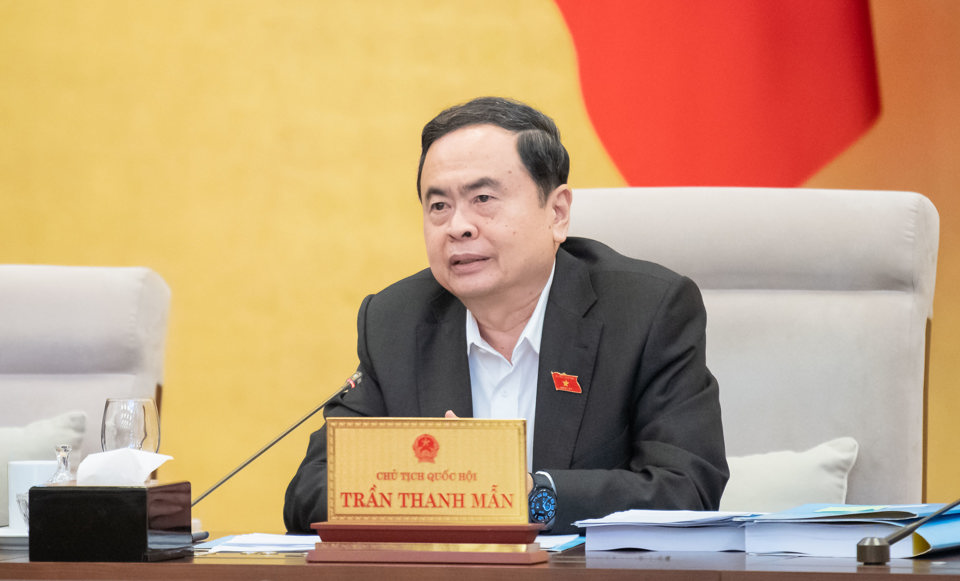
Speaking at the session, National Assembly Chairman Tran Thanh Man emphasized that public opinion and the people are currently very interested in the restructuring of the state apparatus, ensuring it adheres to the principle of being "lean, efficient, strong, effective, and effective." Therefore, the contents submitted to the National Assembly related to the restructuring of the state apparatus must be consistent with the Party's guidelines and policies; the preparation process needs to be urgent, thorough, and of high quality.
National Assembly Chairman Tran Thanh Man also emphasized that this revision of the Law should promote maximum decentralization to the Government, enabling the Government to proactively resolve difficulties and obstacles, and drive national development. At the same time, the National Assembly Chairman requested that consistency be ensured between the provisions related to decentralization and delegation of power stipulated in this law and related laws such as: the Law on the Organization of the National Assembly, the Law on the Organization of Local Government, the Law on the Promulgation of Legal Normative Documents, and the Law on the Supervisory Activities of the National Assembly and People's Councils.
Reiterating General Secretary To Lam's request for decentralization and delegation of power, emphasizing "local authorities decide, local authorities act, and local authorities are responsible," the National Assembly Chairman also noted the need to continue researching and refining the definitions of "decentralization" and "delegation" in the draft law to ensure consistency and uniformity with the provisions of the revised Law on Organization of Local Government; clearly defining the conditions for decentralization such as finance, human resources, administrative procedures, etc. Furthermore, he stressed the need to clarify the conditions and individuals eligible for decentralization, avoiding situations of shirking responsibility; and that the agencies receiving decentralization should be proactive and not be required to further decentralize.
Regarding transitional provisions, the Speaker of the National Assembly suggested that it is necessary to clearly define the articles, clauses, and points of laws and ordinances that have adjusted the duties and powers of the Government, the Prime Minister, Ministers, and heads of ministerial-level agencies.
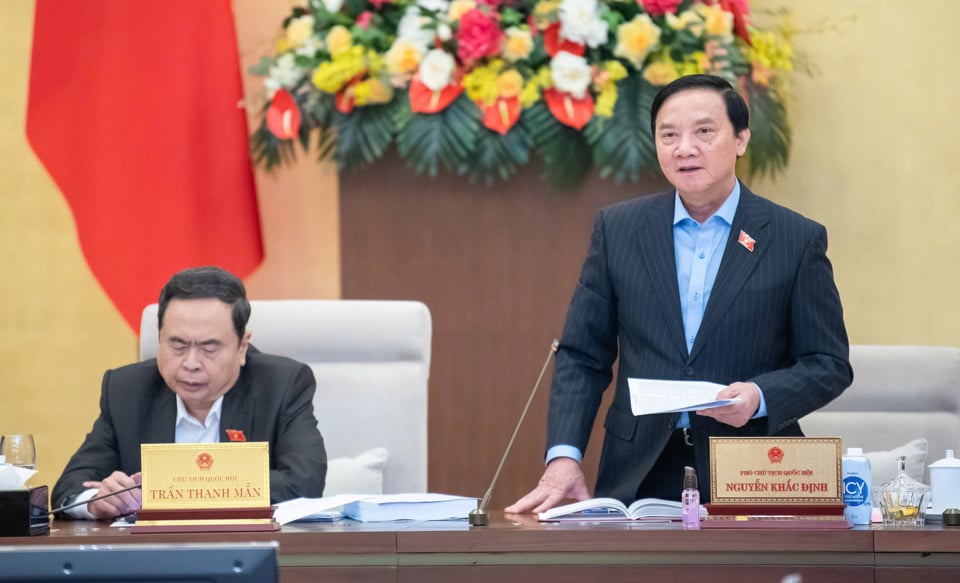
Concluding the session, Vice Chairman of the National Assembly Nguyen Khac Dinh stated that the Standing Committee of the National Assembly unanimously agreed on the necessity of comprehensively amending the Law on Government Organization. Basically, the Standing Committee of the National Assembly endorsed the major contents of the draft Law on Government Organization (amended), which have promptly institutionalized the Party's policy on innovation and creativity in reorganizing the state apparatus to be "lean, strong, efficient, effective, and efficient," defining the authority and responsibility between legislative, executive, and judicial branches according to the principle of maximum decentralization to the Government, creating favorable conditions for the Government to manage and develop socio-economic affairs according to its functions and tasks; and implementing strong and reasonable decentralization and delegation of power between the central and local levels.
Regarding specific issues, the Vice Chairman of the National Assembly stated that, concerning regulations on decentralization, further review and clarification of the content of decentralization and delegation of authority within the administrative system, including the terminology used, are necessary to ensure compliance with Party regulations and consistency within the legal system and related laws. Furthermore, it is crucial to ensure synchronization between the decentralization of assigned tasks and powers and the decentralization of administrative procedures and work processes; clarify the responsibilities between higher and lower levels in decentralization; and ensure that decentralization is linked to the fulfillment of assigned tasks, powers, and responsibilities for achieving results. Simultaneously, further decentralization should be avoided; decentralization must be smooth, convenient, and feasible...
Source: https://kinhtedothi.vn/sua-doi-luat-to-chuc-chinh-phu-phan-cap-phan-quyen-manh-me-hon.html


![[Photo] General Secretary To Lam working with Ambassadors and Heads of Vietnamese representative offices abroad attending the 14th National Congress of the Party](/_next/image?url=https%3A%2F%2Fvphoto.vietnam.vn%2Fthumb%2F1200x675%2Fvietnam%2Fresource%2FIMAGE%2F2026%2F01%2F25%2F1769327811288_a1-bnd-4520-9649-jpg.webp&w=3840&q=75)


![[Photo] Bustling Bat Xat - Lao Cai Trade Promotion Fair 2026](/_next/image?url=https%3A%2F%2Fvphoto.vietnam.vn%2Fthumb%2F402x226%2Fvietnam%2Fresource%2FIMAGE%2F2026%2F01%2F25%2F1769329919758_baolaocai-br_mg-8921-jpg.webp&w=3840&q=75)




Comment (0)