

The fundamental solution to preventing the risk of moral decline among students is to thoroughly understand the educational philosophy of "First learn manners, then learn knowledge," truly placing virtue at the root of current general education curricula and content.
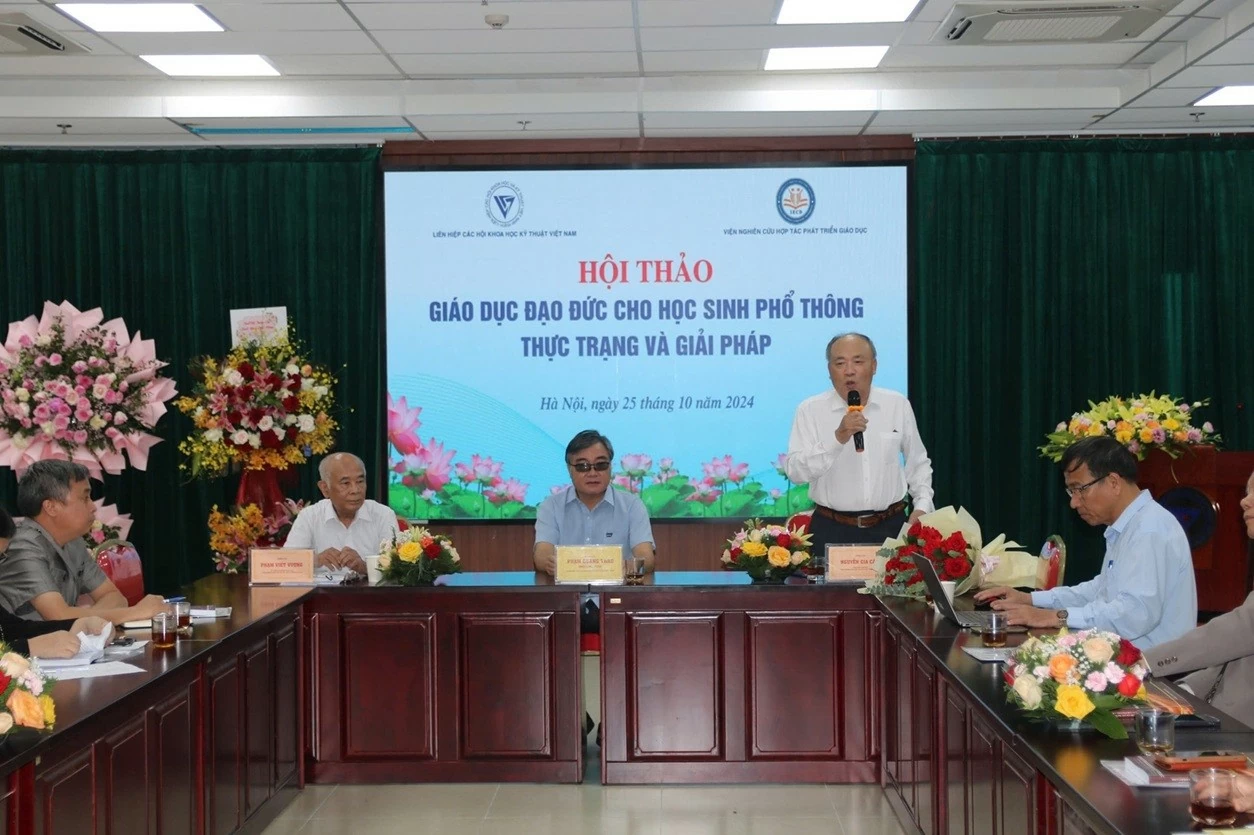 |
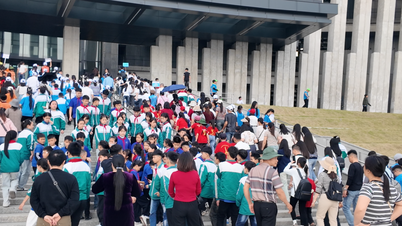
| The workshop "Moral Education for High School Students - Current Situation and Solutions" received attention from many experts and educators. |
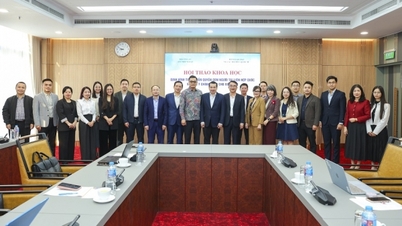
This morning (October 25th), in Hanoi, the Vietnam Union of Science and Technology Associations (Vietnam Union of Associations) collaborated with the Institute for Research on Educational Development Cooperation to organize the workshop "Moral Education for High School Students - Current Situation and Solutions".
Morality is the foundation of humanity.
In his opening remarks at the workshop, Associate Professor Pham Quang Thao, Vice President of the Vietnam Union of Associations, stated that President Ho Chi Minh repeatedly affirmed that morality is the root of human nature. Accordingly, morality is the foundation for developing abilities and other qualities of personality. The main path to forming morality is through education and daily activities. For secondary schools, moral education for students is a top priority.
The practice of moral education for students in recent years has been a matter of concern for the entire education sector and society as a whole. Cases of ethical and lifestyle violations, as well as legal transgressions, have caused great public worry and outrage regarding the declining moral standards of students. One of the reasons for this situation is that current secondary schools focus primarily on academic subjects and do not give due importance to moral education.
Given this reality, Associate Professor Pham Quang Thao hopes that the workshop will gather diverse opinions and perspectives from experts and scientists on education. From there, solutions can be proposed to prevent the risks leading to moral decline among students, as well as recommendations to relevant authorities regarding mechanisms, policies, and management methods for effective and practical educational solutions.
From his perspective, Associate Professor Dr. To Ba Truong, from the Institute for Educational Development Cooperation Research, affirms that moral education for high school students today has special significance and importance in shaping their personality and comprehensive development. Moral education helps students understand and internalize moral values, thereby building a healthy personality and lifestyle.
Students who receive moral education will know how to behave appropriately in various situations, thereby developing communication and teamwork skills. This is crucial in building social relationships and working effectively in the community. At the same time, moral education helps prevent negative behaviors such as school violence and cheating. Thus, early moral education helps children become good citizens with a sense of responsibility towards society and the country.
According to Associate Professor Dr. To Ba Truong, in recent years, the moral decline among high school students has been on the rise, with many serious violations reflecting a deterioration in morality and lifestyle. Incidents of students insulting teachers have occurred in several localities. “These are alarming signs of crossing the red line in social moral standards, causing public outrage,” emphasized Dr. To Ba Truong. Therefore, it needs to be thoroughly addressed immediately, without delay.
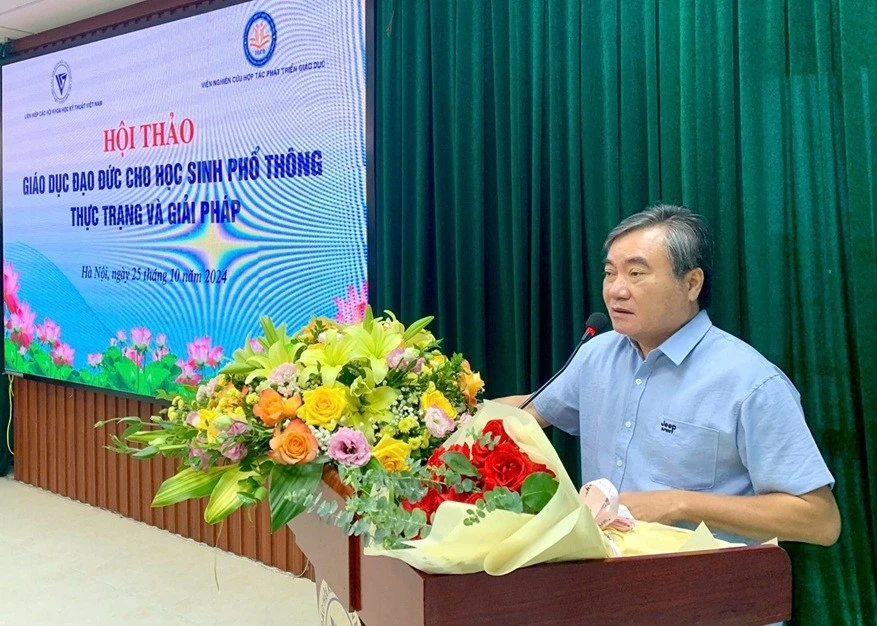 |
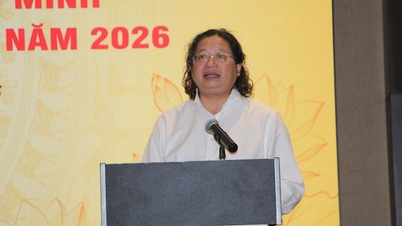
| Assoc. Prof. Dr. Pham Quang Thao delivered the opening remarks at the workshop. |
Adhering to the educational philosophy of "First learn manners, then learn knowledge."
Associate Professor Dr. Tran Dinh Tuan (Institute for Educational Development Cooperation Research) believes that in recent years, the reality of ethical and legal violations by students has been causing public concern. The number of violations has increased, involving offenders of all ages and educational levels; the severity of these violations is also higher. These violations include drug addiction and complicity in the trafficking of prohibited goods. In particular, the decline in ideology, the loss of faith, the indifference and apathy, and the reckless and deviant lifestyles of a segment of students are the most dangerous threat today.
In response to this situation, Associate Professor Dr. Tran Dinh Tuan proposed fundamental solutions to prevent the risk of moral decline among students. Specifically, these include: building schools into true centers of moral education for students; clearly defining the purpose and function of moral and character education for students in schools; reforming the curriculum, increasing the proportion of time and subjects dedicated to moral education in schools; developing moral education content for each grade and level appropriate to age; and diversifying methods and forms of organizing moral education in schools.
Associate Professor Dr. Tran Dinh Tuan emphasized: “The issue of improving the quality of moral education and preventing the risk of moral decline among high school students in the current context is an urgent task for all high schools and the entire education sector. The fundamental solution to prevent the risk of moral decline in students is to thoroughly understand the educational philosophy of "First learn manners, then learn knowledge," truly taking virtue as the foundation in building the current general education curriculum and content.”
Expressing his views, Associate Professor Dr. Pham Viet Vuong from Hanoi Pedagogical University stated that moral education is an important content in schools, contributing to the comprehensive development of students' personalities. To achieve this, diverse and engaging methods and organizational forms suitable to the psychological characteristics of students' age groups are needed. Research into the theory and practice of moral and lifestyle education for secondary school students in the current period is timely and urgent, aiming to find educational measures to prevent deviant behaviors among students and improve the quality of general education.
According to Associate Professor Pham Viet Vuong, there are many reasons leading to deviant behaviors in the ethics and lifestyles of students (due to the psychological and physiological characteristics of their age group; reasons from the family; the development of the Internet and social media; market mechanisms and globalization...).
Therefore, it is necessary to use diverse and engaging methods and organizational forms that are appropriate to the psychological characteristics of students of this age group. In particular, schools need to coordinate with families, the government, and local agencies and organizations to promptly detect deviant behaviors inside and outside the school, in order to find timely preventive and corrective measures.
Offering a solution, Associate Professor Dr. Pham Viet Vuong suggested that it is necessary to improve family education capacity. The education sector should compile materials on family education, ethics, and traditional and modern lifestyles of the civilized world for students and parents to refer to.
Simultaneously, improve the quality of school education. Both science and practice confirm that the best way to educate students on ethics and lifestyle is through teaching science subjects to enhance their cognitive abilities and independent thinking. At the same time, improve the quality of teaching in social sciences, ethics, civics, history, etc. Furthermore, improve the quality and effectiveness of coordination among educational forces, building close relationships between families, schools, and society to jointly address potential situations that students may encounter.
"It can be said that moral and lifestyle education for students needs to impact all three aspects: awareness, attitude, and moral behavior, helping them to have sufficient knowledge, skills, and self-confidence to handle all situations in social relationships," Associate Professor Dr. Pham Viet Vuong affirmed.
Source
![[Photo] Prime Minister Pham Minh Chinh presides over a meeting on private sector economic development.](/_next/image?url=https%3A%2F%2Fvphoto.vietnam.vn%2Fthumb%2F1200x675%2Fvietnam%2Fresource%2FIMAGE%2F2025%2F12%2F20%2F1766237501876_thiet-ke-chua-co-ten-40-png.webp&w=3840&q=75)


![[Photo] Prime Minister Pham Minh Chinh presides over the conference announcing the establishment of the International Finance Centre in Vietnam.](/_next/image?url=https%3A%2F%2Fvphoto.vietnam.vn%2Fthumb%2F1200x675%2Fvietnam%2Fresource%2FIMAGE%2F2025%2F12%2F21%2F1766309817714_ndo_br_dsc-3400-jpg.webp&w=3840&q=75)














































































Comment (0)