

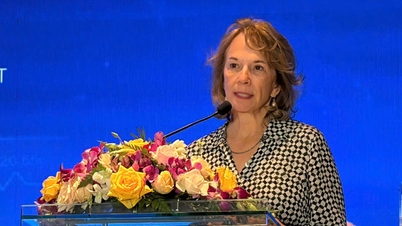
The recipient of the VinFuture 2024 Special Prize for Scientists from Developing Countries - Dr. Firdausi Qadri - aspires to find practical solutions to address challenges in public health care in Bangladesh.
Overcoming all social barriers in Bangladesh, Dr. Firdausi Qadri – recipient of the VinFuture 2024 Special Prize for Scientists from Developing Countries – remains steadfast in her pursuit of scientific research. She has dedicated the entire $500,000 prize money from VinFuture to expanding the ideSHi Institute for Science and Health Innovation Development, which she founded, aiming to nurture future medical talents for Bangladesh.
VinFuture provides further inspiration and motivation.
- How has winning the VinFuture 2024 Special Prize for your innovative work on improving oral cholera vaccines in developing countries impacted your scientific research career in your homeland?
VinFuture has inspired and motivated me to contribute to improving the lives of the people of Bangladesh, while also giving me renewed energy and strengthening my purpose in life. This recognition both drives me in my research and urges me to ensure that scientific solutions are applied in practice, benefiting the less fortunate, especially in global humanitarian crises.
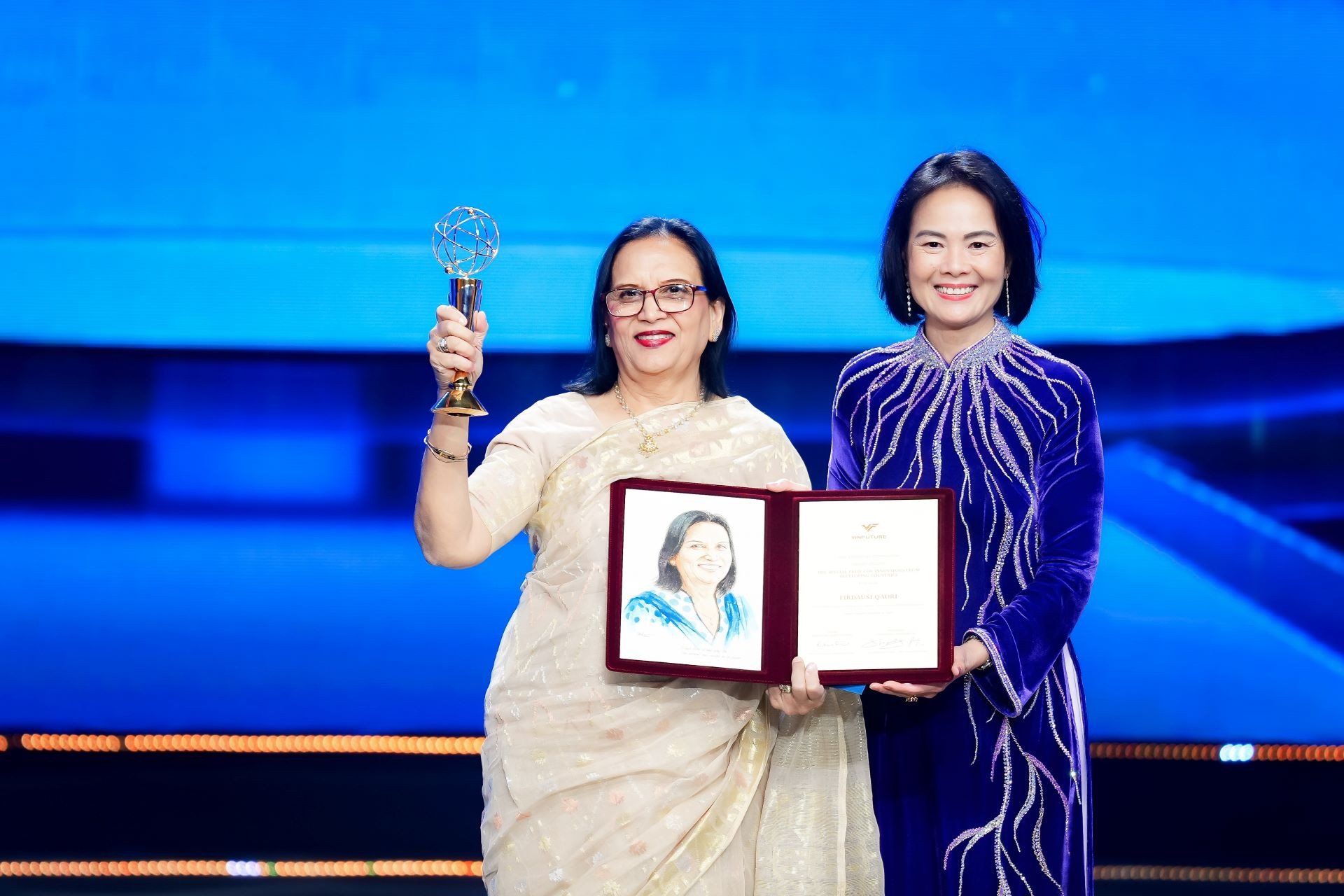
In 2014, I founded the ideSHi Institute for Science and Health Innovation Development with the desire to improve public health and nurture the next generation of scientists. I am extremely happy to receive the $500,000 award from VinFuture, as this money has helped me invest in expanding ideSHi's space and opening more laboratories. Currently, the Institute provides modern facilities, supports research on genetic and infectious diseases, organizes training programs, and collaborates with many international partners.
With the VinFuture grant, I believe ideSHi will continue to deliver practical solutions, addressing challenges in community healthcare, thereby enhancing Bangladesh's position in the biomedical field.
- Could you please share some of the new research directions currently being pursued?
Oral vaccines have paved the way for widespread vaccination campaigns in Bangladesh and other developing countries, helping to prevent outbreaks. However, vaccines alone will not prevent cholera. A comprehensive approach is needed, including improvements in water, sanitation, and personal hygiene (WASH), enhanced education , and most importantly, robust surveillance to monitor the spread of the bacteria.
We are also working towards effective cholera control through a comprehensive public health approach and have made significant progress. One example demonstrates that, in the event of an outbreak, timely vaccination can rapidly reduce the number of cases.
We have implemented this strategy across multiple regions in Bangladesh. Simultaneously, we are working closely with the government to develop a national cholera control plan. This marks a significant milestone in the fight against this dangerous disease.
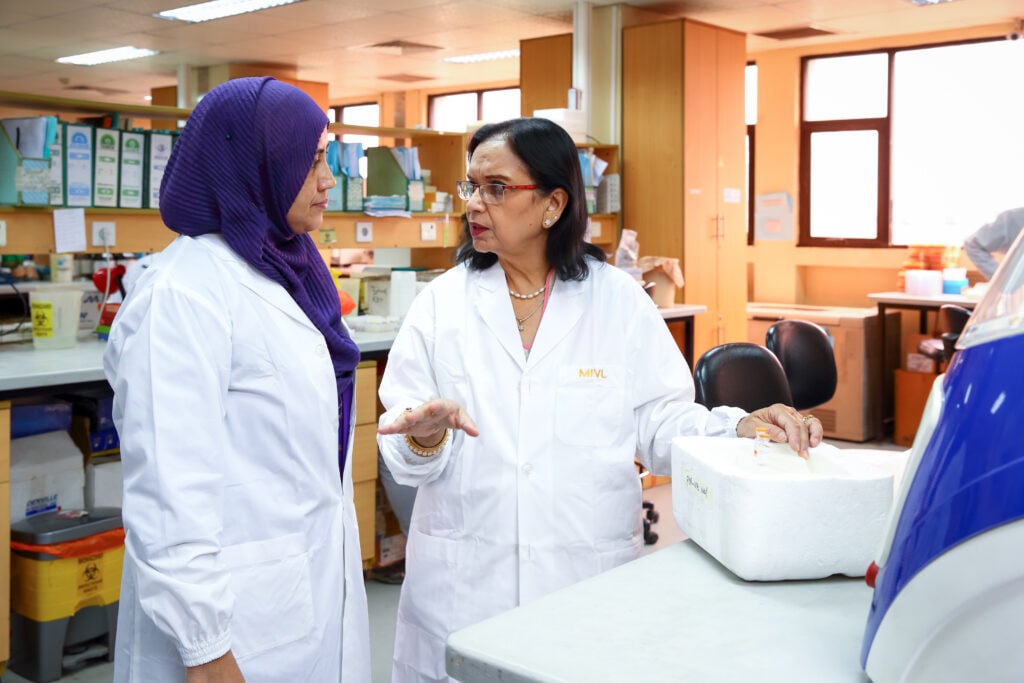
- Her dedication and success in cholera vaccine research are an inspiration to women worldwide. What sparked her passion for science?
My research journey stemmed from a deep passion for immunology. Initially, I focused on laboratory work, but later realized that laboratory research alone was insufficient. Therefore, I expanded my research beyond the lab to the field, going beyond my initial area of expertise.
During my research, I witnessed firsthand the severe impact of cholera at the hospital where I worked in Bangladesh. Each year, up to 200,000 patients with diarrhea were admitted, 90-95% of whom contracted the disease due to difficult circumstances and inadequate living conditions.
I couldn't change everyone's lifestyles, so I started working directly with the community, researching vaccine effectiveness, distribution strategies, and public health interventions. I expanded my collaborations beyond academia to work more with the government, discussing what should and needs to be done.
In reality, cholera is often mentioned with apprehension due to its association with unsanitary conditions. Some governments are even hesitant to acknowledge the existence of this disease for fear of damaging their national image. But at VinFuture, I am honored to be recognized for my research journey.
Breaking down gender stereotypes in science.
- Did you encounter any gender barriers when pursuing science?
Today, gender stereotypes and barriers exist not only in Bangladesh or Asia but are also global. I always aspire to work on equal terms with my male colleagues, to be known simply as a "scientist" rather than a "female scientist." Therefore, instead of letting my gender be a barrier, I focus on my work and don't allow myself to feel inferior or limit my potential.
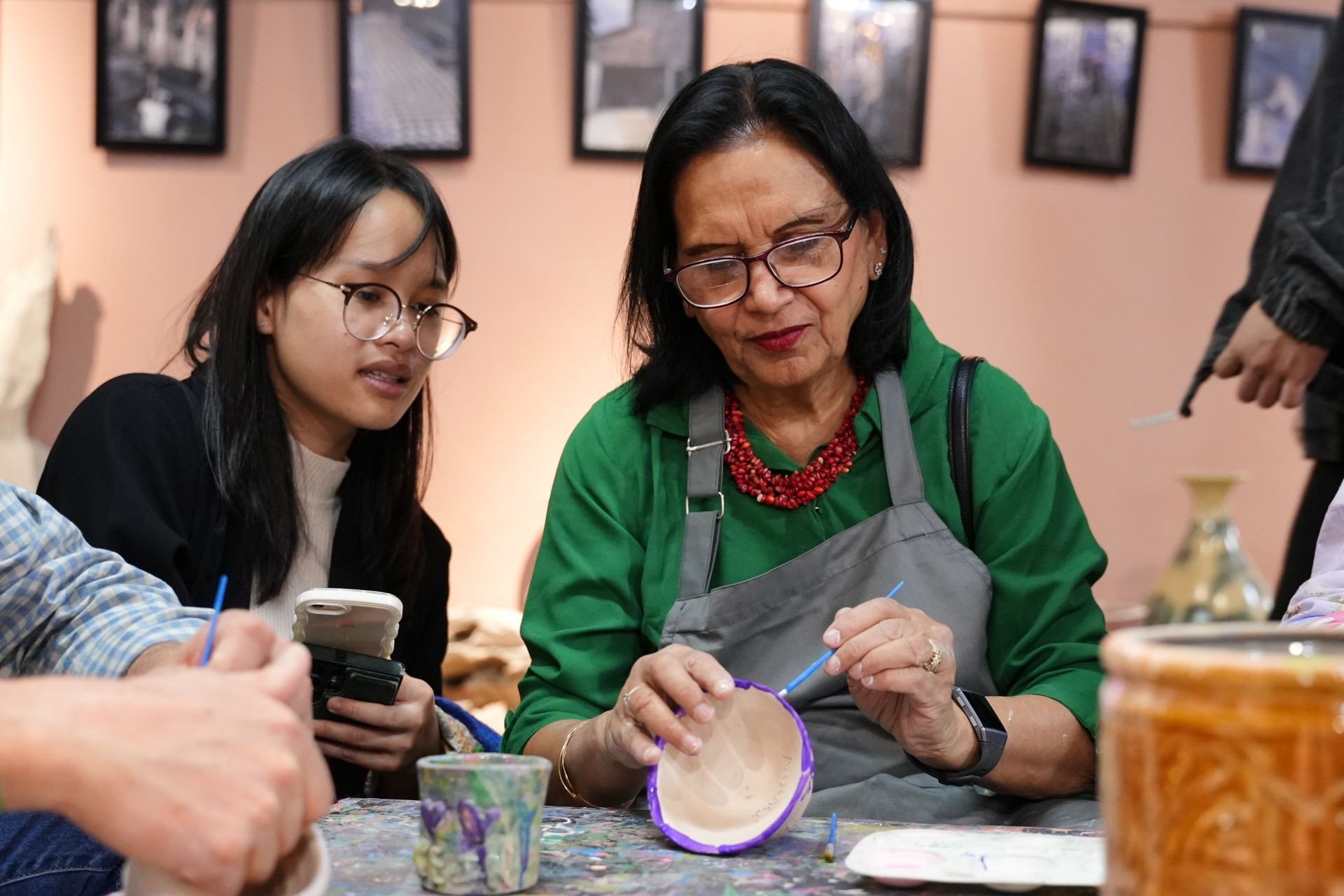
- As someone deeply committed to STEM (Science, Technology, Engineering, and Mathematics) education, why do you believe empowering women in this field is crucial?
Statistics across all sectors show that men still constitute the majority, not only in developing countries but also in advanced economies. If we truly want to contribute to a better world, women must be a part of this transformation.
However, many women remain hesitant to choose STEM fields, not because they lack ability, but because of deeply ingrained social stereotypes. Particularly in fields like engineering and mathematics, the number of women participating is very limited. Cultural biases often dictate which fields are suitable for men and which are for women, creating invisible barriers that discourage women from pursuing STEM.
Another factor to consider is the price to pay and the profound determination required. Success in STEM requires years of dedication and perseverance. This makes the path particularly challenging for women, who must balance career goals with societal expectations for family life.
I have been striving tirelessly and using my own journey as proof to the younger generation that women can both take good care of their families and successfully pursue their scientific careers. There is no secret formula; just focus, perseverance, and unwavering commitment to your chosen work will surely lead to success.
Thank you for sharing your thoughts!
The Dinh
Source: https://vietnamnet.vn/nua-trieu-usd-giai-thuong-vinfuture-2024-se-duoc-nu-chu-nhan-dung-chi-1-viec-2379599.html
























![[Video] The craft of making Dong Ho folk paintings has been inscribed by UNESCO on the List of Crafts in Need of Urgent Safeguarding.](https://vphoto.vietnam.vn/thumb/402x226/vietnam/resource/IMAGE/2025/12/10/1765350246533_tranh-dong-ho-734-jpg.webp)






















































Comment (0)