

People's Artist Thu Hien shared with us about her years of fighting, as well as her peaceful life now at the age of 72.
People's Artist Thu Hien was born in 1952 in Thai Binh province into a family with a rich artistic tradition. She is one of the leading voices of revolutionary music.
Recently, People's Artist Thu Hien shared with VTC News about her years of fighting, as well as her current peaceful life at the age of 72.
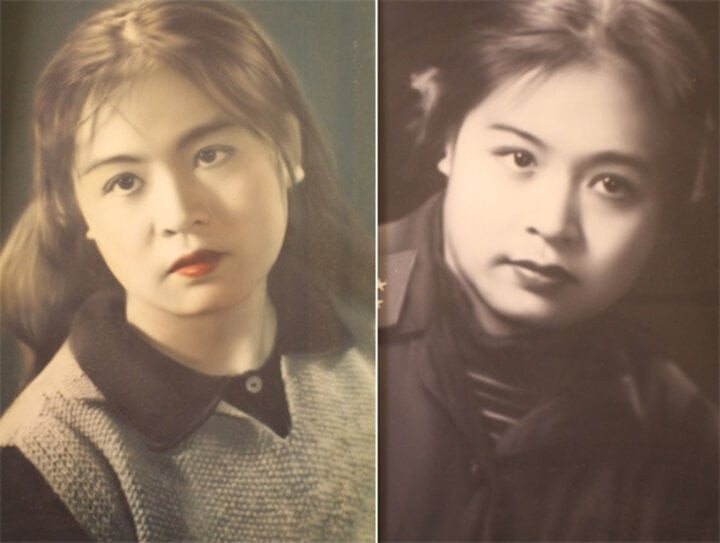
- At the age of 15, People's Artist Thu Hien went to the battlefield and joined a performing arts troupe to entertain the soldiers?
That's right! At 15, after receiving training, professional equipment, and political awareness, I was fortunate enough to join assault teams heading to the battlefields of Zone 4, from Thanh Hoa, Nghe An, Ha Tinh..., which were front lines of fierce fighting and bombing. Along the march, we sang as we went.
Many times, wounded soldiers had to undergo surgery without anesthesia. We stood beside them, singing and calling out their names. They were incredibly resilient; many faced death, but some passed away forever.
Back then, we performed without lights or a stage. In the underground tunnels, we sang by the light of oil lamps. In the deep jungle, we sang by the light of car headlights. We sang with discarded tin cans, inserting bamboo sticks in the middle to make the sound louder. Most of it was a cappella singing. One person sang, and five people sang too.
Many people think that performing arts only involve performing, but that's not true. We participated in cooking, providing medical care to the wounded, and assisting in childbirth. We also faced bombs and gunfire, often teetering on the brink of death. That's the mission of an artist-soldier.
- Memories of a glorious and arduous era must be something she will never forget?
My most memorable experience was in 1972, when I went to Dong Ha ( Quang Tri ) and received orders to go to the Thach Han River to sing across the Ancient Citadel. I had to sing through a hand-operated loudspeaker, but I kept forgetting to sing while pressing the button, and forgetting to press it while singing. The political commissar behind me had to nudge me with a stick to remind me. Luckily, we still completed our mission of "spreading the spirit" from one side of the Thach Han River to the other to our comrades. That day, I sang two songs... Looking at the trees reminds me of Him (composer Do Nhuan) and the folk song "Oh, my dear, please don't leave."
The hardships were countless, but we all loved each other deeply, sharing the same will and optimism to overcome them. We followed our ideals, volunteering for the battlefield. That was the sacred duty of our generation.
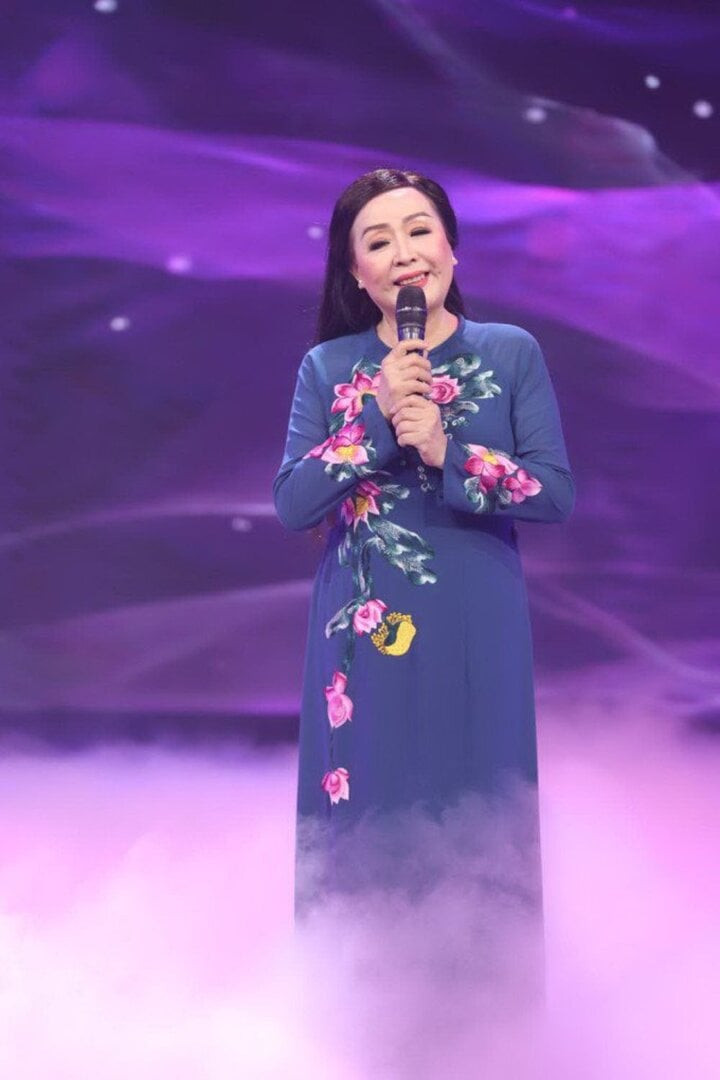
- To fulfill her role as an artist-soldier, she had to be away from her children and family. How did she get through this period?
In 1971, I gave birth and left my child in the North to be raised by my mother. In 1972, I went to the Quang Tri battlefield for the second time. Afterwards, I was selected as one of 12 heroes to go to France to promote the spirit of the Paris Conference in 1973 and 1974. Upon returning, I continued to participate in the campaign to liberate the South.
Whenever I got to visit my child, I would quickly breastfeed and urge her to finish quickly so I could leave. I loved my child very much, but at that time, everyone's resolve was the same; we were going to the battlefield with honor and joy, so we didn't think about ourselves.
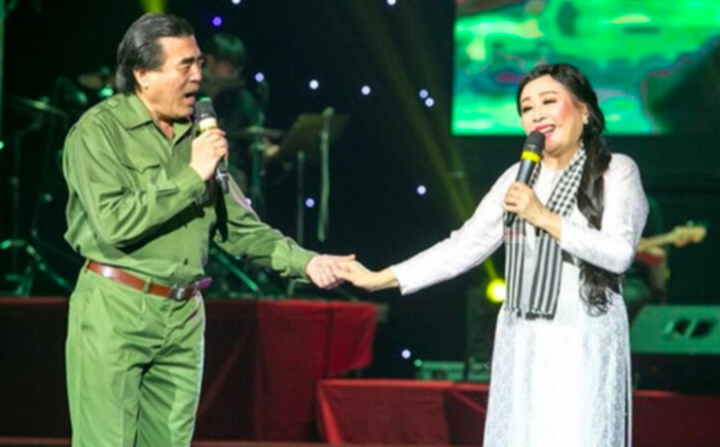
- During her time singing on the battlefield, People's Artist Thu Hien is often remembered alongside People's Artist Trung Duc. Was he the person she sang duets with most harmoniously?
Trung Duc and I have performed in many places, including border regions. Each performance has brought back many memories. I remember one time performing in the eastern part of Quang Ninh province; the venue was inside a rice storage warehouse, completely sealed, with only a small hole for breathing, while a large number of soldiers came to listen. After each song, I had to run outside to catch my breath.
Or on another occasion, when we performed at border checkpoints, we sang: To you at the end of the Red River, the one who went to build the Ke Go reservoir, my love is in a letter… Tears streamed down our faces as we sang. Almost every moment, Duc and I were together, sharing a piece of dried rations when we were hungry, but we still sang from the bottom of our hearts.
In 2000, Trung Duc and I worked together. The album "Truong Son Song " included a series of revolutionary and patriotic songs. Unexpectedly, it received widespread acclaim from the audience. We became a role model for future generations. The audience called us the legendary duet.
- The sweet, poignant voice of People's Artist Thu Hien has captivated many audiences. Singer My Linh once shared that when she sings, half of the audience are men, many of whom are from Central Vietnam. Is this true?
My Linh often jokes like that. I am truly grateful to Central Vietnam; the people of Central Vietnam nurtured me with potatoes and rice, giving wings to my singing voice to reach the public. My voice is closely associated with songs about Central Vietnam such as: A heartfelt song from Ha Tinh, a folk song by the banks of Hien Luong River, beloved Quang Tri…
Perhaps back then, my generation had few singers who performed songs from Central Vietnam. As a folk singer myself, I easily understood the language, pronunciation, the intensity of each lyric, and the deep emotions of the people of Central Vietnam. Therefore, wherever I went, I sang songs about Central Vietnam. Many people still call me a child of Central Vietnam. Few realize that I am actually a child of Thai Binh province.
- What is People's Artist Thu Hien's life like now at the age of 72?
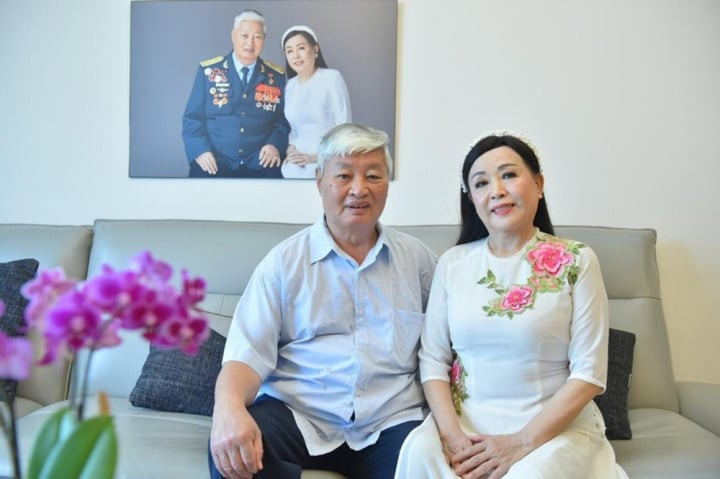
I have a normal life. My husband and I live in an apartment in Ho Chi Minh City. In the mornings, I go for walks, exercise, then come home to prepare meals for my husband and clean the house. In the afternoons, I usually listen to music by young artists. As someone who's been through this for a while, I still learn from them by listening to their new releases every day. I learn everything from arrangement and mixing techniques to performance styles, trying to make my music fresh and less boring.
I still work and sing, but not as often because my health doesn't allow it; mainly just to ease my longing for the profession. I only participate in some events and programs organized by the State and various organizations, and I don't sing or perform at venues anymore.
- For many years, she has been very active in charitable activities.
I enjoy doing charity work, within my means. Every time I perform, I set aside a little money to help those less fortunate than myself. My two daughters and I pooled our money to build a house for the needy in the Mekong Delta. The amount isn't large compared to many people, but it represents the efforts of the three of us.
In addition, we adopted five children, supporting each of them with a few million dong each year. I believe that charity, or spiritual practice, stems from one's heart. If you don't do anything bad, you will find peace.
- You are a famous artist with a rare voice, but your two daughters didn't follow in your footsteps. Does this make you feel disheartened?
I have two daughters who both studied at the conservatory but chose different paths. My youngest is a flight attendant, and my eldest is now pursuing a religious life. I'm not sad that my children didn't follow in my footsteps. I have many students, and I treat them like my own children; that's enough to make me feel content.
Thank you, People's Artist Thu Hien.
People's Artist Thu Hien was born into a family with a rich artistic tradition. Her father was Meritorious Artist Nguyen Hoai An, famous for his nickname "Tam Ken" of the Lien Khu V Folk Song Troupe (the predecessor of the Binh Dinh Bai Choi Opera Troupe), and her mother was Thanh Hao, a Cheo Tuong actress originally from Thai Binh, the daughter of a famous theater manager.
Having loved singing since childhood, Thu Hien has a natural affinity for the stage. Having lived through the brutal war, artist Thu Hien understands many things about life.
Source









































Comment (0)