

Two viewpoints
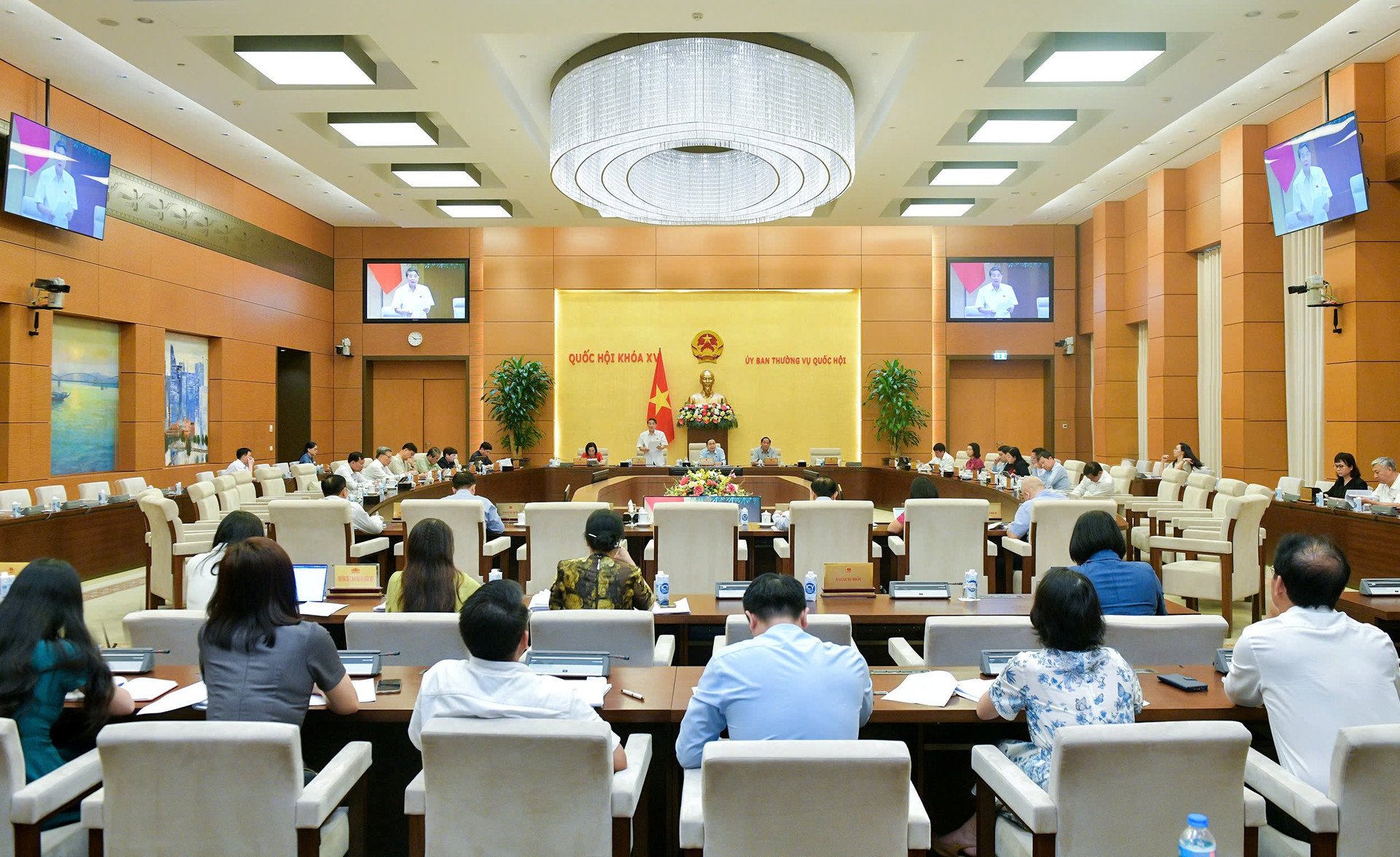
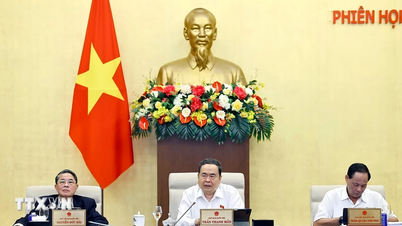
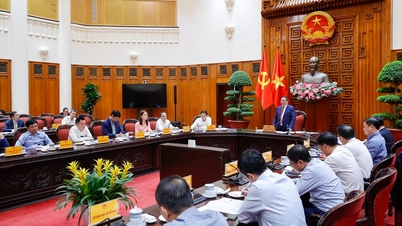
At the session, presenting a summary report on some major issues in explaining, receiving feedback, and revising the draft amended Value Added Tax Law, the Chairman of the National Assembly's Finance and Budget Committee, Le Quang Manh, stated that regarding the suggestion not to transfer fertilizers and agricultural machinery and equipment from the tax-exempt category to the category subject to a 5% tax rate, there were two opposing viewpoints within the Standing Committee of the Finance and Budget Committee.
The first viewpoint suggests maintaining the current regulations because VAT is an indirect tax, and the final consumer bears the VAT burden. Shifting fertilizers to a 5% tax rate would significantly impact farmers (and fishermen) as the price of fertilizers would increase with the VAT, leading to higher agricultural product costs and contradicting the spirit of encouraging agricultural, farmer, and rural development as outlined in Resolution No. 19-NQ/TW.
The second viewpoint agrees with the content of the draft Law and the drafting agency, because Law No. 71/2014/QH13, which moved fertilizers from the 5% VAT tax category to the VAT-exempt category, has created a major policy inconsistency, adversely affecting the domestic fertilizer production industry for the past 10 years. Returning to the 5% tax rate will have certain impacts on fertilizer prices in the market, increasing the cost of imported fertilizers (currently accounting for only 26.7% of the market share); at the same time, it will reduce the cost of domestically produced fertilizers (currently accounting for 73% of the market share); fertilizer production businesses will receive tax refunds because the output tax (5%) is lower than the input tax (10%); and the state budget will not see an increase in revenue due to the need to offset the increase in revenue from imports with the tax refunds for domestic production.
Domestic businesses have room to reduce selling prices if fertilizer and input material prices on the international market remain unchanged. Furthermore, fertilizers are currently a price-stabilized product, so if necessary, in the event of significant price fluctuations in the market, state management agencies can implement necessary management measures to stabilize prices at a reasonable level.
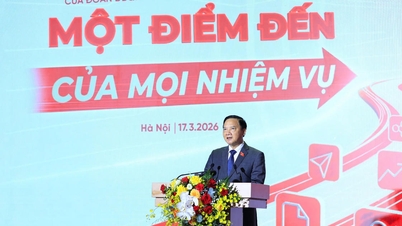
"The majority opinion within the Standing Committee of the Finance and Budget Committee leans towards the first viewpoint," Mr. Mạnh said.
According to Mr. Nguyen Truong Giang, Vice Chairman of the National Assembly 's Law Committee, the current law stipulates that fertilizers are tax-exempt, not subject to a 0% tax rate. Because they are tax-exempt, input tax cannot be deducted or refunded for businesses. Based on this reality, businesses proposed applying a 5% tax to allow for corporate tax refunds. The drafting committee argued that this could lead to a reduction in fertilizer prices on the market.
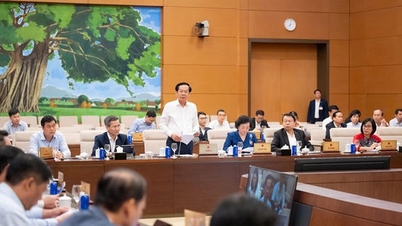
“We have reviewed the entire impact assessment report from the drafting committee. If a 5% tax is imposed on fertilizers, the State will collect approximately 5,700 billion VND annually. Of this, businesses will receive a tax refund of 1,500 billion VND; the state budget will collect 4,200 billion VND. Claiming that farmers will lose 5,700 billion VND by reducing their selling price is unconvincing,” Mr. Giang said, adding that a more accurate assessment is needed because production costs and selling prices are two different issues. Selling prices also depend on the global market . “If a 0% tax is applied to fertilizers, businesses will still receive a tax refund from the state budget. Thus, the state budget will lose 1,500 billion VND per year. At the rate of increase, this could reach 2,000 billion VND per year, but the selling price for farmers will remain stable and not increase,” Mr. Giang proposed.
The Chairman of the National Assembly's Committee on National Defense and Security, Le Tan Toi, also stated that he met with constituents in Long An province and received calls from many provinces in the Mekong Delta. According to these calls, farmers believe that the tax on fertilizers is not supportive of them.
According to Mr. Toi, people have reported that only those farmers with the capacity for concentrated, high-quality production can make a profit. However, the majority of people in the Mekong Delta still produce on a household basis, so production is already difficult under normal circumstances. “Agricultural production is already difficult, and now taxing farmers will cause them to abandon their fields or react negatively. The rural security situation will become complicated,” Mr. Toi said, and requested that the drafting committee and the reviewing agency support the proposal from the perspective of protecting farmers' production and ensuring rural security.
Paying attention to fire safety in high-rise apartment buildings.
On the same day, the Standing Committee of the National Assembly gave its opinion on several major issues of the draft Law on Fire Prevention, Fighting, and Rescue. Reporting at the session, Mr. Le Tan Toi, Chairman of the National Assembly's Committee on National Defense and Security, stated that some opinions suggested adding separate regulations on fire safety conditions for facilities, houses, and individual houses, especially those combining production and business, accommodation, high-rise buildings, apartment complexes, and large urban centers. Some opinions suggested separating this into two articles regulating fire prevention and fighting for houses and houses combining production and business. They also proposed adding groundbreaking regulations and solutions in fire prevention for this type of building, especially houses combining production and business.
Responding to the opinions of National Assembly deputies, the Standing Committee of the National Defense and Security Committee, in coordination with the drafting agency, studied and separated this content into two articles: Article 18 on fire prevention for residential buildings; and Article 19 on fire prevention for residential buildings combined with business activities. At the same time, the draft Law, which has been revised and amended, has been supplemented with more complete and appropriate regulations for these two types of buildings, ensuring compliance with fire safety, firefighting, and evacuation requirements.
The Chairman of the National Assembly's Economic Committee, Vu Hong Thanh, also suggested that regulations on fire prevention and control for high-rise apartment buildings should be added. He noted that firefighting equipment such as helicopters are not yet available, and fire ladders only reach the 20th floor. He emphasized the need for regulations to prevent and mitigate incidents, as dealing with them is very difficult once they occur.
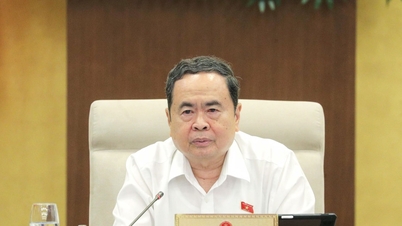
Agreeing with the proposal to separate this content into two articles: Article 18 on fire prevention for residential buildings; and Article 19 on fire prevention for residential buildings combined with business activities, National Assembly Chairman Tran Thanh Man stated that, given the recent practice of residential buildings combined with business activities not meeting fire safety requirements, Article 19 now clearly stipulates fire prevention for such buildings. “The recent fires in this type of building have taught us many valuable lessons. Therefore, we need to synthesize these lessons and incorporate them into the Law to minimize fires and their consequences,” the National Assembly Chairman emphasized.
Source: https://daidoanket.vn/nong-voi-thue-suat-mat-hang-phan-bon-10288090.html




































































Comment (0)