

Recently, doctors in the Trauma Department of Thanh Hoa Provincial General Hospital successfully reattached a severed finger for a patient who suffered a work accident using microsurgery.
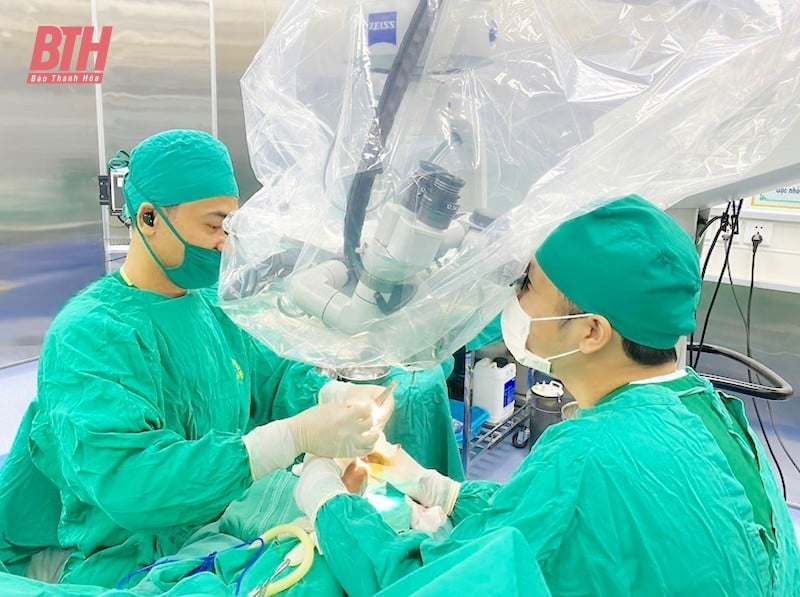
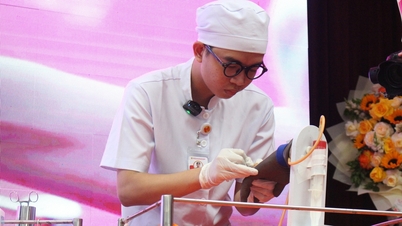
The team of doctors used a surgical microscope to reattach the patient's finger joint.
A 29-year-old male patient, NVL, residing in Tho Cuong commune (Trieu Son district), suffered an accident while working with a mechanical ironing machine. The machine fell on him, resulting in a near-complete severance of the first phalanx of his right second finger, with only a small amount of skin remaining attached. The patient was taken by his family to Trieu Son District General Hospital for first aid before being transferred to Thanh Hoa Provincial General Hospital for treatment.
Trauma specialists quickly consulted to assess the extent of the injury and decided to reattach the severed finger using microsurgical techniques.
However, due to excessive pressure from the mechanical iron, the patient suffered ruptured flexor and extensor tendons, as well as severed blood vessels and nerves in both fingers. Therefore, the medical team performed two surgeries. The first involved microsurgery to reconnect the extensor tendons and fix the first phalanx of the second finger with Kirchner pins. The second involved surgery to reconnect the flexor tendons of the second finger of the right hand.
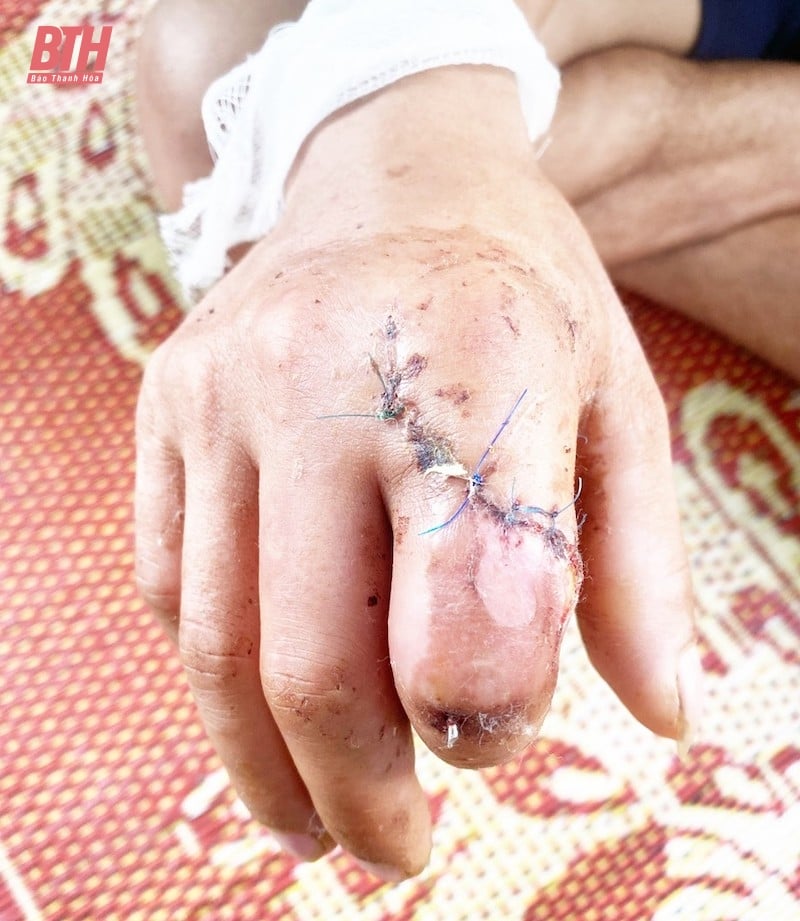
The patient's finger after microsurgical reattachment surgery.
After more than 3 hours of microsurgery, the doctors successfully reconnected the severed blood vessels, nerves, tendons, muscles, and finger bones, restoring the patient's hand to its original state. Approximately 6 hours after the surgery, the patient's finger regained its warmth and pink color, with good blood supply.
After two weeks of treatment, the reattached finger could move gently, the reattachment showed good capillary response, and the patient was instructed by doctors to perform rehabilitation exercises to ensure the continued movement of the reattached finger. The patient was discharged from the hospital and returned to normal life.
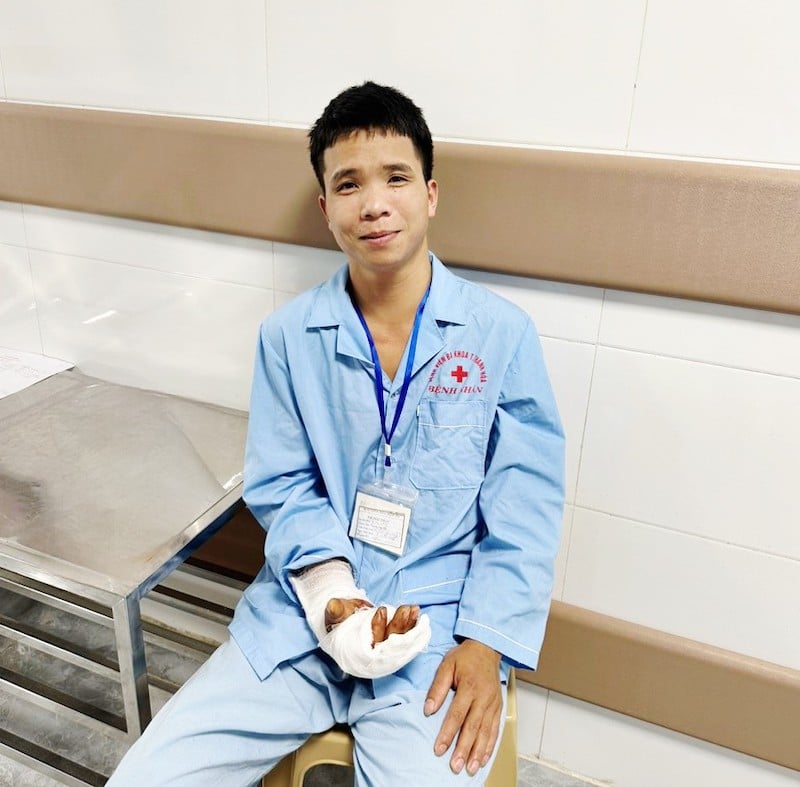
The patient recovered after two weeks of treatment.
Dr. Hoang Tuan Long, Deputy Head of the Trauma Department and the doctor who directly performed the surgery and treated patient L., said: "In patient L.'s case, she was admitted to the hospital with her finger almost completely severed, only a little skin remaining attached. However, assessing the high possibility of recovery, we promptly performed surgery to reattach it to ensure the function of her hand as well as the aesthetics for the patient."
“The difficulty and complexity of this case lies in the small size of the blood vessels in the finger, requiring a high degree of skill and meticulousness in every operation. We had to use a surgical microscope to magnify the surgical field, specialized microsurgical instruments, and highly skilled professionals to perform the suturing of the small arteries and veins. We are very pleased that the surgery was successful, helping the patient regain the full function of their hand. Previously, before implementing this technique, in cases like patient L.'s, initial first aid would usually be given, followed by transfer to a central hospital, or amputation of the severed limb and creation of a stump if the severed tissues were necrotic.”
It is known that since 2022, after sending a team of doctors for formal training at central-level hospitals, Thanh Hoa Provincial General Hospital has successfully performed 3 limb reattachment surgeries, including difficult cases such as complete arm amputation. All patients recovered very well after the reattachment and returned to their normal working and living lives. The successful implementation and application of this technique has yielded positive results, giving hope to many unfortunate cases of limb amputation during work and daily life, allowing for timely emergency surgery locally, reducing severe sequelae for patients, and helping them easily return to normal life.
To Ha
Source

































































Comment (0)