

Vietnam is constantly surrounded by countless sources of imported electronic waste (e-waste) as more and more countries tighten regulations to prevent e-waste from entering their borders. Without a strong protective barrier, Vietnam risks becoming a dumping ground for e-waste for the world .
Risk of information leakage
According to statistics from the Institute of Environmental Science and Technology - Hanoi University of Science and Technology, Vietnam generates approximately 100,000 tons of electronic waste annually, mainly from household electronics and office equipment. It is estimated that by 2025, waste from televisions alone could reach 250,000 tons.
According to the Global Electronic Waste Statistics Partnership, in 2019 alone, Vietnam released 514,000 tons of electronic products onto the market, generating 257,000 tons of electronic waste, averaging 2.7 kg per person. Besides traditional electronic waste, discarded solar panels and electric vehicle batteries have recently become a major challenge as the government encourages the use of solar energy and electric vehicles. Electronic waste can be hazardous to the environment and directly affect human health. If not properly disposed of, electronic waste can release toxic substances such as mercury, lead, chromium, arsenic, and nickel into the environment. Furthermore, there is a potential risk of leakage of personal and important information from discarded electronic devices that are not properly handled.
Mr. Tran Nguyen Hien, Head of the Solid Waste Management Department - Ho Chi Minh City Department of Natural Resources and Environment, stated that in Ho Chi Minh City, the practice of sending electronic waste to scrap collection points stems from the habit of people transferring, giving away, or selling waste that still has economic value. Furthermore, due to the lack of effective implementation of designated electronic waste collection points, there are still recycling activities that do not comply with regulations.
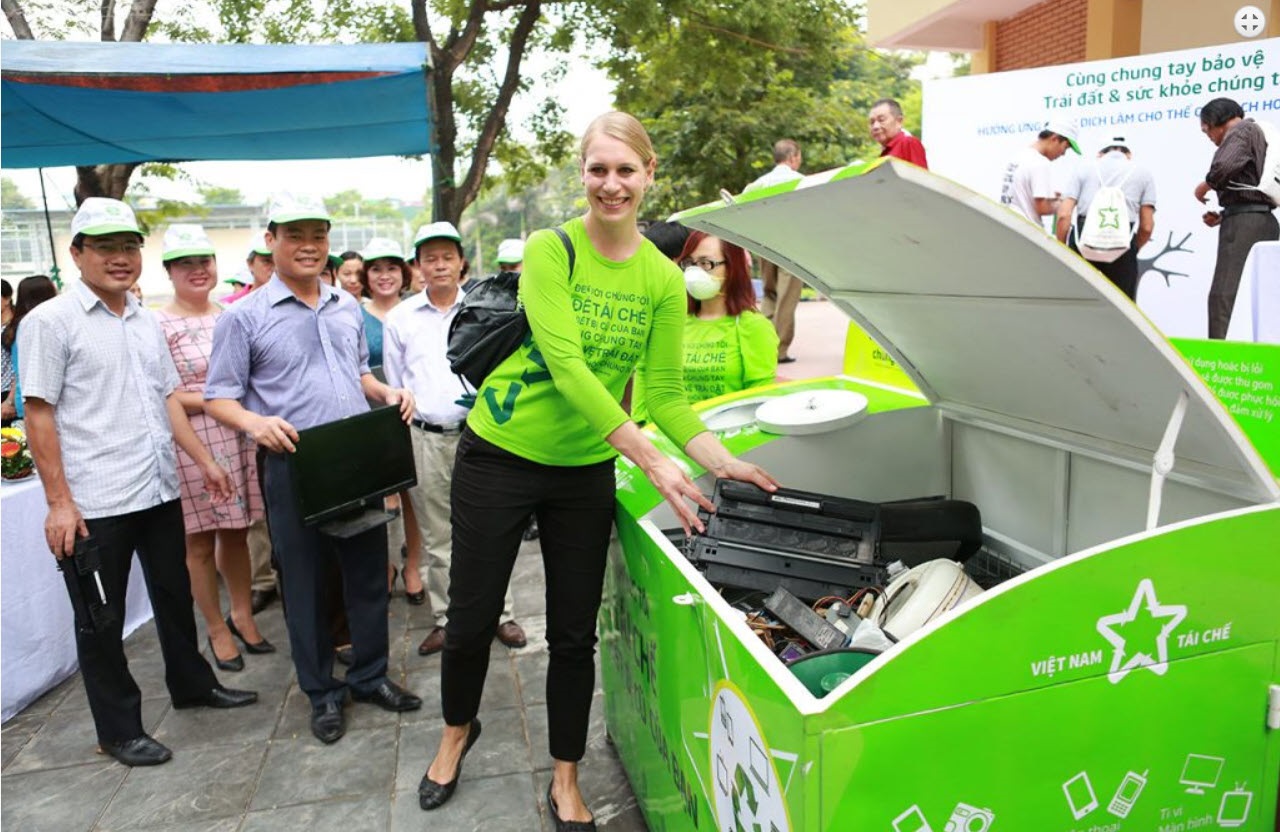
Users hand over old electronic devices to the "Vietnam Recycling" program for proper processing. (Photo: VNTC)
Greening the production process
Over the years, authorities have made efforts to address waste disposal on-site while simultaneously preventing the import of discarded electrical and electronic equipment. The 2020 Environmental Protection Law introduced regulations on the development of a circular economy and the responsibility for recycling and disposing of discarded products (EPR).
A series of programs aimed at raising user awareness and manufacturer/business responsibility regarding electronic waste have been implemented. Notably, the Vietnam Recycling Program (VNTC) has been implemented systematically and consistently (operating continuously since April 2015). This is a free electronic waste collection, processing, and recycling program initiated by electronics manufacturers – primarily HP, Apple, and Microsoft – to comply with Prime Minister's Decision 16 on the recovery of discarded products. Currently, in Ho Chi Minh City and Hanoi, the VNTC program has established 10 electronic waste collection points. Here, users can send old electronic devices such as computers, cameras, and other household electronics for processing by the VNTC team. In 2023, the Vietnam Packaging Recycling Alliance committed to collecting and recycling over 13,000 tons of packaging.
In recent years, Samsung Electronics (South Korea) has restructured its production processes to be greener, using increasingly more post-consumer recycled materials for high-end products and focusing on green, environmentally friendly packaging. At a press conference at the CES 2024 global technology trade show in Las Vegas, USA, on January 8th, Mr. Inhee Chung, Vice President of Samsung's Corporate Sustainability Development Center, shared Samsung's plan for a more circular economy. As part of this plan, Samsung is increasingly using recycled materials in its products – including recycled plastic derived from discarded fishing nets in Galaxy devices, recycled plastic in televisions, and recycled aluminum in Bespoke refrigerators. In addition, the company will also expand the scale of recycling and upgrades for its devices. In mid-2023, Samsung Vina collaborated with the The Gioi Dien Dong retail chain to launch the "Joining Hands to Handle Used Batteries" campaign nationwide, aiming to collect and process used batteries from Samsung devices. Collection bins for used batteries were placed at over 100 The Gioi Dien Dong stores across the country, and the batteries were transported to Samsung factories for processing according to established standards.
At a recent seminar on electronic waste in Hanoi, Mr. Yutaka Yasuda, Senior Managing Director of JX Metal Company of Japan, shared three strong solutions that Japan has implemented to handle and recycle electronic waste. First, strict sorting and collection of electronic waste at the source, placing responsibility for processing on manufacturers. Second, applying laws on recycling household appliances such as televisions, refrigerators, washing machines, and air conditioners, requiring manufacturers to recycle old and broken equipment. Third, Japanese citizens pay when disposing of old electronic devices, and the production process imposes strict requirements on resource recycling rates.
For many years, Vietnam has implemented the National Strategy on Green Growth for the period 2011-2020 and a vision to 2050. In early 2024, Vietnamese leaders demonstrated their determination to restructure the economy towards green and sustainable growth. Both production and business sectors, as well as consumer activities, must be greened.
The processing stage is still at a rudimentary level.
According to the Vietnam Urban and Industrial Zone Environment Association, the process of collecting and processing electronic waste in Vietnam is still rudimentary and inadequate. Approximately 100 electronic waste collection and recycling facilities operate only manually. Those facilities applying high technology face difficulties in terms of human resources, equipment, and a lack of investment in science and technology transfer.
Source: https://nld.com.vn/no-luc-ngan-rac-dien-tu-196240130202833193.htm




![[Photo] President Luong Cuong and his wife attend the Spring Homeland Art Exchange Program 2026](https://vphoto.vietnam.vn/thumb/1200x675/vietnam/resource/IMAGE/2026/02/08/1770565939066_ndo_br_1-6752-jpg.webp)





































































Comment (0)