

Rice prices increased by one unit, fertilizer prices increased by two units.
These days, farmers in Khanh Binh Tay commune, Tran Van Thoi district, Ca Mau province are focusing on planting the 2024-2025 Winter-Spring rice crop. This is the most important rice crop of the year, because in addition to favorable weather and high yields, the price of rice is also higher than the summer-autumn crop. The production plan for the 2024-2025 Winter-Spring rice crop in Ca Mau province covers 35,224 hectares, with Tran Van Thoi district having the largest area at 28,944 hectares, followed by U Minh district with 3,270 hectares, Thoi Binh district with 530 hectares, and Ca Mau city with 2,480 hectares.
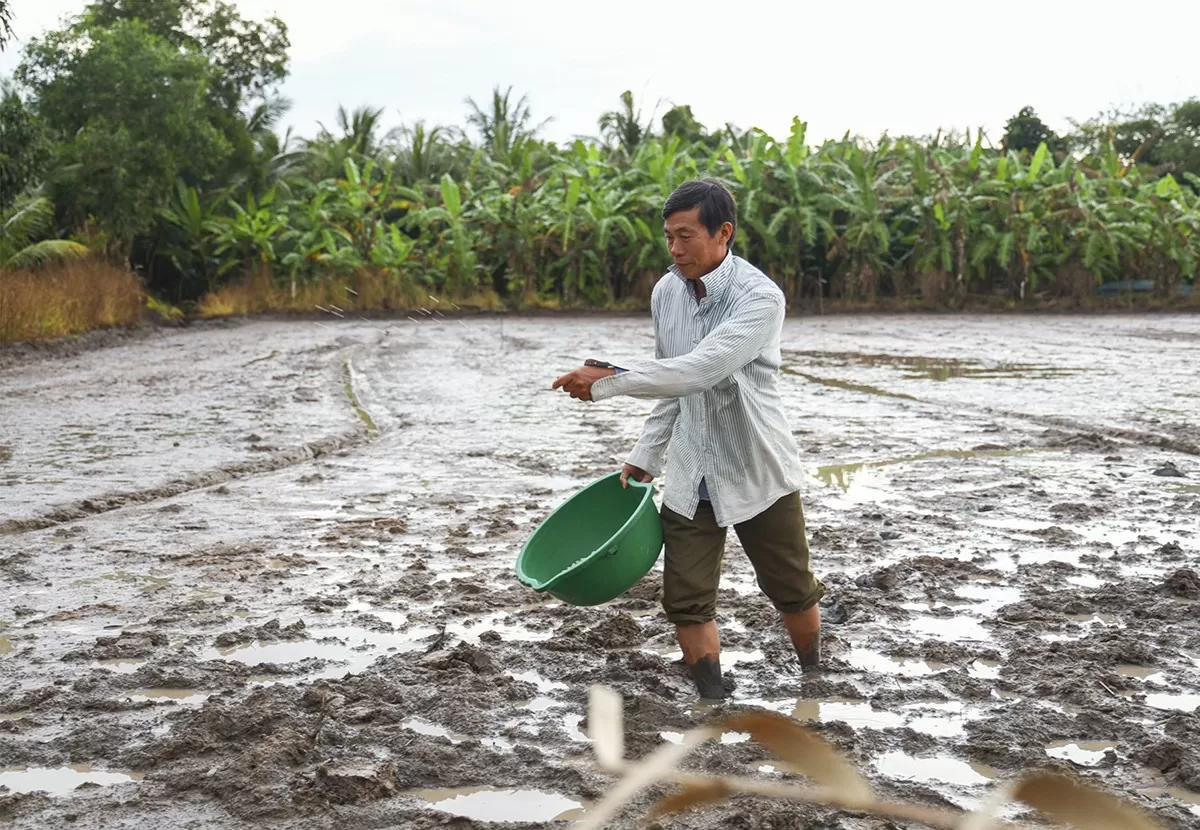 |
| Mr. Pham Truong Giang – Director of Long Giang Agricultural Service Cooperative – is spreading fertilizer in preparation for the new planting season. (Photo: Nguyen Chuong) |
Long Giang Agricultural Service Cooperative (Da Bac A hamlet, Khanh Binh Tay commune, Tran Van Thoi district, Ca Mau province) currently has over 30 hectares, including the cooperative's own area and the area under partnership with individual households.
During the winter-spring season, farmers in the Long Giang Agricultural Service Cooperative plant the ST rice variety, but in the summer-autumn season, the most commonly used variety is OM 18 to minimize lodging. Each hectare yields 5.5 to 6 tons of rice. With a revenue of approximately 17 million VND per hectare per season, the profit margin is around 30-35%, with the remainder being production costs, of which fertilizer costs account for 40%. Mr. Pham Truong Giang, Director of the Long Giang Agricultural Service Cooperative, stated that with the high price of fertilizers, farmers in the cooperative may not achieve the aforementioned profit margin if they are not careful in their farming practices.
“In recent years, fertilizer prices have consistently been on an upward trend. Ten years ago, urea fertilizer cost around 280,000-300,000 VND per bag, but now it's around 600,000 VND per bag; NPK fertilizer, which used to cost around 580,000-600,000 VND per bag, has now increased to 900,000 VND to 1,000,000 VND per bag. Rice prices, which were around 5,000-6,000 VND per kg 4-5 years ago, are now up to 7,500 VND per kg. Farmers produce rice, but the selling price of rice hasn't kept pace with the increase in fertilizer prices,” Mr. Pham Truong Giang informed.
For the past two years, rice prices have consistently remained high. However, this increase in rice prices has led to an increase in agricultural input costs. Therefore, farmers' profits have remained the same. According to rice farmers in Tran Van Thoi district, for every 1 unit increase in rice price, the price of agricultural inputs increases by 2 or 3 units; a bag of fertilizer increases by 100,000 VND while the price of rice only increases by 1,000 VND. The gap between the increase in rice price and the increase in agricultural input costs is quite large. This has resulted in significantly reduced profits for farmers.
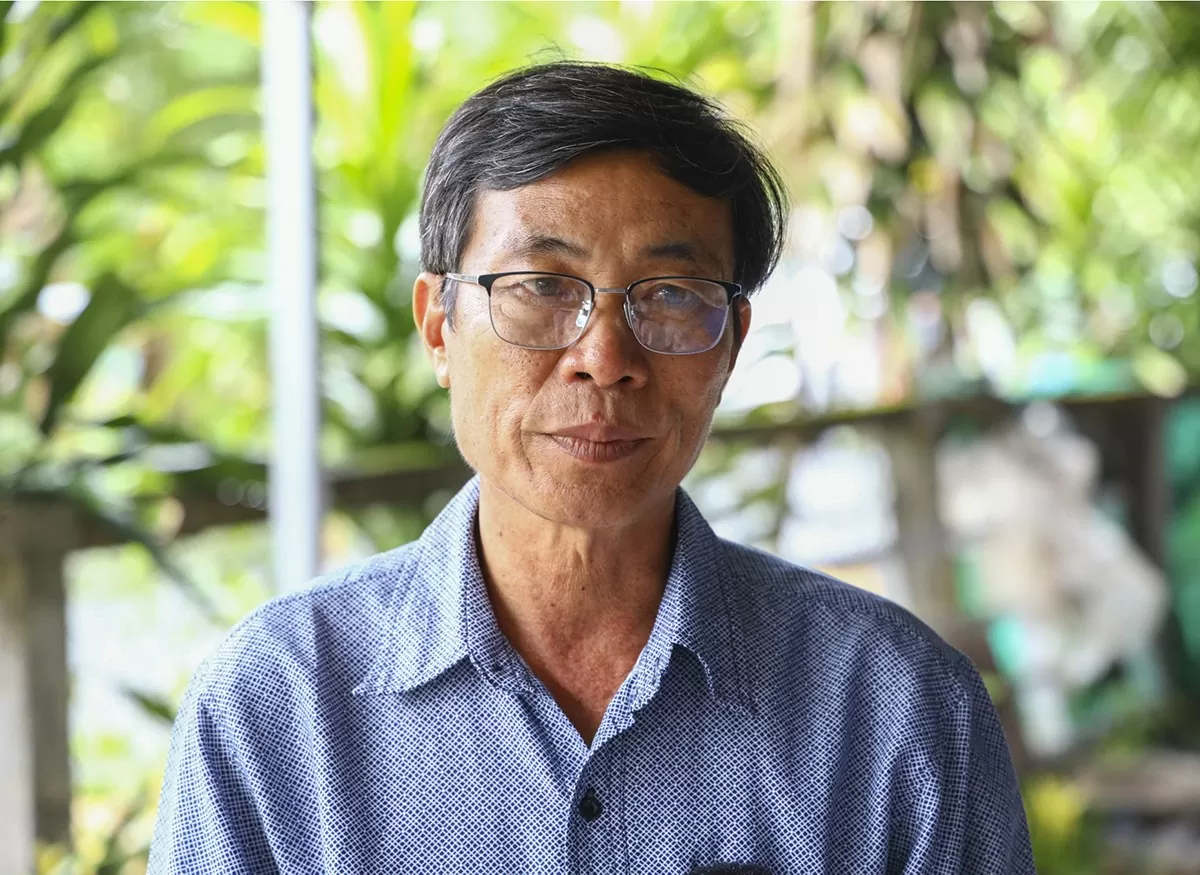 |
| Mr. Pham Truong Giang, Director of Long Giang Agricultural Service Cooperative, said that the increase in rice prices by 1 unit, and the increase in agricultural input costs by 2 or 3 units, has resulted in thinner profits for farmers. (Photo: Nguyen Chuong) |
Not only are agricultural supplies prices rising, but rice farmers in Tran Van Thoi district are also facing the challenge of finding buyers, with fluctuating prices and difficulties in selling their produce due to their dependence on middlemen.
In Can Tho , the issue of agricultural input costs is also a matter of particular concern for farmers. Truong Khuong A Fruit Tree Cooperative (Truong Khuong A hamlet, Truong Long commune, Phong Dien district, Can Tho city) specializes in growing star apple and durian.
Mr. Tran Van Chien – Director of Truong Khuong A Fruit Growing Cooperative – shared that in 2024, the estimated harvest of star apples is 240 tons, of which about 100 tons will be exported and the rest sold to traders outside. For durian, the estimated harvest in 2024 is about 350 tons, with a focus on export, but the harvest season hasn't arrived yet. In previous years, durian yielded 300 tons, mainly sold domestically, with traders purchasing 80 tons.
Speaking about production in recent years, Mr. Tran Van Chien said that farmers are aiming to limit the use of fertilizers and pesticides to lower production costs. “A few years ago, we sold durian at around 30-40 thousand VND/kg, last year it was 60-70 thousand VND/kg. Currently, the price of Ri6 durian is around 140 thousand VND/kg, Monthong durian 160 thousand VND/kg, and Ri6 durian 130-140 thousand VND/kg. Prices fluctuate sharply, and durian growers are quite worried because many people chase after high prices, increasing fertilizer and care for the durian trees, which will drive up production costs. The market is not stable; if durian prices suddenly drop, it will affect profits,” Mr. Tran Van Chien said.
Regarding agricultural input materials, specifically fertilizers, Mr. Tran Van Chien stated that the cooperative has signed an input contract with Thang Loi Company, in which 60% of the fertilizer is imported and 40% is domestically produced.
Imported fertilizers are more expensive than domestic fertilizers, currently with a difference of 4-5 thousand VND/kg; however, farmers like Mr. Tran Van Chien find it difficult to assess which type is of better quality.
“The cooperative has a total area of 45 hectares. For each crop, we use about 4 tons of organic fertilizer and 500-600 kg of inorganic fertilizer. Domestic fertilizers are used by farmers during the soil recovery and aeration stages. Imported fertilizers are used during the flowering and fruiting stages. We use more imported fertilizers, but domestic fertilizers are also indispensable,” Mr. Chien said.
We hope fertilizer prices will decrease and stabilize.
In 2021-2022, fertilizer prices surged dramatically. While prices stabilized in 2023, they remained high, causing considerable anxiety among farmers like Mr. Chien and Mr. Giang.
Mr. Chien calculated: "Fertilizer costs account for about 40% of the input costs for agricultural materials. Growing rice or fruit trees is the livelihood of farmers, so even if costs increase, even if we incur losses, we still have to do it."
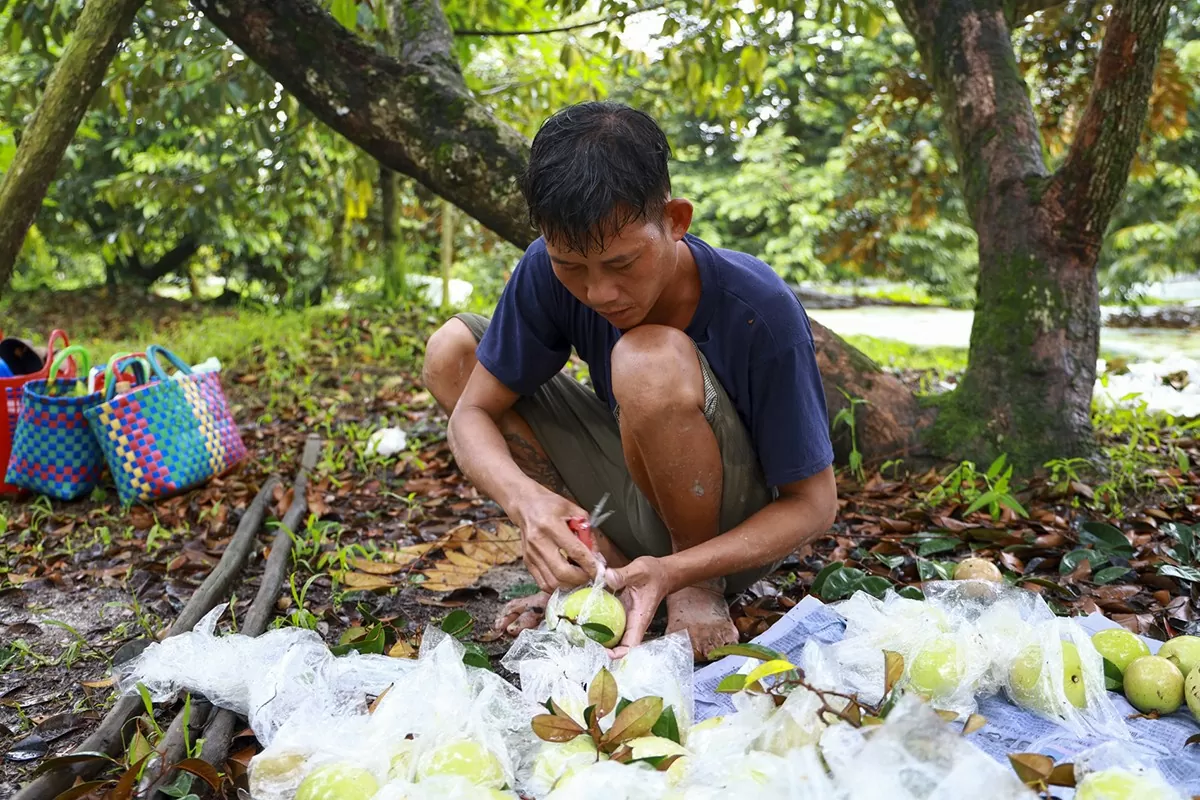 |
| Farmers are harvesting star apples in their orchards. (Photo: Nguyen Chuong) |
Meanwhile, at the orchard of Mr. Ho Van Tuong's family (Truong Khuong A hamlet, Truong Long commune, Phong Dien district, Can Tho city), which covers 12 hectares, they previously mainly grew star apples. However, due to the trees' decline, the family has switched to growing durian. Last year, about 7 hectares of durian trees yielded a harvest, and this year the figure is around 10 hectares.
Growing durian requires significantly higher fertilizer costs than growing star apple. According to Mr. Ho Van Tuong, using more organic fertilizers than chemical ones is recommended. Star apple prices have been relatively stable over the past few years, while durian prices fluctuate. Experienced farmers who manage off-season harvests can sell durian for 130-150 thousand VND/kg, while during peak season it's only 50-55 thousand VND/kg. After harvesting, they have to reinvest in caring for the trees, so they only make a profit of about 30-35 thousand VND/kg even during a favorable season.
When asked about VAT on fertilizers, fruit and rice farmers like Mr. Chien, Mr. Giang, and Mr. Tuong were not entirely clear on the policies. However, what they understood most clearly was that if fertilizer prices continued to increase by 5-10% annually, farmers' profits would certainly decrease.
Therefore, what they are concerned about and hope for is that the state and relevant agencies will have tools to regulate the cost of agricultural inputs, including fertilizers, to keep them stable and reduce them, thereby helping to lower production costs and enabling farmers to produce profitably.
"Fertilizers are indispensable in agriculture; without them, crops will not be productive. If the government has policies to encourage farmers, it needs to create conditions to reduce the cost of fertilizers. Only then can those involved in agriculture, the farmers, have a more prosperous life," Mr. Tuong suggested.
Prior to 2015, the VAT rate on fertilizers was 5%. Following numerous complaints, the 14th National Assembly enacted Law 71 of 2014, effective from January 1, 2015, which stipulates that fertilizers are exempt from value-added tax. Currently, at the request of various ministries, including the Ministry of Agriculture and Rural Development, the State Audit Office, the Fertilizer Association, and delegations from the National Assembly of Bac Giang, Ca Mau, Binh Dinh, Hai Phong, Nam Dinh, Tien Giang, etc., it is proposed that this content be amended. Based on Section 2, Point d of Resolution 101 of 2023, 5th Session, this section should be reviewed. That is why it is proposed to include fertilizers under the 5% VAT tax. The National Assembly has submitted a draft of the revised Value Added Tax (VAT) Law. One of the issues receiving much attention is the proposal to impose a tax on fertilizers, and if imposed, what the tax rate would be; how will this regulation impact the fertilizer market, fertilizer production and trading businesses, and especially farmers – the consumers of this product? |
VAT on fertilizers: Part 2 – Perspectives from National Assembly representatives and recommendations from experts.


![OCOP during Tet season: [Article 4] Elevating local products](/_next/image?url=https%3A%2F%2Fvphoto.vietnam.vn%2Fthumb%2F402x226%2Fvietnam%2Fresource%2FIMAGE%2F2026%2F01%2F29%2F1769652810578_2935-z6982071462129_649e82db06fb2f2ea701388b1f5f5b0b-173322_176-185229-202804_457.jpeg&w=3840&q=75)


![OCOP during Tet season: [Part 3] Ultra-thin rice paper takes off.](/_next/image?url=https%3A%2F%2Fvphoto.vietnam.vn%2Fthumb%2F402x226%2Fvietnam%2Fresource%2FIMAGE%2F2026%2F01%2F28%2F1769562783429_004-194121_651-081010.jpeg&w=3840&q=75)

![OCOP during Tet season: [Part 2] Hoa Thanh incense village glows red.](/_next/image?url=https%3A%2F%2Fvphoto.vietnam.vn%2Fthumb%2F402x226%2Fvietnam%2Fresource%2FIMAGE%2F2026%2F01%2F27%2F1769480573807_505139049_683408031333867_2820052735775418136_n-180643_808-092229.jpeg&w=3840&q=75)



Comment (0)