

As an opportunistic predator, the American alligator may eat almost anything when hungry, including its own kind and carrion.
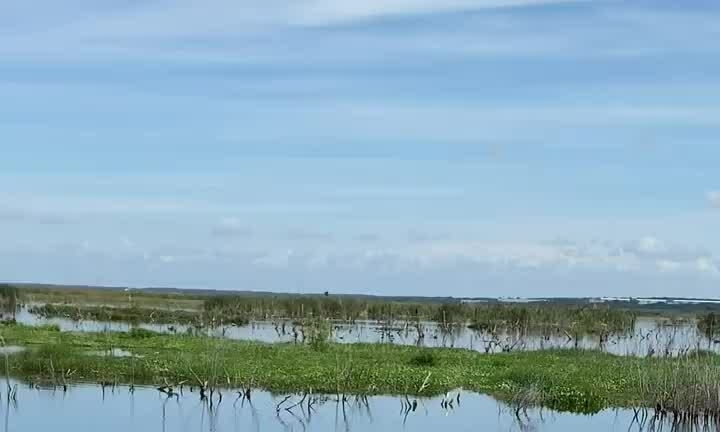
Dawn Jawman filmed an American alligator dragging the carcass of a fellow alligator on Lake Apopka in late July. Video : Dawn Jawman
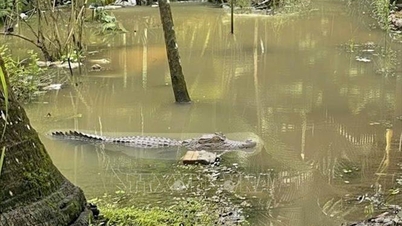
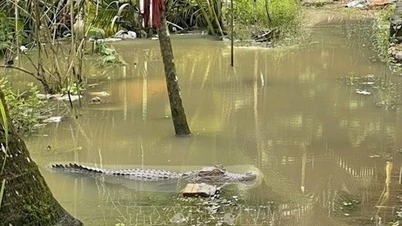
Dawn Jawman filmed a scene of an American alligator ( Alligator mississippiensis ) dragging the carcass of a fellow alligator on Lake Apopka in central Florida, Earth Touch News reported on August 25. Shortly before that, a video of a similar incident – a live alligator dragging the tail of a dead alligator (which had turned white) on Lake Apopka – was also shared on Facebook.
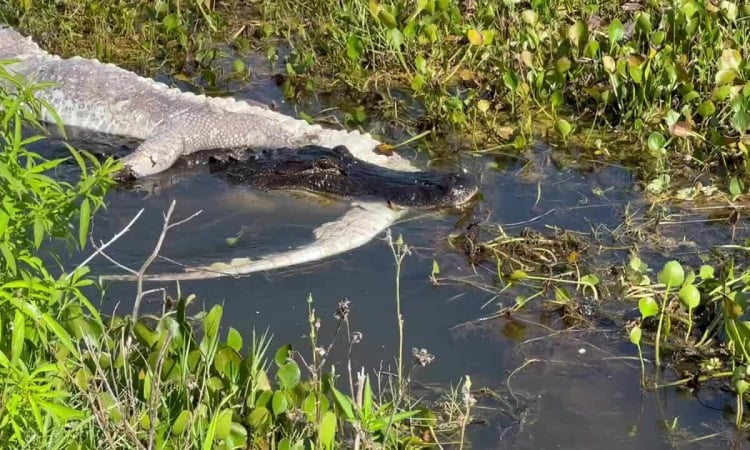
American alligators with the carcass of a white-faced fellow on Lake Apopka in early July. Video: Meagan Tallman
Given the "long-dead" appearance of the dragged alligators and their nearly identical size to the living ones, these cases suggest cannibalism rather than active hunting. American alligators, like many other alligator species, exhibit cannibalistic behavior, but there are usually significant size differences. Cannibalism is even a major cause of death for young alligators.
"It's rare for large alligators to kill and eat others of similar size. Usually, the larger ones will prey on much smaller ones. The telltale sign in these videos is the degree of bleaching of the skin of the dead alligators. If the alligator's skin is discolored like that, it means it's been dead for some time and has been exposed to the sun," said Dr. Adam Rosenblatt, an ecologist at the University of North Florida who has extensively studied American alligators and their black caiman ( Melanosuchus niger ).
Crocodiles are happy with dead meat as well as live meat, even more so because it's essentially a free meal. "The bottom line is that crocodiles always take advantage of an easy meal, and not many things are easier than the carcass of a large crocodile," Rosenblatt added.
It is highly likely that most of the wildlife living in the same area as the American alligator has become its prey at some point, even after death. Experts have even recorded alligators dragging turtle carcasses from beaches into wetlands (freshwater) and climbing ashore to collect wild boar carcasses.
American alligators live primarily in rivers, lakes, and swamps in the southern United States. Their prey typically includes fish, turtles, pythons, snakes, and small mammals. However, they are opportunistic predators and may eat almost anything when hungry, including carrion, their own kind, and livestock. Measuring between 2.6 and 4.6 meters in length and weighing up to 450 kg, American alligators are considered dangerous to humans.
Thu Thao (According to Earth Touch News )
Source link

![[Photo] Two flights successfully landed and took off at Long Thanh Airport.](/_next/image?url=https%3A%2F%2Fvphoto.vietnam.vn%2Fthumb%2F1200x675%2Fvietnam%2Fresource%2FIMAGE%2F2025%2F12%2F15%2F1765808718882_ndo_br_img-8897-resize-5807-jpg.webp&w=3840&q=75)



























































































Comment (0)