

Gold is currently a precious metal that many countries around the world stockpile to stabilize their finances and mitigate risks from economic and financial fluctuations.
According to the latest report from the World Gold Council (WGC), the United States currently holds the world's largest gold reserves, nearly equaling the combined reserves of France, Italy, and Germany. The U.S. possesses 8,133.5 tonnes of gold, valued at approximately $682.3 billion, accounting for almost 25% of total global gold reserves. Most of this gold is believed to be stored in vaults across the U.S., such as the gold bullion vault, commonly known as Fort Knox.
The US gold reserves play a crucial role in maintaining confidence in the US dollar, one of the world's major reserve currencies.
Germany ranks second in the rankings with approximately 3,351.53 tonnes of gold, valued at $281.1 billion. With its strong European economy, Germany maintains a massive gold reserve to protect national assets in times of financial crisis. A large portion of Germany's gold is stored in central banks, including the German Central Bank (Bundesbank) and several international gold reserves.
Maintaining strong gold reserves helps Germany maintain economic stability within the eurozone and bolsters confidence in the euro.
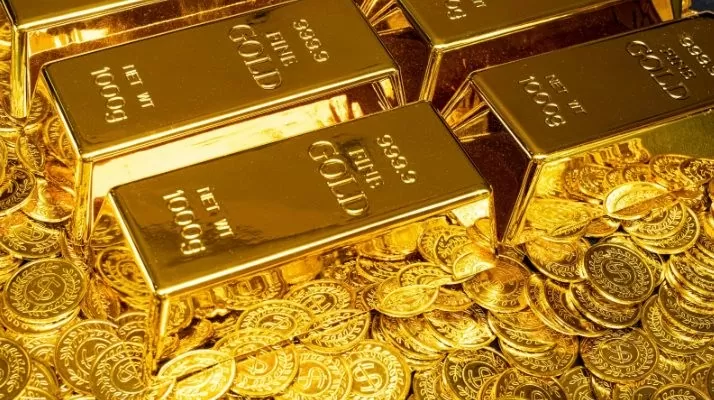 |
| The US gold reserves play a crucial role in maintaining confidence in the US dollar, one of the world's major reserve currencies. (Illustrative image) |
With approximately 2,450 tons of gold, Italy ranks third on the list of countries with the largest gold reserves. The Italian economy is also considered one of the largest in the European region, and gold reserves play a crucial role in maintaining confidence in the euro and ensuring the country's financial stability.
France possesses approximately 2,436 tons of gold, valued at $204.4 billion, ranking fourth on the list. Gold not only serves as a means of protecting assets in times of crisis, but is also a crucial tool in maintaining the stability of the euro.
Russia is a country that has been significantly increasing its gold reserves in recent years. With approximately 2,300 tons of gold, Russia ranks fifth on this list.
China is the world's second-largest economy and possesses approximately 2,279.6 tonnes of gold. China's gold reserves have increased more than fivefold since the early 2000s, from around 400 tonnes in 2001 to over 2,279 tonnes as of the fourth quarter of 2024. China is also the world's largest gold producer.
Switzerland, a leading banking and financial powerhouse, possesses approximately 1,040 tons of gold. Switzerland's gold reserves not only reflect its financial stability but are also part of its national monetary management strategy.
Japan, the world's third-largest economy, currently holds approximately 765 tons of gold in its national reserves. Although Japan primarily maintains its reserve assets in the form of foreign currency, gold still plays a crucial role in protecting assets and maintaining domestic financial stability.
India possesses approximately 700 tons of gold, ranking ninth among countries with the largest gold reserves in the world. Gold has always played a significant role in Indian culture and economy, and maintaining gold reserves helps protect the economy from fluctuations in inflation and exchange rates.
The Netherlands ranks 10th with 612 tons of gold. The country consistently maintains large gold reserves to ensure financial stability and mitigate financial risks from fluctuations in the euro and other international factors.
Source: https://congthuong.vn/nhung-nuoc-nao-dang-du-tru-vang-lon-nhat-the-gioi-378638.html


































































































Comment (0)