


Complications during cosmetic surgery: Risks to be aware of.
Besides the benefits, cosmetic surgery also carries many risks and serious complications, which people need to be aware of and consider carefully.
 |
| In recent years, cosmetic surgery has become a popular trend, with many people seeking ways to improve their appearance to boost their self-confidence. |
The most common complications of cosmetic surgery.
One of the most common complications is an adverse reaction to anesthesia. Improper anesthesia can lead to problems such as respiratory failure or shock.
In addition, infection is also a major threat, which can occur if surgical instruments are not properly sterilized or if the recovery process is not well cared for.
According to medical experts, each type of cosmetic surgery carries its own risks. For example, in breast augmentation surgery, leakage or rupture of the implant can occur.
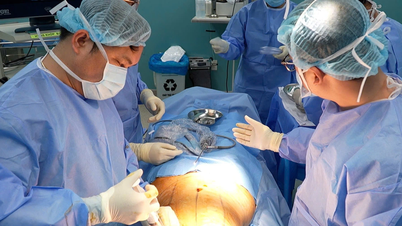
During liposuction surgery, there is a risk of blood clot formation, which can block blood vessels and even be life-threatening. These complications not only cause pain but also seriously affect the patient's health and mental well-being.
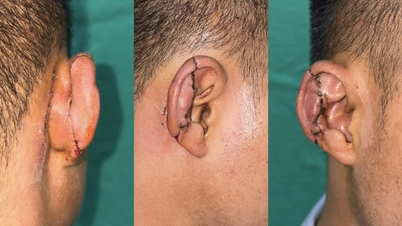
Many people who undergo cosmetic surgery may experience scarring, especially in sensitive areas like the face or chest.
Furthermore, surgical results are not always as expected. Many patients are disappointed with their post-operative appearance, leading to depression or anxiety.
One of the main causes of complications is choosing doctors who lack sufficient expertise and experience. Seeking out cosmetic clinics with unknown origins or those that are too cheap compared to the market can lead to wrong decisions and serious consequences.
Professor Tran Thiet Son, Department of Plastic and Aesthetic Surgery (Bach Mai Hospital), and President of the Hanoi Association of Plastic and Aesthetic Surgery, stated that complications in cosmetic procedures are common when these techniques are not performed by professionally trained doctors or at licensed facilities. These complications tarnish the image of the cosmetic industry.
"Any intervention carries risks. In cosmetic surgery, common complications include infection, deformities, disfigurement at the treated site, bleeding, and most dangerously, death," Professor Son added.
According to statistics from the Vietnam Association of Plastic and Aesthetic Surgery, the complication rate is 14%, equivalent to 25,000 - 35,000 cases out of approximately 250,000 people undergoing cosmetic surgery annually.
Recently, medical facilities have recorded many cases of cosmetic surgery complications resulting from these unlicensed spas, mostly due to the desire for cheap prices and believing in enticing online offers, leading to financial loss and health problems.
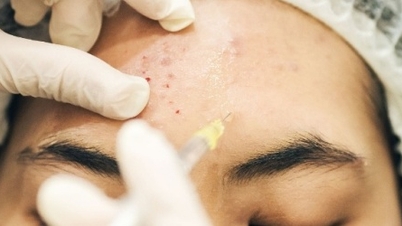
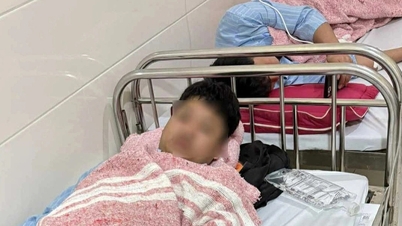
The Central Military Hospital 108 recently admitted a 44-year-old female patient to the emergency room after receiving a local anesthetic injection for a nose filler procedure at an unlicensed beauty salon.
The patient was diagnosed with suspected grade III anaphylaxis to Lidocaine and was treated simultaneously according to both anaphylaxis and anesthetic toxicity protocols with local anesthetics, using the vasopressor adrenaline and 20% lipid emulsion along with other resuscitation measures.
According to Dr. Nguyen Tien Son, from the Emergency Department of Military Central Hospital 108, in the aforementioned case, the patient was fortunate to receive proper, timely, and proactive emergency care, thus avoiding unfortunate consequences.
At the Department of Plastic and Aesthetic Surgery, Viet Duc Friendship Hospital, the number of emergency cases of complications from cosmetic procedures is also on the rise.
Meanwhile, at the Center for Plastic and Reconstructive Surgery, National Burn Hospital, Dr. Tong Hai, Head of the Department of Microsurgery and Reconstruction, stated that the center has recently recorded cases of patients seeking treatment after experiencing complications from cosmetic procedures.
The patients fall into two main groups.
The first group consists of cases where services are provided by unqualified or inexperienced doctors who do not screen for complications.
Group two includes procedures performed at spas and beauty salons, not clinics, by staff who are not doctors or medical professionals. This group often leaves behind long-term consequences that are difficult to remedy.
Dr. Hai said that he was very concerned because some complications could leave long-term consequences for patients, affecting not only their health but also their psychology and quality of life.
Consequently, many patients arrive in a state of panic and anxiety when faced with a medical emergency. Undergoing treatment is not only costly but also psychologically damaging to the patient.
In reality, cosmetic surgery, like any type of surgery, carries risks. Cosmetic procedures can lead to various complications, ranging from unsatisfactory or unnatural results to scarring, and even death.
In addition to the general risks of surgery, according to Dr. Hai, complications related to anesthesia are the leading cause of death in cosmetic surgery. The risk is very small but still exists, and that is why patients need to choose reputable facilities for cosmetic procedures.
How to have safe and beautiful cosmetic surgery?
To ensure safe cosmetic surgery, experts recommend that clients seek out licensed cosmetic clinics, specialized cosmetic centers, specialized cosmetic hospitals, or general hospitals with cosmetic departments – places with highly qualified doctors and modern equipment.
These facilities are typically required to adhere to strict safety regulations. These hospitals usually have a team of professional doctors capable of handling complications should they arise.
People should also consult with a cosmetic surgeon. The surgeon can advise on the procedures, risks, and help determine which method is best suited to each individual's needs and health condition.
At the same time, learn about the main effects, unwanted side effects, risks, and potential complications of medications, chemicals, and implants introduced into the body. (Pay attention to ingredients that may cause allergic reactions, the manufacturer, and the expiration date...).
First and foremost, doctors must have formal training, a university degree, and a practicing license. They may also need further specialized training (Specialist Level I, Specialist Level II, Master's, or Doctorate), experience, and sufficient practical training (36 months if working in the private sector). Those working in hospitals require guidance from supervising doctors to ensure proper practice.
Mastering professional skills, maintaining professional ethics, adhering to medical ethics, protecting patients, and continuously updating in-depth specialized knowledge.
For those interested in cosmetic surgery as recommended by Dr. Tong Hai, first and foremost, if you wish to undergo surgery, you must be an adult with full legal capacity and be fully responsible for your own decisions regarding cosmetic surgery:
People who should not undergo cosmetic surgery include those with chronic, incurable diseases such as heart failure, kidney failure, cirrhosis; blood disorders (acute or chronic myeloid leukemia), persistent anemia, poorly controlled diabetes, or clotting disorders (requiring continuous medication); and systemic diseases that are progressing. For example, people with lupus erythematosus or scleroderma may experience a severe flare-up of their condition after surgery.
Individuals with mental instability, anxiety disorders, schizophrenia, or long-term substance dependence are also contraindicated.
Source: https://baodautu.vn/tai-bien-khi-phau-thuat-tham-my-nhung-nguy-co-can-duoc-luu-y-d227340.html


![[Photo] Prime Minister Pham Minh Chinh visits and extends New Year greetings to former Party and State leaders and offers incense to the esteemed predecessors.](https://vphoto.vietnam.vn/thumb/1200x675/vietnam/resource/IMAGE/2026/02/14/1771078465521_dsc-2411-jpg.webp)



































































































Comment (0)