

 |
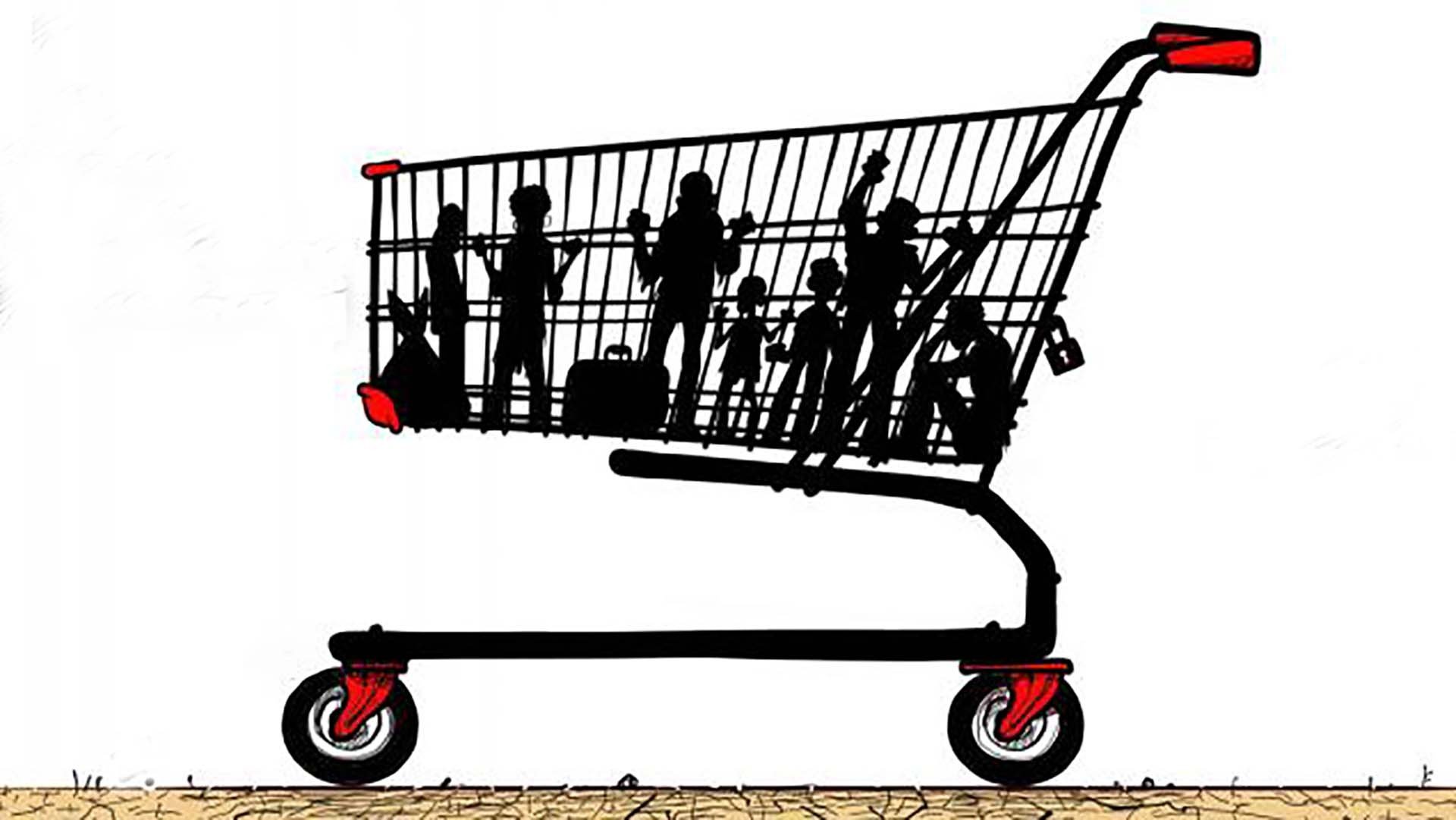
| Illustrative image. (Source: cartoonmovement) |
The tasks and solutions outlined in the Program for the Prevention and Combat of Human Trafficking for the period 2021-2025 and the orientation towards 2030 are considered groundbreaking and comprehensive, demonstrating Vietnam's determination to address this issue through multilateral international cooperation.
The U.S. Department of State 's Trafficking in Persons Report (TIP 2023), released on June 15, 2023, assesses the state of human trafficking in 188 countries and regions worldwide. It upgraded Vietnam's ranking from Group 3 to "Group 2, requiring monitoring," reflecting Vietnam's positive results in combating human trafficking, particularly in investigating and prosecuting human trafficking crimes, as well as strengthening international cooperation in this area.
The effectiveness of programs to prevent and combat human trafficking.
The consistent stance of the Vietnamese Party and State is to recognize, protect, and guarantee human rights, especially those of women and children. In all stages of the anti-trafficking programs, the entire political system, ministries, departments, and all citizens have been mobilized and participated in, while significant resources have been allocated to the implementation of the anti-trafficking program annually.
In particular, over the past year, the Government's Steering Committee for Crime Prevention and Control has vigorously implemented measures to prevent and combat human trafficking, especially the programs and plans for 2022 and 2023; strengthening measures to combat human trafficking both domestically and internationally…
According to Decision No. 793/QD-TTg dated May 10, 2016, of the Prime Minister, July 30th was designated as "National Day for the Prevention and Combat of Human Trafficking". Intensive campaigns to combat human trafficking crimes nationwide (from July 1st to September 30th annually) have been widely implemented, leading to the investigation and discovery of numerous cases and networks involved in human trafficking (both domestically and internationally); prompt completion of case files, timely prosecution, and strict trial of perpetrators of human trafficking crimes in accordance with the law.
In 2022, Vietnamese authorities detected and investigated 90 cases involving 247 individuals committing human trafficking offenses under Articles 150 and 151 of the Penal Code. 222 victims were identified in connection with these cases, an increase of 13 cases, 98 individuals, and 72 victims compared to the same period in 2021. 58 cases involving 128 defendants were brought to trial for crimes related to human trafficking.
In the first quarter of 2023 alone, authorities detected and investigated 56 cases involving 150 individuals committing human trafficking crimes, identifying 118 victims, an increase of 32 cases and 104 individuals compared to the same period in 2022. They also received and processed 93 reports and requests for prosecution related to human trafficking crimes, bringing 15 out of 31 defendants to trial.
In addition, the Ministry of Public Security also organized a review of the pilot implementation of the Program on preventing and combating human trafficking in 8 localities, and held an inter-agency conference to evaluate and propose solutions to improve the effectiveness of the fight against human trafficking along the Vietnam-Cambodia border.
Since January 2023, relevant ministries and agencies have been compiling statistics on human trafficking using the form provided by the Government's Steering Committee for Crime Prevention and Control, as a basis for building a national database on preventing and combating human trafficking. Currently, relevant ministries and agencies are researching the development of a shared database; coordinating with the International Organization for Migration (IOM) Delegation in Vietnam to organize a workshop with domestic and international experts on the needs and purposes of collecting data on preventing and combating human trafficking.
The prevention and control of human trafficking is given special attention by central and local ministries, departments, and agencies, with prevention being the primary and fundamental principle in the implementation of all aspects of combating human trafficking. The content of preventing human trafficking has been integrated into the process of achieving economic, cultural, and social development goals… Communication and awareness campaigns on preventing and combating human trafficking have been organized with diverse content and forms.
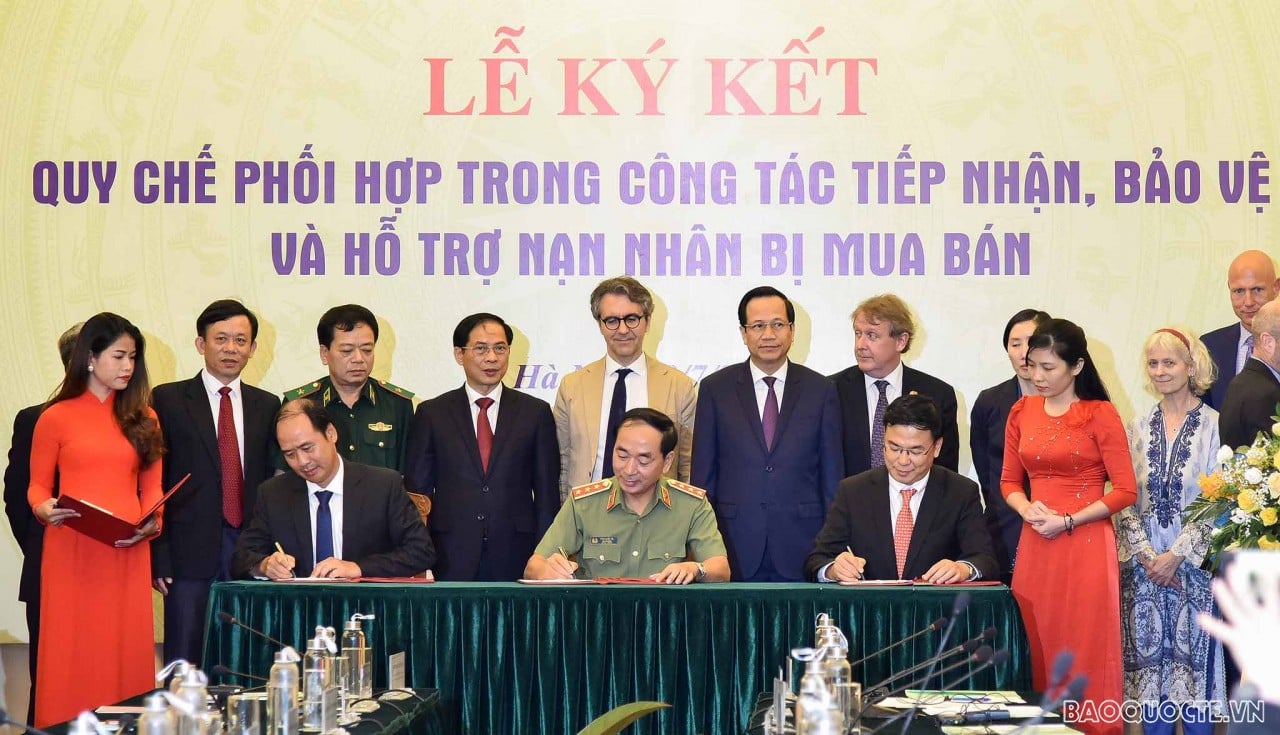 |
| On July 18, 2022, the Ministry of Public Security, the Ministry of National Defence, the Ministry of Foreign Affairs, and the Ministry of Labour, Invalids and Social Affairs signed and implemented the Inter-ministerial Coordination Regulations on receiving, protecting, and supporting victims of human trafficking. (Photo: Nguyen Hong) |
Along with the resolute and uncompromising fight against human trafficking, central and local ministries and agencies have paid special attention to coordinating the verification, identification, rescue, protection, and support of trafficking victims quickly, ensuring victims' rights and adhering to the principle of "putting the victim at the center".
Notably, on July 18, 2022, the Ministry of Public Security, the Ministry of National Defence, the Ministry of Foreign Affairs, and the Ministry of Labour, Invalids and Social Affairs signed and implemented an inter-agency coordination regulation on receiving, protecting, and supporting victims of human trafficking, witnessed by representatives from the US Embassy, the International Organization for Migration (IOM), and several diplomatic missions and international organizations involved in combating human trafficking in Vietnam.
After more than 10 years of implementation, the Law on Prevention and Combat of Human Trafficking (2011) has revealed some inconsistencies that need to be amended and supplemented. To improve the effectiveness of the fight against human trafficking, Vietnam is actively preparing a proposal for the development of a revised Law on Prevention and Combat of Human Trafficking.
In addition, the national population database and citizen identification database have been utilized to serve the prevention and control of human trafficking; tens of thousands of businesses with security and order requirements have been inspected to proactively prevent crime, social evils, and human trafficking; and border patrols and controls have been strengthened to promptly detect and prevent human trafficking to foreign countries.
International and regional cooperation on preventing and combating human trafficking.
Due to its transnational nature, human trafficking has become a global problem, one of the non-traditional security challenges facing all countries; therefore, international and regional cooperation in preventing and combating human trafficking is essential.
Regarding multilateral cooperation, Vietnam has signed and is a member of many international conventions and legal instruments directly related to the prevention and combating of human trafficking, such as: the International Convention on the Elimination of All Forms of Discrimination Against Women, the International Convention on the Rights of the Child, the Optional Protocol to the Convention on the Rights of the Child on the Trafficking of Children, Child Prostitution and Child Pornography, the Optional Protocol to the Convention on the Rights of the Child on the Involvement of Children in Armed Conflict, Convention No. 182 on the Prohibition and Immediate Action to Eliminate the Worst Forms of Child Labour, the United Nations Convention against Transnational Organized Crime (TOC), the ASEAN Convention on Trafficking in Persons, especially Women and Children (ACTIP), the ASEAN Action Plan on the Implementation of ACTIP, and the Protocol on Preventing, Combating and Punishing Trafficking in Persons, especially Women and Children. Supplement to the TOC Convention.
Vietnam is also a party to the Global Compact for Legal, Safe and Orderly Migration – the first intergovernmental agreement on migration – and has issued a plan to implement this agreement, with specific and comprehensive solutions to prevent the risk of human trafficking in international migration.
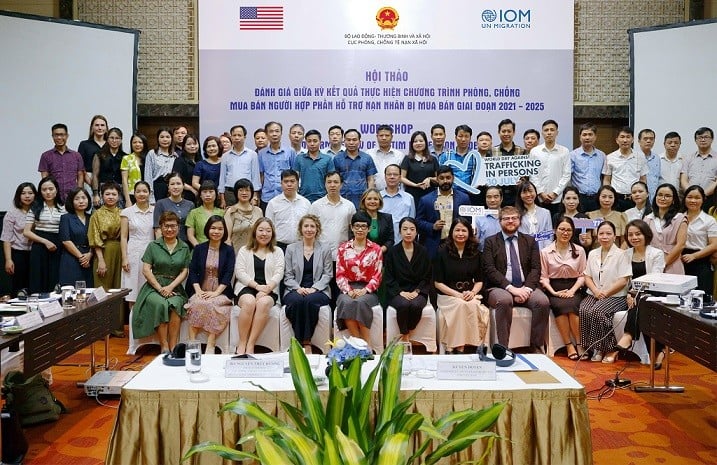 |
| On August 9th, the International Organization for Migration and the Department of Social Evils Prevention under the Ministry of Labour, Invalids and Social Affairs completed a series of workshops on the Mid-Term Review of the Implementation Results of the Program for the Prevention and Combat of Human Trafficking in the period 2021-2025 in the field of victim protection in Ho Chi Minh City. |
In bilateral cooperation, Vietnam has signed and continues to effectively implement mutual legal assistance agreements with many countries around the world, creating an important legal basis for international cooperation in the fight against crime, including human trafficking, especially of women and children. These include cooperation agreements between Vietnam and Cambodia (2005), Laos (2010), Thailand (2008), China (2010), and the United Kingdom (2009) on preventing and combating human trafficking, maintaining annual meetings with implementing agencies and coordinating campaigns to crack down on human trafficking. At the same time, Vietnam has participated in and signed the Memorandum of Understanding and Action Plan of the six Mekong Subregion countries (Laos, Cambodia, Thailand, China, Myanmar, and Vietnam).
Furthermore, Vietnam has signed 15 bilateral agreements and 13 mutual legal assistance agreements on crime prevention and control with other countries, all of which include provisions on combating human trafficking. In addition, Vietnam is also implementing cooperation projects within the framework of the ASEAN-ACT Program funded by the Australian Government.
In addition, Vietnam regularly exchanges information on policies and achievements in combating human trafficking at human rights dialogues with the EU, Australia, and other countries, as well as through regular working sessions with several foreign diplomatic missions in Hanoi.
| According to assessments by the United Nations Office on Drugs and Crime (UNODC) and the International Criminal Police Organization (INTERPOL), the situation regarding human trafficking in the Asia-Pacific region, particularly in the Mekong Subregion (including Vietnam), is very complex. The number of victims of human trafficking is approximately 11.7 million (accounting for 70% of all human trafficking victims worldwide, of which 55% are women and girls; 45% are men). |
International organizations regularly have programs and projects on preventing and combating human trafficking. Vietnam has actively participated in international cooperation in this field through projects such as: "Assessment and proposed revisions to policies and strategic plans on preventing and combating child sexual abuse in the period 2001-2010"; "Improving legal policies on preventing and combating child sexual abuse" funded by UNICEF; and the "Combating sexual abuse and exploitation of youth" project funded by ESCAP...
Vietnam has implemented regional projects on combating trafficking in women and children, including the “Combating Trafficking in Women and Children in the Mekong Subregion” project funded by the Alliance of International Organizations (RAS/98/H01), and the regional project “Combating Trafficking in Women and Children in the Mekong Subregion” funded by ILO/IPEC.
Both projects focus on information and communication activities, raising awareness; investigating and assessing the causes and current situation; developing intervention models; providing vocational training, creating jobs, and reintegrating victims of trafficking into the community... with the common goal of: preventing the development and reducing the level of trafficking in women and children; and mitigating the consequences of this scourge.
Simultaneously with the implementation of the two aforementioned projects, the Department of Social Evils Prevention and Control, Ministry of Labour, Invalids and Social Affairs, also piloted the project "Enhancing community capacity in preventing and combating child sexual abuse" in Dong Thap and Ba Ria - Vung Tau provinces, with funding from the prostitution prevention and control program.
At the same time, to prevent the risk of human trafficking in international migration, especially in illegal migration activities, on March 20, 2020, ministries, sectors and localities continued to seriously implement the Plan for the implementation of the United Nations Global Compact for Legal, Safe and Orderly Migration (Decision No. 402/QD-TTg of the Prime Minister).
Vietnam is currently preparing its application to join the Protocol on Combating Irregular Migration by Land, Sea and Air, an amendment to the United Nations Convention against Transnational Organized Crime of 2000. This is an effort to prevent the risk of human trafficking through criminal activities involving the illegal trafficking of migrants.
The bilateral agreements that Vietnam has signed are important legal tools for preventing, detecting, investigating, prosecuting, and punishing human traffickers.
In the digital age, transnational crimes, including human trafficking, are becoming increasingly sophisticated, posing a serious threat to human rights protection efforts and endangering the lives of thousands of people each year across countries and regions. Strengthening international cooperation and working together to prevent human trafficking is a common goal for all nations, including Vietnam.
Source


![[Photo] Memorable moments at the 10th Vietnam-China Border Defense Friendship Exchange](https://vphoto.vietnam.vn/thumb/1200x675/vietnam/resource/IMAGE/2026/03/20/1773986226876_giao-luu-bien-gioi-vntq-lan-10-ben-tq-9737-4225-jpg.webp)






















































































Comment (0)