

In Gia Lai province, in Chu Pah district, some dealers have completely abandoned chemical fertilizers and pesticides to focus on selling organic fertilizers and biological pesticides.
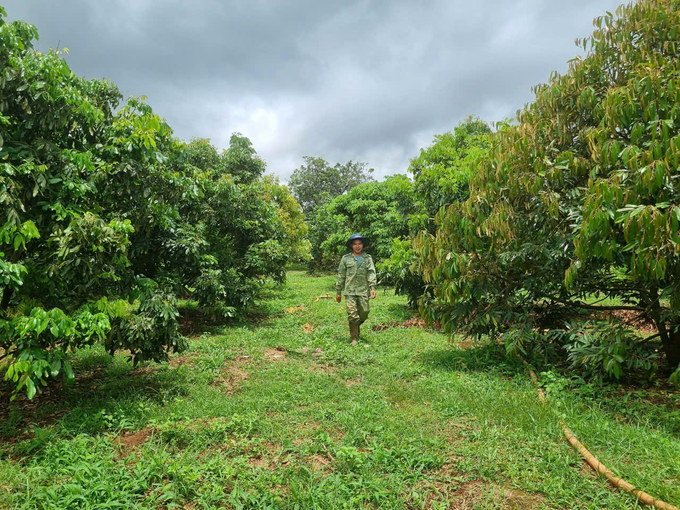
The orchard, treated with biological pesticides, remains lush and green. Photo: Tuan Anh.
The use of biological pesticides is becoming a trend, thereby helping to raise people's awareness of organic and sustainable production.
Chư Păh District is one of the localities with a large cultivated area in Gia Lai province, with over 55,000 hectares. In recent years, the district has focused on promoting the transformation of crop varieties, developing fruit tree areas to improve production efficiency by using new high-yield varieties and applying high technology. In particular, local people are gradually adopting organic farming practices and using biological pesticides to protect health and improve product quality.
Farmers say "no" to chemical pesticides.
In recent years, the use of biological pesticides has become a trend among people in Chu Pah district (Gia Lai province) towards sustainable agriculture . In fruit-growing areas in the communes of Ia Nhin, Ia Ka, Ia Mo Nong, etc. (Chu Pah district), people are increasingly focusing on using biological pesticides that are highly safe, less toxic to the environment, and still yield good quality crops.
The 2.7-hectare orchard of Mr. Bui Van Duong's family (Bluk Blui village, Ia Ka commune, Chu Pah district), filled with fruit trees such as durian, longan, avocado, and pomelo, has been cultivated organically for many years using indigenous microbial preparations (IMO). Because of this organic farming method, Mr. Duong's orchard "says no" to harmful chemicals, especially chemical pesticides used to treat plant diseases.
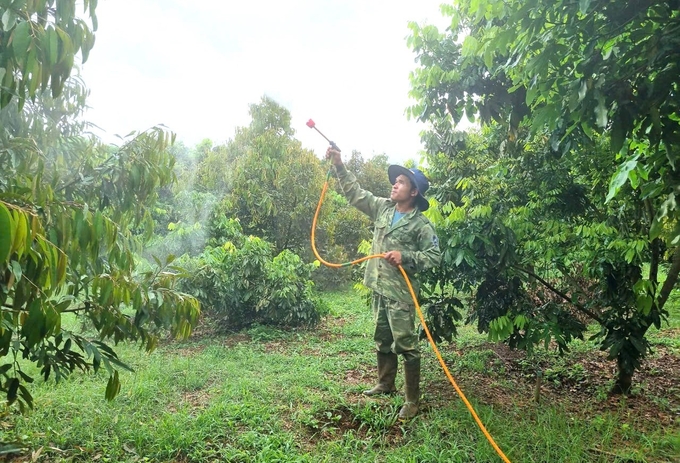
The family of Mr. Bui Van Duong (Bluk Blui village, Ia Ka commune, Chu Pah district) only uses biological products to spray on their orchards. Photo: Tuan Anh.
Mr. Duong said that because his family's orchard is planted using intercropping methods, it is easily susceptible to cross-contamination by harmful organisms such as aphids, mealybugs, and leaf-eating caterpillars. When these pests are present, his family absolutely does not use chemical pesticides to kill them, but mainly uses microbial preparations that they create themselves to control them.
"Most aphids and other pests have alkaline guts, so we use microorganisms, such as Bacillus, combined with fermented garlic and ginger to effectively kill them," Mr. Duong shared.
Mr. Duong also said that he used to use chemical pesticides, but found the cost too high and, more importantly, the health of his family was not guaranteed, with people constantly feeling short of breath. Therefore, he decided to research and develop organic biological fertilizers and products for pest control to ensure safety for his family and consumers.
Further south, in Ia Mơ Nông commune, the local people have become more aware and are very interested in using biological and herbal pesticides in farming.
The family of Mr. Le Kim Long (Ia Lok village, Ia Mo Nong commune, Chu Pah district) owns a 2.2-hectare coffee plantation and nearly 4 sao (approximately 0.4 hectares) of passion fruit. Aware that the use of chemical pesticides pollutes the environment and compromises the health of his family, Mr. Long has gradually switched to using biological pesticides.
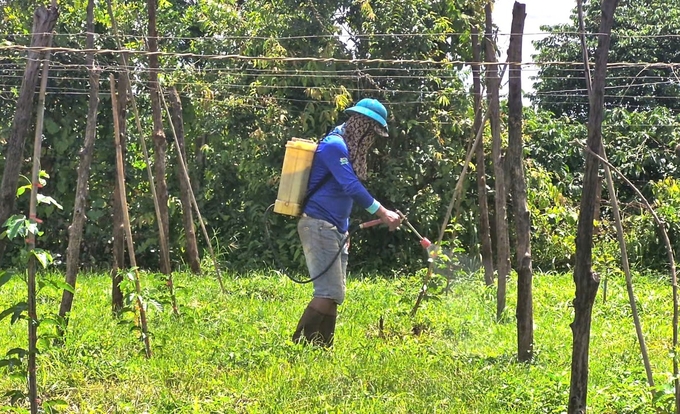
The passion fruit garden of Mr. Le Kim Long's family (Ia Lok village, Ia Mo Nong commune, Chu Pah district) is grown organically using biological pesticides. Photo: Tuan Anh.
In particular, the family's passion fruit garden is being cultivated organically to target the export market, so the use of chemical pesticides is absolutely unacceptable. Mr. Long said that most passion fruit gardens in the area are often infected with diseases such as powdery mildew, fungal diseases, and eye-scarring... The causes are erratic weather, unreliable seedling sources, and inadequate care procedures.
When passion fruit plants are infected with powdery mildew, there are almost no effective treatments. Therefore, the best approach is prevention by removing infected plants from the garden and regularly using biological pesticides to control the pest.
"No matter what crop you grow, health must be the top priority. When using biological pesticides, the working environment is healthier, and consumers feel more secure. In particular, using biological pesticides ensures that passion fruit plants are safe in terms of chemical residue, allowing them to be exported to Europe, bringing higher value to the family," Mr. Long shared.
Biological drugs are increasingly gaining dominance.
Chư Păh District is considered the capital of fruit cultivation, so it also has a large concentration of fertilizer and pesticide dealers. While chemical fertilizers and pesticides used to dominate the display space at these dealerships, now there is an increasing presence of organic fertilizers and biological pesticides. Some dealers have even completely abandoned chemical fertilizers and pesticides to focus entirely on selling organic and biological products.
Mr. Doan Thom, owner of the Nam Thom fertilizer agency (Ia Ka commune, Chu Pah district), said that while previously most people used chemical pesticides to control pests and diseases on crops, the trend of switching to biological pesticides is increasing rapidly. At Mr. Thom's agency alone, the consumption of biological pesticides has almost equaled that of chemical pesticides.
According to Mr. Thom, using biological pesticides takes more time but in return increases durability and does not harm the environment. Currently, there are many types of biological pesticides on the market, such as: nano-biological pesticides, biological pesticides extracted from herbs, biological pesticides containing microorganisms, etc.
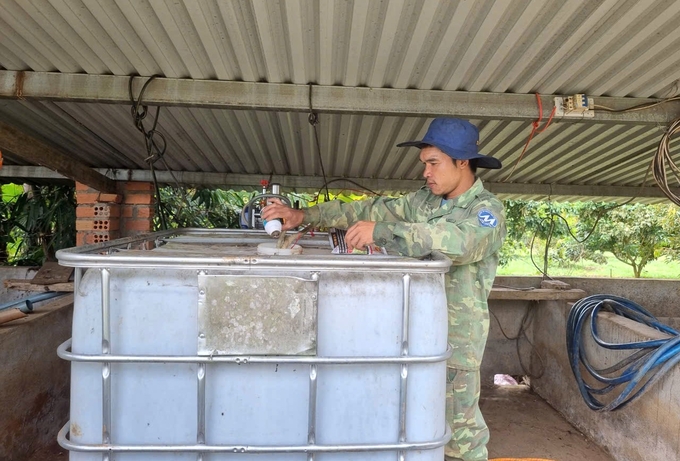
Health and product quality are top priorities for consumers. Photo: Tuan Anh.
Mr. Le Van Thanh, Director of the Ia Mo Nong Agricultural Production - Trade - Service - Tourism Cooperative (Ia Mo Nong commune, Chu Pah district), said that currently, people are increasingly using biological pesticides because they are non-toxic and do not harm the environment. However, the use of biological pesticides needs to be implemented uniformly across all orchards to be effective.
According to Mr. Thanh's explanation, chemical pesticides are still more effective in controlling pests and diseases. Biological pesticides, on the other hand, require multiple applications over the same area of the orchard to be effective, making them very expensive due to the need to purchase many pesticides and hire laborers.
"To promote the use of biological pesticides, the Plant Protection Department and local agricultural sectors need to intensify propaganda to inform people about the benefits of this type of pesticide. From there, Vietnamese agricultural products will be free from chemical residues, making them suitable for the export market," Mr. Thanh suggested.
According to Ms. Le Thi Ngoc Son, Deputy Director of the Agricultural Services Center of Chu Pah district, recently, along with the rapid increase in the use of biological pesticides, people in the district have also been independently researching and producing biological products and organic fertilizers.
Based on that, the unit organizes approximately 10 training courses annually to transfer agricultural techniques, with an emphasis on the use of biological pesticides.
According to Ms. Le Thi Ngoc Son, in the coming time, the unit will continue to propose to the People's Committee of Chu Pah district appropriate support policies for people in using organic fertilizers and biological pesticides. From there, people will be more confident and spread the use of biological pesticides to move towards organic and sustainable agriculture.
Source: https://nongsanviet.nongnghiep.vn/nhieu-dai-ly-chi-con-ban-phan-huu-co-thuoc-sinh-hoc-d400096.html
























































































Comment (0)