

Japan has conducted its first nuclear wastewater discharge into the Pacific Ocean , amid widespread protests from neighboring countries and fishermen.
At 1 PM (11 AM Hanoi time), Japan began releasing treated nuclear wastewater from the Fukushima Daiichi plant through an underground conduit approximately one kilometer long into the sea. The plant operator, Tokyo Electric Power Company (TEPCO), carried out this operation when sea and weather conditions remained stable.
TEPCO will discharge a total of 7,800 tons of wastewater into the sea over the next 17 days, continuously 24 hours a day starting today. This is the first of four planned discharges in the 2023 fiscal year (from now until March 2024), with a projected total discharge of 31,200 tons of wastewater.
Supervisors from the International Atomic Energy Agency (IAEA) were present at the plant to carry out the relevant procedures. TEPCO staff then took water and fish samples for analysis, with results expected to be released "as early as tomorrow".
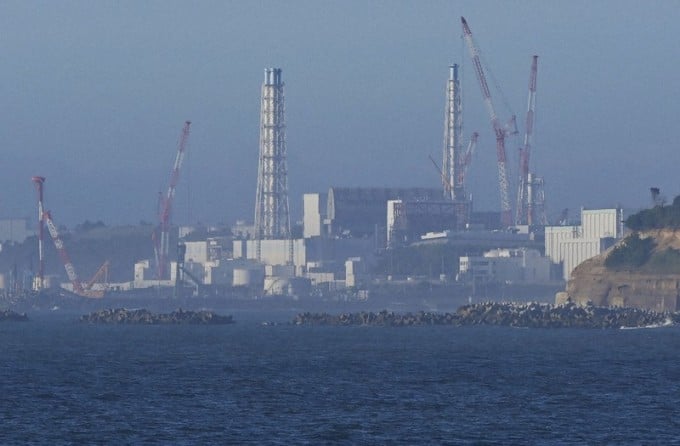
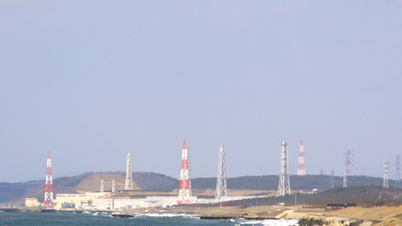
Fukushima nuclear power plant as seen from Namie on August 24. Photo: Kyodo
In March 2011, Japan suffered a double disaster of earthquake and tsunami, affecting the Fukushima Daiichi nuclear power plant. TEPCO, the plant's operator, had to deal with approximately 1,000 steel tanks containing 1.34 million tons of contaminated water used to cool the reactors.
When there was no more land available for building reservoirs and space needed to be freed up, Japanese authorities began planning in 2021 to gradually discharge treated wastewater into the sea. The water is filtered and thoroughly diluted, removing radioactive isotopes, leaving only tritium, one of the two radioactive isotopes of hydrogen.
Japan sets a limit on tritium concentration in wastewater at 1,500 Bq/l (becquerel/liter), which is seven times lower than the WHO's recommended level of 10,000 Bq/l for drinking water.
Tokyo and the IAEA say the water will be released gradually over several decades. With plans to release 31,200 tonnes of wastewater into the sea in fiscal year 2023, the amount of tritium released into the sea will be approximately 5 trillion Bq.
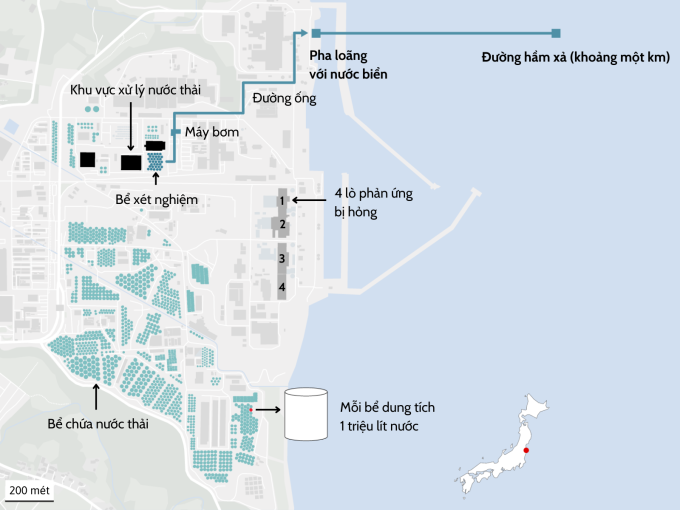
Nuclear wastewater discharge system at the Fukushima plant into the sea. Graphic: Reuters
Japan's wastewater discharge plan has faced opposition from its fishing unions, as well as from neighbors like China and opposition groups in South Korea.
Following Prime Minister Fumio Kishida's announcement of the start date for the wastewater discharge, China summoned the Japanese ambassador for a "stern discussion" and warned that Beijing would "deploy necessary measures to protect the marine environment, food safety, and public health."
Japanese Ambassador Hideo Tarumi expressed regret over China's stance, but affirmed that Tokyo remains prepared to maintain contact with Beijing even after the pollution discharge.
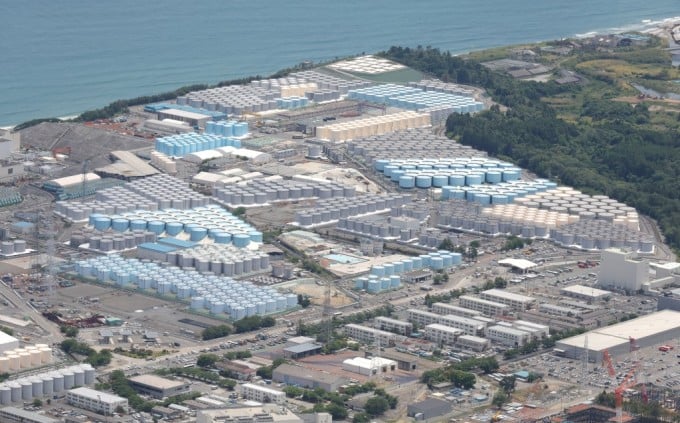
Nuclear wastewater storage tanks at the Fukushima plant, seen from above, May 31. Photo: AFP
Duc Trung (According to Youmiuri, AFP, Kyodo )
Source link



![[Photo] Young people of the Dong Thap Border Guard actively participate in "March Border Month" activities.](https://vphoto.vietnam.vn/thumb/1200x675/vietnam/resource/IMAGE/2026/03/23/1774248483508_ndo_tl_dt3-jpg.webp)






















































































Comment (0)