

Thang (28 years old) discovered gambling when he was a second-year university student. During a trip with friends, Thang was invited to play a few card games for entertainment. At first, he only played for fun, but the thrill of winning money from each game made it impossible for him to quit.
Playing cards became a habit, and before you knew it, you were addicted.
During his university days, Thang played cards 3-4 times a week, betting around 50,000 VND per game. After starting work and earning a salary, what started as a casual game gradually increased to hundreds of thousands, then millions, and finally tens of millions of VND. Each time he lost, Thang would spend more money hoping to recoup his losses; on one occasion, he even pawned his motorbike and borrowed money from friends to gamble.
Seeing their son and girlfriend fall into gambling, Thang's parents and girlfriend repeatedly tried to dissuade them, but to no avail. Thang even decided to break up with his girlfriend because she was controlling his gambling.
After repeatedly losing everything, Thang borrowed money from everywhere, including colleagues at work, but couldn't repay it and was fired by his boss. With new debts, old debts, and unemployment, the 29-year-old man still didn't learn his lesson and plunged into gambling day and night, even stealing his own car to pawn it.
Every time Thang lost at gambling, he would come home irritable, argue with his parents, and smash things.
Worried about their son's health, the family took him to see a psychiatrist, where he was diagnosed with gambling addiction.
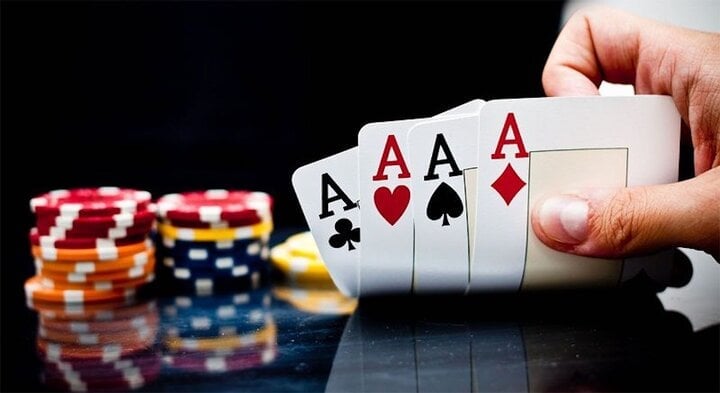
The 28-year-old man had to seek mental health treatment after a long period of gambling addiction.
According to Dr. Bui Nguyen Hong Bao Ngoc, Deputy Head of Department M7, Institute of Mental Health, Bach Mai Hospital, gambling addiction is essentially a brain disease, similar to addiction to stimulants such as drugs and alcohol.
"People with gambling disorder have a high rate of personality disorders," Dr. Ngoc said, adding that studies have found that those with gambling disorder have a high rate of personality disorders, over 60%, emotional disorders in about 50%, and anxiety disorders in over 40%.
According to Doctor Ngoc, the pleasures of life can lead to mental illness, and if left untreated, they will gradually destroy the health, personality, happiness of individuals, families, and society.
People addicted to gambling often exhibit symptoms such as:
- The demand for gambling with increasingly larger sums of money to achieve the desired thrill is growing.
- Feeling restless or irritable when trying to cut back on or stop gambling.
- Numerous unsuccessful attempts to control, reduce, or stop gambling.
- Often preoccupied with gambling (for example, having persistent thoughts about reminiscing about past gambling experiences, or planning the next gamble, thinking about how to earn money to gamble).
- People often gamble when they feel distressed (e.g., helplessness, guilt, anxiety, depression).
- After losing at gambling, people often return on another day to try to break even ("chase" the lost money).
- Dangerous consequences or loss of an important relationship, job, or educational or career opportunity due to gambling.
The expert shared that the way to prevent gambling addiction is to avoid playing and getting carried away with the pleasure of "gambling." To prevent relapse, individuals need to isolate themselves from gambling games. In addition, they need the support and attention of their family, as well as their own efforts.
Patients may require treatment methods such as psychotherapy, brain modulation, and combination chemotherapy. After discharge, they need follow-up appointments and extensive psychological support from family and therapists.
Source

![[Image] A night of light, many layers of message](https://vphoto.vietnam.vn/thumb/1200x675/vietnam/resource/IMAGE/2026/03/10/1773158812907_hoa-nhac9-jpg.webp)































































































Comment (0)