

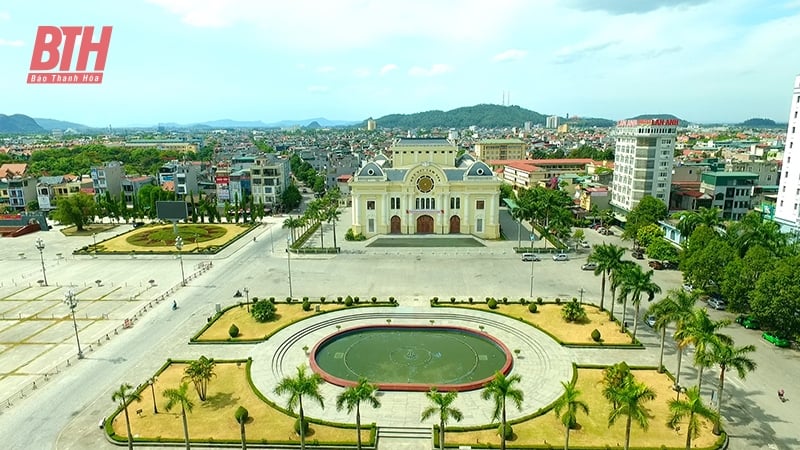
Resolution No. 05/NQ-TU of the Provincial Party Committee's Standing Committee has outlined the most basic and general directions for Thanh Hoa City, with the goal of becoming "one of the top 5 provincial-level cities in the country by 2030, a driving force contributing significantly to making Thanh Hoa province a new growth pole in the North of the country." Furthermore, by 2045, it aims to be "a prosperous, beautiful, civilized, modern, and exemplary city of the whole country." To realize this grand goal, the merger of Dong Son district into Thanh Hoa City and the establishment of wards within Thanh Hoa City is an inevitable and necessary trend, not only creating a foundation to promote the development of the provincial capital but also aligning with the integration process and the future aspirations of Thanh Hoa province.
A suitable and inevitable trend.
Thanh Hoa City is a land rich in historical and cultural traditions. Over 220 years (1804-2024), from the administrative center of Thanh Hoa province, primarily located in the former Dong Son district, the city has continuously developed through various stages, becoming a town, then a city during the French colonial period, and currently a Class III, Class II, and Class I urban city directly under the province. Through several expansions of its administrative boundaries, many neighboring communes from Dong Son district have been merged, becoming communes and wards within Thanh Hoa City.
Thanh Hoa City holds a crucial position for Thanh Hoa province and the North Central region; it serves as the political , administrative, economic, cultural, scientific-technical, and national defense-security center of the province, a gateway connecting the Northern key economic region with the North Central region, and a hub for interaction between Thanh Hoa province and the rest of the country. Over the years, with the attention of the central government, the province, the entire political system, the business community, and all sectors of the population, the city has united and strived to overcome difficulties, building a rapidly and comprehensively developing city. Today, Thanh Hoa City is considered one of the most attractive and dynamic cities in the North Central region and the southern Red River Delta.
Besides socio -economic development, after more than 15 years of implementing the General Planning for the Construction of Thanh Hoa City until 2025, with a vision to 2035, according to Decision No. 84/QD-TTg dated January 16, 2009, of the Prime Minister; and 12 years of adjusting and expanding administrative boundaries according to Resolution No. 05/NQ-CP dated February 29, 2012, of the Government, shortcomings and limitations have emerged that need to be addressed. These include uneven infrastructure quality, inconsistent infrastructure connectivity between the inner city and suburbs, and between new and old urban areas, failing to meet and keep pace with urban development requirements. The city's central role, driving force, and ripple effect on the development of the entire province are not yet clearly defined. In particular, the city no longer has much urban development space to continue allocating industrial zones, industrial clusters, commercial and service establishments, production and business facilities, urban residential land, entertainment areas, etc. Meanwhile, the city's population is constantly increasing, making it impossible to meet the city's future development needs.
Faced with new developments and rapid urbanization, there is a need to adjust some of the city's development directions to align with general trends and practical requirements. To realize the goal of "building and developing Thanh Hoa City into an economic, cultural, service, healthcare, education and training, and sports center for the South-North and North-Central regions; a transitional city between key economic regions of the country; and providing high-quality human resources for the province and the nation," the merger of Dong Son district into Thanh Hoa City is essential and consistent with the current development trends of cities in Vietnam and the world, which involve mergers and expansion to accelerate development.
Dong Son district has a small natural area and population size, not meeting the standards of a district-level administrative unit. In recent years, the remarkable development of the economy, infrastructure, and changes in the urbanization process have presented the district's Party committees and authorities with many new issues that need to be addressed. More importantly, the rural administrative management model is no longer suitable for the socio-economic development and rapid urbanization in the area. Therefore, merging Dong Son district into Thanh Hoa City is a prerequisite for organizing an urban government, meeting development requirements and contributing to the reform and streamlining of the political system's organizational structure for effective and efficient operation.
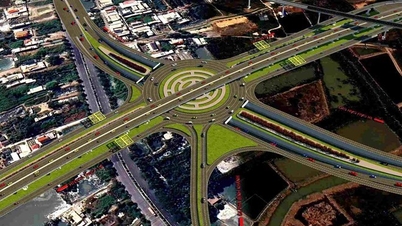
The merger of Dong Son district into Thanh Hoa City is consistent with the policies and directives of the Central Government and Thanh Hoa province; it is a concrete step in implementing the Thanh Hoa Provincial Planning for the period 2021-2030, with a vision to 2045, and the Thanh Hoa City Master Plan to 2040, which have been approved by the Prime Minister, aiming to concentrate resources, accelerate urbanization, and create an open driving force for the city's development. It is also culturally and historically appropriate, as Thanh Hoa City originated from Thanh Hoa town, established in 1889 by a royal decree of King Thanh Thai, from seven villages belonging to the Bo Duc and Tho Hac communes of Dong Son district. Furthermore, it aligns with urban development space, as the merger will expand the urban development area, connecting it to the North-South expressway interchange, linking the city with new national arterial roads; and simultaneously strengthening connections with the western mountainous region of the province.
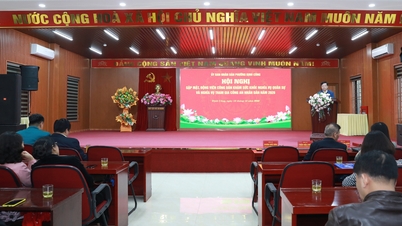
With the active guidance, direction, and support of the province and its functional agencies, and effective coordination with central agencies, on October 24, 2024, the Standing Committee of the National Assembly issued Resolution No. 1238/NQ-BTVQH15 on the rearrangement of district and commune-level administrative units in Thanh Hoa province, giai đoạn 2023-2025. Accordingly, the entire natural area and population of Dong Son district were merged into Thanh Hoa City, and wards were established within Thanh Hoa City. This is an important legal basis, a milestone opening up a new, higher, stronger, and more comprehensive period of development for the city in the future.
As someone who made significant contributions to the project of merging Dong Son district into Thanh Hoa City and establishing wards within Thanh Hoa City, Mr. Hoang Van Hung, Head of the Urban Management Department (Thanh Hoa City), stated: “With a large land area and investment resources not being fragmented, Thanh Hoa City after the merger will have many conditions to develop a synchronous and modern infrastructure, develop industry, trade - services, tourism, healthcare, and high-quality education. At the same time, it will create a foundation for organizing and expanding the scope of urban government management, replacing rural government management, contributing to the innovation of the management and operation methods of the government apparatus towards an urban direction to meet the requirements and tasks set forth, especially in the fields of urban order management, construction order management, and land management. The organizational structure will also be streamlined, reducing the number of departments, and improving the effectiveness and efficiency of the political system. In addition, the merger of Dong Son district into Thanh Hoa City will be a “lever”.” "Promoting economic development towards a modern and sustainable direction, strengthening regional and inter-regional linkages, and reducing pressure on development land and the current concentration of population in urban areas."
The urban expansion of Thanh Hoa City.
The Thanh Hoa City Master Plan until 2040 identifies "Rung Thong town and the communes of Dong Thinh, Hoang Quang, and Hoang Dai as inner-city wards, representing the expansion of Thanh Hoa City." Specifically, Rung Thong town is designated as a new residential area combined with mixed-use service facilities along National Highways 45 and 47. Dong Thinh commune is planned as an industrial and service urban area west of Thanh Hoa City, housing and industrial zones connected to the development axis from Thanh Hoa City to Tho Xuan Airport. Hoang Quang commune is envisioned as a new urban area with integrated technical and social infrastructure, part of the new urban area in Hoang Quang commune (Thanh Hoa City) and Hoang Thinh and Hoang Loc communes (Hoang Hoa). Hoang Dai commune is planned as a model landscape urban area along the Ma River.
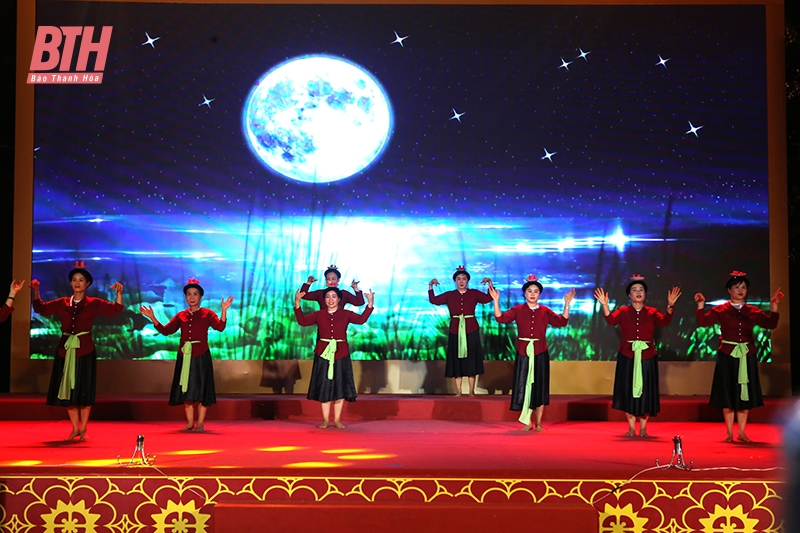
In recent years, the town of Rừng Thông and the communes of Đông Thịnh, Hoằng Quang, and Hoằng Đại have experienced rapid socio-economic development; the technical and social infrastructure systems have been invested in comprehensively and modernly, gradually forming an urban space in the area. These socio-economic changes and the urbanization process have presented these localities with many new issues that need to be addressed, such as: economic management; construction and architectural planning management; technical infrastructure management; population management; landscape and environmental protection... Therefore, the current model of government management is no longer suitable, and it is necessary to establish wards, creating a legal basis for establishing a suitable organizational model for the management apparatus.
Resolution No. 1238/NQ-BTVQH15 of the Standing Committee of the National Assembly decided to establish four wards: Rung Thong, Dong Thinh, Hoang Quang, and Hoang Dai, based on their existing natural area and population size, and officially took effect from January 1, 2025. The establishment of these four wards within Thanh Hoa City brings many very positive impacts. Economically and socially, it will contribute to accelerating growth, shifting the economic structure towards industry, handicrafts, trade, and especially services, creating many jobs for workers, contributing positively to the socio-economic development of the wards and the city, and improving the living standards of the people. As an expanded urban area of the city, the infrastructure system will receive comprehensive investment, especially urban infrastructure, transportation, healthcare, education, and cultural institutions. Regarding state management, the new ward-level government model will improve state administration, resolve issues more quickly and efficiently, and create conditions for enhancing the capacity and quality of officials and civil servants in performing their duties. The process of building and developing these wards will also bring about changes in both the material and spiritual aspects for the people. People will have access to and enjoy a full range of services with higher and more diverse standards, and their cultural and spiritual lives will be improved.
Along with the establishment of four new wards, Thanh Hoa City will merge Tan Son ward into Phu Son ward in its entirety to create conditions for the new administrative unit to expand its development space and concentrate resources on infrastructure investment and socio-economic development. Thus, after the reorganization, Thanh Hoa City will have 47 commune-level administrative units, including 33 wards and 14 communes.
Thanks to the strong determination of the Party committees and authorities, and the consensus among cadres, Party members, and all strata of the people in the two localities, the merger of Dong Son district into Thanh Hoa City and the establishment of wards within Thanh Hoa City marks an extremely important milestone for a new period of development for the city. This contributes to placing Thanh Hoa province among the leading provinces nationwide – a new growth pole in the North of the country.
Text and photos: To Phuong
Lesson 2: Achieving consensus between the Party's will and the people's aspirations.
Source: https://baothanhhoa.vn/nhap-huyen-dong-son-vao-tp-thanh-hoa-tao-vung-dong-luc-mo-cho-thanh-pho-phat-trien-bai-1-dau-moc-mo-ra-thoi-ky-phat-trien-moi-232864.htm







































































Comment (0)