

 |
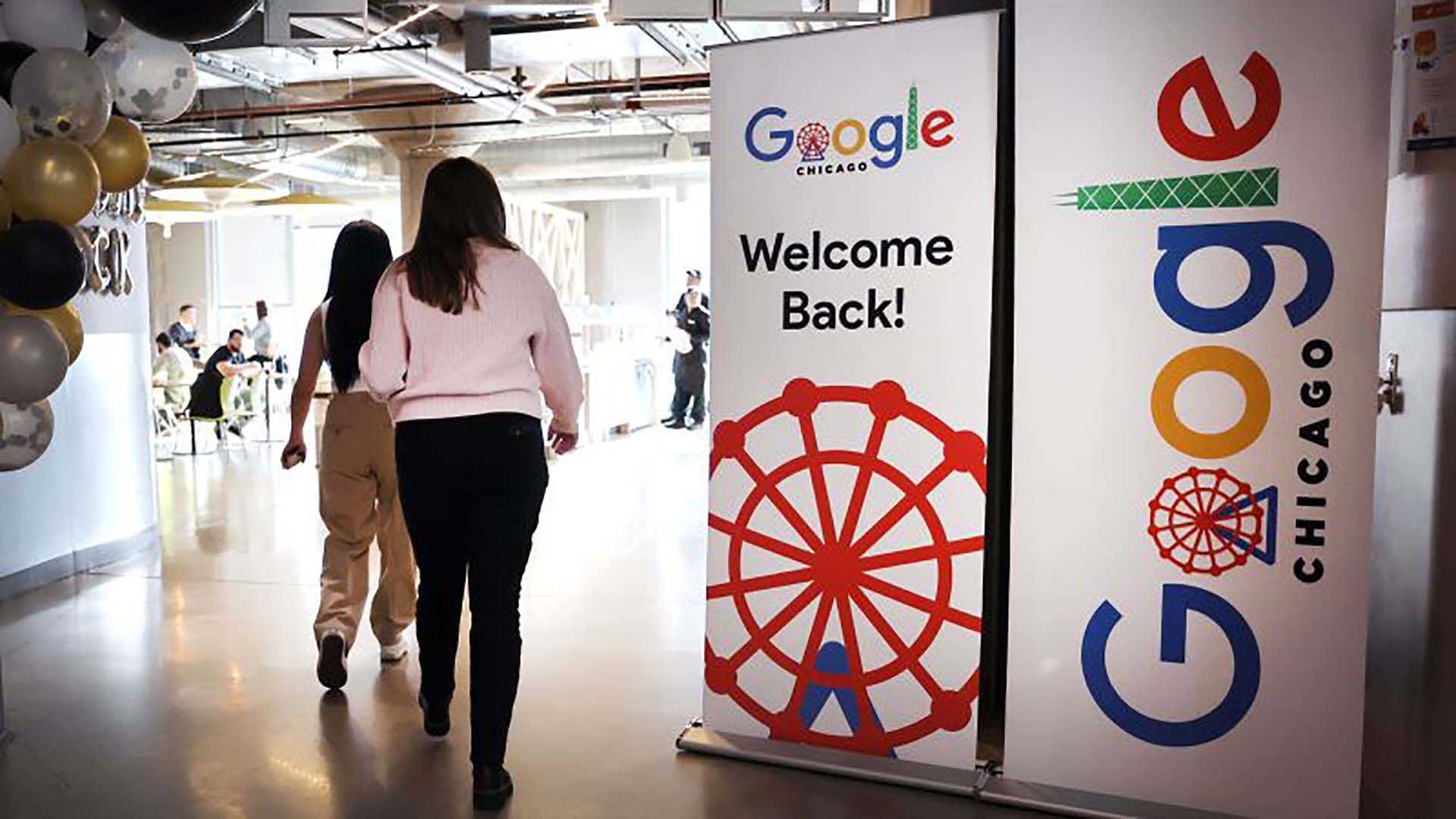
| Google employees returned to work in the office three days a week after a two-year hiatus due to the Covid-19 pandemic. (Image source: Getty Images) |
Google, a pioneer in the technology industry, strictly enforces a policy requiring employees to work in the office at least three days a week.
Google spokesperson Ryan Lamont affirmed that the new policy “is going well and we want to see employees connect and collaborate in person, so we are limiting remote work, except in exceptional cases.”
yt
According to Mr. Lamont, company leaders are reviewing reports on how their employees are adopting different work methods. He said the company has been implementing a hybrid work-from-home model for over a year and “we are officially integrating this approach into all of our workplace policies.”
Undesirable
This new policy has disappointed many employees. Chris Schmidt, a software engineer at Google, told CNN that, “the company is ignoring employee professionalism, instead focusing on attendance tracking and linking it to employee performance reviews. Implementing this new policy creates unnecessary difficulties for workers and shows no consideration for the diverse circumstances of employees.”
Not only is Google facing employee backlash, but other tech companies are also struggling to find the best way to get employees back into the office after they've become accustomed to working remotely. This tug-of-war is further complicated by the fact that tech companies have laid off tens of thousands of workers in the past year.
At Amazon, tensions flared up last week when hundreds of employees staged a march to draw attention to their grievances, including the company's three-day work week, which has been in place since May 2023.
Pamela, an Amazon employee, stated at the rally that she created an online chat room on Slack called "Remote Advocacy" to provide a space for employees to discuss the impact of the return-to-work policy on their lives.
“The chat room currently has 33,000 participants,” Pamela told the crowd at the rally, calling the chat room advocating for remote work “the clearest expression of employee dissatisfaction within the company.”
However, employee protests haven't changed the fact that these companies have spent billions of dollars on workplace space over the years and frequently talk about the value of workplace interaction.
In response to the protests, Amazon stated that it might take time for employees to adjust to returning to the office for longer hours. They were pleased that more people had returned to the office in the first month and declared that "energy, collaboration, and connection" were now present in the company environment.
Similarly, Meta, Facebook's parent company, is also working towards this. They announced that employees must return to work three days a week starting this September. A Meta spokesperson told CNN that the policy isn't too rigid and that employees designated to work remotely will be allowed to continue working remotely.
According to software engineer Chris Schmidt, when all workers come to the office, there's no guarantee you'll have enough space to sit and work.
He shared: “Many teams are working with social distancing, and for some of our job positions, there may not be a need to collaborate with anyone in the office. Right now, many companies in New York don’t even have enough desks and meeting rooms for employees to use comfortably.”
Adjust working methods accordingly.
With the Covid-19 pandemic under control, countries are returning to normal life, and businesses are gradually increasing the number of employees working in person, moving towards a full return of workers to the office.
“I’m happy with remote work because of its convenience and efficiency. As long as my laptop has an internet connection, I can multitask and work from anywhere,” said Samie Dorgham, an employee at an AI startup in London, UK.
In the US, collected data shows that job hopping and labor shortages are high, while companies are struggling to recruit and retain employees.
A survey conducted by the American polling firm ADP with the participation of 33,000 people worldwide showed that two-thirds of respondents said they would be willing to find new jobs if they were forced to return to the office full-time unnecessarily.
Business Insider (US) even ran a headline saying Gen Z would quit their jobs if they had to return to working in the office. The imbalance between the number of job seekers and the number of workers needed to fill the vacancies is causing salaries to rise in some industries.
Many companies are now adopting technology to reduce labor density in the workplace.
Food packaging plants, part of the manufacturing and in-house warehousing sector, have accelerated the deployment of robots. Robots are being used to assist in hospitals and hotel room service orders. Demand for ordering applications in restaurants and hotels is increasing. Many companies are implementing self-checkout systems in grocery stores and pharmacies. Companies are increasingly interested in automating processes with robots to handle paperwork and reduce density in office space.
Chris Schmidt said: “We deserve a voice in shaping the policies that affect our lives, in order to establish clear, transparent and fair working conditions for all.”
Clearly, finding appropriate adjustments to working methods will be crucial for maintaining the operations of many businesses and organizations in the context of an economy recovering from Covid-19.
Source













































































































Comment (0)