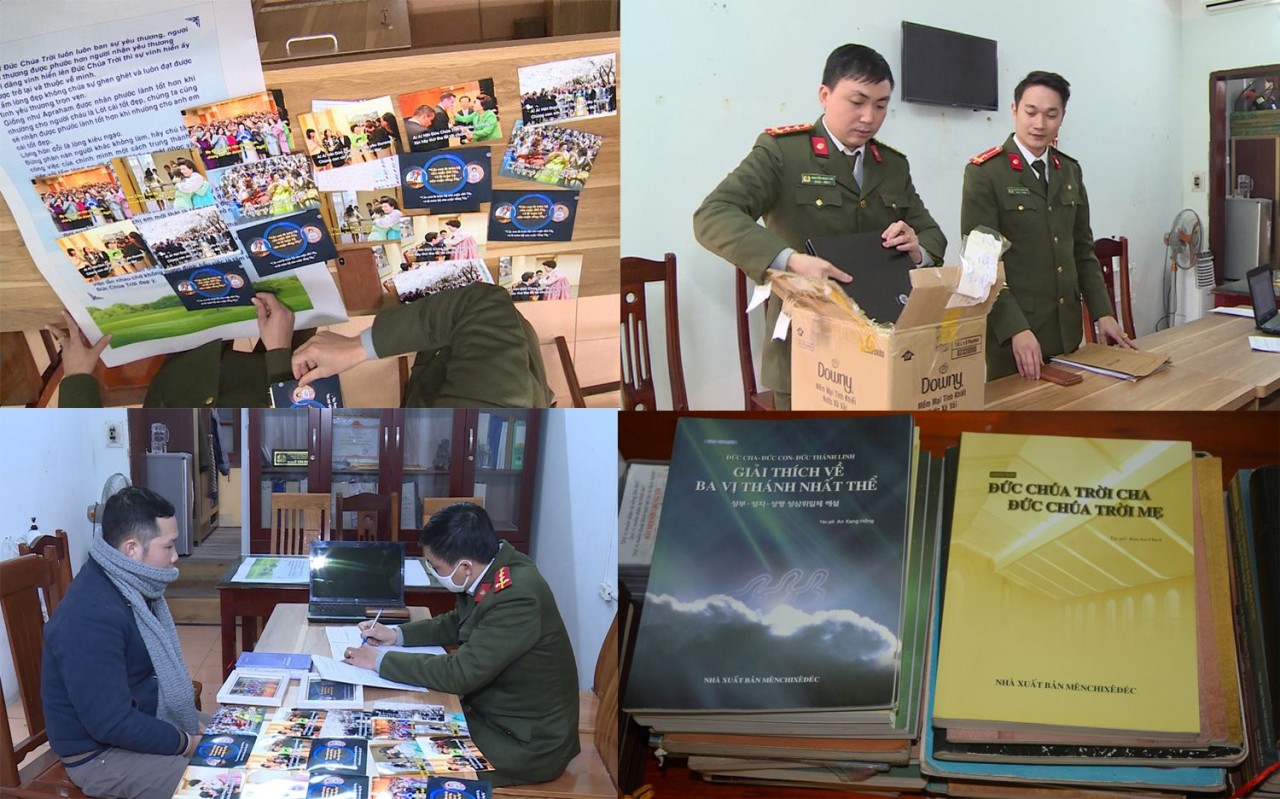
 |
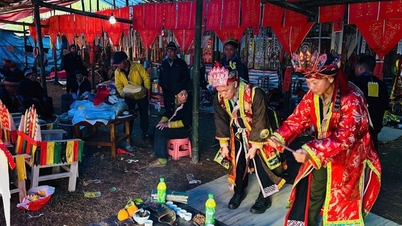
| Thanh Hoa City Police discovered and removed the propaganda and activity site of the 'Church of God the Mother'. (Source: Thanh Hoa Newspaper) |
The Dangers of Heretical and Mixed Religions: Detachment from Reality, Anti- Scientific. To date, Vietnam has approximately 45,000 religious establishments, including over 2,900 relics associated with religious sites, some of which are recognized by UNESCO as World Heritage sites. Annually, Vietnam hosts nearly 13,000 festivals, categorized into five types: folk festivals, historical and revolutionary festivals, religious festivals, festivals imported from abroad, and cultural, sports, and professional festivals. In the religious sector alone, Vietnam has over 26.5 million followers (accounting for 27% of the population), and 43 organizations belonging to 16 religions recognized or registered by the state. The country currently has over 54,000 religious dignitaries, more than 130,000 religious officials, and 29,658 places of worship. Despite being a multi-religious country, Vietnam does not have a single dominant religion; instead, all religions are harmoniously integrated with Vietnamese national traditions and culture, creating a diverse religious landscape. This is why Vietnam is often referred to as a "museum of religions" for the world. Although religions coexist, there is no religious conflict; religious leaders and followers actively participate in and contribute to the nation-building and defense efforts. This success is due to the fact that Vietnam's policies and laws on religion have met the legitimate aspirations and desires of religious leaders and followers. Furthermore, local authorities, especially in ethnic minority and mountainous regions, consistently uphold and protect the freedom of religion and belief for their citizens, facilitating the lawful operation of religious organizations. However, hostile and reactionary elements continue to seek ways to undermine, propagate, and blatantly distort the situation regarding the guarantee of freedom of belief and religion, and the vibrant religious life in our country. In particular, they encourage and support the formation and development of various cults, heterodox sects, and illegal organizations under the guise of religion within the country to attract participants and complicate security and order. When the government takes action, they distort the truth by claiming Vietnam is "suppressing" religion to create pretexts for exerting pressure and interfering in our internal affairs. A recurring pattern is that these cults and heterodox sects tend to appear and thrive in rural and remote areas, especially in the Southwest, Central Highlands, and Northwest regions – areas crucial for national defense and security. According to statistics from the Government's Religious Affairs Committee, as of December 2022, there were approximately 85 cults, mixed sects, and illegal organizations operating under the guise of religion, collectively known as "strange religions." Among these "strange religions," some operate contrary to social moral standards and cultural traditions, dividing national and religious unity, such as the "Church of God the Mother," the "Lady Dien Cult," and the "Coconut Cult"...; there are even "strange religions" with
political overtones, violating the law and negatively impacting security and order, such as the "Christian Protestantism," the "Ha Mon cult," the "De Ga Protestantism," the "Lady Co Do Cult," the illegal organization "Duong Van Minh," and the "Vietnam Interreligious Council"... These religious phenomena and beliefs all share one common point: they are not recognized as legal entities by the State or are forced to cease operations because they were established with the purpose of infringing on national security. However, for various reasons, these forms of belief and religion continue to exist, and at times and in some places, individuals even try to circumvent authorities and operate openly. Currently, these forms of cults and cults with superstitious elements are becoming increasingly complex and difficult to control and manage, as a segment of the population still follows them, causing many negative consequences for social life. A prime example is the negative impact of the "doctrine" of the cult "Church of God the Mother," which has led many to believe in it, resulting in delusions, loss of faith, and a disconnect from the secular world, placing absolute and blind faith in a supernatural world, in the decisions and control of gods and demons. Furthermore, the leaders force members with stable incomes to pay 10% of their monthly income as a membership fee. On each holiday, participants whisper to each other to donate at least 50,000 VND each time, usually twice a week, on the day of religious instruction to "communion" with God... These actions not only cause waste, instability, suffering, loss, and depletion of people's wealth and material resources, but also provide opportunities for unscrupulous individuals to profit. More dangerously, "followers" of cults with superstitious elements such as "Ba Dien Cult," "Coconut Cult," "Falun Gong," etc., after a period of time, have become alienated from modern science, denying social progress. There have been many cases of people falling ill but, due to blindness, no longer believing in advanced science, instead believing in superstition that simply practicing and performing rituals and making offerings to deities can cure their illnesses. Those negative influences are not suitable for a humane society - a fair, democratic, modern, civilized society, so we need to fight to eliminate them.
| As of December 2022, the country has about 85 heretical religions, mixed religions, and illegal organizations that carry the name of religion and are commonly called "strange religions". |
Guarantee freedom of belief and pure religion While superstitious beliefs and religions have been directly impacting life, the economy, and society, "unorthodox sects" founded by individuals with strong political ambitions are engaging in activities that threaten the country's political security.
Furthermore, some individuals even become "puppets" of hostile forces to spread distorted narratives about the state of religious freedom in Vietnam or to incite and manipulate extremist and fanatical religious followers to oppose the Party's policies and the State's laws on religion as well as in other areas.
In recent times, the leaders of the above-mentioned “strange religions” have used religion as a trick to deceive and incite ethnic minorities to participate in separatist activities. In 2001, 2004, and 2008, exiled Fulro members used “Dega Protestantism” as a tool to gather and develop domestic anti-government forces, plotting to establish an “independent Dega State”.
Recently, still using the same old tactics, exiled Fulro elements have continued to set up illegal organizations under the guise of religion, such as "Vietnam Evangelical Church of Christ," "Central Highlands Evangelical Church of Christ," etc., aiming to gather followers from ethnic minorities in the country to link with other Protestant groups and reactionary Vietnamese exiles who exploit issues of democracy, human rights, and religious freedom to oppose Vietnam and demand the establishment of a "separate state and religion" for ethnic minorities.
In Northwest Vietnam in 2011, a group led by Vang A Ia exploited superstition and religious authority to spread distorted and deceptive propaganda, calling for and gathering forces to welcome a "Mong king," declare themselves king, and establish a "Mong kingdom." Influenced by these narratives, in early May 2011, many Mong people, including young men, women, the elderly, and children, from the provinces
of Ha Giang , Tuyen Quang, Lao Cai, Lai Chau, Dak Lak, and Dak Nong, brought blankets, clothes, personal belongings, food, water, and fuel, and followed mountain trails to Huoi Khon village, Nam Ke commune, to gather and declare themselves king and establish a Mong kingdom. Notably, from the beginning of 2020 until now, some subjects, because they have not given up their oppositional ideology, still have the illusion that they will receive help from the outside to establish a separate state for the Mong people, so they have connected and colluded with organizations abroad and some subjects in Ha Giang, Lao Cai, Lai Chau gathered in Muong Nhe to discuss, unify, and spark activities to establish a "Mong state"... Thus, it can be seen that the above activities not only violate Vietnam's national security but also affect the integrity of the country's territorial sovereignty...
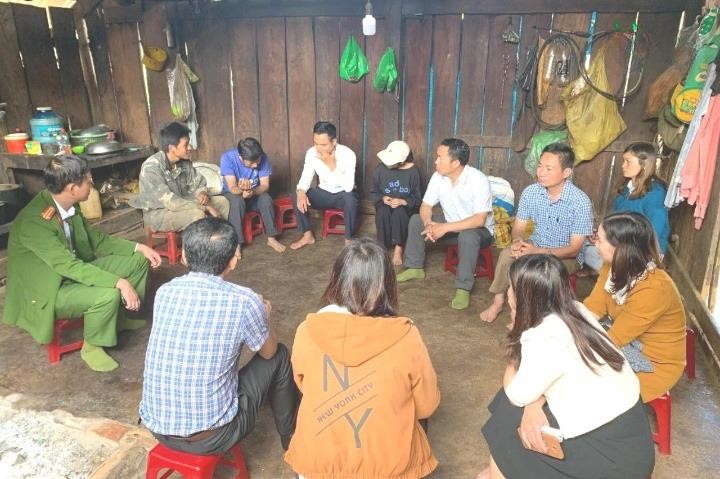 |
| The authorities of Dak Ha commune (Dak Glong district, Dak Nong province) propagate to people not to believe in and follow evil religions. (Source: People's Police Newspaper) |
Therefore, the struggle to prevent and ultimately eliminate all forms of cults, heterodox sects, and illegal organizations masquerading as religions is entirely correct and consistent with the religious policy of our Party and State. It contributes to protecting national security, maintaining territorial
sovereignty , and removing political elements from religious life, ensuring the pure freedom of belief and religion of the people. To achieve this goal, relevant levels and sectors within the political system, such as the Religious Affairs Committee, the Mass Mobilization Committee, and the Vietnam Fatherland Front, need to coordinate closely with the police forces at all levels to strengthen propaganda and raise political and legal awareness; to expose the schemes and activities of hostile and reactionary forces exploiting religion, so that the general public understands the true nature of cults and heterodox sects, as well as their negative impacts on social security and safety. This fosters self-awareness in prevention and participation in the fight against activities that affect security and order by cults and heterodox sects. This will also be an important prerequisite for functional agencies to gain the support and approval of the people in combating and prosecuting the ringleaders and key figures in accordance with the law, bringing about a pure religious life that meets the indispensable spiritual needs of the people. In addition, functional agencies also need to effectively manage state security and order regarding religious activities. This includes focusing on managing and guiding religious activities according to the traditional customs and practices of the nation, taking into account the economic conditions and circumstances of the locality, and in accordance with the law. For those who mastermind and lead cults, heterodox sects, and illegal religious organizations, decisive, timely, and thorough action is necessary. Exposing the nature and illegal activities that destabilize politics and society, create divisions among ethnic groups and religions, and exploit religion for cults, superstitions, and incite separatism and autonomy. Furthermore, it is necessary to continue promoting economic, cultural, and social development, poverty reduction, and social justice, while continuously improving the educational level of the people, especially ethnic minorities, those in remote areas, border regions, and islands; strengthening national defense and security, and ensuring political stability and social order in the locality. At the same time, it is crucial to enhance the rich and healthy cultural and spiritual life of all citizens to create strong "resistance" and "immunity" against the activities of cults and heretical sects.
(*) People's Security Academy


![[Photo] Explore the US Navy's USS Robert Smalls warship](/_next/image?url=https%3A%2F%2Fvphoto.vietnam.vn%2Fthumb%2F1200x675%2Fvietnam%2Fresource%2FIMAGE%2F2025%2F12%2F10%2F1765341533272_11212121-8303-jpg.webp&w=3840&q=75)




















![[Video] The craft of making Dong Ho folk paintings has been inscribed by UNESCO on the List of Crafts in Need of Urgent Safeguarding.](https://vphoto.vietnam.vn/thumb/402x226/vietnam/resource/IMAGE/2025/12/10/1765350246533_tranh-dong-ho-734-jpg.webp)












































Comment (0)