



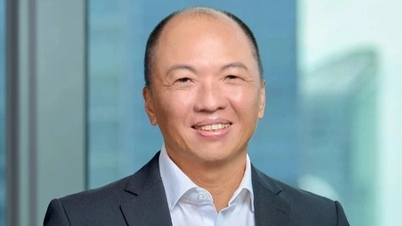
On the occasion of the 15th anniversary of the Vietnam Oil and Gas Association, he granted us a very open and sincere interview, without shying away from some issues that could be considered "sensitive".
PV: Sir, during your career in the oil and gas industry, which projects are you most proud of?
Dr. Nguyen Quoc Thap: In my life working in oil and gas exploration and production, it's difficult to say which is the best and second best. But I can say that there are three projects that have left a positive impression and lasting legacy.
My career in the oil and gas industry spans a full 36 years and 6 months. If the history of the oil and gas industry spans 65 years, then I've been involved in it for more than half of that time. Three projects have left a lasting impression and been particularly memorable: the first was Bir Seba (Algeria), the second was in the Nenetsky region during the Russian Federation era, and the third, most recently, was Sao Vang Dai Nguyet.

First, we must remember the project in Algeria because it was the first overseas investment project where we (Vietnam/ Petrovietnam ) were the operator. This project received a lot of media attention, and I recall that in 2013, the New Energy Newspaper published a three-part series titled "Searching for Oil in a Fiery Desert," which won a top prize at the National Journalism Awards.
In the Sahara Desert, the roads leading to the oil fields are called "sports roads." They level the sand, pour plaster, and compact it, creating what's called a hard road. After each sandstorm, the road might be completely covered, but they simply remove the sand, and the road remains usable. In snowy and icy regions, they utilize the snow and ice themselves to build roads. Despite being two very different and contrasting environments, oil and gas workers adapt to each condition and circumstance.
Regarding the Nhinhetsky project, the exploration license was granted by the Government of the Russian Federation, and the contract establishing the Rusvietpetro joint venture between Petrovietnam and Zarubesneft officially came into effect on July 7, 2008. After a rapid process from design, procurement of materials and equipment, construction and drilling of development wells, the project received its first oil flow in September 2010, witnessed by both participating parties.
Our thinking at the time was that, from the moment we signed the EPCI contract, we wouldn't get the first line of work for 24 months. That was the logic at the time. My colleagues reported to me that the other side's report was "inaccurate" and that it was impossible to implement. However, each side had a different approach or way of working. When I worked directly with the partner, I completely trusted them and went back to convince my own team because of their high level of professionalism. They achieved the goal, much to the surprise of our own staff and engineers.
I was quite fortunate to participate in a project in Bir Seba, one of the hottest places in the Sahara Desert, and then another project in Nhenhetsky, one of the coldest places.
PV: In your opinion, why did Russia allow us to enter into a joint venture on this project? And it seems this is the only project Russia has allowed a foreign joint venture on Russian soil?
Dr. Nguyen Quoc Thap: That issue stems from the behavior of the two countries. According to the Intergovernmental Agreement, Block 09.1 ended in 2010. At that time, the Russian side wanted an extension. The Vietnamese side was 50-50, meaning half supported the extension and half did not. Subsequently, based on a proposal from Petrovietnam, the Government agreed. The Vietnamese Government raised the issue with the Russian side that the Government could consider extending the agreement in Vietnam if the Russian Federation agreed to establish a similar joint venture in Russia on a symmetrical basis. This proposal was supported and agreed upon by the Russian Government. And that's how the Rusvietpetro joint venture was created. However, the mode of operation is different. That is, Vietsovpetro operates under the Intergovernmental Agreement. Rusvietpetro operates on the following mechanism: the two sides establish a company to sign and receive licenses for oil and gas exploration and exploitation in a field that the Russian Federation Government grants, almost as if by designation.

Thus, Russia's joint venture with Vietnam on this project in the Russian Federation is due to the extension of the intergovernmental agreement and the continuation of the Vietnam-Russia oil and gas joint venture in Vietnam. These negotiations between the two sides were very successful, and this is invaluable experience in cooperation and investment. It must be said that the generations of leaders of Petrovietnam and the government leaders have been very insightful in setting conditions and constraints for the extension, as well as outlining plans for expansion and new establishment.
At that time, I was the Deputy General Director of the Corporation, in charge of overseas projects. Petrovietnam directly invested in the Nhenhetxky Project.
PV: Could you tell us approximately how much money the Nhenhetxky Project has paid so far? And is this the most profitable project?
Dr. Nguyen Quoc Thap: According to Petrovietnam's report, by the end of 2024, the total amount of money transferred back to Vietnam from the project will be more than three times the Vietnamese side's investment contribution, which is 533 million USD. Around 2016, Vietnam had already recovered all its capital. From then on, it will be entirely profit from the project. It is projected that by 2030, Vietnam will continue to receive approximately 2 billion USD, assuming an oil price of around 70 USD/barrel.
If we consider the return on investment, the Nhenhetxky Project could be considered highly profitable. However, Vietsovpetro may have even higher figures. Meanwhile, the project in Algeria is still recovering its investment.

PV: And what is your assessment of the Sao Vang Dai Nguyet Project?
Dr. Nguyen Quoc Thap: The Sao Vang Dai Nguyet project faced many bottlenecks during its implementation that needed to be resolved and overcome. Looking back now, we realize that the decision to implement the project was very timely; if it had been delayed, the project would hardly have become a reality due to sensitive factors in the South China Sea.
This project, I wouldn't call it a joint venture, but rather a consortium of contractors. The two Japanese partners are Idemitsu Kosan and Teikoku Oil.
They signed the oil and gas contract, and Vietnam has the right to participate in the project when it becomes commercially viable. We participate partly as the host country's manager, the party that signed the oil and gas contract with the consortium; and secondly, we have the right to participate in the project once it becomes commercially viable, with a 20% stake.
The project had several key points. Firstly, the gas price was finalized; secondly, the timing of the development plan approval was crucial. The project was implemented with multiple contractors, including Vietsovpetro, PVEP, Petrovietnam, and PV GAS. And despite facing the Covid-19 pandemic, it was completed on schedule by the end of 2020. If we hadn't implemented the project at that precise time, or had been even slightly delayed, it would have been difficult for everything to become a reality.

PV: What difficulties did you encounter while implementing this project, sir?
Dr. Nguyen Quoc Thap: Every step in the project implementation, from laying the foundation to installing the topside platform, involved careful consideration of potential obstacles. Then there was connecting pipelines and infrastructure: Vietsovpetro's infrastructure at Thien Ung field, PVEP's Dai Hung field, and PV GAS's Nam Con Son 2 pipeline. A series of tasks were carried out during the Covid-19 pandemic.
| The Vietnam Oil and Gas Association (VPA) is and will continue to adhere to its guiding principles: "Connecting - Intelligence - Development," the Resolution of the 4th Congress (2022-2027), and the overall work program, aligning with societal demands and practical realities to formulate specific and meaningful work content that contributes to the robust development of the oil and gas industry. The 15th anniversary of the VPA's establishment and development is an opportunity to reflect on the past journey, assess achievements, and draw lessons learned to move the Association's activities into a new phase, with the expectation of improving the quality of all areas of operation and gradually reaching new heights. |
This project also faced difficulties in implementation due to the involvement of multiple partners. Vietsovpetro's work habits, standards, and regulations were one thing, while Idemitsu's were another. My role was to figure out how to get the project running.
When implementing the project with Idemitsu, I stipulated that they had to perform certain tasks. If additional investment arose, the Vietnamese side supported and agreed to include it in the project costs, and they would be reimbursed. If we were too strict, they wouldn't accept some costs, such as "transit" fees. However, because there were two "transit" units – PVEP from Dai Hung's gas and Thien Ung from Vietsovpetro – these costs had to be incurred.
At that time, we had to be flexible. We proposed that they needed to agree to have their costs included in the project and receive a refund. Basically, this affected the partner's profits to some extent, but once they received their refund and considering the project's progress, they accepted Petrovietnam's requirements.
Our partners also "know themselves and know their opponent," they understand and agree with our approach, and that our approach is correct. In such cases, if we lack sufficient tact, goodwill, and experience, it will be difficult to reach a consensus through negotiation.
Currently, this project is being implemented very successfully. Overall, the project's parameters are better than initially projected. Specifically, the amount of condensate obtained is higher than expected. Furthermore, the prices of crude oil and condensate since the project began production are higher than in the initial design scenarios. Therefore, the Sao Vang field alone has already recouped its investment.
Recently, our partner has made additional investments in the Sao Vang mine. I think they will recoup that additional investment in the not-too-distant future.

PV: Could you elaborate on the element of chance involved in exploration and prospecting?
Dr. Nguyen Quoc Thap: The exploration and prospecting profession is fraught with risks. And when risks arise, a lot of money is certainly lost. Foreign oil and gas companies have lost perhaps nearly 14 billion USD in Vietnam... But once you enter the oil and gas exploitation industry, you have to accept the risks.
However, in the exploration and prospecting phase, there are also people who are considered "lucky" or "lucky." To put it simply, imagine opening a pho restaurant; not everyone who opens one will have a thriving business. The oil and gas industry has many similar cases and situations. Some projects fail not because of a lack of skill, but simply because of bad luck or the lack of a "lucky touch."
PV: Thank you for this fascinating conversation. We wish you good health and continued intellectual contributions to the development of Petrovietnam!
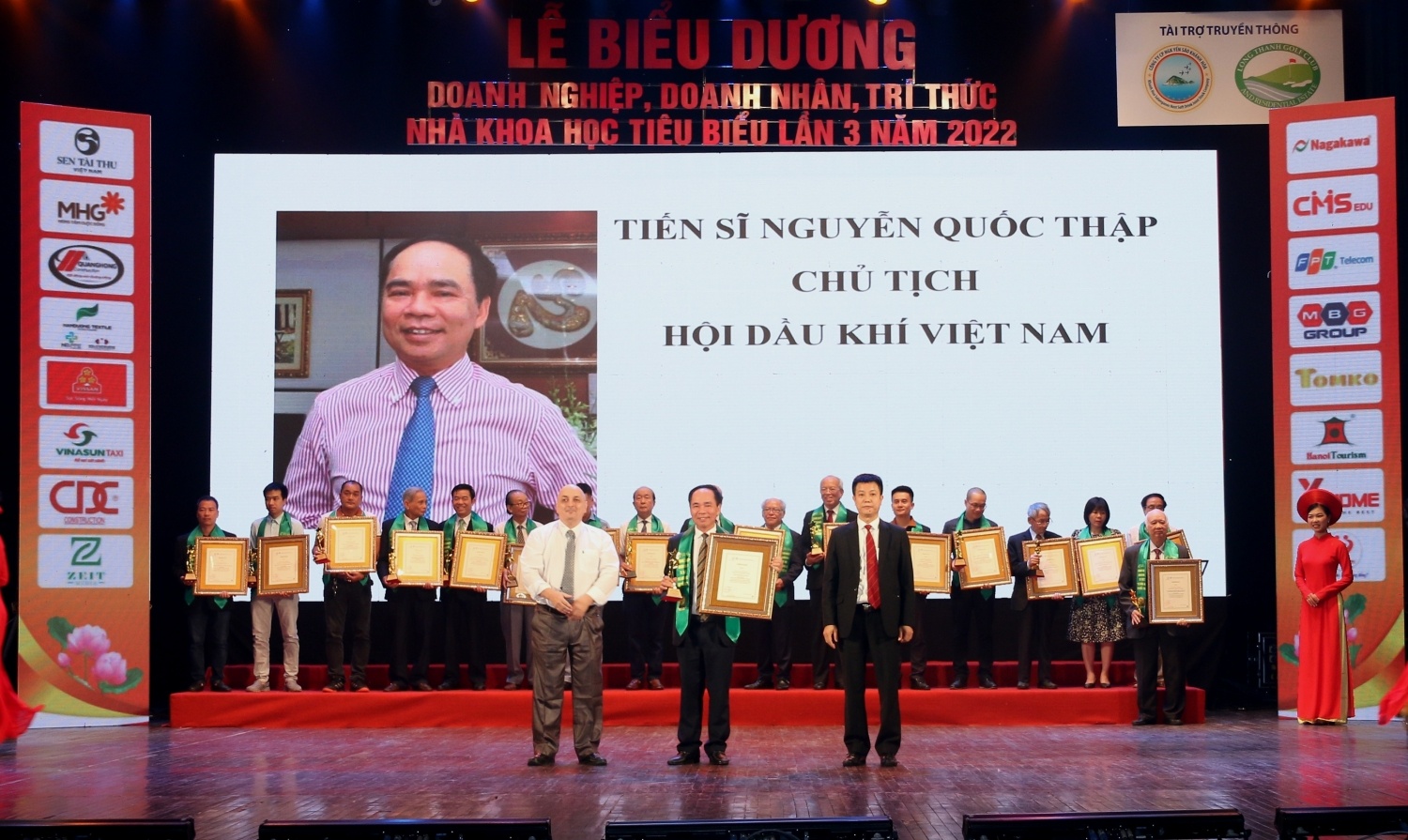
Outstanding expert, intellectual, and scientist. As a specialist in geophysics, mining geology, and extraction, with many years of experience participating in overseas projects, Dr. Nguyen Quoc Thap has been assigned to participate in, direct, and manage oil and gas exploration and production investment projects of Petrovietnam, managing and monitoring activities in domestic oil and gas contract blocks; directly supervising key units of the industry, such as: Vietsovpetro Joint Venture, Rusvietpetro, Vietnam National Exploration and Production Corporation (PVEP), Vietnam Gas Corporation - JSC (PV GAS), Vietnam Drilling and Drilling Services Corporation (PV Drilling)... In his capacity, Dr. Nguyen Quoc Thap also directed the development of relationships with national oil and gas companies in countries with investment projects to maximize the capacity, understanding of the investment location, and advantages of the host country… to successfully implement projects; establishing long-term relationships with corporations such as Total (France), ExxonMobil (USA), PTT (Thailand), Salamander (UK), Petrofac (USA)… to leverage technological expertise, financial resources, and management experience, and to participate with these partners in investing in oil and gas projects in third countries, creating consortia to jointly carry out oil and gas exploration and production. In the field of science and technology (S&T), Dr. Nguyen Quoc Thap has directed relevant departments of the Group and the Vietnam Petroleum Institute to promote research and development in S&T, laying the foundation for the Group's accelerated development strategy, with development in both breadth and depth. This includes strengthening the research capacity of leading experts, enhancing international coordination and integration, gradually improving the reputation and image of several S&T units in the industry, and forming a team of highly qualified experts and scientific research personnel capable of applying many advanced technologies and techniques from around the world. This has been recognized internationally, with international partners sending staff to conduct collaborative research... With the research topic "Applying advanced scientific and technological solutions to study and discover new oil and gas-bearing objects and improve the exploitation efficiency of the Dai Hung field, Block 05-1a, South Con Son Basin, Vietnam continental shelf," Dr. Nguyen Quoc Thap directed and participated with the PVEP research team in conducting a comprehensive economic and technical study to serve as a basis for selecting the optimal development plan for the field after the production of new wells declines, and to maintain the future development of the Dai Hung field. With his achievements, Dr. Nguyen Quoc Thap has made significant contributions to the development of the oil and gas industry in general and Petrovietnam in particular. In recognition of these contributions, Dr. Nguyen Quoc Thap has been awarded the title of "Outstanding Emulation Soldier" by Petrovietnam for many consecutive years, the title of "Outstanding Emulation Soldier" by the Ministry of Industry and Trade, and a Certificate of Merit. He has also been awarded the Ho Chi Minh Prize for Science and Technology and the Second Class Labor Medal by the President of Vietnam. |
Nguyen Nhu Phong


























































Comment (0)