

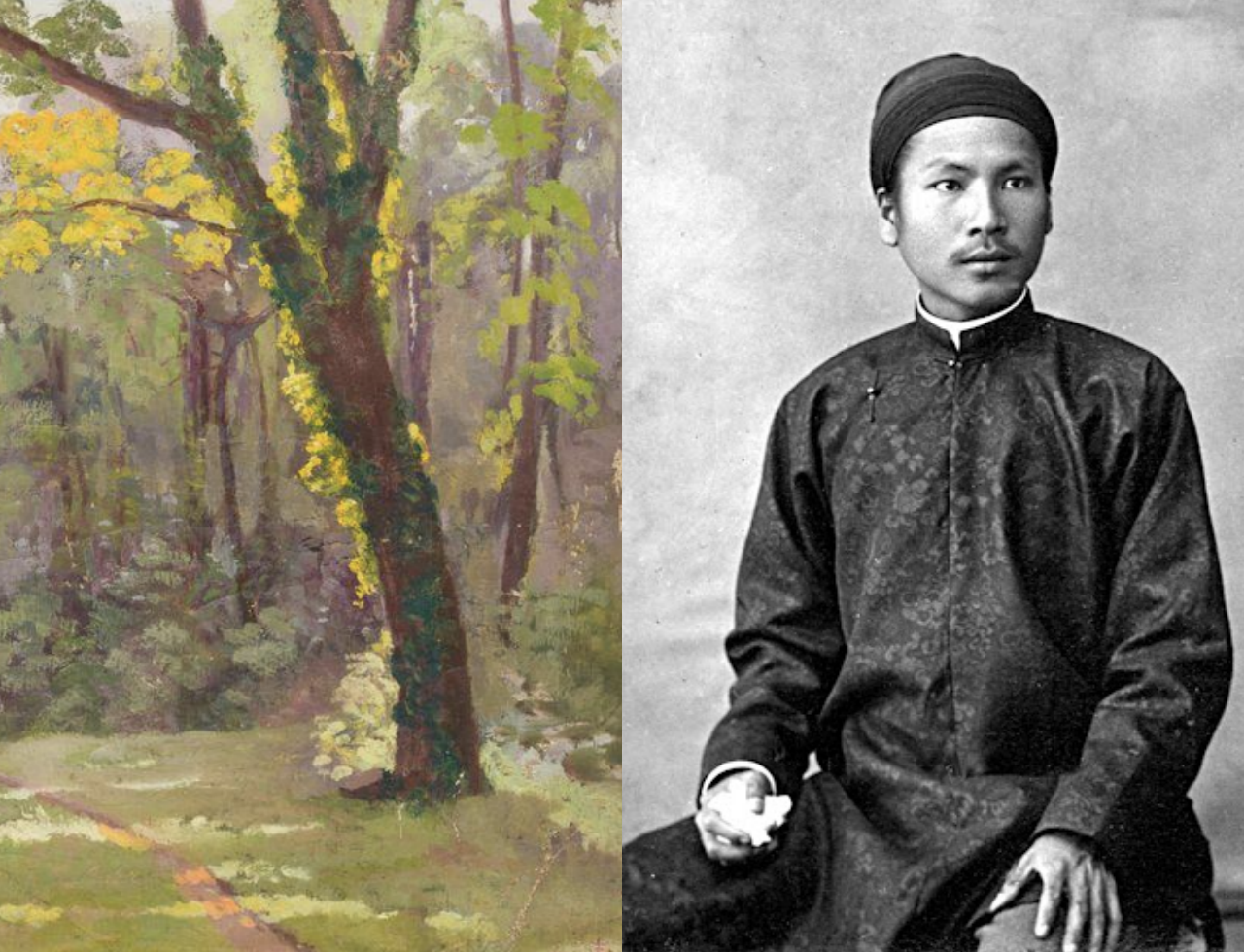
More than 20 oil paintings created by King Hàm Nghi during his years living away from his homeland have been gathered and revisited in the imperial city of Huế .
“The Prince of Annam, thin as a reed, spoke of painting, of the art studio (atelier) at his villa in the village of El Biar…” (Jules Roy).
The virtues of the young king
King Hàm Nghi (1971-1944) ascended the throne at the age of 13. In his book "The Exiled King" (Le Roi Proscrit), the French writer Marcell Gaultier wrote: "King Hàm Nghi maintained his sacred character with his people. The young king did something that resonated throughout the country: With a resolute will for independence, and despite the French presence in Huế, Annam displayed an unyielding attitude."
Because of these qualities, shortly after Hàm Nghi ascended the throne, he was exiled by the French to Algeria – a country in Africa completely unfamiliar to the Vietnamese at that time.
Living in exile, he was quite reclusive and quiet in a villa called Tung Hien Villa in El Biar village. Later, when he became an artist, he painted many pictures of this village as a form of nostalgia, a way of connecting with his homeland.
In 1899, he went to France to see the Paul Gauguin exhibition, and his paintings were later heavily influenced by this great artist. Despite his exposure to French culture, he retained the image of an Eastern prince.
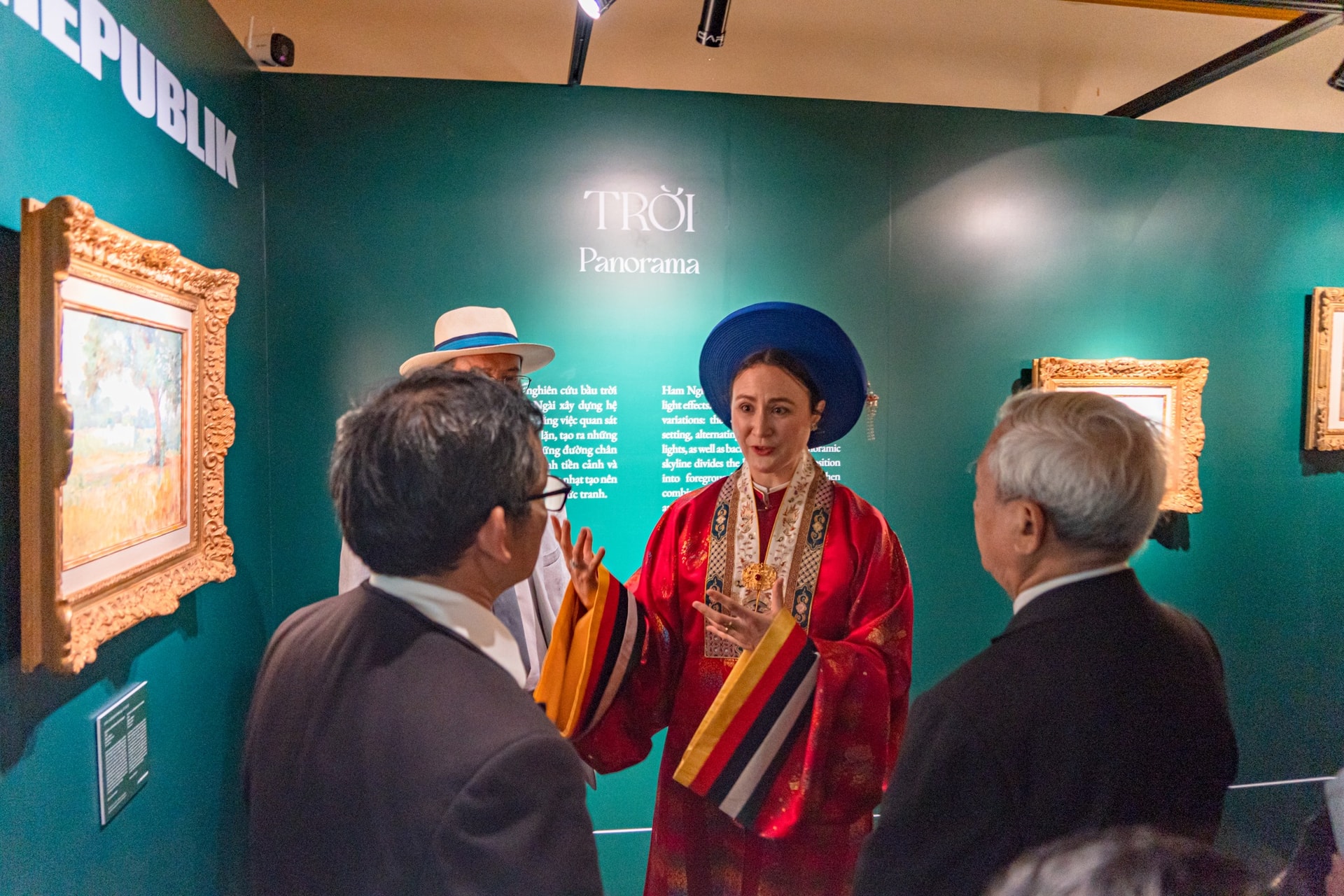
As a king in exile, banished by the French to Algeria in Africa, it was natural that every activity of King Hàm Nghi was monitored and supervised.
However, they were very lenient and quite respectful of his character and way of life. Captain De Vialar discovered the talented drawings of King Hàm Nghi, and he suggested that the painter Marius Reynaud (1860-1935) teach King Hàm Nghi the basics of painting.
In 2010, 66 years after his death, his painting "Sunset" was auctioned at Dorout, Paris, attracting considerable attention. Fortunately, a Vietnamese-born doctor made a great effort to acquire this valuable painting. The successful auction awakened public interest in the enduring legacy of the king in Vietnam.
The sky, mountains, and water of my homeland
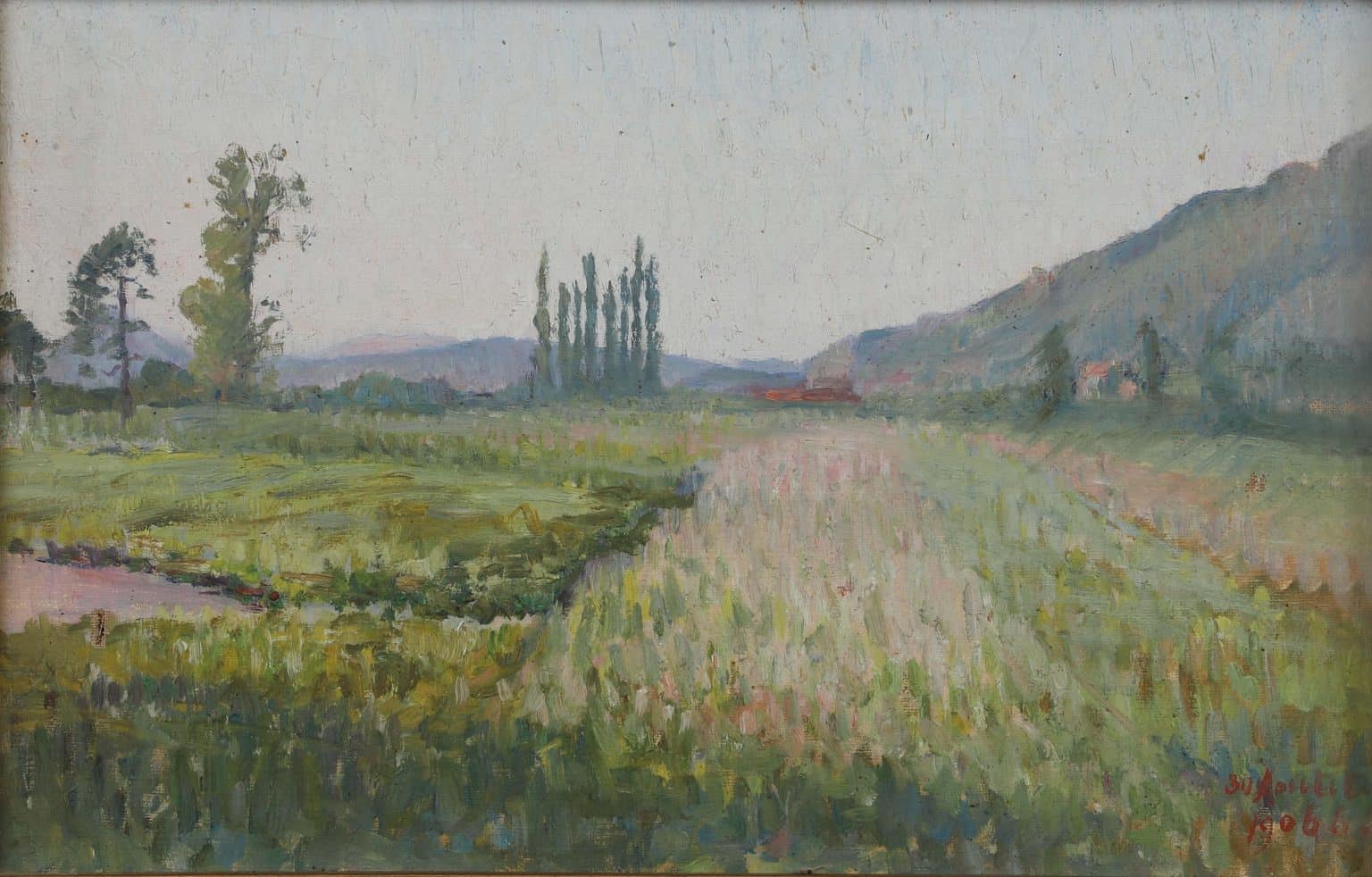
The paintings that King Hàm Nghi created during his exile often depicted landscapes of the place where he lived, or scenes that evoked emotions in him.
The king often shared his thoughts and feelings in letters to his friend in 1901: “Whenever I feel boredom approaching, I quickly grab my paint box and run out into the middle of the field. There, I silently gaze at the landscape for hours on end, and try to record the beauty I see (...). Painting has given me so much solace. That is why I cling to it with both my soul and my body. Without it, I don’t know what I would be like, because I have seen, just like you, that life is a monotonous series…”
The oil painting "Port Blanc Sea Cliffs (st- Lunaire)" painted in 1912 (61x50cm, private collection, Amandine Dabat) is one of the works representative of the king's style.
The name Tu Xuan was often signed by the king on works of art, as if to emphasize that he was a small child of spring – the distant spring of Vietnam, which he had not yet had the opportunity to return to.
Art helped him alleviate his longing for home. His paintings often lack people, the colors are usually muted, and they reflect loneliness, emptiness, and desolation.
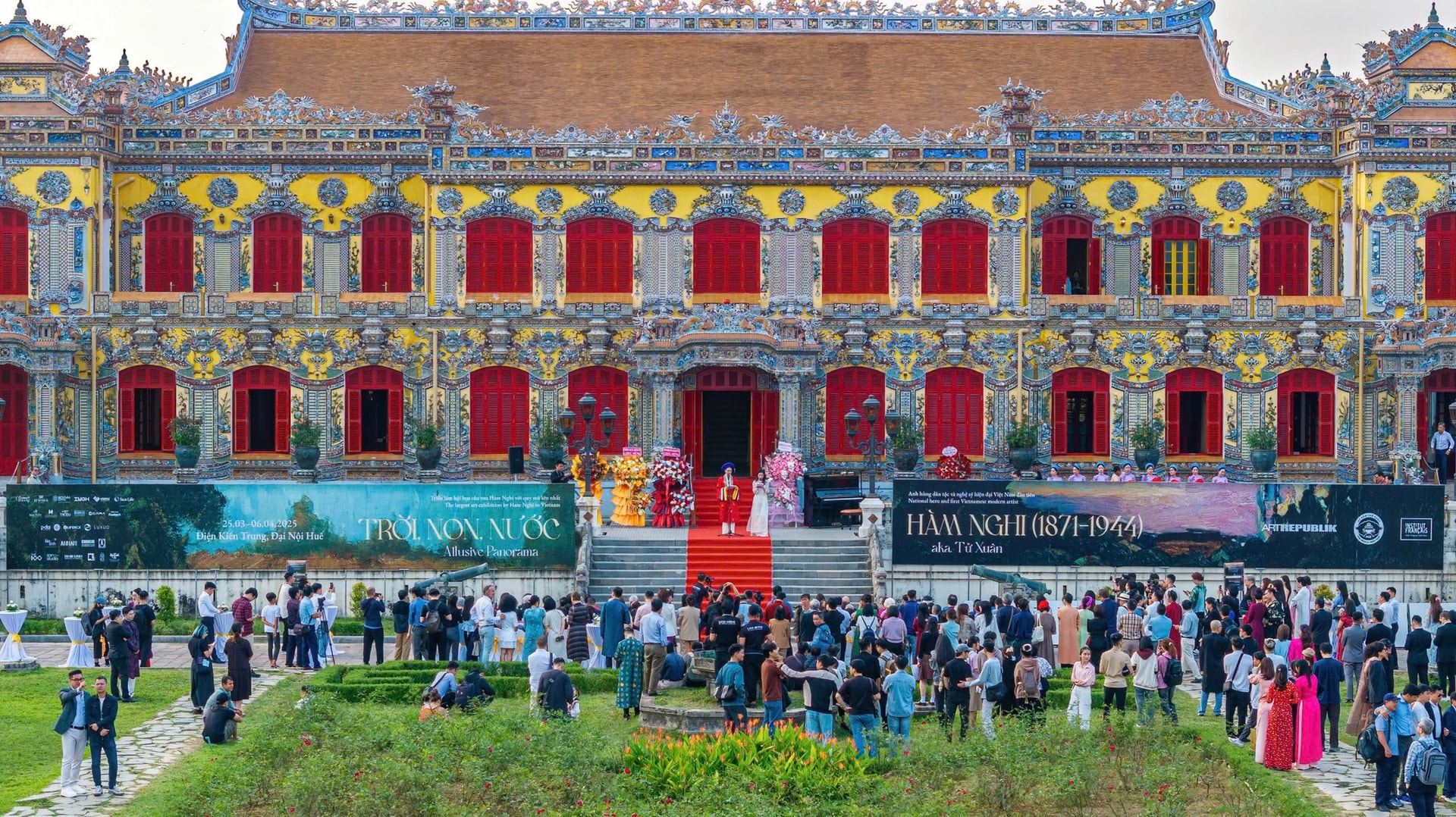
In late March, Kien Trung Palace (located within the Hue Imperial Citadel) became an artistic meeting point when Art Republik Vietnam magazine, in collaboration with the Hue Ancient Citadel Conservation Center and the French Institute in Vietnam, organized a special painting exhibition titled "Sky, Mountains, Water - Allusive Panorama".
This is the second retrospective exhibition, and also the largest, showcasing paintings by King Hàm Nghi in Vietnam. The exhibition displays over 20 works, gathered from 10 private collections. These works were repatriated, appraised, preserved, and restored by leading experts and co-curated by art researcher Ace Lê and Dr. Amandine Dabat, a fifth-generation descendant of King Hàm Nghi.
“The public knows King Hàm Nghi as a national hero who issued the Cần Vương decree with the ambition of reclaiming national sovereignty from French colonialism. However, not many people know that he was also one of the first two Vietnamese painters (along with Lê Văn Miến) to be trained in Western academic methods, and therefore can be considered a pioneer in the dawn of modern Vietnamese art,” commented Ace Lê, curator and editor-in-chief of Art Republik magazine.
The "return" of King Hàm Nghi's paintings to the Kiến Trung Palace (Hue) is a tribute from posterity to the patriotic king. This is also a rare opportunity for the Vietnamese public to admire King Hàm Nghi's works in an exhibition space designed within the historical site to meet international museum exhibition standards.
The curator had a rather difficult time finding paintings created in Algiers and was fortunate to find three works from three different collectors. Perhaps the most remarkable is "Vue de la résidence d' El Biar (View of the El Biar Residence)" (1901). This painting is one of the rare works depicting the architecture of the Villa des Pins. It was also a gift from Princess Như Lý (the second daughter of King Hàm Nghi, the great-grandmother of Dr. Amandine) to her assistant.
Dr. Amandine Dabat said: "Ham Nghi was not only a patriotic king who devoted his life to his roots and wore only the national costume, but also a talented artist with many outstanding works of art, especially paintings."
Source: https://baoquangnam.vn/nghe-thuat-trong-chon-luu-day-3152211.html


![OCOP during Tet season: [Part 3] Ultra-thin rice paper takes off.](/_next/image?url=https%3A%2F%2Fvphoto.vietnam.vn%2Fthumb%2F402x226%2Fvietnam%2Fresource%2FIMAGE%2F2026%2F01%2F28%2F1769562783429_004-194121_651-081010.jpeg&w=3840&q=75)


Comment (0)