

In the treasure trove of Vietnamese music , "Going to Huong Pagoda" is a song with a vibrant presence but an extremely mysterious origin. There was a time when many people searched for the author who set Nguyen Nhuoc Phap's poem to music, but they were all unsuccessful. And the final truth left everyone… stunned.
The song is famous, but the original sheet music cannot be found.
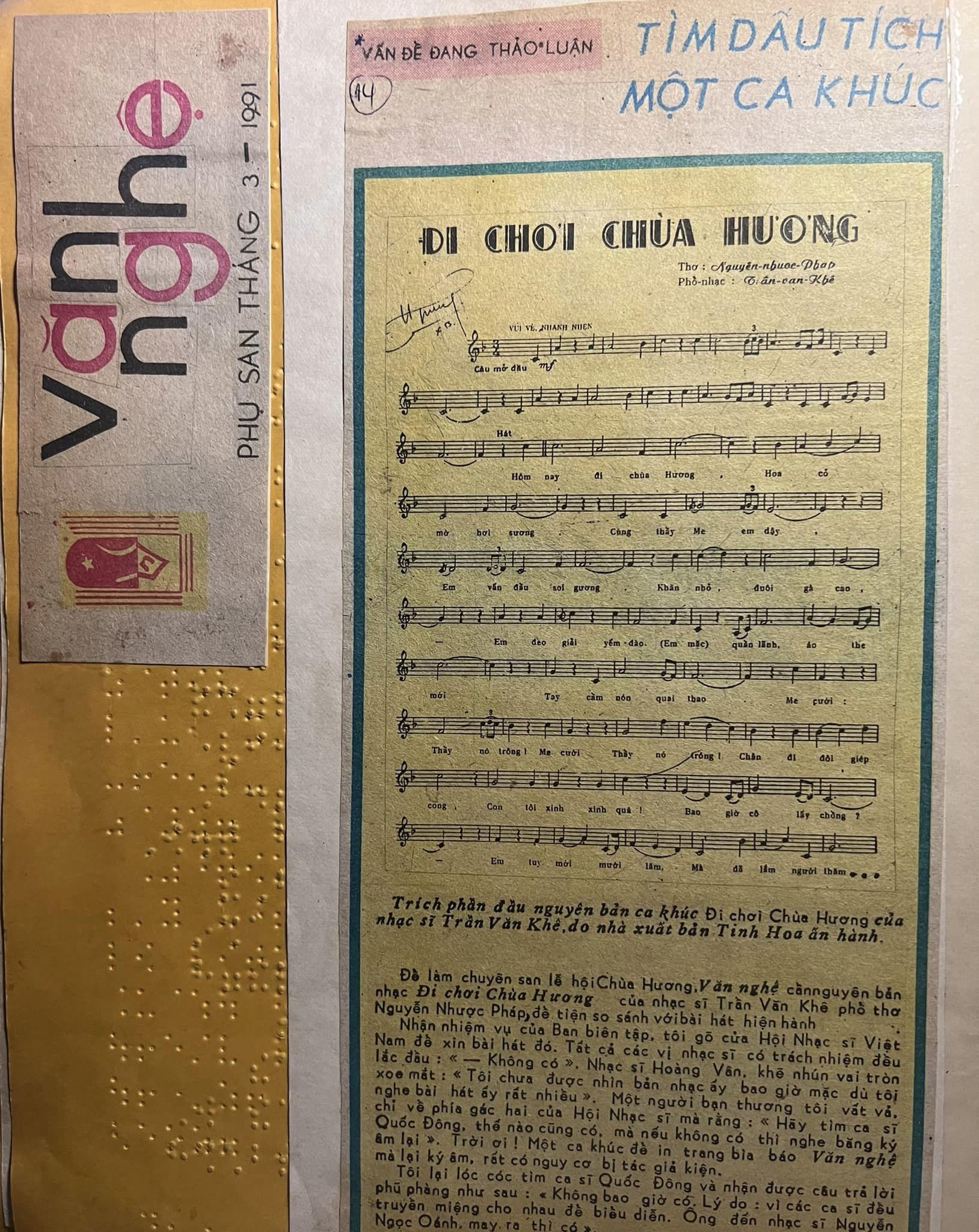
The original version of the song "Going to Huong Pagoda" is signed by the author Tran Van Khe. Photo reproduced from the Literature and Arts newspaper.
First of all, Nguyen Nhuoc Phap's poem, titled "Chua Huong" (Perfume Pagoda), has 34 stanzas, written in the five-word long poem style (each line has 5 words, 4 lines/stanza). According to writer Nguyen Giang, at that time, Nguyen Nhuoc Phap secretly loved a young lady from a noble family, then considered the "beauty of Hanoi" (Miss Do Thi Binh, residing at 67 Nguyen Thai Hoc Street, Hanoi ), so he composed this poem as a gift to his "muse". Every day, Nguyen Nhuoc Phap would quietly pass by 67 Nguyen Thai Hoc Street hoping to meet his dream girl. Sadly, cruel fate took him down at a very young age, his talent at its peak, so he died without ever meeting Miss Do Thi Binh even once.
Speaking to Dan Viet , Dr. The Hung, a scholar of aesthetics, said that in 1991, when he was assigned to produce a special issue on the Huong Pagoda Festival for the weekly literary magazine Van Nghe, he urgently needed the original sheet music for the song "Going to Huong Pagoda" by Tran Van Khe, set to a poem by Nguyen Nhuoc Phap, for comparison with the currently popular version. Upon receiving this assignment, he approached the Vietnam Musicians Association to request the sheet music. However, all the responsible musicians shook their heads, saying they didn't have it.
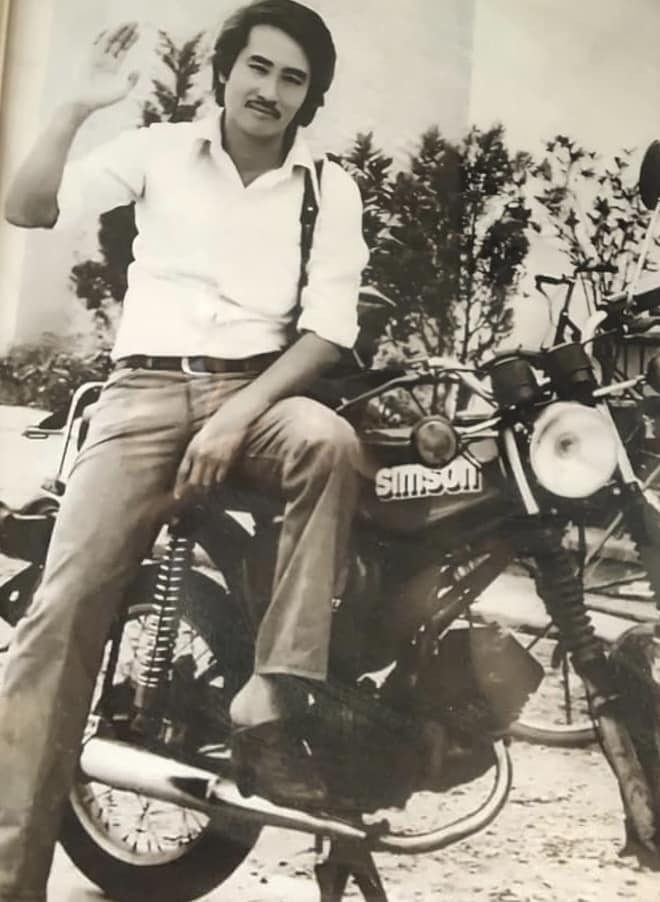
Dr. The Hung, a scholar of American studies, in his youth. Photo: Provided by the interviewee.
"I still remember, composer Hoang Van shrugged slightly, his eyes widening: 'I've never seen that sheet music before, even though I've heard the song many times.' A friend, feeling sorry for my hardship, pointed towards the second floor of the Musicians' Association building and said: 'Look for singer Quoc Dong, you'll definitely find it, and if not, listen to the recorded version.' Oh my God! A song meant for the cover of the Literature and Arts magazine, and yet I had to transcribe it? There was a high risk of the author suing me."
I went searching for singer Quoc Dong again and received this blunt answer: "Absolutely not. The reason is that singers only tell each other about performances through word of mouth. You might have a chance if you go to composer Nguyen Ngoc Oanh."
A popular and emotionally resonant song, meticulously produced and broadcast on television and the Voice of Vietnam radio station for millions of viewers and listeners—a performance that any band wanting to be popular must include in their show—yet there's no sheet music for it. Strange, but true!
So I decided to seek out composer Nguyen Ngoc Oanh. After listening to my explanation of the newspaper's purpose, he promised to help me within 24 hours if he could find it in his music "archive"... And if he found it, he would offer some of his opinions to prove that the song was no longer the same as it is now, even though the author's name was still... Tran Van Khe.
As promised, I knocked on the door, and Mr. Oanh excitedly announced the good news: they had found it. Before me was the musical score of Nguyen Nhuoc Phap's poem by composer Tran Van Khe. At the bottom of the score was the inscription: "The 'Visiting Huong Pagoda' score, second edition published by Tinh Hoa Publishing House. In addition to the regular editions, there is also a special edition marked from I to XX TH. I to X each have the author's signature and the TH seal, given as a gift."
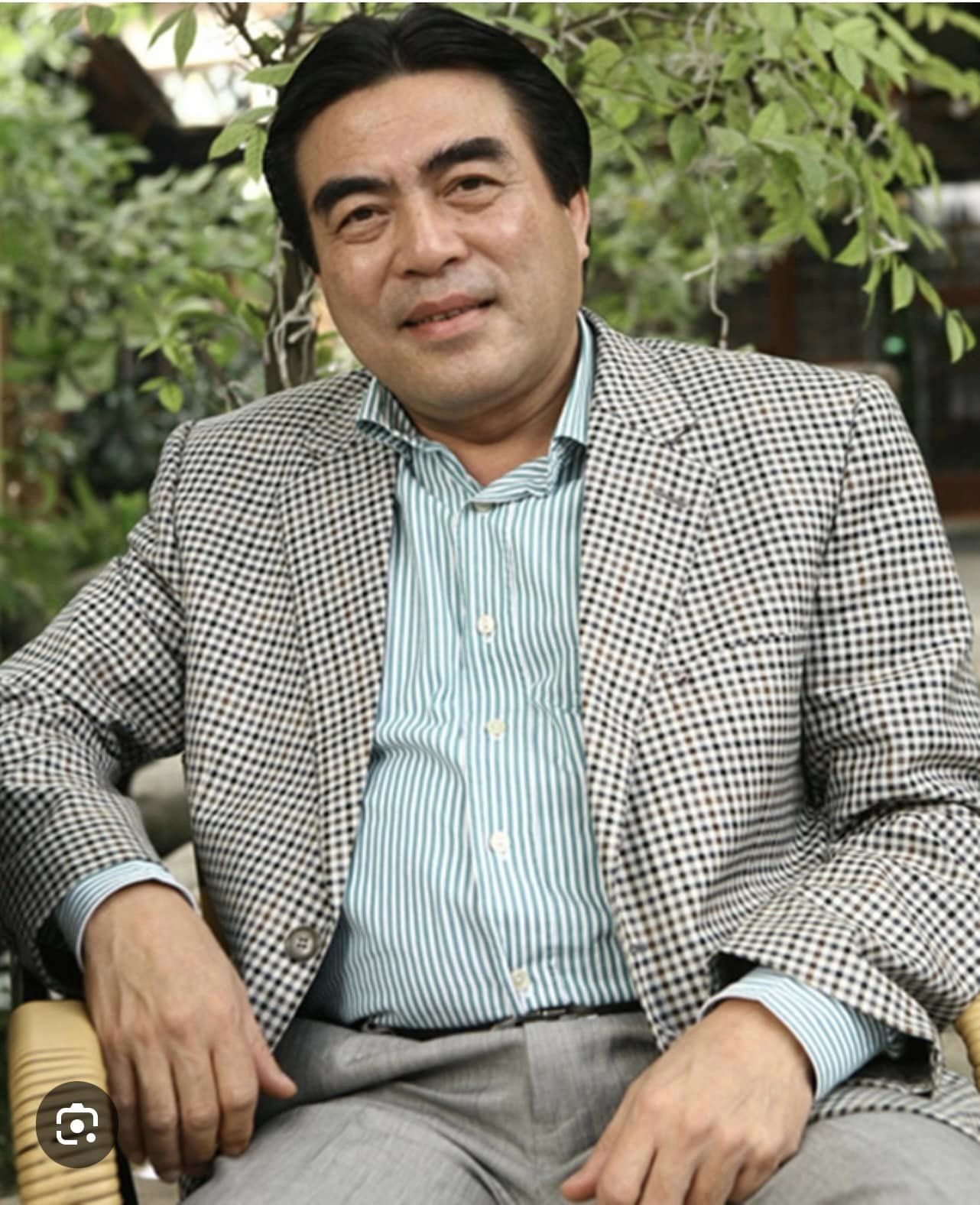
People's Artist Trung Duc during his peak years. Photo: Archival.
It turns out that the original version of the song "Going to Huong Pagoda" did exist. However, compared to the popular version today, it has been distorted through multiple retellings. The song was created nearly half a century ago, when Professor and Doctor Tran Van Khe was still a student, an amateur author. We can understand his clumsy technique in setting Nguyen Nhuoc Phap's long poem to music.
In terms of melody, both the beginning and middle sections of the piece are written in F major. It then transitions to a minor key (D minor) and concludes with two desert phrases. The original version is in a major key with a 3/4 time signature. However, the singers performing it today use a minor key with a Rumba Boléro rhythm (usually written in 4/4 time).
Composer Nguyen Ngoc Oanh was surprised on stage when he accompanied a singer performing this song. He wondered about the song's author and found out it was singer Trung Duc.
He asked why the work wasn't titled after him but instead after Tran Van Khe, to which Trung Duc replied: "I did it that way initially because I wanted the work to have a place among the public. Only after it became widely known did I think about copyright."
So, after 49 years, the song "Going to Huong Pagoda" has been rewritten once again. Luckily, the Literature and Arts editorial office was given the original manuscript by composer Nguyen Ngoc Oanh; otherwise, where would we find the author Tran Van Khe amidst this Huong Pagoda festival?"
Dr. The Hung, a scholar of American studies, also added that after learning about this story, poet Tran Dang Khoa called him, curious to know which song was composed by Tran Van Khe. He then had to play the song "Going to Huong Pagoda" by Tran Van Khe – who is actually People's Artist Trung Duc – for his younger brother to listen to.
People's Artist Trung Duc "owes" Professor Tran Van Khe an apology.
People's Artist Trung Duc shared with Dan Viet that in 1980, while working at the Vietnam National Opera and Ballet Theatre, he accidentally read the poem "Chua Huong" (Huong Pagoda) by poet Nguyen Nhuoc Phap. He loved the poem so much that he started composing music for it. After completing the song, he submitted it to the Theatre's Art Council for approval, but because at that time he was only a singer and not a composer, no one paid attention to the song.

People's Artist Trung Duc has performed the song "Going to Huong Pagoda" many times. Photo: Provided.
Unwilling to accept the song being ignored, he took a gamble and signed the song as Trần Văn Khê (Professor Trần Văn Khê) and submitted it again. He shared: "I thought people wouldn't believe a singer could compose music, so using the name of a famous person in the music industry seemed more plausible." Sure enough, upon seeing Trần Văn Khê's name, the Art Council approved the song and allowed it to be performed immediately when Trung Đức requested permission.
"I had planned to meet and apologize to Professor Tran Van Khe for that presumption. But since then, I haven't had the opportunity to meet him, and now he has peacefully passed away," said People's Artist Trung Duc.
During his lifetime, Professor Tran Van Khe did not "sue" People's Artist Trung Duc. Nor did anyone mention that he had any opinion on this composition. It seems he did not take the matter seriously and allowed the work to be returned to its author. However, currently, some websites still mistakenly attribute the song to Tran Van Khe.
According to Dr. The Hung, a scholar of American studies, after he finished writing the song "Searching for the Spiritual Child for People's Artist Trung Duc," he and People's Artist Trung Duc met and became close friends. Even though People's Artist Trung Duc was five years younger than him, he always considered him a close friend wherever they went. Occasionally, when the opportunity arose, they would meet and reminisce about old times.
Source: https://danviet.vn/nghe-si-nhan-dan-trung-duc-tung-mao-danh-giao-su-tran-van-khe-de-qua-mat-hoi-dong-nghe-thuat-20240919102859554.htm











































































Comment (0)