

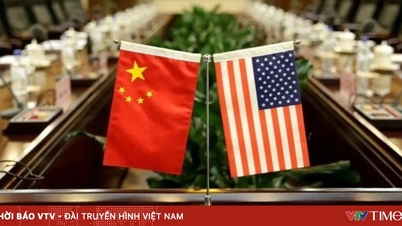
US-China relations continued to be the most prominent focus at the Shangri-La Dialogue, held from June 2-4 at the hotel of the same name in Singapore.
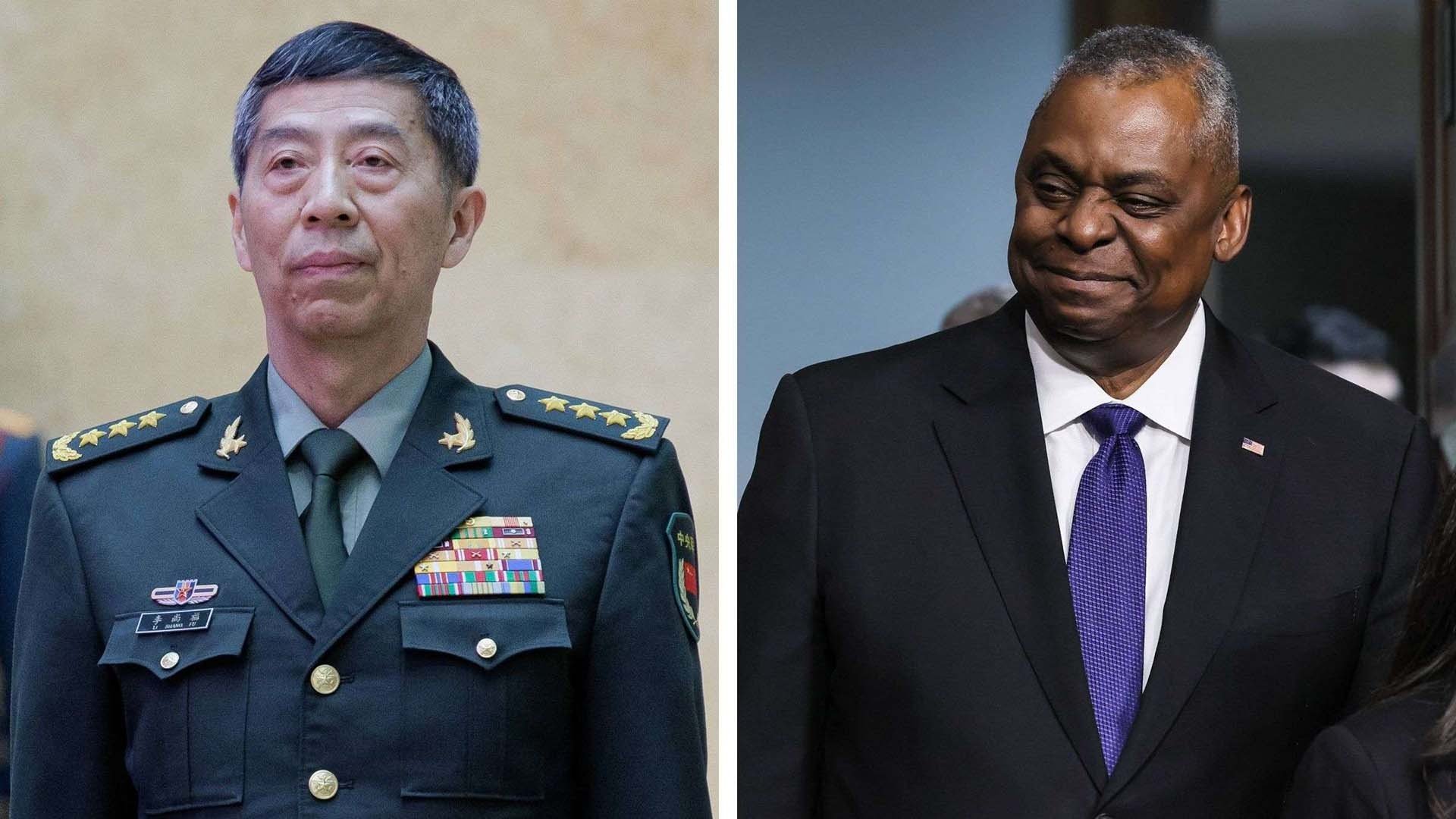 |
| Chinese Defense Minister Li Shangfu and his US counterpart Lloyd Austin. (Source: Itar-Tass/UPI Photo/Imago) |
The word "continue" is used because, according to policy analyst James Crabtree, Executive Director of the International Institute for Strategic Studies (IISS) in Singapore, the focus of the Shangri-La Dialogue for nearly two decades has always been the relationship between the United States and China. So what is special about this year's Shangri-La Dialogue?
A new factor…
First and foremost, there's the emergence of new faces. This year, attention will undoubtedly be focused on Li Shangfu, China's Minister of National Defense, who replaced Wei Fenghe last March. Since then, the top official of China's defense sector has not appeared much at international events or regional forums. The Shangri-La Dialogue will be a good opportunity for him to make his mark.
Notably, since taking office, Li Shangfu has yet to have any direct meetings with his American counterpart, Lloyd Austin. Furthermore, on May 29th, the Pentagon stated that China had rejected the US proposal to hold a meeting between the two countries' top defense officials at the Shangri-La Dialogue. Regarding this decision, Foreign Ministry spokesperson Mao Ning said that the US needs to “seriously respect China’s sovereignty, interests, and concerns,” demonstrating sincerity and creating a favorable atmosphere for dialogue.
Against this backdrop, Li Shangfu's speech on "China's New Security Initiative," his meetings and exchanges with representatives of the host country, and his interactions with other delegations will receive particular attention.
For his part, Lloyd Austin is expected to meet with a number of leaders on the sidelines of the event to promote defense cooperation in the region and a shared vision of a free and open Indo- Pacific , with ASEAN at its center.
Another highlight was the appearance of Australian Prime Minister Anthony Albanese, the keynote speaker at the opening on June 2nd. In his speech, he outlined the nation's vision for the Indo- Pacific region. Last year, as the keynote speaker at the Shangri-La Dialogue, Japanese Prime Minister Kishida Fumio delivered a notable address on this topic.
The old painting
Despite the change in China's representative, the content of this year's Shangri-La Dialogue still seems to be a matter between China and the United States.
In fact, Beijing's refusal comes amidst a complex shift in US-China relations since the most recent Dialogue, marked by several tense events, including the visit of the then-Speaker of the US House of Representatives to Taiwan (China).
On the one hand, both sides have shown the necessary efforts to de-escalate tensions. In early May, US National Security Advisor Jack Sullivan met with Wang Yi, Director of the Office of the Central Foreign Affairs Commission of the Communist Party of China, in Vienna. US President Joe Biden believes relations with China will soon "thaw." Pentagon spokesman Brigadier General Pat Ryder emphasized that China's decision does not affect efforts to establish lines of communication with the People's Liberation Army (PLA).
On the other hand, incidents on the ground between the two countries' militaries are occurring with increasing frequency, most notably the US shooting down a Chinese balloon in February. More recently, in a May 30th announcement, the Indo-Pacific Command (INDOPACOM) stated that a Chinese J-16 fighter jet flew directly in front of a US RC-135 reconnaissance aircraft. A similar incident occurred in December 2022, forcing the US aircraft to change course to avoid a collision.
Could a meeting between U.S. and Chinese defense leaders change this reality? The answer is probably no. During the 2022 Shangri-La Dialogue, Austin met privately with his then-Chinese counterpart, Wei Fenghe. However, this brief encounter did not ease bilateral relations, with Wei criticizing Washington for hindering Beijing's development at the forum.
In fact, following the meeting between Chinese President Xi Jinping and US President Joe Biden on the sidelines of the G20 summit in Indonesia in November 2022, bilateral high-level contacts have continued, albeit at a lower frequency.
Not to mention that when he was Director of the General Equipment Department, Li was once sanctioned by the US government in connection with the Su-35 fighter jet and S-400 air defense missile system deal between Russia and China.
In this context, the fact that the US and Chinese defense leaders have not yet met at Shangri-La is not entirely unexpected or negative. Perhaps China's decision and the US response reflect caution from both sides. However, in a relationship described by politicians and academics as "the most important bilateral relationship of the 21st century," such caution is certainly necessary.
Source


![[Photo] Prime Minister Pham Minh Chinh presides over the conference announcing the establishment of the International Finance Centre in Vietnam.](/_next/image?url=https%3A%2F%2Fvphoto.vietnam.vn%2Fthumb%2F1200x675%2Fvietnam%2Fresource%2FIMAGE%2F2025%2F12%2F21%2F1766309817714_ndo_br_dsc-3400-jpg.webp&w=3840&q=75)

![[Photo] Prime Minister Pham Minh Chinh presides over a meeting on private sector economic development.](/_next/image?url=https%3A%2F%2Fvphoto.vietnam.vn%2Fthumb%2F1200x675%2Fvietnam%2Fresource%2FIMAGE%2F2025%2F12%2F20%2F1766237501876_thiet-ke-chua-co-ten-40-png.webp&w=3840&q=75)

























































Comment (0)