


Many believe that investing in a railway connecting Long Thanh Airport will be costly and requires careful consideration. The Transport Newspaper interviewed Mr. Le Van Dat, Deputy Director of the Institute of Transport Strategy and Development, to clarify this issue.
Part 1: Preventing the risk of connectivity issues when operating Long Thanh Airport.
Part 2: Preventing the risk of transportation shortages connecting to Long Thanh Airport: Accelerating the implementation of the plan.
Clearly define direct and indirect connection routes.
Could you please tell us how the railway network connecting to Long Thanh International Airport has been planned ?
Recognizing the crucial role of Long Thanh International Airport, the Ministry of Transport has proactively researched and incorporated railway lines into its planning to diversify connectivity options and better meet transportation needs in each phase.

Mr. Le Van Dat, Deputy Director of the Institute of Transport Strategy and Development.
The plan clearly identifies the main railway lines that connect directly, including: the North-South high-speed railway line (Ho Chi Minh City - Nha Trang section) with a length of 370 km, station at Long Thanh Airport, which functions to connect inter-regional passengers, especially those in the North and South Central regions, with the airport.
The Thu Thiem - Long Thanh light rail line has a total length of 38 km. Starting from Thu Thiem (Ho Chi Minh City) and ending at Long Thanh Airport, it serves as a passenger transfer route between Ho Chi Minh City and Long Thanh Airport.
Why not redirect investment funds from railways to roads?
According to Deputy Director Le Van Dat, many people are currently asking: Instead of investing heavily in railways, could the authorities prioritize funding for expanding road networks?
There are two main reasons:
Firstly, railways have the capacity to transport large volumes of passengers at high speeds and with stable travel times, especially during peak hours; reducing pressure on expressways, national highways, and local roads connecting to the airport. In particular, at Long Thanh International Airport, expressways such as the Ho Chi Minh City - Long Thanh - Dau Giay Expressway or Ring Road 3 may reach capacity limits after 2030 if no alternative transportation methods are implemented.
Expanding road networks and increasing traffic volume also increase the risk of traffic accidents and congestion.
Secondly, railways are a low-emission mode of transport, contributing to the reduction of air pollution and greenhouse gas emissions, aligning with the strategy for green and sustainable transport development.
A well-connected airport by rail will provide a competitive advantage over other international airports in the region, enhancing the passenger experience and attracting more airlines.
Not only does it play a crucial role in providing a quick and efficient connection between Ho Chi Minh City (Thu Thiem area) and Long Thanh International Airport, reducing travel time and traffic congestion on road routes such as the Ho Chi Minh City - Long Thanh - Dau Giay expressway, the Thu Thiem - Long Thanh railway line also serves as a "backbone" transportation route for urbanization and economic development in surrounding areas.
The Bien Hoa - Vung Tau railway line has a total length of 84 km, connecting the southeastern regions of Vietnam, especially industrial zones in Dong Nai and Ba Ria - Vung Tau, with Long Thanh Airport.
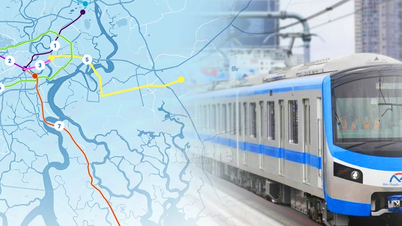
In addition, indirect connections include Ho Chi Minh City's urban rail system with Long Thanh Airport, as well as Metro Line 6 of Ho Chi Minh City, which connects directly from Ho Chi Minh City to Tan Son Nhat Terminals T1, T2, T3 to the Thu Thiem - Long Thanh light rail line, connecting to Long Thanh Airport and playing a crucial role in passenger transit between the two airports.
Ho Chi Minh City Metro Line 2 (Ben Thanh - Tham Luong) connects the city center to Long Thanh Airport via transfer stations in Thu Thiem.
I also understand that Ba Ria - Vung Tau will have a railway line connecting to Long Thanh Airport.
What are the planned implementation timelines for these projects, especially the railway lines connecting Ho Chi Minh City with Long Thanh International Airport, sir?
According to the plan, Ho Chi Minh City's Metro Line 2 is expected to be completed and put into operation in 2030.
Two high-speed railway lines, the North-South line and the Thu Thiem-Long Thanh light rail line, will be invested in and are expected to be completed and operational by 2035.
Metro Line 6 is expected to be operational in 2035.

According to assessments, by 2035 at the latest, Long Thanh International Airport needs a connecting railway to increase efficiency in handling the large volume of passengers (Photo: ChatGPT).
Two to three connecting railway lines are needed.
According to him, given the operating capacity of Long Thanh International Airport, at the latest, what is the required timeframe for a connecting railway line to support other modes of transport?
The timing for deploying the railway line connecting to Long Thanh International Airport needs to be determined based on passenger and freight transport demand and the capacity of other modes of transport, and can be divided into three phases.
In Phase 1 (2025), Long Thanh Airport is expected to have a capacity of 25 million passengers per year and 1.2 million tons of cargo per year. During this phase, road routes such as the Ho Chi Minh City - Long Thanh - Dau Giay Expressway, Ring Road 3, and bus routes can meet immediate demand.
Phase 2 (2030) will increase capacity to 50 million passengers/year and 1.5 million tons of cargo/year. This is when the risk of overload on road routes will begin to emerge, requiring the addition of modern transport methods such as the Thu Thiem - Long Thanh light rail.
Phase 3 (2040 - 2050): Capacity reaches 100 million passengers/year and 5 million tons of cargo/year. Without a supporting railway line, the connecting transportation system will face severe congestion, reducing the airport's operational efficiency.
According to the analysis, the connecting railway line needs to be completed and put into operation no later than 2035 to meet demand.
Experience shows that for an airport the size of Long Thanh Airport, how many railway lines are needed to be sufficient?
International experience shows that a large-scale international airport like Long Thanh Airport, with a designed capacity of up to 100 million passengers per year in phase 3 (2040-2050), needs to develop 2-3 connecting railway lines to meet the demand for passenger and cargo transportation.
For Long Thanh Airport, if funding is favorable, a light rail line could be invested in during phase 1 (2025 - with a capacity of 25 million passengers/year): connecting Thu Thiem and Long Thanh to serve basic transportation needs from Ho Chi Minh City.
Road routes (Ho Chi Minh City - Long Thanh - Dau Giay Expressway, DT.25C) play a supporting role in connectivity.
Phase 2 (2030 - capacity of 50 million passengers/year) requires the addition of inter-regional routes: the Bien Hoa - Long Thanh - Vung Tau railway line to connect key economic provinces; and continued implementation of urban metro lines such as Metro Line 6 (Ho Chi Minh City).
Phase 3 (2040 - 2050 - capacity of 100 million passengers/year) will bring the North-South high-speed railway line into operation, ensuring inter-regional passenger transport capacity, especially from the Central and Northern regions.
By doing so, when operating at maximum capacity, the Long Thanh mega-airport will have a total of 3 railway lines (urban, inter-regional, and high-speed).
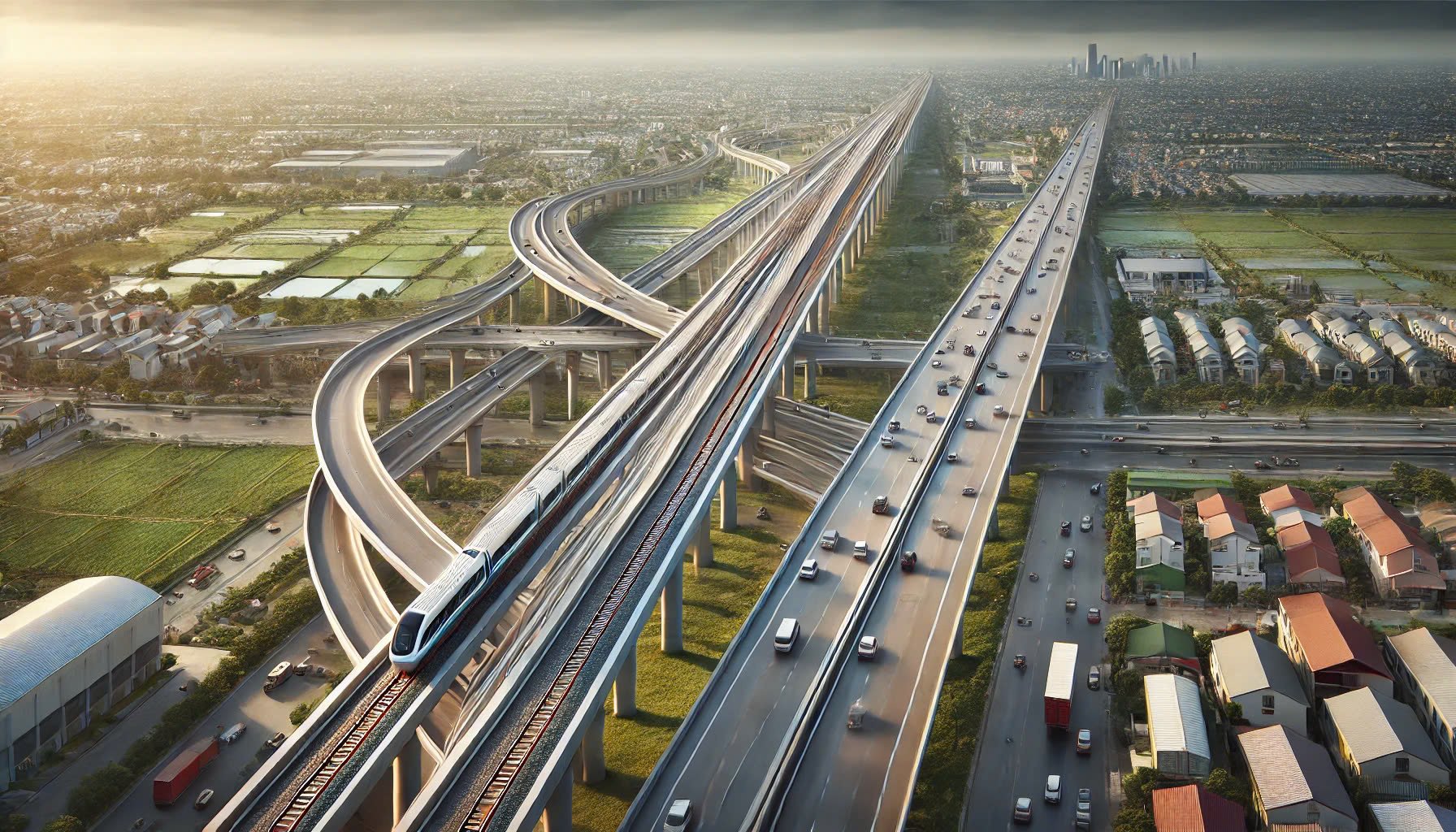
The railway system plays a crucial role in alleviating traffic pressure on the road network connecting to Long Thanh Airport (Illustrative image: ChatGPT).
Mobilizing diverse sources of capital
Based on preliminary calculations, how much capital will be needed to develop the railway connecting Long Thanh International Airport? Where will these resources be mobilized from , sir ?
To date, the exact amount of capital allocated for the railway connecting Long Thanh Airport remains unknown. However, it can be affirmed that the resources needed are substantial, requiring a comprehensive strategy encompassing state budget, private sector investment, and international cooperation.
In this plan, the state budget could contribute 30% - 40% of the initial investment in essential items such as land clearance, basic infrastructure, and a portion of construction costs. Priority will be given to the Thu Thiem - Long Thanh light rail line and the Bien Hoa - Vung Tau line, projects that are difficult to recoup investment.
Socialized capital can be mobilized from 60% to 70% from large domestic and international enterprises, through the PPP method, specifically the BOT model. This approach is suitable for routes where capital can be recovered through train ticket sales.
Official Development Assistance (ODA) funding is mobilized from international organizations such as ADB, WB, JICA, or climate funds, especially for environmentally friendly projects.
Priority is given to applications requiring advanced technology or sustainability (light or high-speed rail).
Additionally, investment in a railway project connecting the airport could explore the use of preferential loans from development banks to reduce borrowing costs, or the issuance of bonds to raise capital from individual and institutional investors.
Lessons from major airports
Based on experiences around the world, how do developed countries connect railways to airports, sir?
Developed countries have successfully implemented airport-connected rail systems to optimize passenger transport efficiency, reduce traffic congestion, and promote regional economic development.
A prime example is Japan, one of the countries with the most comprehensive railway network.
At Narita Airport (Tokyo), the Narita Express (N'EX) connects the airport to central Tokyo, combining with the Shinkansen bullet train system for fast travel times (approximately 60 minutes from Tokyo). The train schedule is synchronized with flight departures and arrival times.
In Germany, Frankfurt Airport is connected to major cities such as Cologne, Munich, and Berlin by the ICE high-speed rail line. For passenger convenience, the rail station is located within the airport grounds, integrating both regional and urban rail services.
In Singapore, airport connectivity is provided by a highly efficient metro system. Changi Airport connects to the city center via the modern East West Line, which runs frequently (every 3-5 minutes) and connects directly to other major MRT lines in the city. The advantage of this line is its affordable fares, suitable for a wide range of passengers.
In England, for example, dedicated railway lines have been developed to connect airports. Heathrow Airport (London) is a prime example. It is connected to Paddington Central Station in London via the Heathrow Express high-speed train, with a short travel time (approximately 15 minutes). The train carriages are designed for comfort, offer ample luggage space, and have convenient connections to the underground and intercity train lines.
China, closest to Vietnam, uses high-speed trains as one of the modes of transport that enhances the attractiveness and efficiency of large airports.
At Beijing Capital Airport, connections to neighboring cities are facilitated by a combination of subway and high-speed rail (300-350 km/h for high-speed trains). The railway station is integrated within the airport grounds. Train lines run in sync with takeoff and landing times, minimizing waiting times.
Drawing on lessons learned from around the world, Long Thanh Airport can develop multimodal connectivity, combining high-speed rail, light rail, and metro to serve diverse passenger needs. The railway terminal design should be synchronized with the airport terminal to reduce transit time.
Thank you, sir!
Source: https://www.baogiaothong.vn/ngan-nguy-co-thieu-giao-thong-ket-noi-san-bay-long-thanh-nen-dau-tu-he-thong-duong-sat-192241230014413856.htm
































































































Comment (0)