

Village kitchens come to the city.
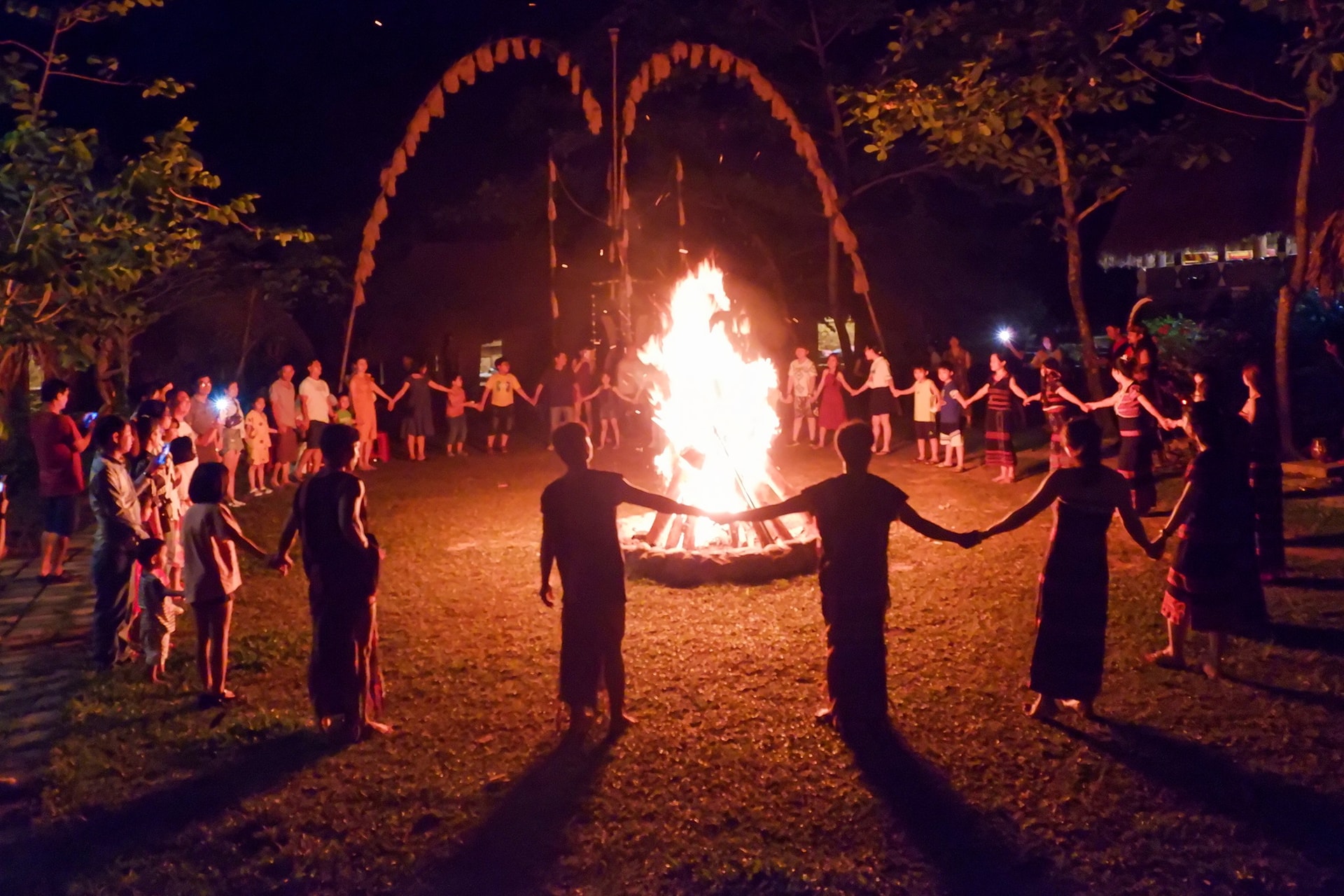
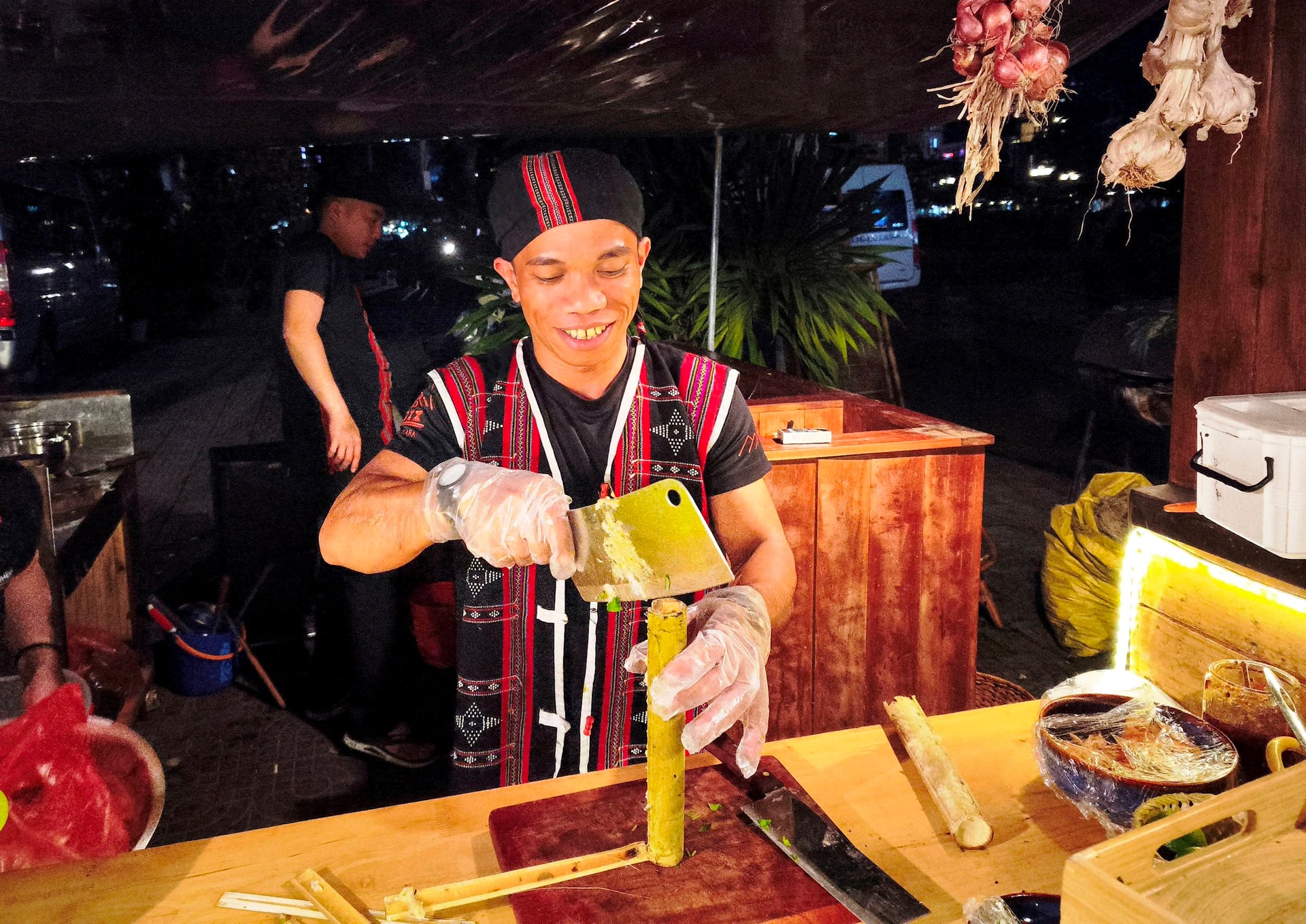
A cold March night. In the open space between the high-rise buildings in the An Thuong Western Quarter, a campfire was lit, occasionally glowing red in the breeze blowing from the sea.
Diners gathered around rows of banana leaves suddenly stopped talking when the sound of birds echoed. Many foreign guests exclaimed "wow" and praised "perfect" when they learned that those sounds were coming from a forest leaf on the lips of old man Pố.
While they were delighted by the flavorful Co Tu dishes, they were equally amazed by the performance of the elders. “This is one of the activities of 'Village Kitchen on the Street' – a project by Toom Sara Village aimed at bringing the cuisine and unique cultural characteristics of the Co Tu people to the heart of Da Nang City,” said Huynh Tan Phap, the project's initiator.
With his profound knowledge and ability to select stories to share with visitors, Elder Po keeps listeners engrossed in exploring Co Tu culture without ever getting bored.
For example, simply by sharing a story about spreading banana leaves to serve food, the old man helped many understand that in Co Tu culture, the two sides of a leaf—face up or face down—symbolize offerings to gods or inviting guests. And when pointing to the ceremonial pole, the old man excited the younger audience with the meaning of the different colors…
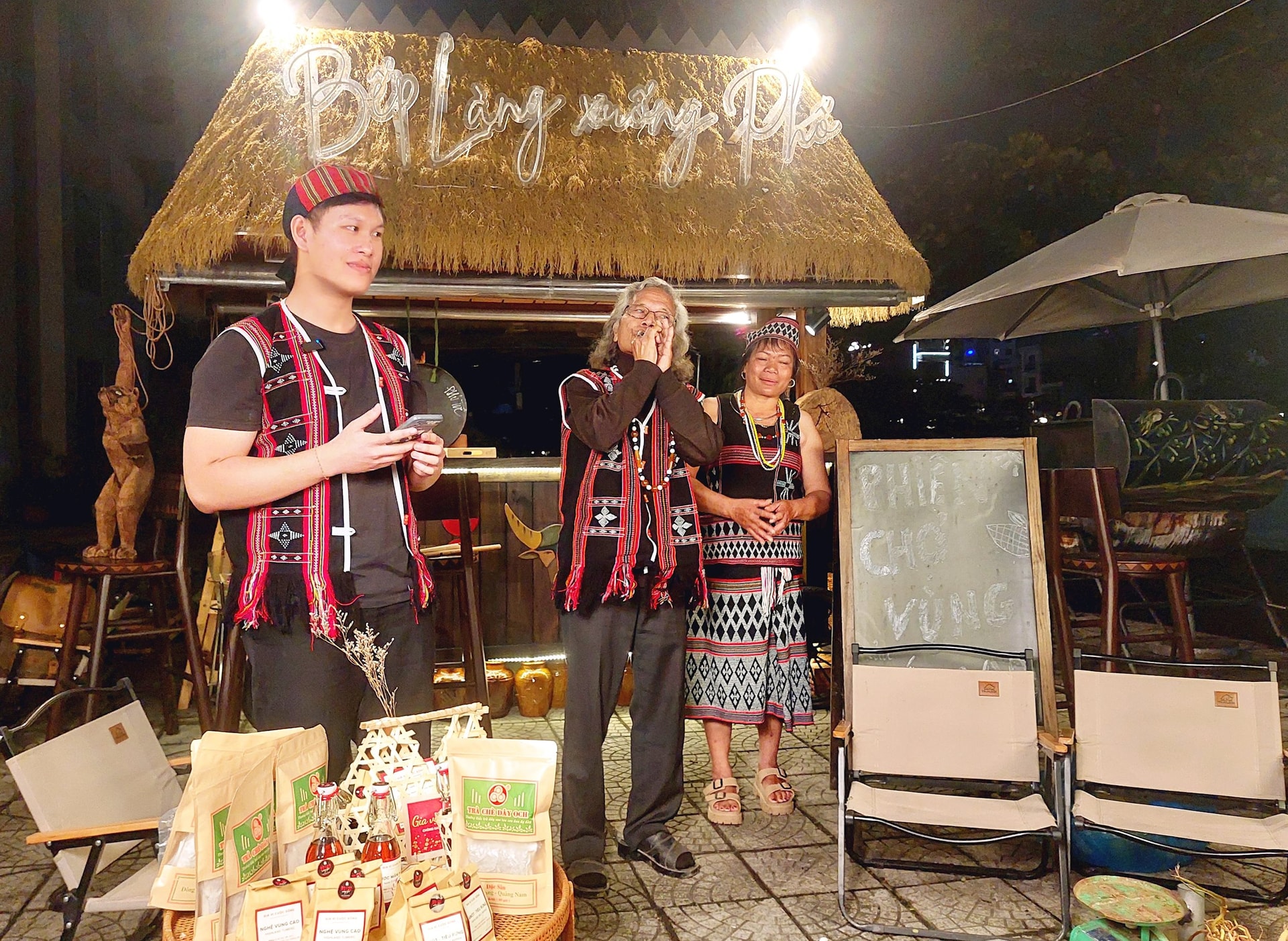
"When talking to strangers about Co Tu culture, don't focus too much on information; use easy-to-understand analogies. Make it interesting, and they'll naturally want to learn more...", Elder Po concluded.
Telling the story of Co Tu culture is a small part of the project. Huynh Tan Phap, a young man born in the 1980s from Thang Binh, is fascinated by highland culture, even though he is not from the mountains. Phap says that, as the name suggests, "Village Kitchens Come to the City" is a place that brings together chefs residing in highland villages of Quang Nam who are invited to Da Nang .
He arranged accommodation and paid them a fairly good salary so they could prepare dishes with the flavors of the mountains and forests every day, such as: bamboo rice, stream fish, forest frogs, grilled meat, smoked beef... The "drinks" included traditional rice wine or various types of wine infused with native plants such as ginseng and codonopsis...
Ms. Alang Thi Bap (53 years old, residing in Dong Giang district, Quang Nam province) was arranging wild vegetables, roots, and fruits while explaining that these agricultural products were harvested from the fields, brought to the city, and then sold via livestream by a group of young people invited by Mr. Phap.
Co Tu show
One night at Suoi Hoa tourist area (Hoa Phu commune, Hoa Vang district, Da Nang city), a group of tourists were attentively listening to the storyteller recount the origins of the Co Tu people when suddenly, from afar, a small flame, propelled by a cable car, ignited a pile of firewood already stacked in the grass.
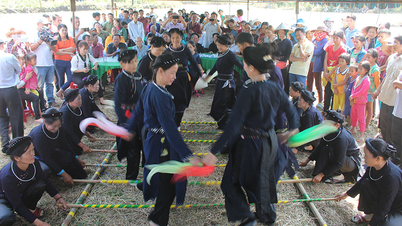
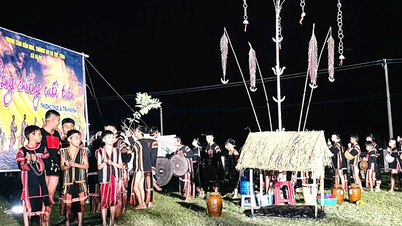
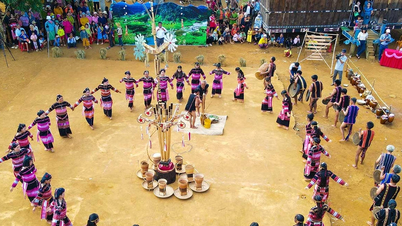
The stage was lit up, and dozens of men and women in traditional Co Tu costumes formed a circle, singing, dancing the Tang Tung Da Da dance, and playing gongs and drums.
Elder Alang Dung (63 years old, residing in Phu Tuc village, Hoa Phu commune) concluded the program with an ancient story about unique customs, the ethnic group's generations-long adaptation to the vast forest, and the distinctive cuisine of the mountains and forests…
This cultural program, called the Co Tu Show, was created by Huynh Tan Phap a few years ago and features the participation of about 50 Co Tu people, all residing in Phu Tuc village.
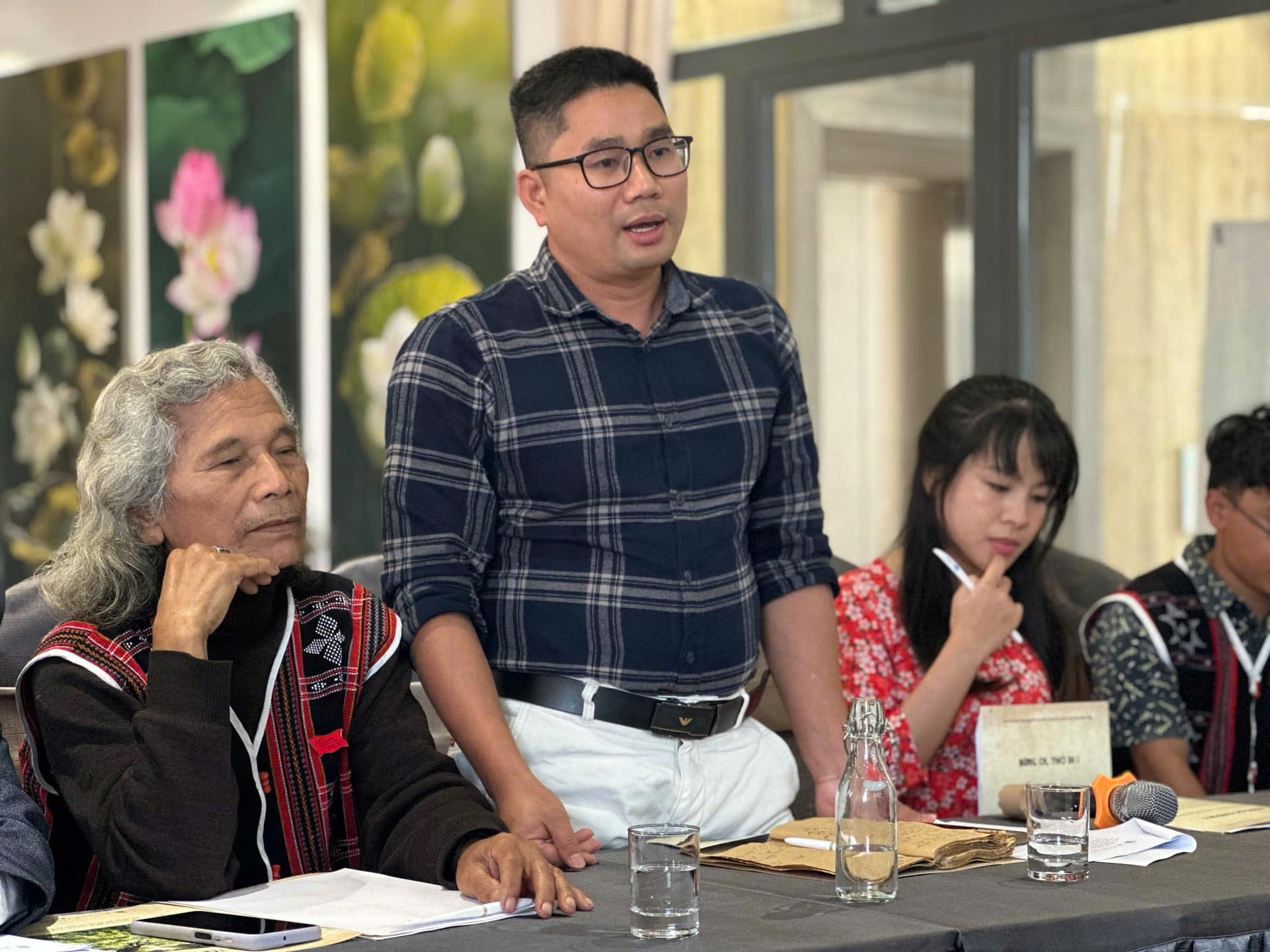
“During the 1 hour and 30 minute performance, the Co Tu actors truly commanded the stage. We believe that when they perform with pride, they will be the best at introducing and promoting the unique cultural features of their people,” said Mr. Phap.
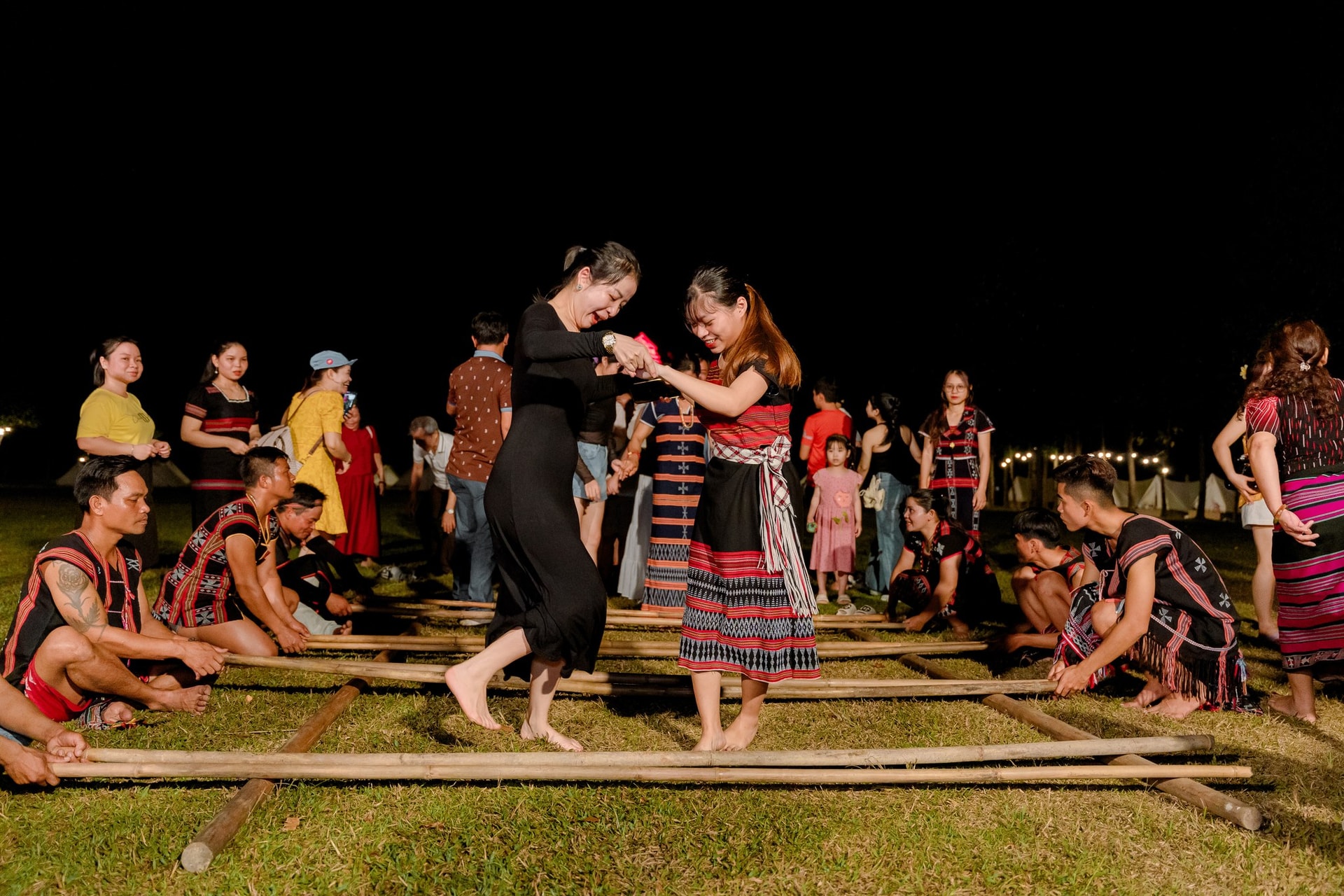
A more engaging interaction is that after each performance, the Co Tu artisans stay behind to answer questions from tourists. Under the influence of rice wine, both guests and hosts join in the traditional dances…
Ms. Zoram Thi Nguyet (35 years old, team leader) said that all 25 members of the team are excited because they earn extra income every Saturday evening. "Earning money from dancing and receiving compliments and questions from tourists makes us very happy," Ms. Nguyet said.
As for village elder Alăng Dũng, his joy lies in spending most of his time in Toom Sara village doing the work that is "truly characteristic of a native Cơ Tu person."
“Early in the morning, my father goes to the forest to clear weeds and plant trees. In the evening, he practices performing arts in front of the gươl (village house), which is built in the traditional style that has existed since ancient times. Here, my father feels like he is living like his ancestors. And on top of that, he earns an income, so he's very happy!” Mr. Dũng shared.
Toom Sara is the brainchild of Mr. Huynh Tan Phap, dedicated to the architectural and sculptural art of the Co Tu people. For many years, to recreate this village according to the traditional model, he devoted countless hours to searching for and purchasing old houses in the vast forests.
Pháp said he was fortunate to receive the sympathy of many people, especially skilled artisans involved in restoring and reviving an entire village.
"The luckiest thing was that I found a traditional communal house that was about to be demolished because it was dilapidated. I bought it, brought some brothers from the mountains down, and meticulously restored it for a whole month," Mr. Phap recounted.
Forest, breathe!
Over a cup of rice wine that night, when he was slightly tipsy, Huynh Tan Phap confided that while he cherishes the Co Tu culture, it must be linked to improving the livelihoods of the people. From the moment he started working on community tourism, he has always believed that whatever he does must spread values that also generate income for the people.
Therefore, on February 25th, when launching the "Forest, Breathe!" project, Huynh Tan Phap spoke quite a bit about phases 3 and 4 (from August 2025 onwards). In these two phases, the Co Tu people will officially benefit through reforestation tourism products on an area of 75 hectares, along with the activities of Toom Sara Village currently being implemented.
This is also part of the realization of the "Livelihoods from the Forest" initiative launched by Huynh Tan Phap. This initiative not only focuses on planting native forests but also aims at exploiting forest resources rationally and protecting nature in the long term…
Huynh Tan Phap shared: “I imagine the forest being suffocated by the rough hands of humans. The forest needs to be given a breath of fresh air, encouraged to ‘breathe’ through a model of planting native, multi-layered forests combined with symbiotic plants under the forest canopy such as Ba Kich (Radix Polygoni multiflori), Rau Ma (Radix Polygoni multiflori), etc., to both protect the soil, conserve water, and create biodiversity…”.
I read through the draft of the project "Forest, Breathe!" and found in it a Huynh Tan Phap full of ideas. Still bearing the marks of caution, prioritizing feasibility, and above all, still a Huynh Tan Phap passionate and dedicated to Co Tu culture.
Therefore, it is not surprising that the initial phase of the project includes events celebrating the forest-preserving culture of the Co Tu people, such as: the "Breath of the Forest" music night; a reenactment of the Bhuôih Ca Coong festival - a thanksgiving ceremony to the mountain and forest gods; and an art workshop on driftwood carving…
The journey of a tree's life is a long one, and hopefully, with the legacy of the ASEAN Community Tourism Award given to Toom Sara village (January 2025), France, with its initiatives to cherish the cultural pieces of the Co Tu people, will succeed as expected…
Source: https://baoquangnam.vn/nang-niu-nhung-manh-ghep-van-hoa-co-tu-3151150.html




























































Comment (0)