


Athlete's foot (tinea pedis) is one of the common skin diseases, especially during the rainy season, caused by the fungal strains Trichophyton rubrum, Trichophyton interdigitale, and Epidermophyton floccosum.
Dr. Tran Nguyen Anh Thu, a specialist in Dermatology and Cosmetic Dermatology at Tam Anh General Hospital in Ho Chi Minh City, stated the above, further explaining that these strains normally exist on the skin's surface without causing harm. However, in humid environments, the fungi proliferate and cause skin diseases. Therefore, during the rainy season, the disease easily develops and spreads rapidly.
High-risk factors for the disease include wearing damp shoes or socks; sharing personal items or direct skin contact with pathogens; infections on open wounds; and prolonged soaking of feet in dirty water.
Athlete's foot typically starts between the toes (3rd-4th and 4th-5th), manifesting as thickened, moist, white or red skin, scaling, and cracking in the middle and lower areas of the toes.
As the disease progresses, the skin between the toes becomes swollen, painful, and develops ulcers and pus. Improper hygiene can easily lead to infection, resulting in cellulitis (acute soft tissue infection in the deeper layers of the skin).
Athlete's foot is difficult to cure completely. Therefore, patients should go to medical facilities for tests to identify the type of fungus causing the infection and receive early treatment. Treatment mainly involves topical medications; in more severe cases, oral medication may be added. To reduce itching and treat accompanying infections, doctors will prescribe antibiotics.
Before applying the medication, wash your feet thoroughly with soap and warm water, then dry the affected area. Use an adequate amount; do not apply too much as this may cause burning and waste the medication. Apply the medication evenly and thinly to the infected area and a portion of the surrounding skin. Patients should not stop taking the medication on their own, even if the fungal symptoms have subsided.
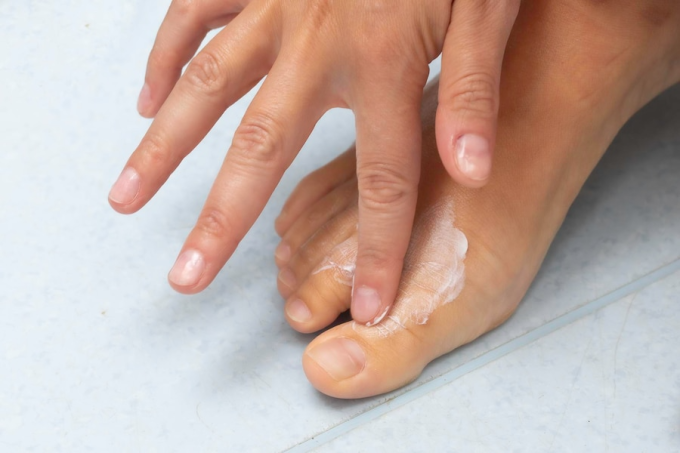
Wash your feet thoroughly and apply ointment to treat athlete's foot. (Image: Freepik)
Topical and oral antifungal medications can cause certain side effects. Therefore, they should not be used in the elderly, those with kidney or liver disease, or impaired filtration; or patients taking antacids for stomach problems. Pregnant and breastfeeding women should avoid systemic antifungal medications. Consult a doctor when using antifungal medications concurrently with other medications.
Dr. Anh Thu noted that if patients experience side effects such as loss of appetite, bloating, fatigue, yellowing of the eyes and skin, and dark yellow urine, they should stop taking the medication immediately and consult a dermatologist or cosmetic skin specialist for appropriate treatment.
To prevent and reduce the risk of recurrence, keep your feet clean and dry, especially after contact with contaminated water, and avoid wearing socks or shoes all day. Choose socks made of absorbent material and wash them with hot water to kill harmful bacteria and fungi. Limit wearing shoes and socks all day. Avoid sharing towels, shoes, and socks with others, especially those with fungal infections. When itching between your toes, do not scratch vigorously as this can cause abrasions, inflammation, and worsen the condition.
Phan Yen
Source link













































































Comment (0)