

The issue of developing sustainable livelihoods for ethnic minority and mountainous regions has always been a top priority for the Party and the State. Through the National Target Program for Socio -Economic Development of Ethnic Minority and Mountainous Regions for the period 2021-2030, the lives of people in these regions have gradually improved, particularly through support from the National Target Program for Socio-Economic Development of Ethnic Minority and Mountainous Regions for the period 2021-2025. This article is based on the Sustainable Livelihood Framework theory of the UK Department for International Development (DFID) (1999), according to which capital is understood as the types of capital that people can use to earn a living, including five types: (i) Physical capital; (ii) Financial capital; (iii) Social capital; (iv) Human capital; and (v) Natural capital; From there, the study assesses the current state of livelihood capital in the ethnic minority and mountainous areas of Quang Tri province, and proposes some solutions to ensure sustainable livelihoods for ethnic minorities and people in these areas.
The current situation of livelihood capital in ethnic minority and mountainous areas of Quang Tri province from the perspective of the DFID sustainable livelihood framework.
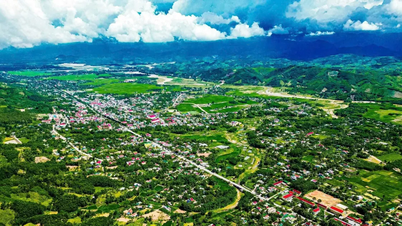
The ethnic minority and mountainous areas of Quang Tri province currently have a natural area of 313,675 hectares, accounting for 68% of the province's total natural area; there are 44 mountainous communes and towns, of which 38 are inhabited by ethnic minorities, mainly the Van Kieu and Pa Co ethnic groups. As of January 1, 2023, the mountainous population was 46,003 households; the total number of ethnic minority households was 21,374 (accounting for 13.4% of the province's total population).
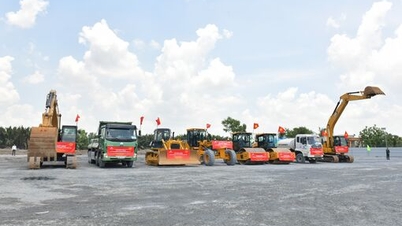
Regarding physical capital: Infrastructure has been developed quite comprehensively. The entire region has 100% of communes and villages connected to the national power grid; 98.7% of households use electricity; 100% of communes have television coverage; 100% of communes have paved roads leading to the commune center; 77% of villages have paved roads leading to the commune center; 100% of communes have health stations meeting national standards; 100% of communes have primary schools, 75% of communes have secondary schools, and 38 schools meet national standards; the percentage of communes with cultural centers is 40.4%; the percentage of villages with community centers is 82%; there are traditional houses for the Van Kieu - Pa Co people in two mountainous border districts (Huong Hoa and Dakrong) to preserve and promote the tangible and intangible heritage values of ethnic minorities. Currently, the ethnic minority region has two communes that have met the standards for new rural areas: Vinh Ha commune (Vinh Linh district) and Tan Lap commune (Huong Hoa district).

The policy of supporting housing land and funding for issuing land use right certificates for residential and production land to poor ethnic minority households and poor households in communes in Zone III, and particularly difficult villages and hamlets in Quang Tri province during the 2019-2022 period was implemented with a total approved budget of 8,627 million VND. "Soft" infrastructure – information technology infrastructure – was prioritized through the allocation of funds for IT applications.
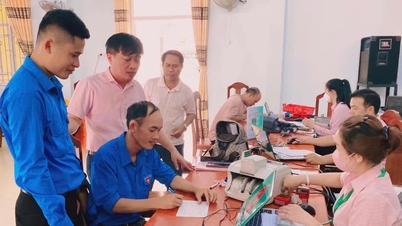
Regarding financial resources: The implementation of the National Target Program for Socio-Economic Development of Ethnic Minority and Mountainous Regions in Quang Tri province for the period 2021-2025 began in 2022. Generally, 2022 presented many difficulties and obstacles, resulting in a disbursement value of only 55,239 million VND out of 216,314 million VND, reaching only 25.5% of the central government's allocated capital.
In 2023, the disbursement results according to the allocated capital plan for 2023 and the capital carried over from 2022 amounted to VND 312,654.3 million out of VND 561,923.5 million, reaching a rate of 55.6%. Overall, the disbursed capital over the two years totaled VND 364,010.7 million out of VND 613,280.0 million, reaching 59.3%.
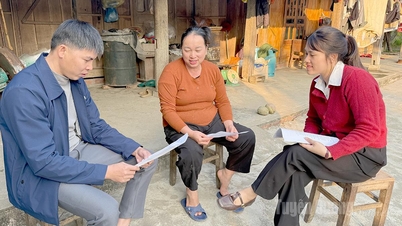
Regarding social capital: Organize policy dialogues at the commune and cluster village levels in particularly disadvantaged areas; conduct training courses on information gathering for gender equality monitoring and evaluation systems for commune and village officials; and conduct training courses for provincial and district officials on synthesizing and analyzing information on gender monitoring and evaluation.
Currently, 105 community communication groups with 910 members have been established and are operating. Border security, political stability, and social order are maintained; there are no collective complaints or land disputes in ethnic minority and mountainous areas.
Regarding human capital: effectively implement projects on education, training, and healthcare development. The percentage of ethnic minority students of the correct age in primary school reached 95%, and in lower secondary school reached 96%; 100% of commune health stations have doctors, and all villages have village health workers. Organize conferences to commend exemplary influential individuals; direct and inspect the implementation of policies for influential individuals. Preserve and promote the fine traditional cultural values of ethnic minorities in conjunction with tourism development. The poverty rate in mountainous areas decreased by 3.25% in 2023 compared to the previous year.
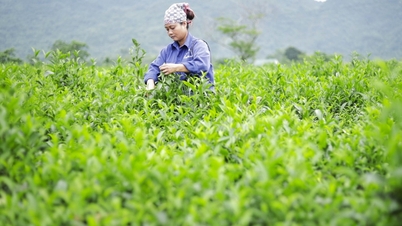
Regarding natural capital, the potential and advantages are being exploited, contributing positively to the economic development of the region. The entire region is implementing agricultural restructuring associated with the construction of new rural areas, thereby exploiting the potential and advantages of each locality. Sustainable agricultural and forestry economic development is being pursued, linked with forest protection and increasing people's income. Effective support is being provided for building two-way trade models to promote the consumption of distinctive products of ethnic minority and mountainous regions, and to efficiently utilize natural capital.
However, implementing livelihood capital programs for ethnic minority and mountainous areas in Quang Tri province still faces several difficulties, such as the average income of ethnic minority households being significantly lower than the provincial average. While ethnic minorities account for 13.10% of the population, 80.55% of households in poverty belong to ethnic minority groups; the poverty rate among ethnic minorities is 68.94% of the total number of poor households in the province. Furthermore, people lack both residential and agricultural land.
Some solutions
Firstly, regarding the effective creation of physical capital: Develop basic infrastructure serving production and people's lives, prioritizing the connection of transportation routes from commune centers to villages, and routes linking with agricultural and forestry production areas. Effectively address land, housing, and production land issues for people; arrange and stabilize the population in ethnic minority areas, mountainous regions, border areas, areas affected by natural disasters and landslides, and special-use and protection forests; linking this with vocational training and job creation for rural laborers.
Secondly, regarding the effective utilization of financial capital: Strengthen mobilization sources, encourage legitimate contributions from businesses, funding from organizations and individuals both domestically and internationally; and matching funds, participation, and contributions from the people and beneficiaries of the Program. Local authorities need to implement measures to optimize costs and manage expenditures to increase the effectiveness of financial capital for the livelihoods of ethnic minority and mountainous regions. Enhance the transparency of local authorities in managing and using capital resources.
Thirdly, regarding the creation of social capital: Improve the quality of emulation movements and campaigns on sustainable poverty reduction, building new rural areas, and socio-economic development in ethnic minority and mountainous regions. Build a strong political system at the grassroots level, maintain political security and social order; consolidate and strengthen the great national unity, and enhance the trust of ethnic minorities in the Party and the State.
Fourth, regarding the effective development of human capital: Comprehensive development of education, training, healthcare, and culture; significant improvement of people's lives; and increased quantity and quality of ethnic minority cadres, civil servants, and workers. Continuing to promote the role of influential figures in ethnic minority communities. Enhancing the effectiveness of propaganda, mobilization, and implementation of building a cultured lifestyle in rural areas; preserving and promoting the identity and tangible and intangible cultural values of ethnic groups in the area, linked with the development of rural tourism.
Fifth, regarding the effective utilization of natural capital: Leveraging the indigenous knowledge of ethnic minority communities in supporting production development along the value chain of national target programs. Enhancing benefits from forests; effectively applying the Community-Based Forest Management (CBFM) model. Maximizing the advantages of the ethnic minority and mountainous regions of Quang Tri province, particularly the two border districts of Huong Hoa and Dakrong, in building a dual-purpose trade model that serves as both a point of sale for essential goods and a collection and distribution point for characteristic products of the ethnic minority and mountainous regions.
Thai Thi Hong Minh
Source: https://baoquangtri.vn/mot-so-giai-phap-ve-tang-cuong-hieu-qua-thuc-hien-von-sinh-ke-tu-goc-tiep-can-dfid-cua-vung-dong-bao-dan-toc-thieu-so-va-mien-nui-o-tinh-quang-tri-187693.htm
![[Photo] Prime Minister Pham Minh Chinh receives Lao Minister of Education and Sports Thongsalith Mangnormek](/_next/image?url=https%3A%2F%2Fvphoto.vietnam.vn%2Fthumb%2F1200x675%2Fvietnam%2Fresource%2FIMAGE%2F2025%2F12%2F16%2F1765876834721_dsc-7519-jpg.webp&w=3840&q=75)
![[Live] 2025 Community Action Awards Gala](/_next/image?url=https%3A%2F%2Fvphoto.vietnam.vn%2Fthumb%2F1200x675%2Fvietnam%2Fresource%2FIMAGE%2F2025%2F12%2F16%2F1765899631650_ndo_tr_z7334013144784-9f9fe10a6d63584c85aff40f2957c250-jpg.webp&w=3840&q=75)
![[Image] Leaked images ahead of the 2025 Community Action Awards gala.](/_next/image?url=https%3A%2F%2Fvphoto.vietnam.vn%2Fthumb%2F1200x675%2Fvietnam%2Fresource%2FIMAGE%2F2025%2F12%2F16%2F1765882828720_ndo_br_thiet-ke-chua-co-ten-45-png.webp&w=3840&q=75)
![[Image] The tenacious fighting spirit of Vietnamese women's football](/_next/image?url=https%3A%2F%2Fvphoto.vietnam.vn%2Fthumb%2F1200x675%2Fvietnam%2Fresource%2FIMAGE%2F2025%2F12%2F17%2F1765990260956_ndo_br_4224760955870434771-copy-jpg.webp&w=3840&q=75)
![[Photo] Prime Minister Pham Minh Chinh receives the Governor of Tochigi Province (Japan)](/_next/image?url=https%3A%2F%2Fvphoto.vietnam.vn%2Fthumb%2F1200x675%2Fvietnam%2Fresource%2FIMAGE%2F2025%2F12%2F16%2F1765892133176_dsc-8082-6425-jpg.webp&w=3840&q=75)




















































![[Live] Closing Ceremony and Award Presentation for the "Impressive Vietnam Tourism" Video/Clip Creation Contest 2025](https://vphoto.vietnam.vn/thumb/402x226/vietnam/resource/IMAGE/2025/12/17/1765974650260_z7273498850699-00d2fd6b0972cb39494cfa2559bf85ac-1765959338756946072104-627-0-1338-1138-crop-1765959347256801551121.jpeg)





















Comment (0)