

Reading the poem "Why?!" by poet Nguyen Hong Vinh, recently published in the Cong Luan newspaper, I was reminded of two theatrical plays: "Dau Nga's Injustice" by Quan Han Khanh (China) and "Quan Am Thi Kinh" (Vietnam). Both plays speak of the immense injustice suffered by women in old society. From the perspective of modern cultural dialogue theory, these are voices in dialogue with oneself, with one's fate, with society as a whole, and with the entire human condition! Thi Kinh, so good, gentle, and long-suffering, was unjustly accused, and tragically so, two or three times.
It turns out that in a society full of calamities, contradictions, and absurdities, good people and goodness are very difficult to survive. Therefore, for goodness and good people to exist, the way of seeing, thinking, and living of that society must change. Thi Kinh's lament is not addressed to people, even the closest and dearest, but to the fate of humanity, to the human condition. Therefore, there is no response. But why does the entire village of Thi Kinh and Thi Mau only know how to "eat their quotas," without caring about justice: whether the accusations are true or not!? The "officials," even the wealthy and intelligent "village chiefs," only need to see Thi Mau's "pregnant belly," without "investigating," and immediately consider Thi Kinh the "author"!? Because people are indifferent to the misfortunes of others! Is silence the best thing?
Here are the lamentations of the people of Chuzhou to Judge Tianzhang in "Dou'e's Injustice": "We know Dou'e is innocent, but fearing the power of that corrupt official, we have to swallow our resentment and dare not speak out. We did not harm her, so why must we suffer this drought for three years?" Judge Tianzhang's reply is also a voice of justice: " Knowing that Dou'e is innocent, yet not speaking out for justice, that is unrighteous. Those who side with the corrupt official and do not save the innocent are inhumane. Heaven has eyes. Natural disasters and man-made calamities are meant to punish those who are inhumane and unjust!" These words are also words of truth and morality!
Based on that approach, for me, Nguyen Hong Vinh's poem "Why?!" is a poem with profound ideological meaning, addressing phenomena that seem normal, but are actually very abnormal in the face of many thought-provoking phenomena in the market economy era.
The poem is based on the central question "Why?". Therefore, these two words are repeated eight times, because it is a question for everyone: Why is it like this? A question of universal awareness. Answering that question is the result of a process of perception, analysis, and experience leading closer to the truth. The first stanza is an understanding of the unnatural laws that govern and influence human life:
Why was the autumn sunshine so breathtaking yesterday afternoon?
Suddenly, a storm raged at night, breaking branches and tearing leaves apart.
Blocking the path of many people passing through.
Children who are late for school are crying?!
The following three stanzas describe events that defy the natural order of love:
Why is it that when I see you, I absentmindedly look away?
Muttering something amidst the rustling of falling leaves.
He stood alone, lost in thought, beside the crimson banyan tree!
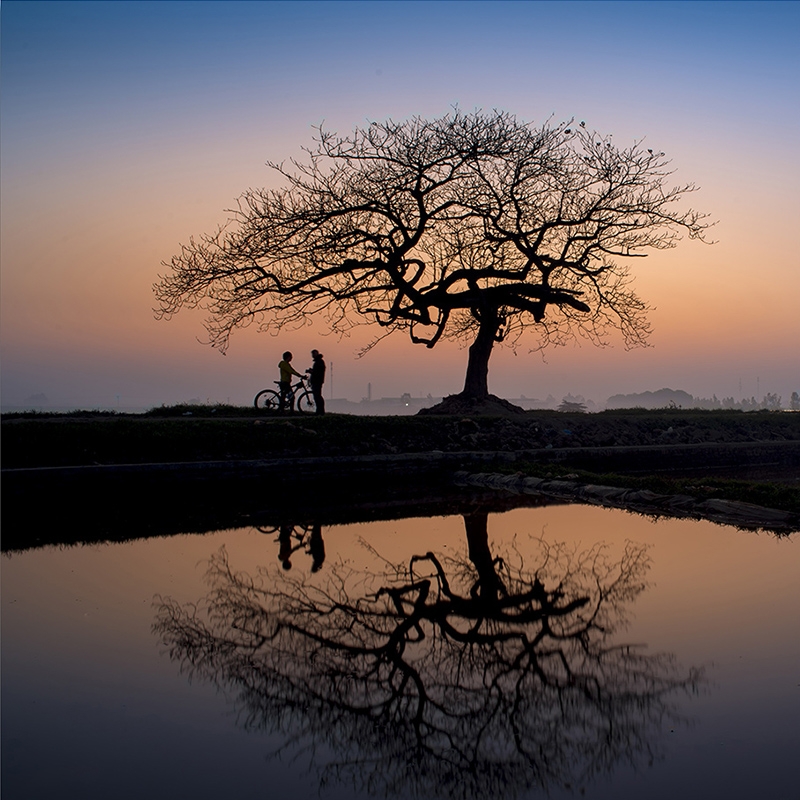
The poem you just posted
It has a funny name:
"I don't understand why!"
Are you going to praise my poetry with a long article in the newspaper again?!
He wrote to her:
"Why and why?"
That question goes on endlessly.
The answers of life never stop.
It turns out that "she" is a poet, and meeting "him" is merely a "form," a "shell"; the "core," the inner essence, is poetry. The poem "she" wrote is also an understanding of "him," titled "I don't understand why you are like this!" Perhaps it speaks to the feelings of many, which is why the poem is praised?! In turn, "he" is also surprised, " Why and why?" in the face of countless natural and social phenomena that push human fate into uncertainty and deadlock, and the phenomenon of " meeting him, she absentmindedly looks elsewhere" is a prime example?!
Therefore, "Why" is no longer a question of love or for love, but for everything: " The answer to life never ends!"
For the lyrical persona, "he" explains "why" it is this way:
At night, I "decode" things for myself:
Perhaps the REASON is what makes the DIFFERENCE.
I enjoy writing poetry.
He's obsessed with novels again.
I want to go on a beach vacation.
And he headed towards the plateau…
One explanation, very much in the context of "globalization," is that it stems from "differences." And differences are inevitable, so "why" is an eternal question. But perhaps the following reflection reveals the true nature of the issue:
However, isn't that just a fallacy?
For the deepest thing is true love.
When two hearts don't yet belong to each other.
Because there's a lack of sharing and understanding…?!
But "globalization" must also be based on the principle of "seeking common ground while preserving differences," that is, striving towards a common goal while maintaining individual differences. Perhaps love should also be like that?
The author doesn't offer a definitive answer, leaving that right to the reader. This is a respectful way of engaging in dialogue and discovering the truth together!
Therefore, the last two stanzas are the central theme of the poem, revolving around the categories of phenomena and essence of nature and society:
The storm has passed.
The river's alluvial soil is calm.
The rice fields are lush and green.
The sky is vast and blue.
Kites once held captive are soaring freely!
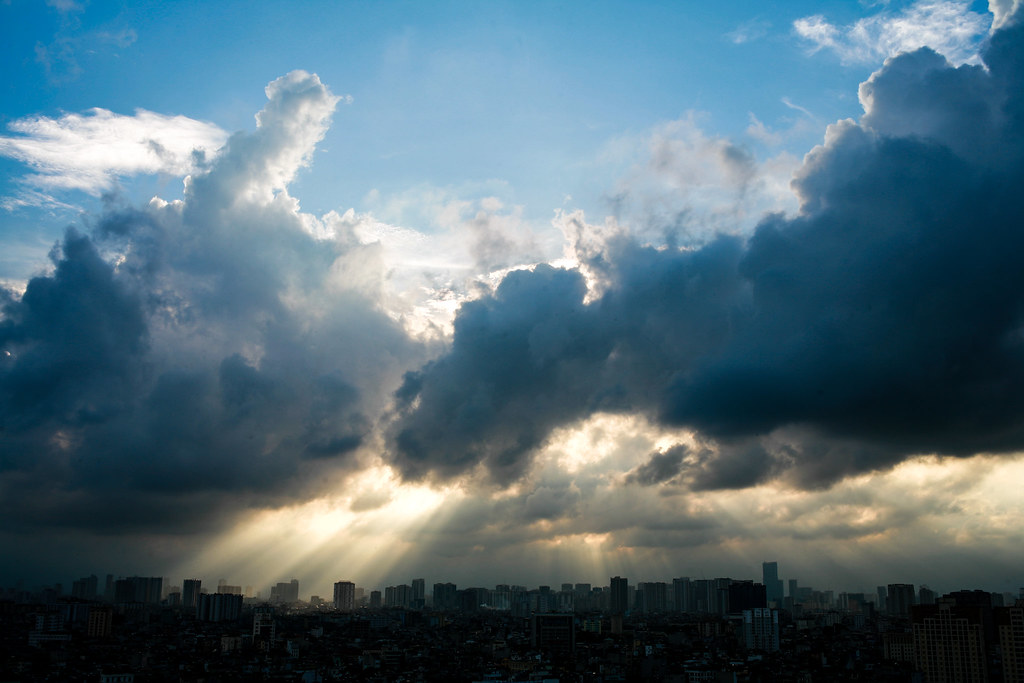
That's the law of nature: the storm subsides, and the sun shines! And "she" later understood the pain caused by humanity itself:
People inflict more suffering on each other.
Goodness is being submerged.
Evil is rampant.
Malicious rumors spread
Deception and madness
Many people choose to remain silent.
The question "WHY" keeps piling up because of this!
Genuine philosophical thought often emerges from contradictory categories and concepts within philosophy. Only through this can philosophical thought become profound. The opposing categories themselves (Generosity/Cruelty; Good/Evil) reveal the contradictions of both nature and society. Why? That is also a philosophical question, because: " Many people choose to remain silent!"
If, in the past, "many chose to remain silent," it led to heinous injustices like those of Dau Nga and Thi Kinh that weighed heavily on humanity's hearts, is it still the same today?
Poetry leaves its mark thanks to its intellectual depth. In my opinion, Nguyen Hong Vinh's poem "Why?!" is excellent because it contributes to changing the perceptions of many people in today's civilized society. " Silence is golden" – a Western proverb says so. But it refers to people who are open-minded, who know how to be silent to absorb knowledge, to learn, to listen and reflect, and to find useful lessons for themselves. That belongs to the realm of ethics. But if one remains silent in the face of bad habits and evil, it is complicity; and gradually one will become an "ally" with evil and wickedness. " Good is submerged/Evil runs rampant/Malicious rumors spread/Falsehood and madness prevail."
Faced with such a chaotic and unjust situation, people need to express their indignation, cultivate goodness, and push back evil. This is how we contribute to a healthier society, purifying human relationships and compassion! The core of the poem is this message, evoking civic responsibility and the reader's duty to contribute to making human relationships and compassion more beautiful, creating intrinsic motivation to overcome all obstacles and propel society forward.
In that sense, the poem is a voice engaging in heartfelt dialogue with us and society.
Hanoi , October 10, 2024
Assoc. Prof. Dr. Nguyen Thanh Tu
Source: https://www.congluan.vn/mot-bai-tho-gop-suc-giai-ma-mot-cau-hoi-thuong-nhat-post316276.html


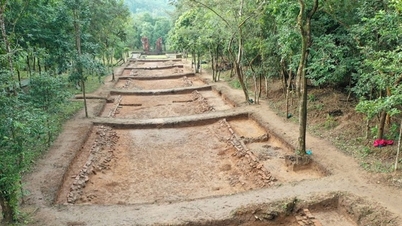
![[Image] Close-up of the newly discovered "sacred road" at My Son Sanctuary](/_next/image?url=https%3A%2F%2Fvphoto.vietnam.vn%2Fthumb%2F1200x675%2Fvietnam%2Fresource%2FIMAGE%2F2025%2F12%2F13%2F1765587881240_ndo_br_ms5-jpg.webp&w=3840&q=75)




































































Comment (0)