

With a credit growth target of 16%, it is estimated that more than 2.5 trillion VND will be injected into the economy to actively support the GDP growth target of over 8% in 2025 approved by the Government and the National Assembly.

However, Mr. Dao Minh Tu, Deputy Governor of the State Bank of Vietnam (SBV), affirmed that the SBV has determined its operational direction. monetary policy Its ultimate goal is to provide support. economic growth. If lending is proactive, targeted, and capital is utilized effectively while ensuring the safety and soundness of the bank, credit It could increase further. But how can we use capital effectively to boost economic growth?
Businesses are still "starving" for capital.
Speaking to Tuoi Tre newspaper, Mr. Nguyen Phuoc Hung, vice chairman of the Ho Chi Minh City Business Association, said that in recent years the State has issued many positive policies to support businesses with capital, helping them access the best sources of funding.
In particular, the debt restructuring policy, maintaining the same debt classification as stipulated in Circular 06, has helped businesses relieve debt pressure, supplement cash flow, and significantly contribute to the recovery and development process. However, a recent survey by the association with businesses in Ho Chi Minh City shows that businesses still face many difficulties.
According to Mr. Hung, up to 75% of businesses have not been able to completely clear their inventory, 67% of businesses have outstanding debts that are difficult to collect, 21% of businesses are forced to plan for workforce reductions, and up to 50% of businesses are requesting credit support and interest rate reductions.
Meanwhile, according to the Association Bond market In Vietnam (VBMA), the value of corporate bonds maturing at the end of 2024 is nearly VND 80 trillion, and the amount of bond debt due in 2025 is estimated at VND 180 trillion. The fact that Circular 06 is effective until the end of 2024 has created pressure as businesses will experience a sudden withdrawal of cash flow.
Given the difficulties faced by businesses and the instability of export markets, Mr. Hung suggested that the State Bank of Vietnam should require commercial banks to share the burden with the community by fixing the net interest margin (NIM) at an average of 3%. This would ensure banks make a profit, businesses have appropriate borrowing interest rates, and create a healthy and fair competitive business environment among different sectors in the economy.
"We recommend that credit institutions enhance access to capital for businesses, such as simplifying loan procedures and stabilizing market conditions." lending interest rate "And cash flow-based credit for businesses with stable output and viable business plans," Mr. Hung said.
According to Duong Tiet Anh, co-founder of the NetZero Pallet project, green startups face difficulties in accessing capital due to a lack of collateral and unstable cash flow, even though they need capital for production, R&D (research and development), and market expansion.
"Banks often require collateral, making it very difficult for startups to borrow capital, while the market demand is high, export opportunities are great, and the need for accelerated development of green startup projects requires large amounts of capital," said Mr. Tiet Anh.
But capital needs to be injected into the right targets.
Mr. Tran Viet Anh, Chairman of the Board of Directors of Nam Thai Son Import-Export Joint Stock Company, believes that credit is crucial for businesses to meet their production, business, and import-export needs. Therefore, the disbursement of capital should be directed towards targeted sectors such as technology, import-export, logistics, retail, and the environment.
At the same time, it is necessary to create transparent and favorable mechanisms to make it easier for businesses to access credit from banks through transparent control tools. "The goal is to support those who meet the standards, helping the money flow quickly, avoiding negotiations or 'begging,' as that wastes time and hinders the flow of capital to the market," Mr. Viet Anh said.
Furthermore, Mr. Viet Anh also suggested that, in the context of Vietnam's commitment to reducing carbon emissions, there should be incentives for green credit to encourage businesses in this sector to develop, transform technology, and meet emission reduction standards.
According to Mr. Nguyen Quoc Hung - General Secretary of the Association For Vietnamese banks to achieve growth, they must invest and control inflation. Crucially, for sustainable economic growth, money must flow to the right places and be used for the right purposes.
Accordingly, capital must flow into public investment projects, loans for production and business, exports, etc. These are the areas that create jobs and income for the people, stimulate vibrant production, business, and trade, and are the main contributors to economic growth.
"Effectively implemented key public investment projects will boost the development of industries such as cement and steel. However, the capital required for public investment projects is enormous; budget funds will have to be seed capital, along with foreign loans and capital from other sources." "Issuing bonds, borrowing from banks... we're involved," Mr. Hung said.
However, according to Mr. Hung, while capital investment must be effective wherever it is directed, bank credit for real estate must be strictly controlled. Bank credit should not be concentrated on high-end real estate projects that are completed but then left idle, which is a great waste of social resources.
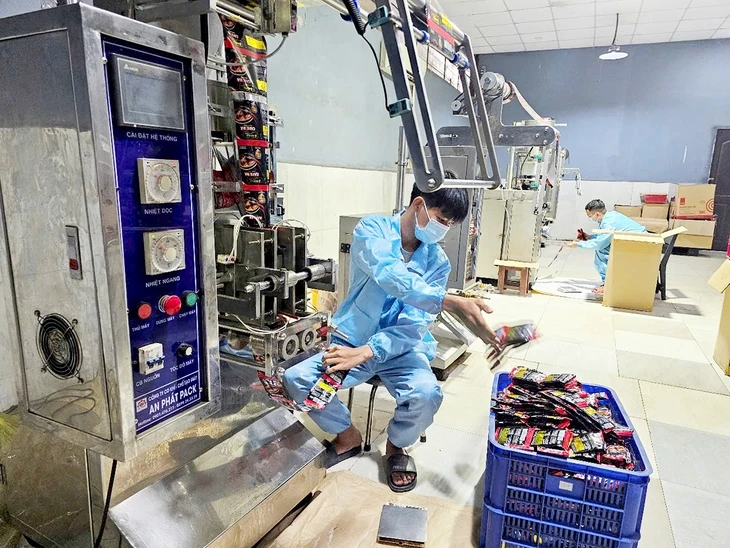
Dr. Vo Tri Thanh, Director of the Institute for Strategic Brand and Competition Research, also believes that strong institutional reforms are needed to attract investment, both domestic (especially private) and foreign. He also stressed the need for faster but more efficient disbursement of public investment, particularly in infrastructure development.
"Specifically for infrastructure projects that are behind schedule, a large amount of capital, including bank credit, is tied up. Therefore, the Government , ministries, and localities need to focus on resolving these issues to ensure their completion and commissioning as soon as possible. This is also a very important resource for economic growth," Mr. Thanh said.
Source

![[Photo] A vibrant celebration of generations of Nhan Dan Newspaper staff](https://vphoto.vietnam.vn/thumb/1200x675/vietnam/resource/IMAGE/2026/03/11/1773228432744_cb-75-nam-7-7034-jpg.webp)






























































































Comment (0)