

With the rapid development of digital technology and the increasing demand for healthcare, telehealth checkups are gradually becoming a popular trend.
With the rapid development of digital technology and the increasing demand for healthcare, telehealth checkups are gradually becoming a popular trend.
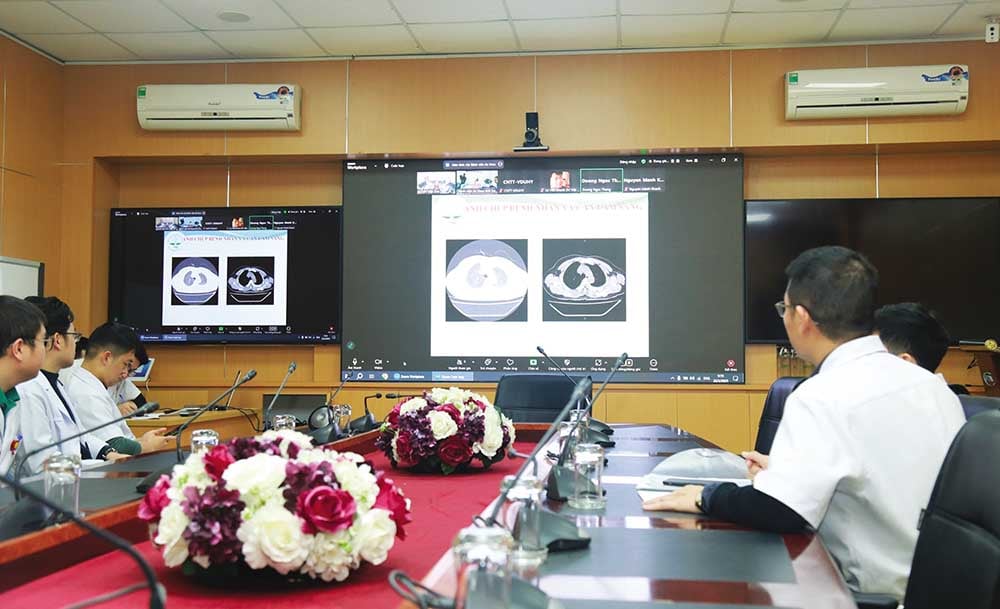 |
| Applying technology to remote health checkups helps provide quality healthcare services while saving patients time and travel costs. |
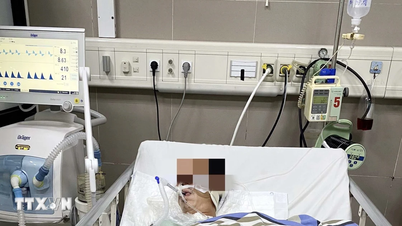
Providing remote medical care to patients in emergency situations.
According to updated information on February 22, 2025, a serious traffic accident occurred in Son La province when a sleeper bus collided with a tractor-trailer. The accident resulted in many serious injuries, with some patients being transferred to Viet Duc Friendship Hospital for further treatment.
Viet Duc Friendship Hospital has collaborated with Son La Provincial General Hospital to conduct remote emergency consultations via telemedicine (remote health check-ups), determine optimal treatment plans, and receive patients requiring specialized treatment.
Earlier, following a major storm, a female patient buried under rubble in Van Yen town (Yen Bai province) was found in critical condition. Through the telemedicine system, doctors at Viet Duc Friendship Hospital quickly identified the patient's condition and coordinated timely emergency care and treatment.
Telemedicine is the provision of remote healthcare services via technology platforms using video, audio, images, or electronic data, allowing patients to access medical services without having to visit a healthcare facility in person. Forms of remote healthcare can include video consultations, remote delivery of test results, or patient monitoring via smart medical devices.
Telehealth consultations save patients time and travel costs, especially for those living in remote areas or unable to travel to hospitals due to unstable health conditions. Telehealth systems connect patients with doctors without long waits or hospital visits.
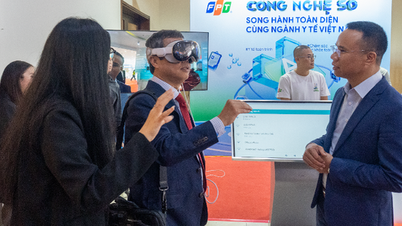
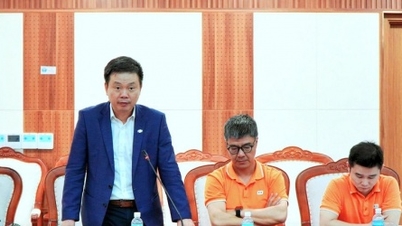
 FPT Group will utilize its technological platforms and capabilities to build a suitable model; integrating AI technology into healthcare processes to make it more accessible to the public.
- Mr. Nguyen Van Khoa, General Director of FPT Group
By connecting patients with specialists via online platforms, telemedicine helps provide quality healthcare services, even for patients who are not near major hospitals. In particular, many diseases can be detected early through continuous remote monitoring. In the treatment of cardiovascular diseases, many patients can have their health monitored through smart wearable devices such as heart rate and blood pressure monitors. Data from these devices is sent directly to doctors, helping them make timely treatment decisions without the patient having to go to the hospital.
According to healthcare professionals, telemedicine is an ideal solution for caring for patients with chronic diseases such as diabetes, hypertension, or cardiovascular disease. Patients can receive regular health advice and monitoring without having to visit the hospital for each follow-up appointment.
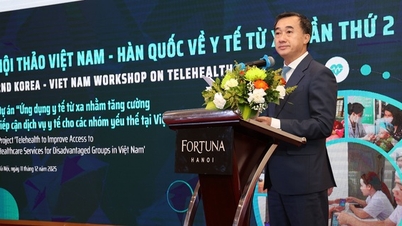
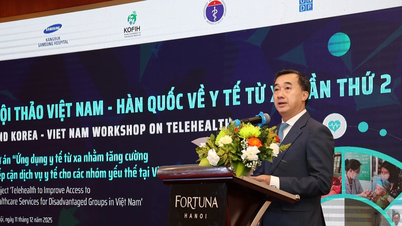
Since 2020, the Ministry of Health, in collaboration with the United Nations Development Programme (UNDP) and international organizations such as the Korea Foundation for Health Care (KOFIH), has implemented a telehealth program in remote and disadvantaged areas. The program utilizes the "Doctor for Every Home" software in eight provinces: Ha Giang, Bac Kan, Lang Son, Thua Thien Hue, Quang Ngai, Binh Dinh, Dak Lak, and Ca Mau. The positive results have prompted the Ministry of Health to cooperate with UNDP and KOFIH to implement the Telehealth Application Project, aiming to enhance access to healthcare services for vulnerable groups in Vietnam across 10 disadvantaged provinces.
Ms. Ramla Khalidi, Resident Representative of UNDP in Vietnam, emphasized that digital technology will help improve the quality of healthcare at the grassroots level, making it easier for people in remote areas to access essential medical services. This program is clear evidence that digital transformation in the healthcare sector will open opportunities for vulnerable groups, ensuring they are not left behind.
Prioritize investment in technology.
Telehealth offers numerous clear benefits, most evident during the Covid-19 pandemic. This model helps reduce travel costs, alleviate the burden on healthcare facilities, and provide people in remote areas with access to quality healthcare services without having to travel to medical facilities.
According to Mr. Vuong Anh Duong, Deputy Director of the Department of Medical Examination and Treatment Management (Ministry of Health), the application of technology in remote medical examination and treatment helps doctors monitor patients' health status more frequently, thereby improving treatment effectiveness and minimizing risks. Electronic health records (EMR), the application of artificial intelligence (AI) in diagnosis, and remote monitoring devices are tools that help improve the quality of healthcare.
However, implementing telemedicine in Vietnam is not easy. According to a survey by the Ministry of Health, about 40% of district-level hospitals lack the necessary technological infrastructure, such as stable internet access and smart medical equipment, to deploy remote healthcare services.
To address these issues, healthcare experts propose several key solutions. First, it is necessary to increase investment in technological infrastructure, especially in rural and mountainous areas where network connectivity and equipment are weak; ensuring stable internet access and advanced medical equipment to effectively implement telehealth services.
Furthermore, training doctors, nurses, and medical staff on the use of technology in telemedicine will help healthcare facilities effectively implement remote healthcare services. In addition, hospitals and healthcare facilities need to have measures in place to protect patient information during remote consultations and treatments, ensuring the security of medical data.
Source: https://baodautu.vn/mo-rong-phu-song-y-te-tu-xa-d249218.html

![[Photo] Prime Minister Pham Minh Chinh meets with representatives of female leaders and managers of central agencies and presents the Kovalevskaia Award 2025.](https://vphoto.vietnam.vn/thumb/1200x675/vietnam/resource/IMAGE/2026/03/06/1772789429283_ndo_br_dsc-1149-jpg.webp)


![[Image] Me So Bridge - an important connecting point on the Ring Road 4](https://vphoto.vietnam.vn/thumb/1200x675/vietnam/resource/IMAGE/2026/03/06/1772781627165_ndo_br_dji-0917-jpg.webp)
![[Photo] People in Ho Chi Minh City experience the green space at Ly Thai To Park No. 1.](https://vphoto.vietnam.vn/thumb/1200x675/vietnam/resource/IMAGE/2026/03/06/1772783731988_01-9003-png.webp)

































































Comment (0)