

Choose Vietnamese sausage from a reputable source.
To buy delicious Vietnamese pork sausage (giò chả) made from high-quality meat, the first thing you need to consider is choosing a reputable supplier. Long-established, branded sausage producers trusted by many consumers usually guarantee the quality of their ingredients and processing methods. These establishments typically adhere strictly to food safety and hygiene standards, use fresh ingredients, and have clear commitments to product quality.
A simple way to identify a reputable establishment is to ask for opinions from people who have previously purchased and used the product. Reviews from previous customers will help you easily find a place that sells delicious and high-quality Vietnamese sausage.
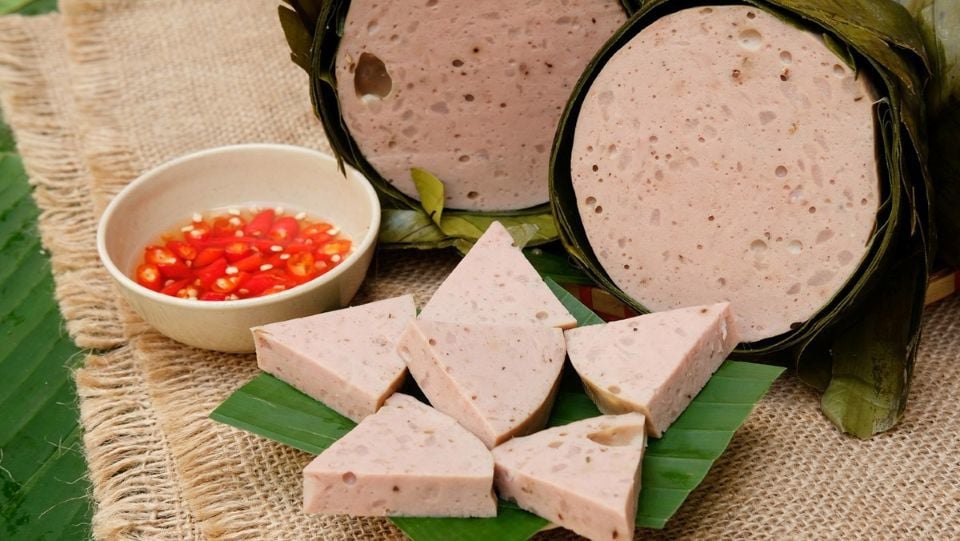
Identifying sausage by its color
One simple way to identify good quality Vietnamese pork sausage (giò chả) is through its color. Sausage made from high-quality meat usually has a natural, bright, smooth, and uniform color. Fresh, good quality pork will create a sausage with a bright pink color, sometimes with a hint of off-white. If the sausage is dark red or brown, it's likely the meat has been artificially colored or preserved for too long, which is unhealthy.
Specifically, pork sausage made from fresh pork will not have excessively large streaks of fat or unnatural red discoloration. A good sausage will have an even distribution of meat and fat, creating a smooth texture without lumps or separation.
Check the aroma of the Vietnamese sausage.
Good quality Vietnamese pork sausage (giò chả) made from premium meat will have a distinctive flavor, primarily the aroma of fresh meat and spices. When chewed, clean giò chả has a sweet, fragrant taste, is soft, not mushy, and does not feel dry or tough.
If you see a piece of pork sausage with a strong, pungent aroma, be cautious because it's very likely that it has been treated with artificial meat flavoring. Conversely, if the sausage smells rancid or spoiled, the wrapping leaves are dry, old, sticky to the touch, or show signs of mold or mildew, absolutely do not buy it.
Identifying Vietnamese sausage by its texture
An important characteristic for identifying good quality Vietnamese pork sausage (giò chả) is its texture. Good quality sausage made from fresh, high-quality pork has a soft, smooth texture that is neither mushy nor too dense. When you cut a slice, you'll see that the surface of the sausage has a certain elasticity and doesn't crumble. If the sausage is dry, hard, or easily broken, it may have been made from stale meat or frozen for too long.
A good Vietnamese pork sausage (giò chả) should have a balanced texture of lean meat and fat. If there is too much fat, the sausage will be greasy and cloying. Conversely, if there is too little fat, the sausage will be dry and lack the natural richness and flavor.
Test for elasticity and ductility.
Pork sausage made from high-quality meat will have a certain elasticity and flexibility. When you press on a piece of sausage, it will spring back slightly and won't be too hard or too soft. This flexibility helps the sausage maintain its shape without crumbling or breaking when cut. This is a very important characteristic when evaluating pork sausage, because if it's too mushy or too hard, it may be due to an unbalanced ratio of lean meat to fat, or the use of too many additives.
When cutting with a knife, the blade sticks to the surface of the ham, making it difficult to slice; it doesn't slide smoothly. The ham is both chewy and crispy, fragrant and savory, with a hint of banana leaf aroma... The slices of ham look smooth and slightly moist.
If the sausage doesn't have the small holes or other characteristics mentioned above, it means it has been mixed with a lot of flour and made from low-quality meat.
See the ingredients list.
Another way to identify good quality Vietnamese pork sausage (giò chả) is through its ingredients. Authentic giò chả typically contains fresh pork, pork fat, and natural spices such as pepper, garlic, salt, sugar, and fish sauce. If you buy giò chả that lists ingredients like borax, artificial coloring, or preservatives, it's very likely a low-quality product.
Homemade Vietnamese sausage (giò chả) or sausage from reputable establishments usually does not use chemicals, only traditional spices. The presence of too many artificial ingredients is a sign that the sausage may have been made from low-quality ingredients.
Price
Vietnamese sausage made from high-quality meat is not only delicious but also very nutritious. Fresh meat provides all the necessary vitamins and minerals for the body. Sausage made from pork contains protein, vitamins B1 and B6, and minerals such as iron and zinc, which help support health and strengthen the immune system.
If Vietnamese sausage (giò chả) is too cheap, it may be due to poor meat quality or even the mixing of ingredients of unknown origin. Choosing giò chả from establishments with reasonable prices, not excessively cheap compared to the general market, will help you avoid using low-quality products.
How to preserve Vietnamese pork sausage (chả lụa)
How to preserve Vietnamese pork sausage when you don't have a refrigerator.
Depending on the weather conditions in each region, you can preserve them in different ways.
- For regions with cool or cold climates like Northern Vietnam, simply wrap the cut end of the sausage to prevent contact with external bacteria.
- In areas with hot climates year-round, where food spoils easily, in addition to carefully wrapping the pork sausage, you should prepare a good insulated container or place it in a cool, well-ventilated area. Alternatively, you can put the sausage in a clean aluminum or stainless steel pot, cover it tightly, and then place it inside a large basin of cold water.
The above methods for preserving Vietnamese pork sausage without a refrigerator are only effective for a short period (1-2 days). It's best to consume it within the same day to ensure the quality of the sausage!
Store in the refrigerator.
By storing the sausage in the refrigerator, you can keep it for about 4-6 days in the chiller compartment and about 10-20 days in the freezer.
Before refrigerating Vietnamese pork sausage (chả lụa), you should carefully wrap it in banana leaves or plastic wrap. This helps keep the sausage fresh and moist for longer, preventing it from drying out.
Since refrigerators, especially the cooling compartment, also contain many types of bacteria, you need to wrap the sausage tightly with plastic wrap every time you cut it to prevent it from spoiling.
How to use Vietnamese pork sausage after refrigeration.
For types of Vietnamese sausage such as pork sausage, beef sausage, fried sausage, etc., that are stored in the refrigerator, you should take them out of the refrigerator about an hour before eating. This will make the sausage less cold and also crispier and tastier.
Another tip: for other types of sausages like pork head terrine, this dish needs to be refrigerated for a while before eating because it makes the terrine chewier and crispier. Therefore, after slicing it, you should immediately put the terrine back in the refrigerator for another 10-15 minutes before eating for a more delicious experience!
Source: https://kinhtedothi.vn/meo-phan-biet-gio-cha-sach-lam-tu-thit-chuan.html



![[Image] Nearly 125,000 Hanoi students completed the Literature exam for the 10th grade entrance exam.](https://vphoto.vietnam.vn/thumb/1200x675/vietnam/resource/IMAGE/2026/05/30/1780117233041_ndo_br_thiet-ke-chua-co-ten-2-png.webp)



























![[Photo] Admire the coral "masterpiece" amidst the million-year-old heritage of Dak Lak province.](https://vphoto.vietnam.vn/thumb/1200x675/vietnam/resource/IMAGE/2026/05/30/1780107638639_y25-jpg.webp)






































































Comment (0)