

(NLĐO) - According to NASA, the period when Earth is most susceptible to flares and fireballs from the Sun will last until next year.
NASA and the National Oceanic and Atmospheric Administration (NOAA) have jointly confirmed that the Sun has entered the peak phase of its 25th solar cycle, a period when it will frequently launch the most flares and fireballs at Earth and surrounding planets.
This phase, characterized by increased magnetic field activity, could continue into the next year.
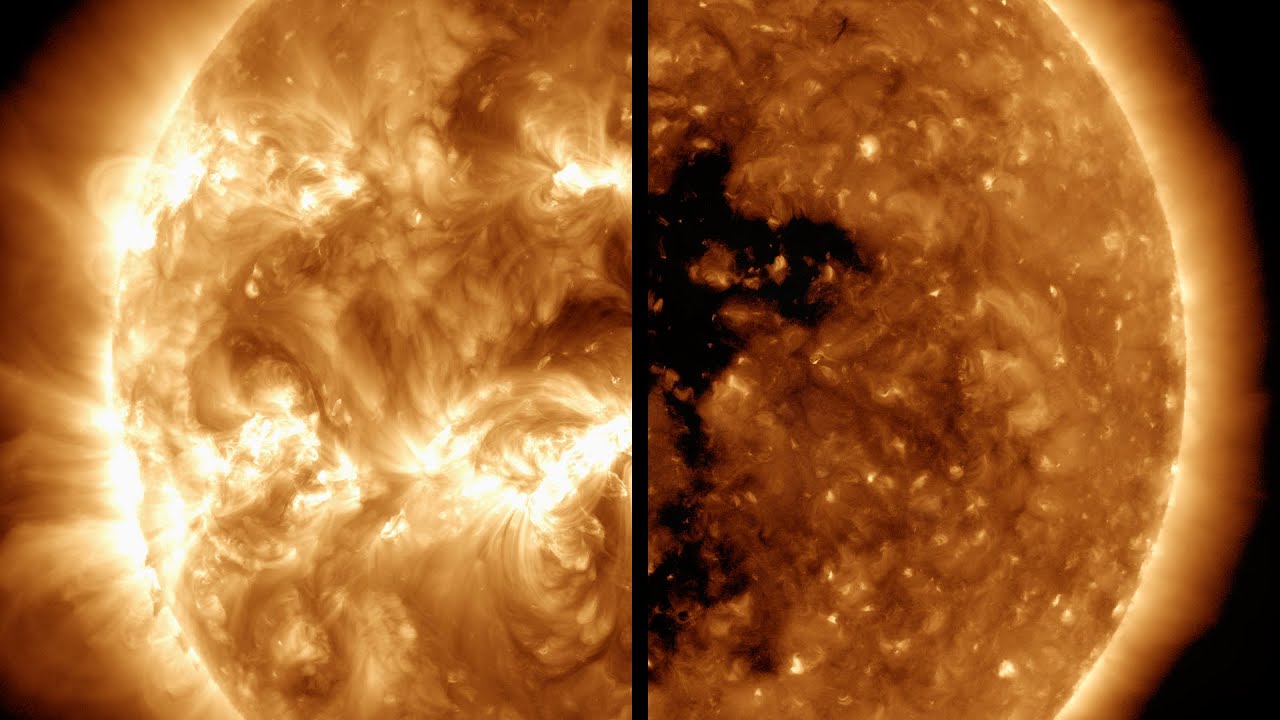
The Sun's current "explosive" activity is completely different from its quiet periods - Photo: NASA
According to SciTech Daily, our Sun has an activity cycle of 11 years, fluctuating between periods of low and high magnetic field activity.
During peak periods like the present, the Sun undergoes a magnetic pole reversal: the North Pole becomes the South Pole and vice versa.
This is felt on Earth through continuous and powerful geomagnetic storms. Recently, Earth has experienced very strong geomagnetic storms.
The highlight was the event in May 2024, when a series of flares and coronal mass ejections (CMEs) created the strongest geomagnetic storm on Earth in the past two decades and possibly the most spectacular aurora display in five centuries.
However, Elsayed Talaat, Director of Space Weather Operations at NOAA, explained that the announcement from the agency and NASA does not mean this is the peak of solar activity that we will see in this cycle.
It is very likely that in the coming months or years, the Sun will erupt even more violently.
But with the technological advancements of modern man, it will profoundly affect many things, requiring Earthlings to be prepared.
In early September 1859, the global electrical and telegraph grids suffered severe damage from the Carrington Event, one of the most powerful geomagnetic storms humanity had ever experienced.
Today we no longer use telegraphs and have much better means of protecting the power grid.
However, we have invented countless other things that can be affected by geomagnetic storms: navigation technology, radio, satellites, spacecraft...
For ordinary people, brief disruptions caused by geomagnetic storms usually don't affect daily life. But space agencies need to pay close attention to space weather forecasting.
For example, space weather forecasting is crucial to supporting spacecraft and astronauts in NASA's Artemis mission.
This study of the space environment is a crucial part of understanding and minimizing astronaut exposure to cosmic radiation.
Furthermore, predicting potential geomagnetic storms helps prevent the space industry's plans from falling apart: In 2022, SpaceX suffered serious damage when approximately 40 newly launched Starlink satellites were knocked back to Earth by a geomagnetic storm.
Scientists predict that the solar maximum will last for another year before the Sun enters its decline phase, leading to a solar minimum.
Source: https://nld.com.vn/nasa-mat-troi-dang-rung-minh-dao-nguoc-cuc-tu-196241017095029596.htm


















































































Comment (0)