

In response to the requirements for simplifying and reducing administrative procedures and business conditions, the draft Law on Railways (amended) has eliminated 20% of administrative procedures and 33% of business conditions compared to the current law.
Addressing institutional shortcomings and creating new impetus.
On the morning of March 10th, the Standing Committee of the National Assembly discussed the draft Law on Railways (amended). Authorized by the Minister of Construction , Deputy Minister of Construction Nguyen Danh Huy presented the draft law.
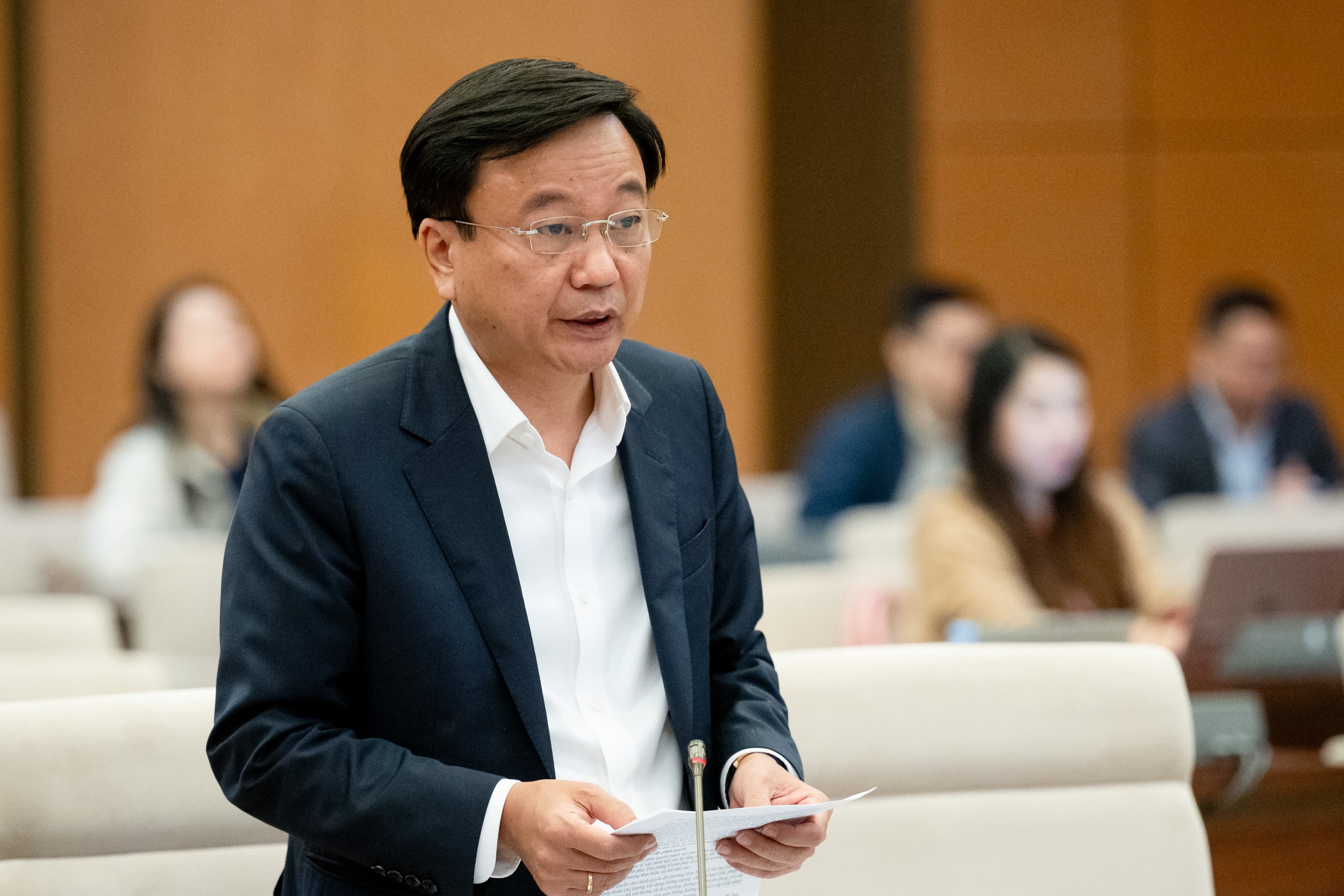
Deputy Minister of Construction Nguyen Danh Huy presents the draft Law on Railways (amended) (Photo: National Assembly Media).
Deputy Minister Nguyen Danh Huy stated that the draft law was developed to further institutionalize the Party and State's guidelines and policies on railway development; to overcome existing institutional shortcomings and inadequacies; to create new impetus for the development of the railway industry; to promote the competitiveness of railway transport; and to serve the travel needs of the people.
The draft law is built on five guiding principles, particularly focusing on promoting decentralization and delegation of power in railway operations; maximizing the mobilization of resources for the development of railway infrastructure, with the state budget playing a leading role; and attracting all economic sectors to participate in railway business…
Accordingly, to meet the requirements for simplifying and reducing administrative procedures and business conditions, the draft law has removed regulations on 20% of administrative procedures and 33% of business conditions compared to the current Railway Law.
"The 2017 Railway Law had 20 administrative procedures. The current draft law has reduced 4 administrative procedures, amended the implementing entities for 10 administrative procedures to make them more convenient, and only retained 6 administrative procedures."
These administrative procedures have been thoroughly evaluated by the Ministry of Construction in the "Administrative Procedure Impact Assessment Report," Deputy Minister Huy informed.
To promote decentralization and delegation of power, the draft law proposes strong delegation of authority to local governments in the investment, management, and operation of railway infrastructure; it has also revised some powers from the Government and the Prime Minister to the Minister of Construction and local governments.
Specifically, local authorities are empowered to carry out 10 administrative procedures related to: approving the construction of level crossings; granting and renewing construction permits for level crossings on local and specialized railways; issuing certificates of registration for railway vehicles; and issuing licenses for train drivers on specialized and local railways.
Delegating authority from the Prime Minister to the Minister of Construction for the approval of railway line and station planning.
It is proposed that the Minister of Construction be responsible for specifying the service life of railway vehicles, instead of the Government as stipulated in the 2017 Railway Law.
Classification of the three Vietnamese railway systems.
The draft law also amends and supplements five provisions concerning: investment in railway infrastructure development; management and operation of railway infrastructure; railway transport operations; connectivity of transport modes; and development of the railway industry and human resources.
Specifically, regarding the management and operation of railway infrastructure, the draft law amending and supplementing regulations on the classification of Vietnam's railway system includes national railways, local railways (including urban railways and general railways transporting both passengers and goods to serve the development needs of localities), and specialized railways.
This regulation aims to address the practical needs of localities such as Binh Duong, Tay Ninh, Thanh Hoa, etc., which require investment in conventional railways (not urban railways).
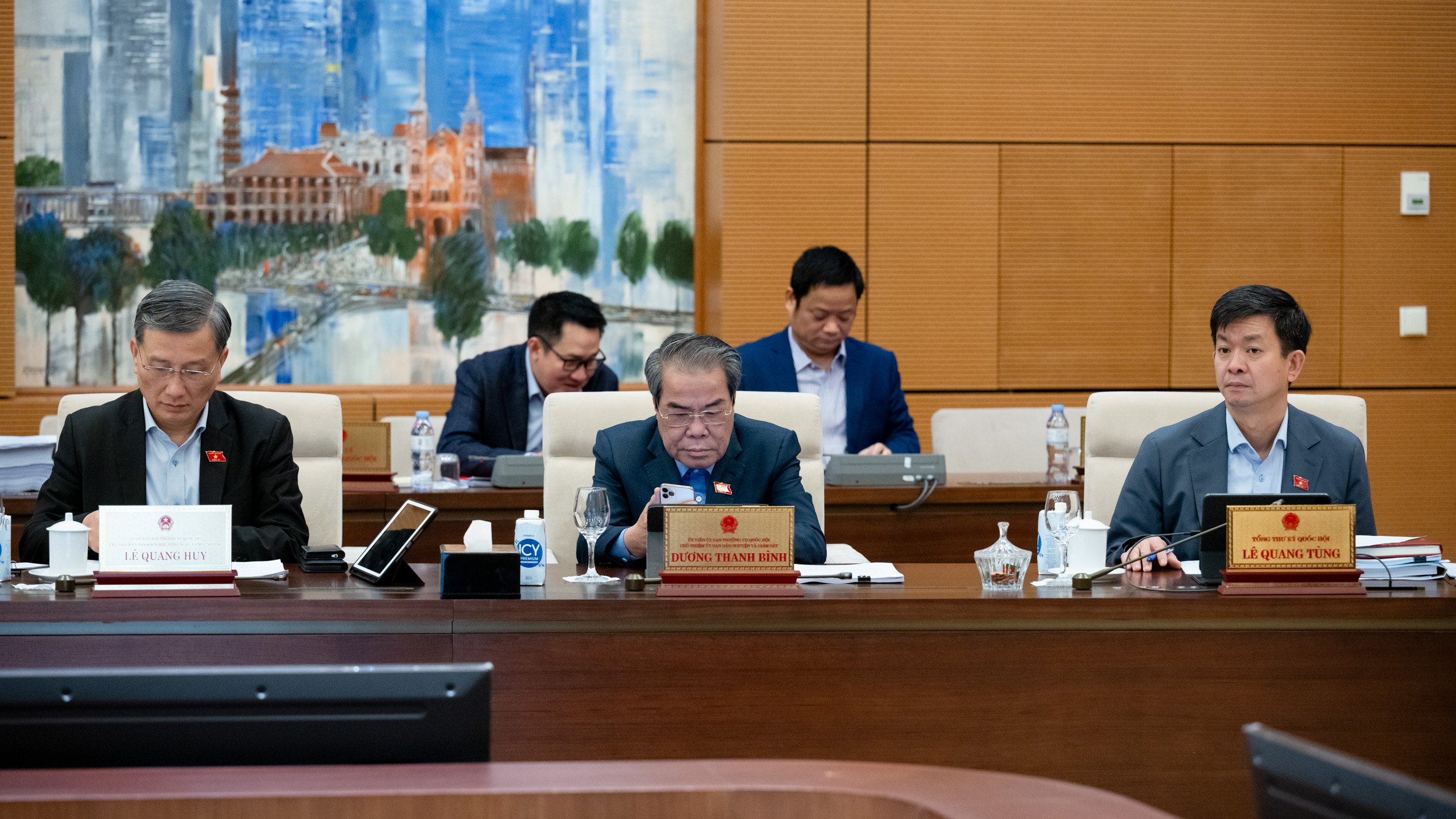
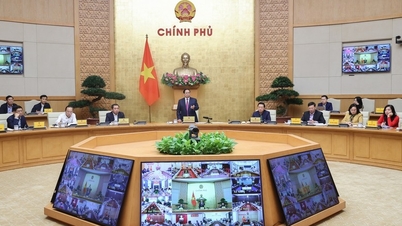
View of the session (Photo: National Assembly Media).
The draft law amends and supplements regulations stipulating that organizations entrusted with managing railway infrastructure assets invested by the State shall organize the management and maintenance of railway infrastructure, aiming to resolve long-standing obstacles in the transfer of national railway infrastructure assets to the Vietnam Railway Corporation.
At the same time, amend and supplement regulations on leasing and transferring the right to exploit railway infrastructure assets invested by the State for a limited period to attract and diversify types of enterprises participating in railway management and development, such as "Public leadership - private management", "Public investment - private management", "Private investment - public use"...
Proposal to add principles for the development of the railway industry.
Presenting the verification report, Chairman of the Committee on Science, Technology and Environment Le Quang Huy stated that the draft law has concretized the five main policy groups that have been approved.
Regarding the proposed review of railway classification and technical standards, the Committee on Science, Technology and Environment suggested clarifying the roles and responsibilities of management agencies for each type of railway, especially for specialized railways.
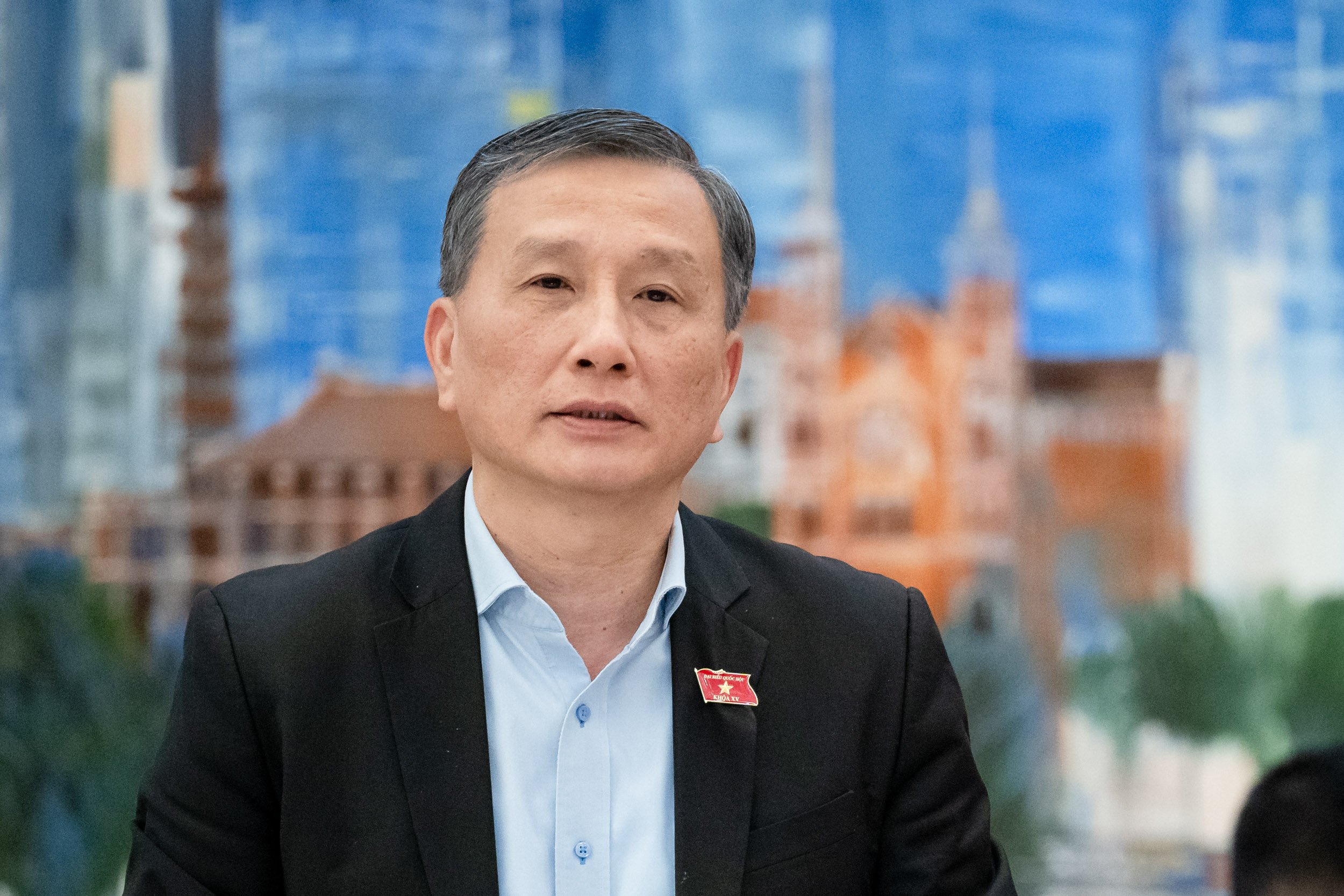
Chairman of the Committee on Science, Technology and Environment Le Quang Huy presents the verification report (Photo: National Assembly Media).
At the same time, it is also necessary to clarify the potential lack of synchronization between these modes of transport within the national railway system, which could affect transport efficiency and connectivity between different modes of transport.
This committee also recommended studying and supplementing the principles in the development of the railway industry and railway transportation.
For example, this includes encouraging localization and the development of domestic industries, promoting linkages between the railway industry and supporting industries; innovating technology and transferring technology to improve production efficiency, operation, and competitiveness; ensuring safety, efficiency, and environmental protection in all stages from production, assembly, maintenance, to operation of railway vehicles; and synchronizing training and development plans for human resources involved in research and activities in the railway sector, moving towards technological self-reliance.
Source: https://www.baogiaothong.vn/luat-duong-sat-sua-doi-luoc-bo-toi-da-thu-tuc-hanh-chinh-phan-quyen-manh-me-192250310105227512.htm
![[Photo] Prime Minister Pham Minh Chinh receives Lao Minister of Education and Sports Thongsalith Mangnormek](/_next/image?url=https%3A%2F%2Fvphoto.vietnam.vn%2Fthumb%2F1200x675%2Fvietnam%2Fresource%2FIMAGE%2F2025%2F12%2F16%2F1765876834721_dsc-7519-jpg.webp&w=3840&q=75)

![[Photo] Prime Minister Pham Minh Chinh receives the Governor of Tochigi Province (Japan)](/_next/image?url=https%3A%2F%2Fvphoto.vietnam.vn%2Fthumb%2F1200x675%2Fvietnam%2Fresource%2FIMAGE%2F2025%2F12%2F16%2F1765892133176_dsc-8082-6425-jpg.webp&w=3840&q=75)
![[Live] 2025 Community Action Awards Gala](/_next/image?url=https%3A%2F%2Fvphoto.vietnam.vn%2Fthumb%2F1200x675%2Fvietnam%2Fresource%2FIMAGE%2F2025%2F12%2F16%2F1765899631650_ndo_tr_z7334013144784-9f9fe10a6d63584c85aff40f2957c250-jpg.webp&w=3840&q=75)

![[Image] Leaked images ahead of the 2025 Community Action Awards gala.](/_next/image?url=https%3A%2F%2Fvphoto.vietnam.vn%2Fthumb%2F1200x675%2Fvietnam%2Fresource%2FIMAGE%2F2025%2F12%2F16%2F1765882828720_ndo_br_thiet-ke-chua-co-ten-45-png.webp&w=3840&q=75)



![[Video] Bach Mai Hospital puts into operation a group of the world's most modern equipment.](https://vphoto.vietnam.vn/thumb/402x226/vietnam/resource/IMAGE/2025/12/17/1765931442107_dung00-58-18-13still010-jpg.webp)


![[Video] Independence and self-reliance linked with international integration through 40 years of reform](https://vphoto.vietnam.vn/thumb/402x226/vietnam/resource/IMAGE/2025/12/16/1765899635777_1-1-8054-png.webp)




















































Comment (0)