

What does "Khao le the linh" mean?
Unless you're from Ly Son or have witnessed this ceremony, the phrase "khao le the linh" (offering sacrifices to the soldiers) might be incomprehensible to most. Those four words alone encapsulate countless stories of our ancestors' pioneering efforts and their role in defending national sovereignty and territorial integrity.
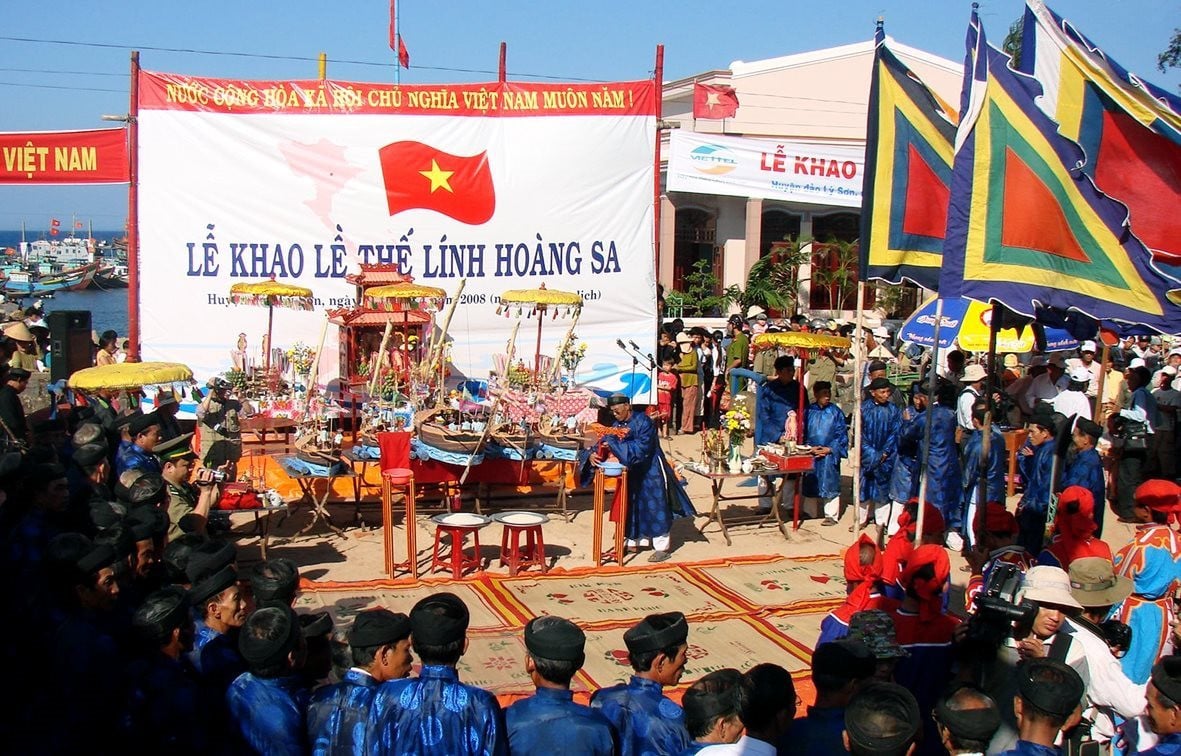
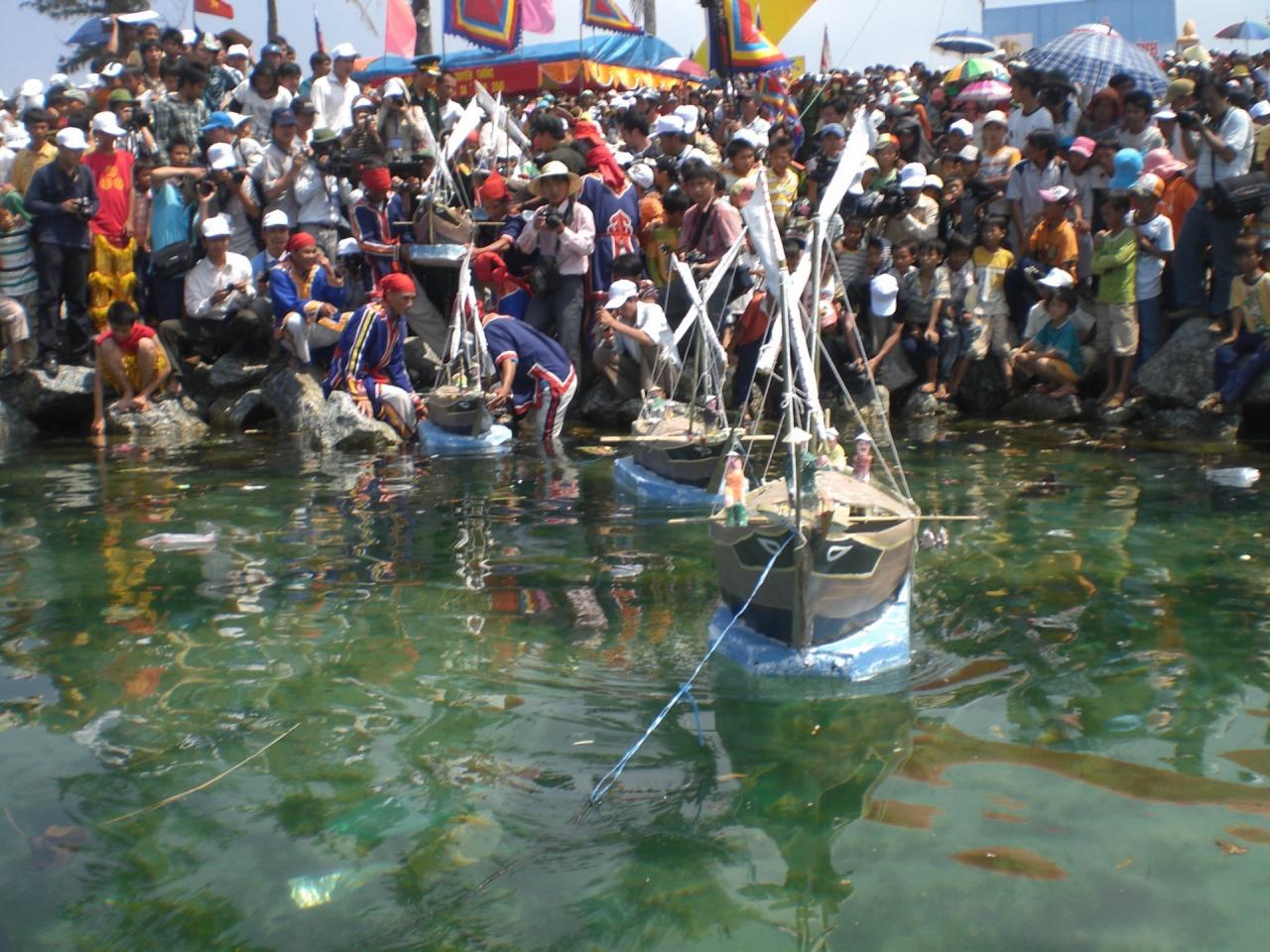
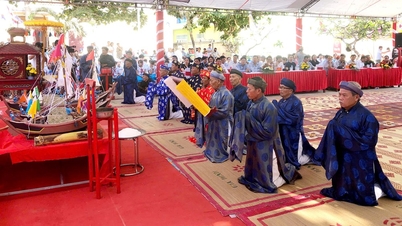
So what does "khao le the linh" mean? "Le" here refers to established customs and traditions. "Khao le" means the annual feast for the soldiers who went to the Paracel Islands to defend the homeland. "The linh" is a ritual, somewhat influenced by Taoism. People use effigies to represent the soldiers who went to the Paracel Islands.
The Khao Le The Linh ceremony has been maintained by the people of Ly Son for hundreds of years, ever since the Nguyen lords took control of the South.
Every year, the feudal dynasties of Vietnam, from the time of the Nguyen lords onwards, dispatched people to the Paracel Islands, and later the Spratly Islands, to protect Vietnam's maritime sovereignty. This force included not only people from Ly Son Island but also almost all able-bodied men from many coastal areas of Quang Ngai province .
However, only in Ly Son is the traditional "khao le" ceremony held. Why? Dr. Nguyen Dang Vu, a specialist in maritime culture research in Quang Ngai, suggests that the number of people who went to Hoang Sa (Paracel Islands) in other places is not as high as in Ly Son.
Perhaps, during the voyages to the Paracel Islands to defend the islands, the majority of the sailors from Ly Son were from the island, and also the ones who sacrificed their lives the most. That is why the rituals commemorating those who died have been maintained by the people of Ly Son for hundreds of years.
The fate of the soldiers
The elderly women in Ly Son still often sing this song: "Hoang Sa, the sky and sea are vast/ Those who go there may never return." The song is as melancholic as a corner of the island at sunset!
Looking at the supplies they carried when they boarded the boats, it's clear that going to the Paracel Islands back then was synonymous with "no return." Besides provisions, each soldier also carried a pair of woven mats, several bamboo poles, and a name tag engraved with their name and hometown.
These items were for when someone died; comrades would wrap the body in two woven mats along with a dog tag and throw it into the sea, hoping the soldier's remains would wash ashore. The villagers would then know the deceased's relatives and inform them.
It was also a precautionary measure, because almost none of the soldiers who died on those long sea voyages left any trace behind. Proof of this is the hundreds of symbolic graves that still exist on Ly Son Island. Each grave contains only clay figurines!
Ly Son Island is only 10 square kilometers in size, but its population has now reached over 22,000 people. Yet, the village still reserves land for these symbolic graves to endure over time. This speaks volumes about the ferocity of the Hoang Sa expeditions of the past and the sacredness that generations of descendants of the island still hold for those who sacrificed themselves for a great cause.
In Ly Son, there are still people who specialize in sculpting clay figures to be buried in "wind graves." These are the graves of fishermen who unfortunately died at sea and whose bodies were never found.
The wind-blown tombs date back to the time when our ancestors defended the Paracel Islands, and the people of Ly Son have maintained them to this day, although the content may have changed. This is also a way of preserving and honoring the boundless patriotism of our forefathers.
Honoring patriotism
In the Paracel Islands, there are two islands named after Pham Quang Anh - the commander who led the troops to the Paracel Islands to plant sovereignty markers (in 1815 during the reign of Gia Long) and Pham Huu Nhat (in 1836 during the reign of Minh Mang).
These two commanders were courageous leaders who had traversed the Paracel Islands many times. Pham Quang Anh, in particular, set foot on the Paracel Islands for two consecutive years (1815-1816) to survey the waterways.
However, the harshness of nature did not give those heroes any chance to return to the mainland again.
Their bodies, along with those of their comrades, remained at the bottom of the sea, serving as markers of national maritime sovereignty. Their descendants have named two islands in the Paracel Islands after them.
Ly Son currently has a shrine dedicated to "fallen soldiers." It houses hundreds of memorial tablets, each corresponding to a soldier who died while on duty in the Hoang Sa Islands.
Through years of war, invasion, and fire, the people of Ly Son have protected these dog tags as if they were precious treasures.
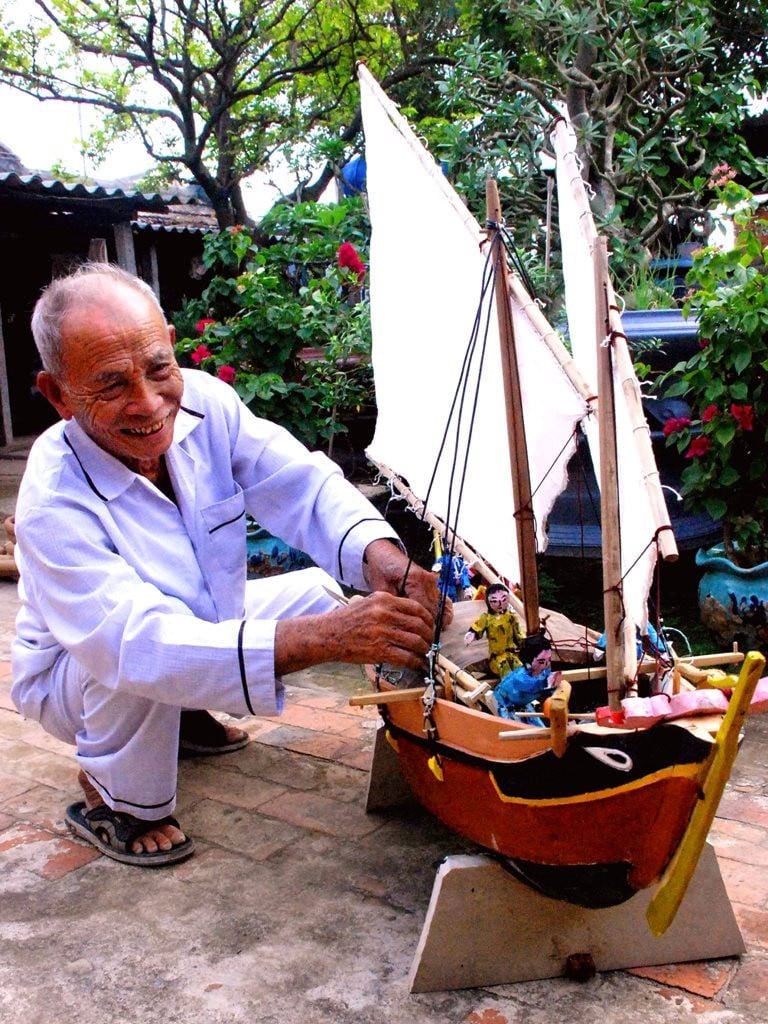
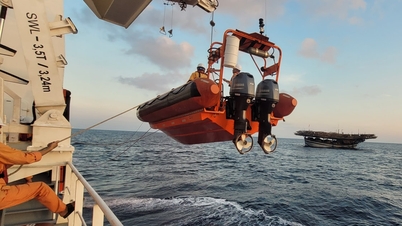
Mr. Vo Hien Dat, until his death in 2017, had spent 60 years guarding this shrine. He seemed to revive the atmosphere of the days when young people from Ly Son boarded boats to head straight to Hoang Sa by restoring the fragile bamboo boats – the means of transport to Hoang Sa in those days.
Looking at the bamboo boats and artifacts used by soldiers in the past when they went to the Paracel Islands for duty, today's descendants can imagine the harshness of those sea voyages.
Every year around the second lunar month, the clans on Ly Son Island hold the Khao Le The Linh Hoang Sa ceremony. This is also the time when their ancestors set sail for Hoang Sa to perform their duties. The entire atmosphere of "going to Hoang Sa" from the past is recreated in the Khao Le ceremony with all its sacredness and solemnity.
It is no coincidence that the Khao Le The Linh Hoang Sa ceremony was recognized as a national intangible cultural heritage in 2013.
What sets the Khao Le Festival apart is that it is organized by the people, truly embodying the spirit of a "people's festival." Therefore, the Khao Le Festival has endured through time!
Source

![[Image] Hanoi's urban life under the challenge of a "scorching hot" environment](https://vphoto.vietnam.vn/thumb/1200x675/vietnam/resource/IMAGE/2026/05/25/1779706979265_nang-nong-t5-2026-minh-duy-7-4636-jpg.webp)



![[Image] Close-up view of the interchange connecting the two expressways and Long Thanh Airport.](https://vphoto.vietnam.vn/thumb/1200x675/vietnam/resource/IMAGE/2026/05/25/1779703378210_ndo_br_z7863716673926-224453a31600126cce10622af6290afd-4549-jpg.webp)






































































Comment (0)