

GĐXH - Chives are considered best eaten in the spring to warm the stomach and prevent inflammatory diseases.
Chives are a year-round food, but are considered best eaten in spring. According to traditional medicine, chives have a sweet and spicy taste, a warm nature, and are used to warm the body, replenish deficiencies, regulate internal organs, and nourish the kidneys and enhance male potency.
Chives are quite rich in nutrients including sugar, protein, fat, carotenoids, vitamins B and C, fiber, calcium, phosphorus, iron, etc., and especially contain many active compounds with antibacterial and anti-inflammatory properties.
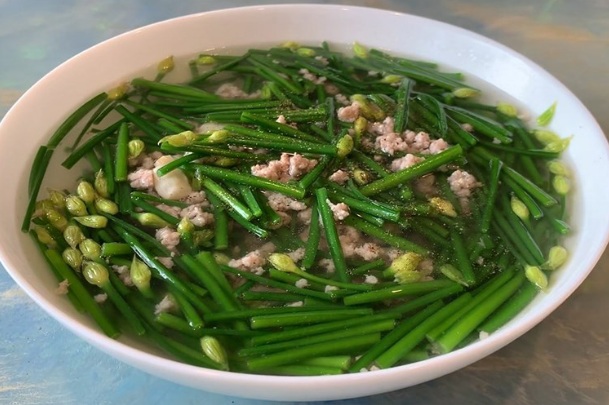
Illustrative image
Modern research shows that chives are rich in fiber, which stimulates digestion, promotes bowel movements, and prevents constipation and tooth decay. The fiber in this vegetable also balances gut bacteria, minimizes the impact of carcinogens on the intestinal lining, and actively prevents colon cancer. Furthermore, chives can support the treatment of hypertension and cardiovascular diseases.
In winter, when the weather is cold, you can boil chives and drink the resulting liquid instead of tea throughout the day to help warm your stomach. Drinking this after eating a lot of meat can also help prevent bloating.
The health benefits of chives
Helps fight inflammation
Sharing his insights with the Health and Life Newspaper, Dr. Huynh Tan Vu, a specialist in Internal Medicine, stated that chives are particularly beneficial for respiratory and intestinal illnesses in children. Scientists have studied chives and found that they contain compounds such as sulfur, saponins, and bitter substances. Notably, the substance Odorin in chives is considered a specific antibiotic against Staphylococcus aureus and Bacillus coli bacteria.
Additionally, chives seeds contain alkaloids and saponins. The fresh juice of chives leaves contains many antibiotics effective against various bacteria, acting as a broad-spectrum antibiotic against gastrointestinal bacteria in general, and particularly against intestinal diseases such as Staphylococcus aureus, Salmonella typhi, Shigella flexneri and subtilis, colipathogene, and E. coli bethesda. This antibiotic is quite stable.
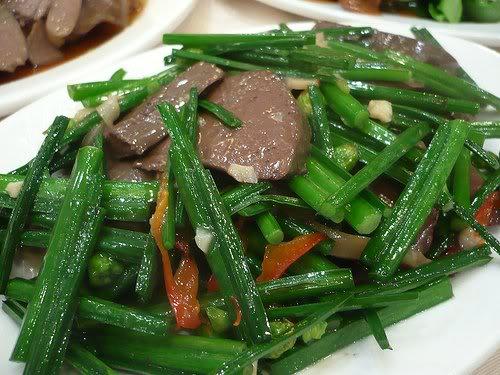
Illustrative image
Helps lower blood pressure and cholesterol.
Like garlic, chives contain allicin. Allicin helps lower blood pressure and inhibits cholesterol production in the body. Furthermore, it also possesses antibacterial and antifungal properties, eliminating bacteria and fungi in the gut and ensuring proper digestive function.
Good for the skin
Because chives have antibacterial and antifungal properties, they are very good for the skin and improve skin infections. Chives can replace creams for treating scabs and healing open wounds. Thanks to these properties, chives can kill bacteria and fungi, helping wounds heal faster.
In addition to the benefits mentioned above, chives can also help prevent unpleasant pregnancy-related problems, prevent blood clots, and effectively prevent acne.
Helps strengthen bones
Chives are rich in vitamin K, a vitamin responsible for your bone health. Women are especially prone to osteoporosis than men, so regularly eating chives can help increase bone density.
How much chives should you eat for optimal health?
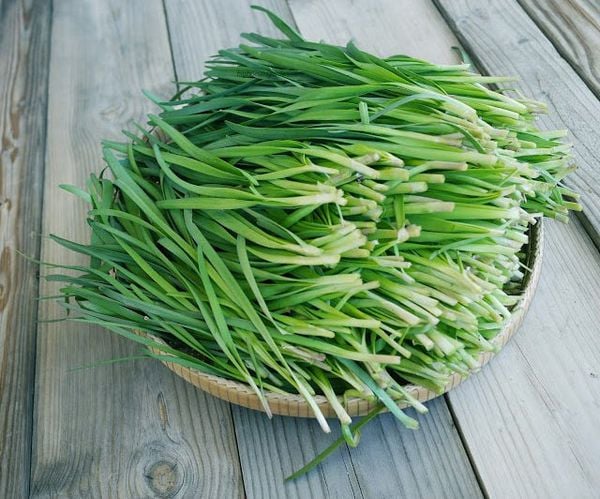
Illustrative image
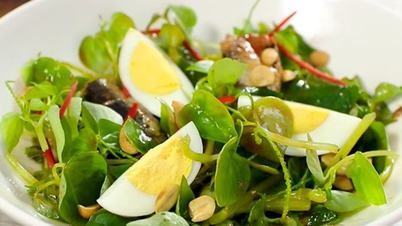
Chives are a very popular vegetable that can be used to prepare many different dishes, such as eating them raw, in soups, stir-fries, etc., or they can also be used to decorate dishes to make them more appealing.
Chives are generally quite mild, but they must be consumed properly to avoid overconsumption. You should only consume chives in moderation, otherwise you may experience digestive problems. Those with a history of allergies to onions or garlic should be cautious, as they may also experience allergic reactions when eating chives.
Additionally, dishes containing chives should only be consumed immediately after preparation; never leave them overnight as this can easily lead to food poisoning.
Source: https://giadinh.suckhoedoisong.vn/loai-rau-giup-khang-viem-va-phong-benh-xuong-khop-cuc-tot-nguoi-viet-nen-an-de-tang-cuong-suc-khoa-172250208172839148.htm
![[Image] Vietnam's colorful journey of innovation](/_next/image?url=https%3A%2F%2Fvphoto.vietnam.vn%2Fthumb%2F1200x675%2Fvietnam%2Fresource%2FIMAGE%2F2025%2F12%2F14%2F1765703036409_image-1.jpeg&w=3840&q=75)






















































![[Image] Vietnam's colorful journey of innovation](https://vphoto.vietnam.vn/thumb/402x226/vietnam/resource/IMAGE/2025/12/14/1765703036409_image-1.jpeg)



























Comment (0)