

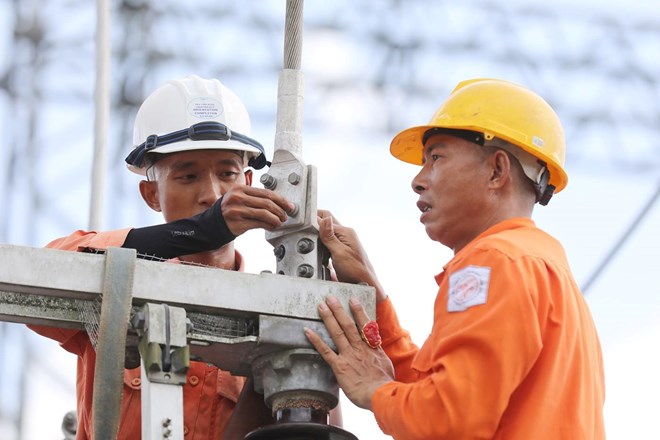
The proposed electricity price increase is just an idea.
Speaking to Lao Dong newspaper on January 3rd, Mr. Nguyen Anh Tuan, General Director of EVN, stated that the electricity price increase in 2024 is currently only an idea. The exact amount and timeline for the increase will depend on calculations by the relevant authorities – based on EVN's financial reports.
"Whether or not to increase electricity prices requires thorough and objective research, based on assessments of the socio-economic impact and people's lives. However, we are also striving to implement solutions to move towards electricity pricing based on market mechanisms," Mr. Tuan said.
Mr. Dao Nhat Dinh (Vietnam Energy Magazine) stated that the plan to increase electricity prices in 2024 to help EVN balance its finances is appropriate. Because if EVN's "health" is weak, it will affect its ability to attract investment in the electricity sector.
"Electricity is a special type of energy, a strategic commodity whose price is regulated by the State, and a crucial input cost used in almost all economic sectors and household consumption. A power shortage will lead to production stagnation and disrupt people's lives."
"If electricity prices are not increased to a level that can help EVN balance its finances, it will affect the preservation of state capital in EVN, the ability to provide sufficient electricity for the economy, and national energy security in the context of climate change and the economy's ever-increasing electricity demand," Mr. Dao Nhat Dinh said.
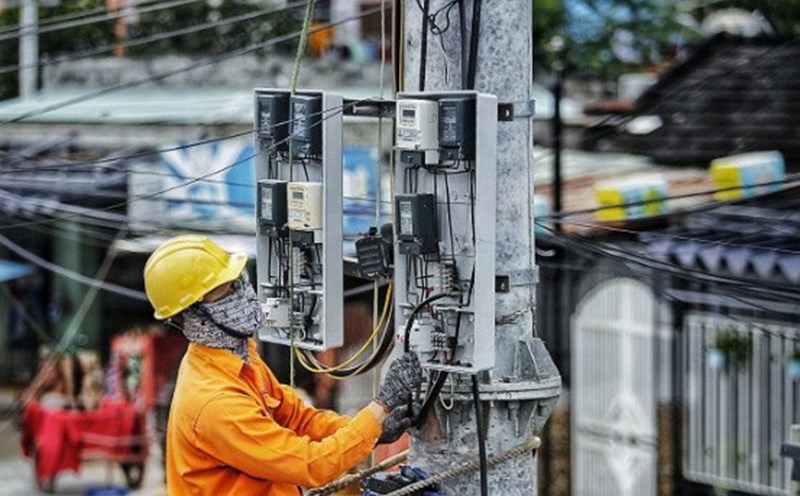
According to Mr. Dao Nhat Dinh, the electricity price increase should be below 5%, within EVN's authority to adjust. This increase would be sufficient for EVN to resolve its accumulated losses while avoiding widespread impact on the public.
Regarding the timing of electricity price increases, Mr. Dao Nhat Dinh stated that electricity prices should absolutely not be increased during the hot season (from May to July) to avoid a sudden surge in electricity bills, which would cause frustration for customers. He suggested that the electricity price increase should be implemented in October of this year.
Extreme caution is needed.
Meanwhile, in an interview with Lao Dong newspaper, Dr. Ngo Duc Lam, former Deputy Director of the Institute of Energy ( Ministry of Industry and Trade ), argued that extreme caution and careful consideration are needed: "We need to see if the economy and the people can withstand a third electricity price increase."
According to Mr. Ngo Duc Lam, before considering raising electricity prices, it is necessary to address whether the management of input fuel prices for electricity production is appropriate.
"In the power generation structure, coal-fired power plants still account for a large proportion, while coal prices have been continuously rising recently, affecting electricity production costs. Therefore, the structure of electricity components needs to be reviewed," Mr. Lam said.
According to him, previously, when the Power Development Plan VIII was being drawn up, coal-fired power accounted for about 30% of the total installed power capacity; however, coal-fired power generation reached over 40%. Before and during the planning period, coal prices remained low at around 7 cents (excluding hydropower, where coal-fired power had the lowest price among all power sources in the entire system).
However, things have changed. The price of input coal has skyrocketed, especially the high price of imported coal, causing the cost of electricity production to increase accordingly. Therefore, the input structure of each type of power source must be recalculated to suit the current reality. The current structure is not suitable for the time when the Power Development Plan VIII was developed and needs to be adjusted.
“Electricity is the country's infrastructure, profoundly impacting the economy. When electricity prices rise, the cost of all goods also increases. Therefore, the Government needs to carefully consider whether or not to increase electricity prices in 2024. The assessment should not only rely on proposals from EVN or the State Capital Management Committee at enterprises, but also require calculations from the Ministry of Finance and the Ministry of Planning and Investment,” said Mr. Ngo Duc Lam.
Due to financial imbalance, EVN employees' salaries are very low.
At the summary conference on January 2nd, EVN Chairman Dang Hoang An stated that due to financial imbalances, the employment and living standards of officials, employees, and workers in the electricity sector have been declining recently.
“I, along with the Board of Members and the General Director, are very concerned about the living conditions of EVN’s officials, employees, and workers in 2024, the 70th anniversary of the Group’s founding. Project management boards, schools, and service units of the corporations have very low salaries; many low-level officials of the Group do not earn enough to live on,” the EVN Chairman stated.
Source

![[Photo] Prime Minister Pham Minh Chinh receives the Governor of Tochigi Province (Japan)](/_next/image?url=https%3A%2F%2Fvphoto.vietnam.vn%2Fthumb%2F1200x675%2Fvietnam%2Fresource%2FIMAGE%2F2025%2F12%2F16%2F1765892133176_dsc-8082-6425-jpg.webp&w=3840&q=75)
![[Photo] Prime Minister Pham Minh Chinh receives Lao Minister of Education and Sports Thongsalith Mangnormek](/_next/image?url=https%3A%2F%2Fvphoto.vietnam.vn%2Fthumb%2F1200x675%2Fvietnam%2Fresource%2FIMAGE%2F2025%2F12%2F16%2F1765876834721_dsc-7519-jpg.webp&w=3840&q=75)
![[Live] 2025 Community Action Awards Gala](/_next/image?url=https%3A%2F%2Fvphoto.vietnam.vn%2Fthumb%2F1200x675%2Fvietnam%2Fresource%2FIMAGE%2F2025%2F12%2F16%2F1765899631650_ndo_tr_z7334013144784-9f9fe10a6d63584c85aff40f2957c250-jpg.webp&w=3840&q=75)

![[Image] Leaked images ahead of the 2025 Community Action Awards gala.](/_next/image?url=https%3A%2F%2Fvphoto.vietnam.vn%2Fthumb%2F1200x675%2Fvietnam%2Fresource%2FIMAGE%2F2025%2F12%2F16%2F1765882828720_ndo_br_thiet-ke-chua-co-ten-45-png.webp&w=3840&q=75)











































![[Live] Closing Ceremony and Award Presentation for the "Impressive Vietnam Tourism" Video/Clip Creation Contest 2025](https://vphoto.vietnam.vn/thumb/402x226/vietnam/resource/IMAGE/2025/12/17/1765974650260_z7273498850699-00d2fd6b0972cb39494cfa2559bf85ac-1765959338756946072104-627-0-1338-1138-crop-1765959347256801551121.jpeg)
















Comment (0)